

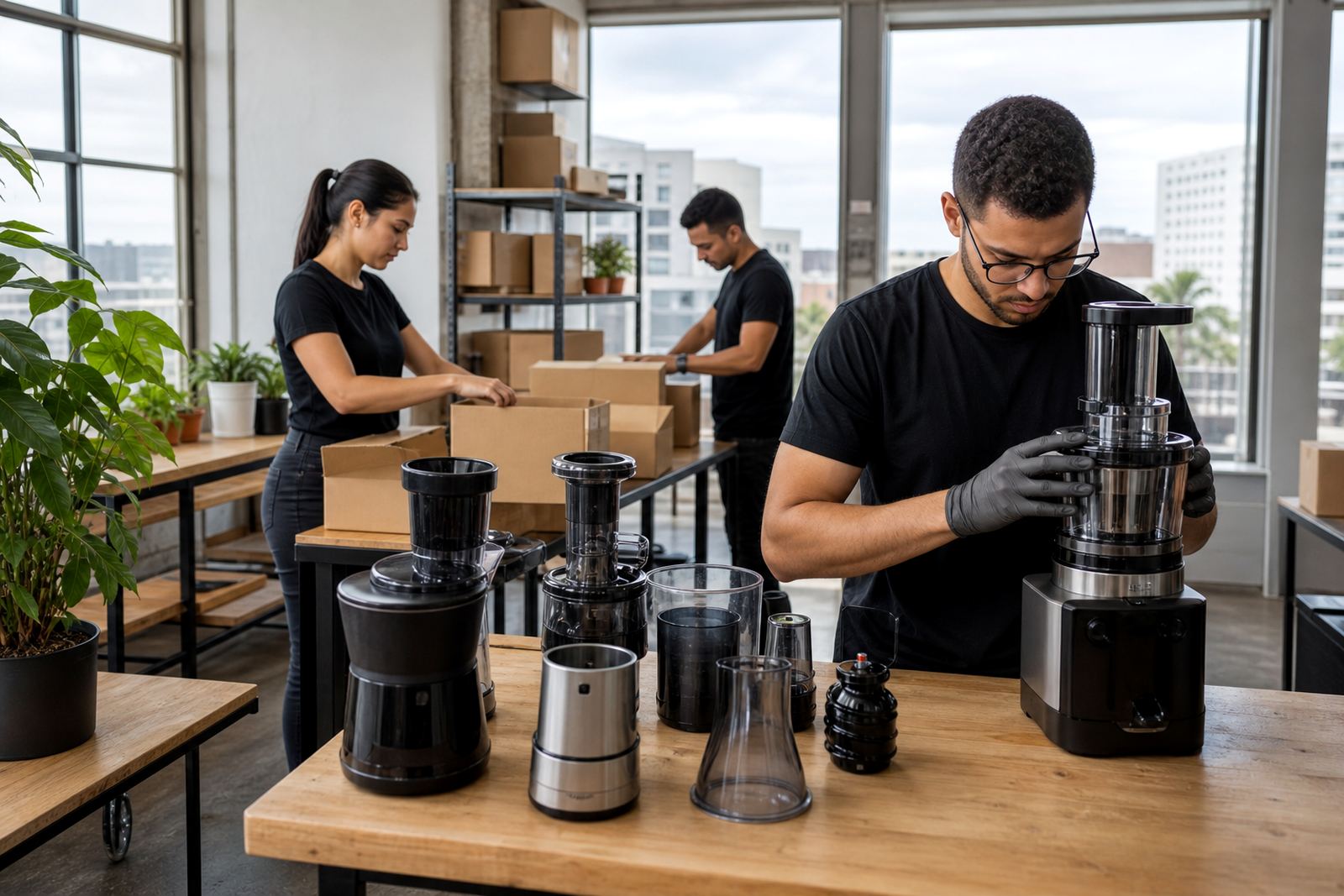
A Cape Town base with a national reach
MiniPress was founded in 1991 and operates from Paarden Eiland, close to the working harbour, warehouse routes and the city’s busy trade corridor. That location matters in daily work: it keeps stock moving, makes collections and dispatch more orderly, and helps us serve customers in Cape Town, Johannesburg, Durban, Pretoria, George, Stellenbosch and Somerset West without unnecessary delays.
We sell online and arrange delivery across South Africa, with the same practical approach whether an order is headed to a townhouse in Pretoria or a home kitchen in George. The goal is straightforward, suitable juicing equipment with support that feels organised and human.
What we know about juicers and cold presses
Our range includes slow masticating juicers, centrifugal juicers and cold presses. Each type works differently, so the right match depends on how often the machine will be used, how much prep a household is comfortable with, and how important speed, juice texture and pulp handling are in daily use.
- Slow masticating juicers use a slower crushing motion that can help extract juice from firmer produce and leafy items, with less heat build-up during operation.
- Centrifugal juicers use a fast spinning action and are often chosen for quicker juicing tasks where speed matters more than quiet running.
- Cold presses apply pressure rather than high-speed spinning, which many customers prefer for lower noise and slower processing.
We keep the product conversation practical. Questions about feed chute size, pulp container space, cleaning time and counter space matter just as much as the machine type itself.
How we handle cleaning and food safety
Juicing equipment needs regular cleaning because plant fibres, moisture and residue can build up quickly if parts are left unattended. We give guidance on rinsing, brushing mesh screens, checking seals and drying removable parts before storage. In coastal areas like Cape Town or Durban, that drying step is especially useful because humidity can linger in the air and affect stored parts.
We also pay attention to food safety habits around home use. That includes keeping produce separate from other kitchen items, washing hands before assembly, using clean chopping boards and replacing worn seals or cracked containers when needed. If a customer has a machine that smells off, leaks around the base or leaves residue in hard to reach places, we help work through the cause before it becomes a bigger issue.
- Deep clean guidance for baskets, screens and juice paths
- Seal replacement and leak troubleshooting
- Brushes and tools for routine maintenance
- Storage care for dry cupboards and packed kitchens
The way we work on ordinary days
Our team works with order handling, product support and after-sales questions in a practical rhythm. Lukhanyo Mthembu leads the business, with Ayesha Letsoalo overseeing operations, Sibusiso Rapetswa handling technical support, Megan Mokoka coordinating online sales, Ruan Fortuin supervising warehouse and dispatch, Nomonde Gxowa assisting customers and Tariq Petersen supporting content and training. Each role matters when a customer needs a first setup check or wants help understanding a part.
We do not rush people through a purchase. If a machine needs a cable plug check, a noise and vibration check, or a second look at a screen filter, we work through it step by step.
Support that continues after the box is opened
Some customers want help from the start, others only need a quick check after a few weeks of use. We support both. The service list includes first time setup, video support calls, routine care planning, spare parts help, seal replacement, screen care, leak troubleshooting, noise vibration checks and storage care.
That support is built around common home use problems, not complicated workshop language. A loose lid, a blocked outlet, a tired brush, or a container that has not been seated correctly can all affect performance. We help customers work through those issues in a calm, practical way and explain what part is worn, what can be cleaned, and what should be replaced.
- Video support call for remote guidance
- Spare parts help for worn or missing items
- Routine care plan for regular home use
- Brushes and tools for day to day cleaning
Why local detail matters in South Africa
South African homes are not all the same. A flat in Cape Town may have limited counter space and shared storage, while a family home in Johannesburg may want a machine that can handle more regular use. In Durban, moisture and salt air can affect storage and cleaning habits, and in towns like George or Stellenbosch, a customer may prefer a quieter machine that suits an early kitchen routine.
We keep those differences in mind when helping customers compare machines and care requirements.That is why we try to be clear, careful and specific. No fuss, just proper information.