
What Screen Care Covers at the Paarden Eiland Base
Screen care is the service we use to help keep the fine openings in a juicer screen, strainer basket or press filter free from pulp build up, staining and handling damage. It suits home units used often in Cape Town flats, family kitchens in Pretoria, or during weekend batch prep in George where fruit and veg can leave heavier residue on the mesh. We look at how the screen seats, how it is removed, and whether residue is causing slow flow or uneven output.
The service is practical and mechanical, not cosmetic. We focus on keeping the screen serviceable for normal kitchen use, with safe cleaning methods that do not bend the mesh or widen the holes. On some units, a screen that has been scrubbed too hard can lose its shape, so we check for dents, hairline cracks and loose edges before it goes back into use.
How We Handle Slow Masticating, Centrifugal and Cold Press Screens
Different machines need different handling. Slow masticating juicers usually use a fine screen or strainer section that works under steady pressure, so pulp can pack into the openings if it is not rinsed soon after use. Centrifugal juicers spin the produce fast, which can leave a dry fibre layer on the basket and around the rim. Cold presses generally have larger contact surfaces and can still trap fibre in seals, perforations and channels, especially when hard produce is run through back to back.
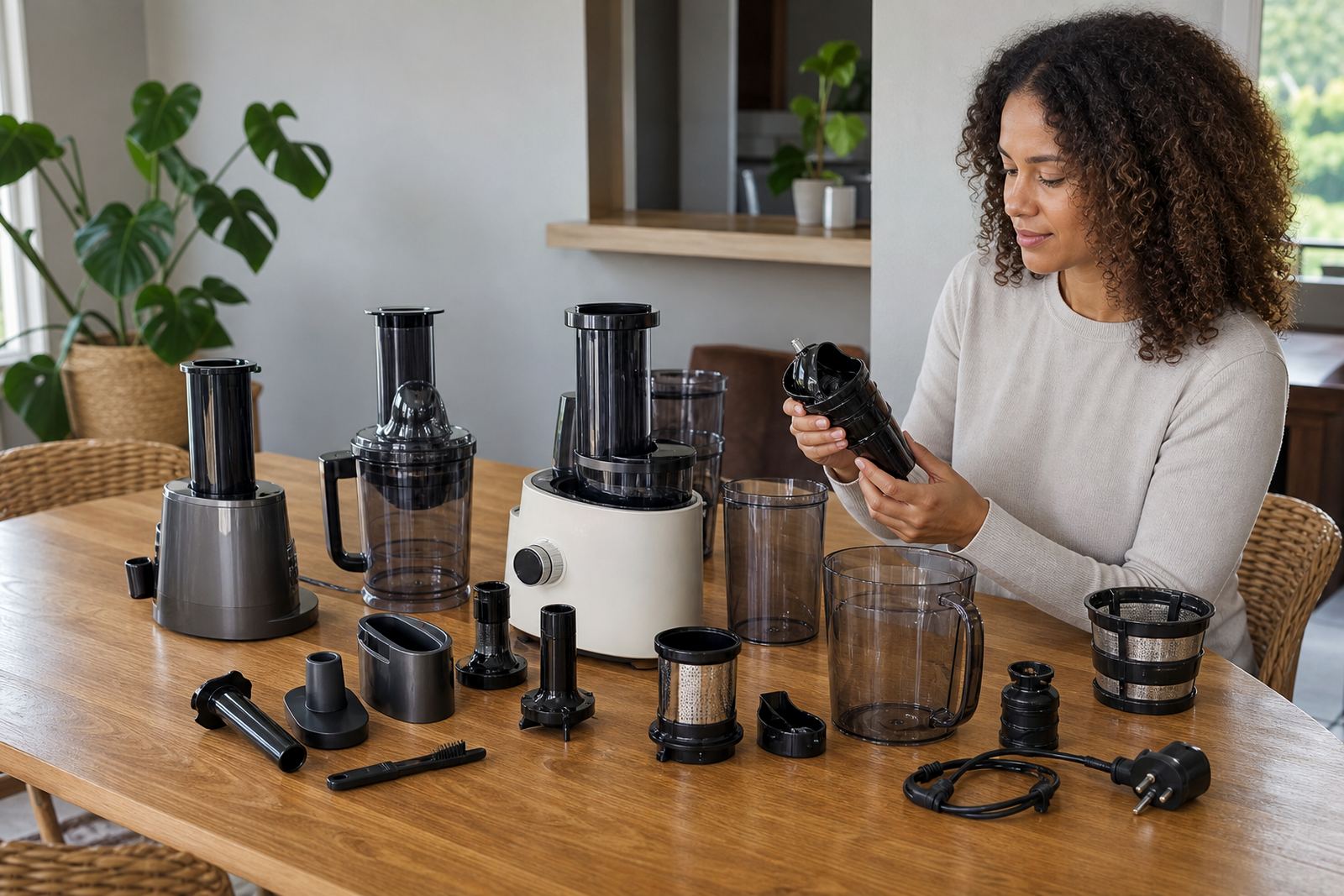
Our guidance covers the common screen styles found in home units:
- Fine mesh stainless steel screens
- Plastic framed strainers with perforated sections
- Metal baskets with micro openings
- Press filter plates and juice outlet screens
- Removable pulp guards and flow reducers
If the screen is warped, the feed may feel uneven or the juice may pass more slowly than usual. A careful wash, dry and refit often solves smaller issues, though a damaged screen may need replacement if the mesh has opened up or the frame no longer sits square.
The Cleaning Steps We Recommend After Use
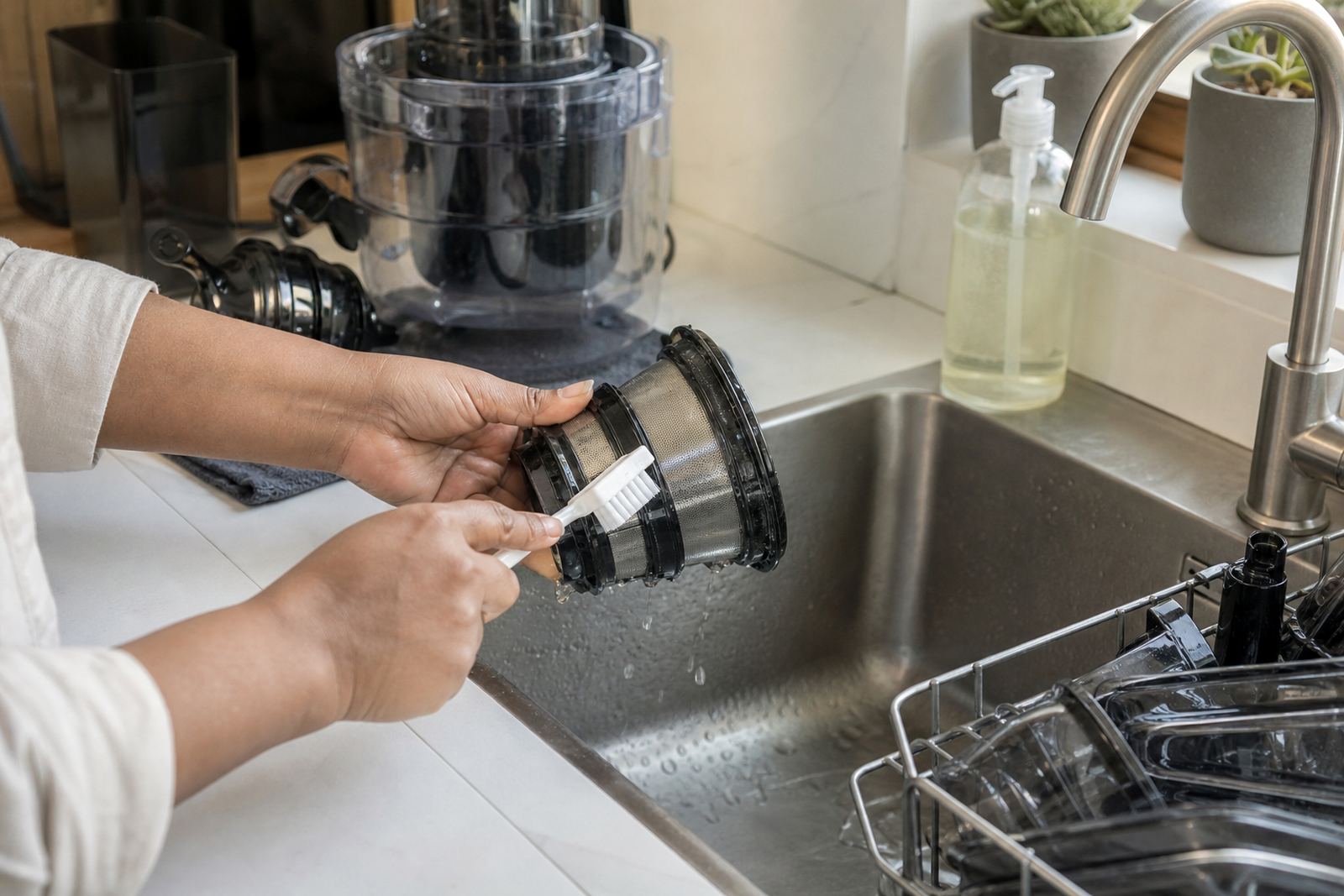
We show owners how to clean the screen without forcing debris deeper into the holes. The main rule is to rinse soon after juicing, then use a soft brush while the residue is still fresh. Dried pulp can become hard and clingy, which makes people scrub harder than they should. That is when mesh damage often starts.
- Switch off and unplug before touching any screen or basket
- Lift out the screen with both hands so the frame does not twist
- Rinse from the clean side to the dirty side where possible
- Use lukewarm water and a soft brush, not steel scourers
- Wash away pulp under the rim and around the locking points
- Dry fully before storage to reduce odour and staining
Food safety matters here as well. A screen that is left damp in a closed cupboard can hold moisture, which is not ideal in coastal areas like Durban or Paarden Eiland where humidity stays high. Clean, dry parts are easier to inspect and safer to store with the other kitchen attachments.
What Happens During a Screen Care Job
When a screen comes in for care, we first inspect the mesh, frame and seating points. We check for blocked openings, cracked plastic, rough edges and any signs that the screen is sitting off centre. We also look at the juice path around the screen because a blockage there can feel like a screen fault when the cause is actually a build up in the housing.
Our process usually follows this order:
- Visual inspection and fit check
- Safe removal of residue and fibre
- Cleaning advice based on the screen material
- Dry fit check and seating confirmation
- Optional replacement guidance if wear is already visible
We can also support owners who are unsure whether the screen should be brushed, soaked or replaced. The right method depends on the material and the type of residue, so we avoid blanket advice that can damage a part. A screen that is treated the wrong way can lose efficiency fast, especially on units used most days.
Turnaround, Workload and What You Can Expect
Turnaround depends on how heavy the residue is, whether the screen has to be fully checked, and whether other parts need attention at the same time. A light clean and handling check is usually quicker than a screen with compacted fibre in the corners or a mesh that has already been bent. For customers in Cape Town and nearby delivery areas, the process is usually straightforward. For Johannesburg, Durban, Pretoria and George, courier timing can add a day or two either way.
We give clear feedback on whether the screen is fit for continued use, needs a deeper clean, or should be replaced due to wear. If a unit has other issues like vibration, poor flow or leaks, we will say so upfront so the screen care does not get blamed for a separate fault. That saves time and avoids repeat handling.
Pricing Approach and Spare Part Notes
Screen care is priced according to the machine type, the condition of the screen and whether the work is only cleaning guidance or includes inspection and handling support. Simple jobs cost less than screens that need careful residue removal or parts matching. If replacement is required, we quote according to the screen style, size and fit, because some units use a one piece strainer while others use a basket, insert or filter plate.
We do not recommend parts that the machine does not need. If the screen can still be used safely, we will say so. If a replacement is the better choice, we explain the fit points so the new part sits correctly and does not rattle. That matters on fast centrifugal juicers where a poor fit can cause vibration, and on slow juicers where the screen must line up neatly with the auger and chamber.
- Inspection only when the screen just needs a check
- Cleaning guidance for routine household use
- Replacement advice when mesh wear is visible
- Combined pricing when a screen is handled with other service items
Aftercare for Clean Screens and Better Handling
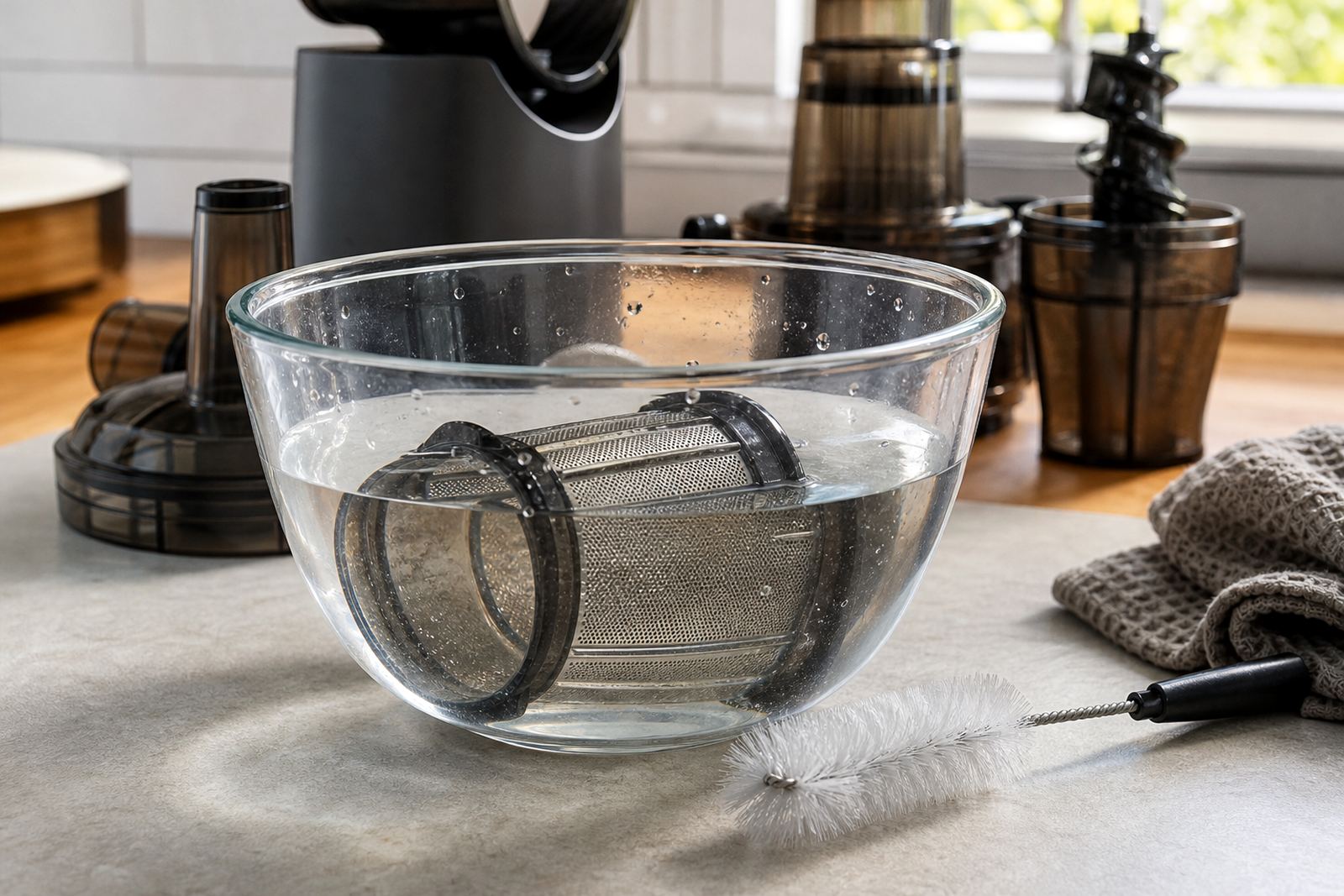
Once the screen is back in use, the best aftercare is a steady routine: rinse promptly, dry fully, store it where it will not be knocked, and avoid metal tools that can scratch the mesh. A soft nylon brush and a small rinse basin are usually enough for most home jobs. If the machine is used for fibrous produce, a slightly longer rinse is often needed so pulp does not set in the holes.
We also help with storage care, leak checks and seal questions if they affect the screen area. A screen can look dirty when the real issue is a worn seal or a split collar above it. If the unit starts making a new noise, vibrating more than usual or leaving wet pulp around the frame, it is worth checking the whole assembly rather than only the screen.
Clients can reach us through the enquiry form on our contact page for Screen Care support, delivery area checks and part guidance.
Key facts
| Service type | Screen Care for home juicers and cold presses |
|---|---|
| Applies to | Slow masticating juicers, centrifugal juicers and cold presses |
| Typical screen materials | Stainless steel mesh, plastic framed strainers, perforated baskets and press filter plates |
| Main checks | Blocked openings, mesh wear, frame shape, seating, residue build up and dry fit |
| Coverage area | Paarden Eiland, Cape Town and delivery to Johannesburg, Durban, Pretoria, George, Stellenbosch and Somerset West |
| Support methods | Inspection, cleaning guidance, replacement advice, aftercare notes and video support call |