
What a proper deep clean covers on your machine
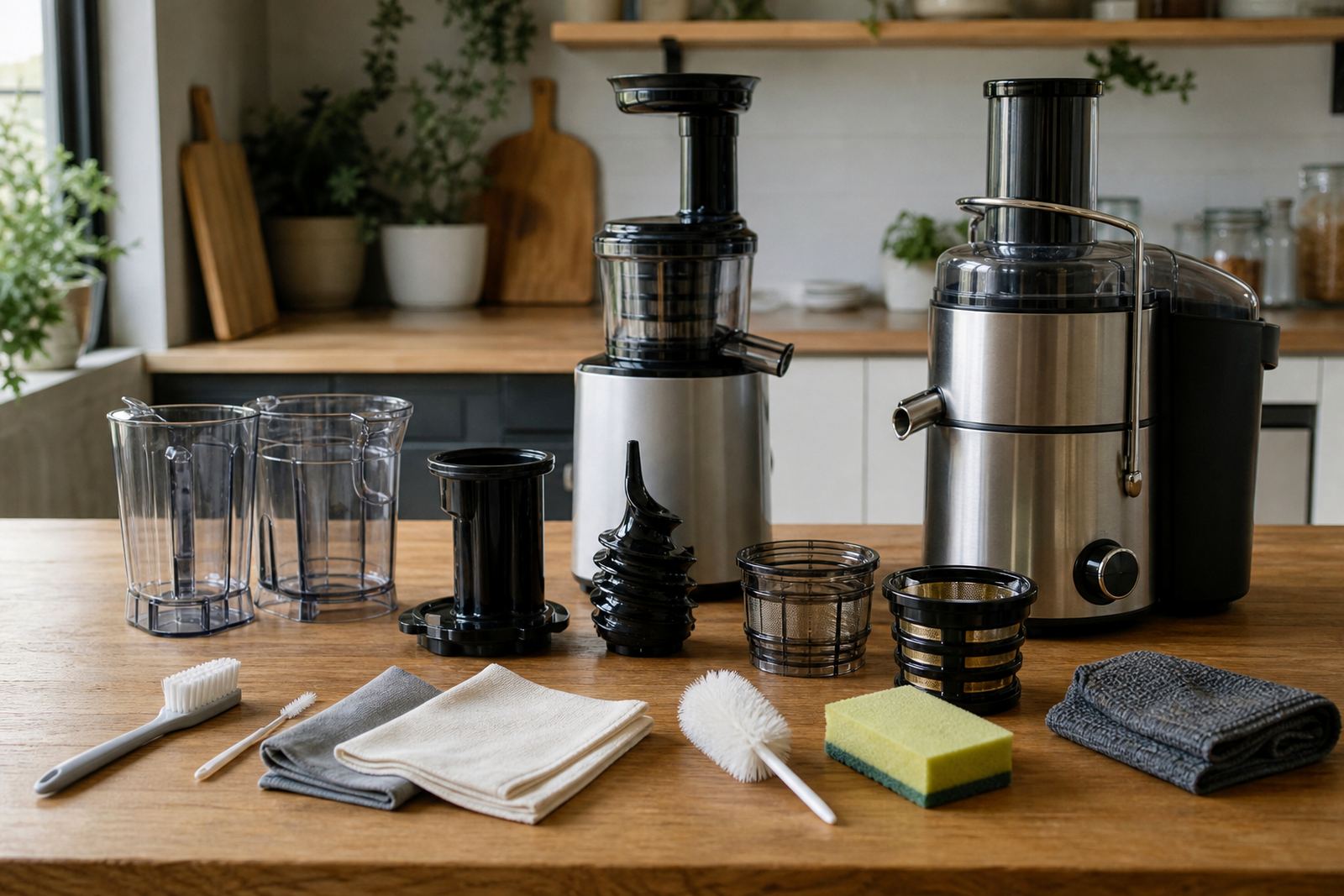
A proper deep clean goes beyond a quick rinse after juicing. It focuses on the parts that hold fibre, pulp and juice film, especially the strainer or screen, auger, feed chute, juice bowl, outlet parts, seals and any lids or caps that touch wet produce. With slow masticating machines and cold presses, the fine slots in the screen and the grooves around the auger can trap residue if they are left too long, while centrifugal juicers can build up a sticky layer around the basket and lid assembly.
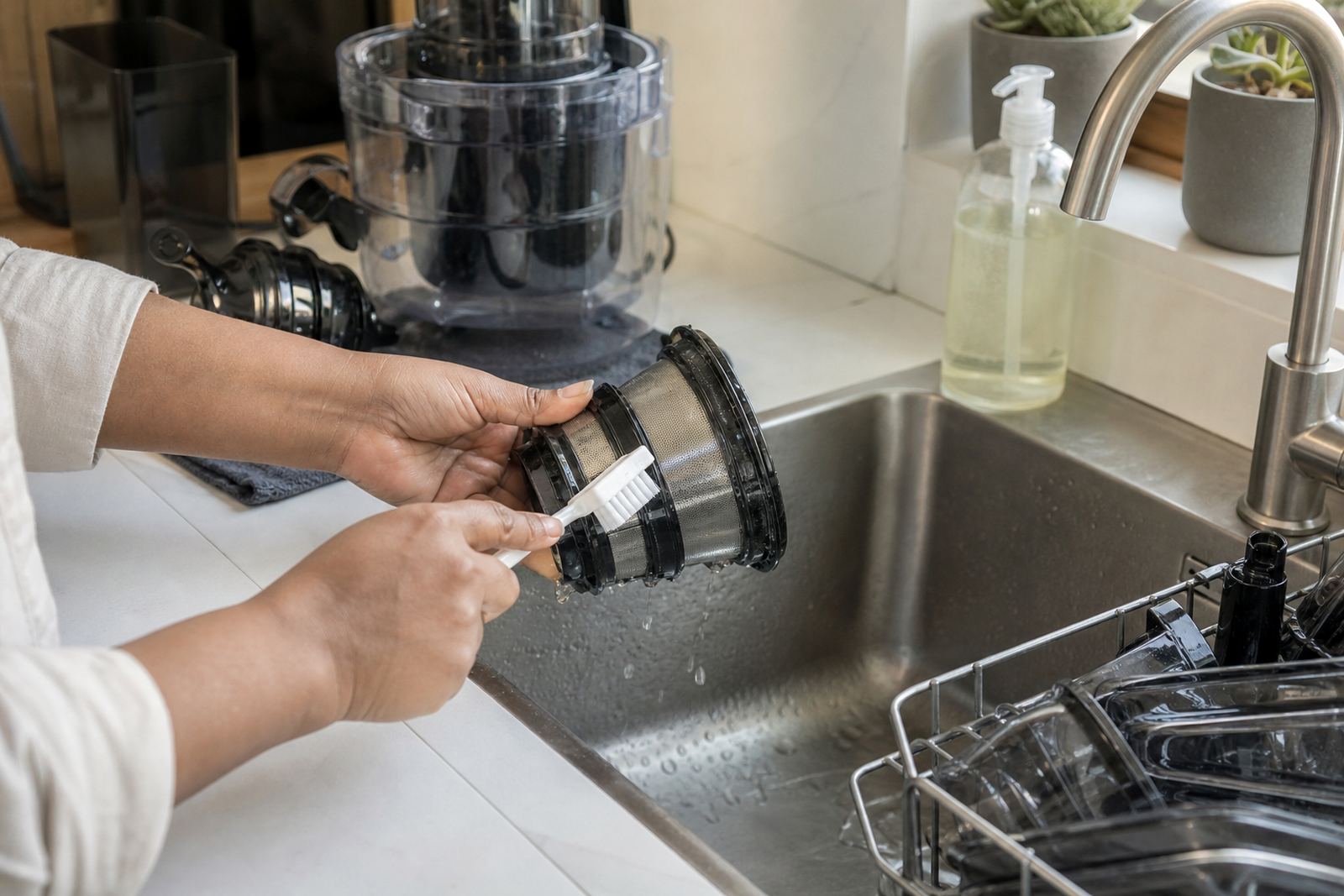
Our guidance is practical and specific to the way home juicers are put together. We show you how to break the unit down safely, which parts should be washed straight away, and which areas need a soft brush rather than scrubbing pads that can mark the surface.
- Strainers, screens and fine mesh parts
- Augers, pulp exits and juice outlets
- Lids, hoppers, seals and locking arms
- Contact surfaces that touch fruit and vegetables
- Drying points where moisture can sit overnight
How we handle the cleaning process step by step
We start with a visual check of the machine as it arrives or as you describe it in a video support call. The aim is to find dried pulp, discolouration, sticky residue, light odour, worn seals or build-up in the screen and outlet path. From there we guide you through safe stripping of the juicer into its working sections, with care taken not to force tight clips or twist parts that should lift out cleanly.
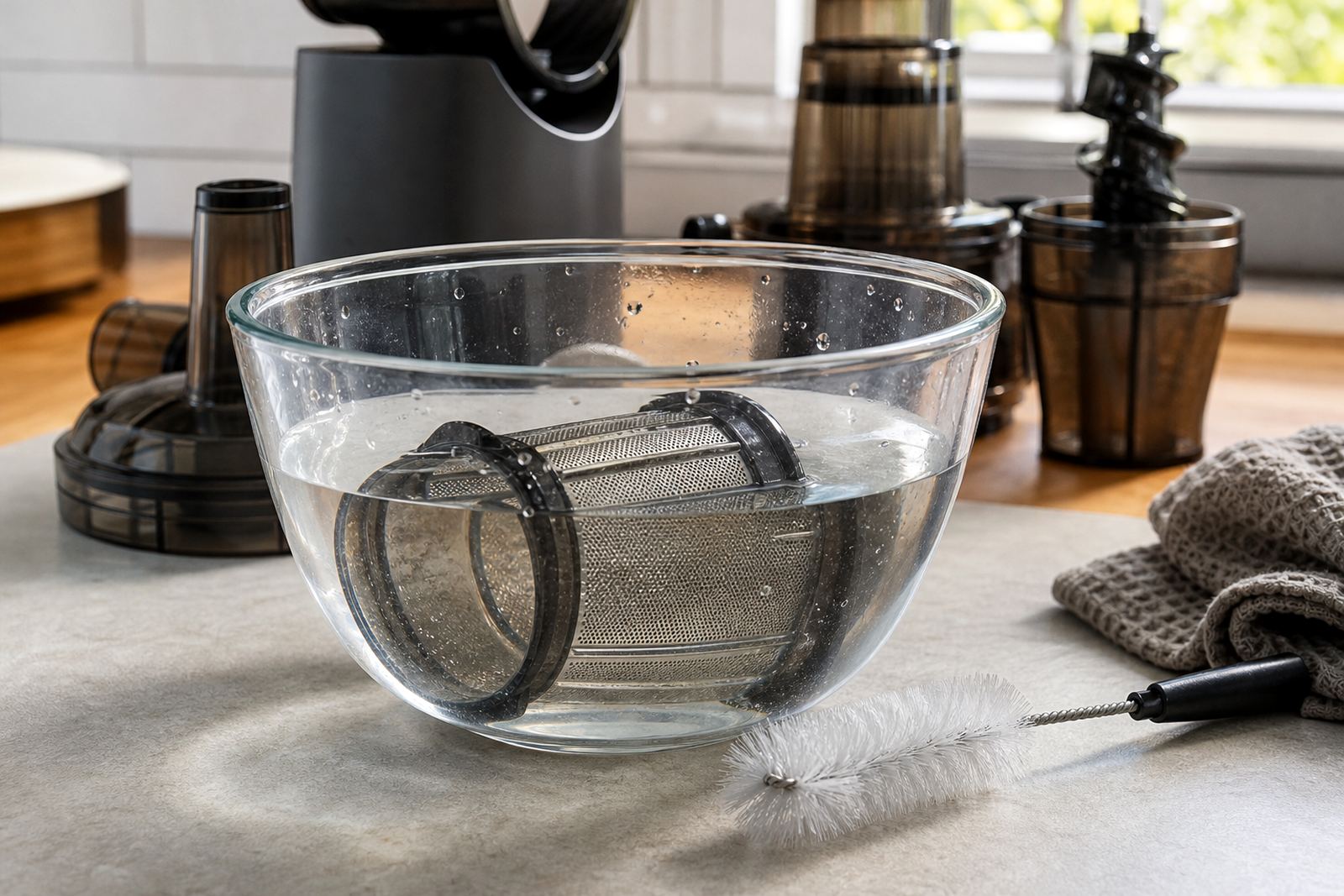
The process is kept orderly so you can follow it at home without guesswork. For food safety, we always focus on clean water, suitable brushes and thorough drying before reassembly. Where residue has hardened, we explain how to soak parts in warm water, what to avoid using on clear plastics, and how to dry every section fully so moisture does not sit in the seam lines. If a part shows cracks, clouding or a split seal, we point that out before you put the unit back into service.
- Initial check of residue, wear and visible damage
- Careful strip-down of removable parts
- Soak, brush and rinse steps for each section
- Drying and reassembly checks
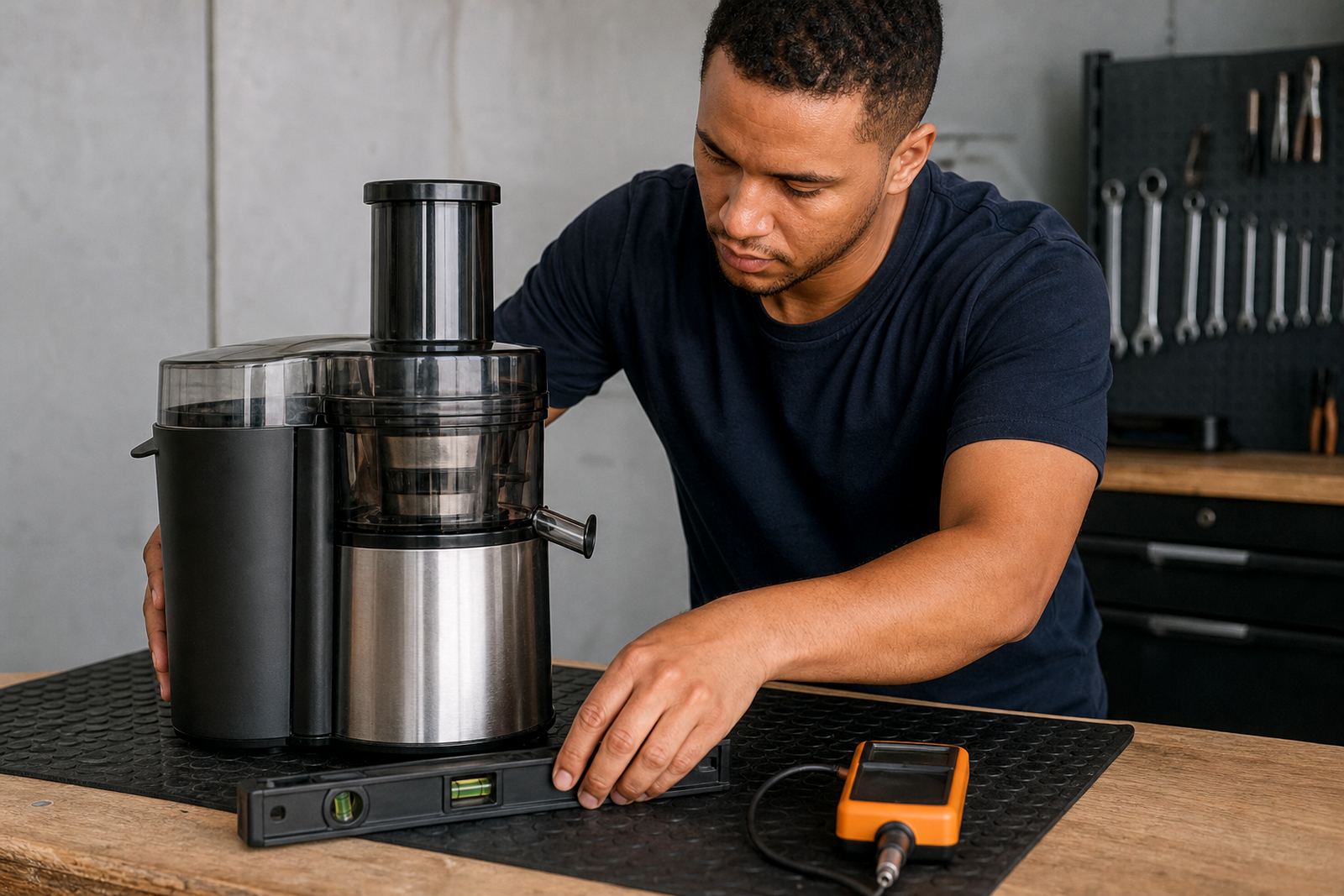
- Final run-through to confirm the fit and flow
Slow masticating, centrifugal and cold press differences
Different juicer types need different handling. Slow masticating juicers and cold presses use an auger or pressing mechanism that works at a slower speed, so the fine screen and the body of the auger are the main cleaning points. These machines usually hold on to fibrous pulp around the end cap, seal ring and outlet path, so a gentle brush and careful rinse matter more than force. Centrifugal juicers spin fast and tend to leave spray marks, pulp packing in the basket and a coating on the lid, so cleaning is quicker but needs attention around the mesh and the rim where pulp collects.
We explain which parts can be brushed, which parts should not be soaked for too long, and how to dry each component without leaving lint or water spots. This matters in coastal areas, where standing moisture can encourage odour or staining, and in busy homes where a machine may be packed away straight after use. The goal is a clean machine that looks right, fits back together properly and is ready for the next use without lingering residue.
- Slow masticating units: screen, auger and outlet path
- Centrifugal units: basket, lid rim and spray areas
- Cold presses: pressing chamber and juice channel
- Seal points and locking edges on all three types
What we can help with when the clean is not going well
Some machines do not clean up properly because of wear rather than bad habits. A split seal can trap pulp, a tired screen can hold residue in tiny openings, and a loose fitting may let juice seep into spaces you cannot reach with a brush. We help identify those issues during the deep clean guidance so you know whether the problem is just build-up or a part that needs attention.
We can talk you through safe cleaning of rubber seals, food contact surfaces and removable clips, then advise on whether the machine needs a deeper parts check. If there is leakage, unusual noise, vibration or a screen that seems blocked even after washing, we can move the conversation to our seal replacement or noise and vibration checks services.
- Sticky residue that keeps returning after washing
- Light leak points around seals or caps
- Odour from parts that did not dry fully
- Clouding, staining or fine mesh blockage
- Loose clips, worn gaskets or fitting issues
Turnaround, pricing and how the booking is handled
Deep clean guidance is priced by the work needed, the machine type and how much support is required. A quick online check with a few photos or a video call may be enough for light residue, while a more detailed case with build-up, stuck parts or worn seals takes longer. We quote before any work is confirmed, and the pricing approach stays clear so you know whether the task is basic guidance, a follow-up call or a fuller inspection of the unit.
Turnaround depends on the queue, your location and how much detail the machine needs. In most cases, we can set out the next step soon after the enquiry lands through the contact page form. If the issue is urgent for home use, we will tell you what can be done first and what can wait until the machine is fully dry or opened safely. No unnecessary extras are added, only the steps needed to clean the unit properly and keep food contact areas in good order.
- Quote based on machine type and cleaning complexity
- Support can be handled by message, photos or video call
- Clear guidance before any extra work is approved
- Delivery area support across South Africa from Cape Town to George
Aftercare that helps the machine stay cleaner for longer
After the deep clean, we explain how to dry the machine fully, store parts without trapping moisture and avoid reassembling the unit while any section is still damp. We also cover brush care, safe wiping of contact surfaces and how to check the screen, auger and seals before the next use. A machine that is dried properly and packed carefully is much easier to clean next time, and it is less likely to carry over odour or sticky film.
If you want extra help later, MiniPress can guide you on spare parts, seal replacement, screen care, storage care, cable and plug checks, and routine care planning. Our base is in Paarden Eiland, Cape Town, and the service team works with customers across South Africa, including Cape Town, Johannesburg, Durban, Pretoria, George, Stellenbosch and Somerset West. Clients reach us through the enquiry form on our contact page, and from there we can set out the next practical step.
- Dry all parts fully before storage
- Keep brushes clean and separate from general kitchen tools
- Check seals and mesh for early wear
- Store the machine out of damp cupboards where possible
Key facts
| Service name | Deep Clean Guidance |
|---|---|
| Machine types covered | Slow masticating juicers, centrifugal juicers and cold presses |
| Core focus | Strainers, augers and food contact surfaces |
| Support format | Photo review, message guidance or video support call |
| Base location | Paarden Eiland, Cape Town |
| Delivery areas | Cape Town, Johannesburg, Durban, Pretoria and George |