
What we check when a juicer starts talking back
Noise and vibration checks are for slow masticating juicers, centrifugal juicers and cold presses that are otherwise working but not sounding right. We look at the practical causes first: uneven placement on the counter, a loose feed chute collar, a basket or auger not seated properly, a worn rubber foot, or ingredients being pushed through faster than the machine can handle.
The aim is to separate normal working sound from a problem that needs correction. Some vibration is part of the process, especially on hard fruit, fibrous veg or when a centrifugal unit is running at high speed. But if the unit shifts on the counter, chatters, hums unevenly or produces a knocking sound, there is usually something to check before it becomes a bigger fault.
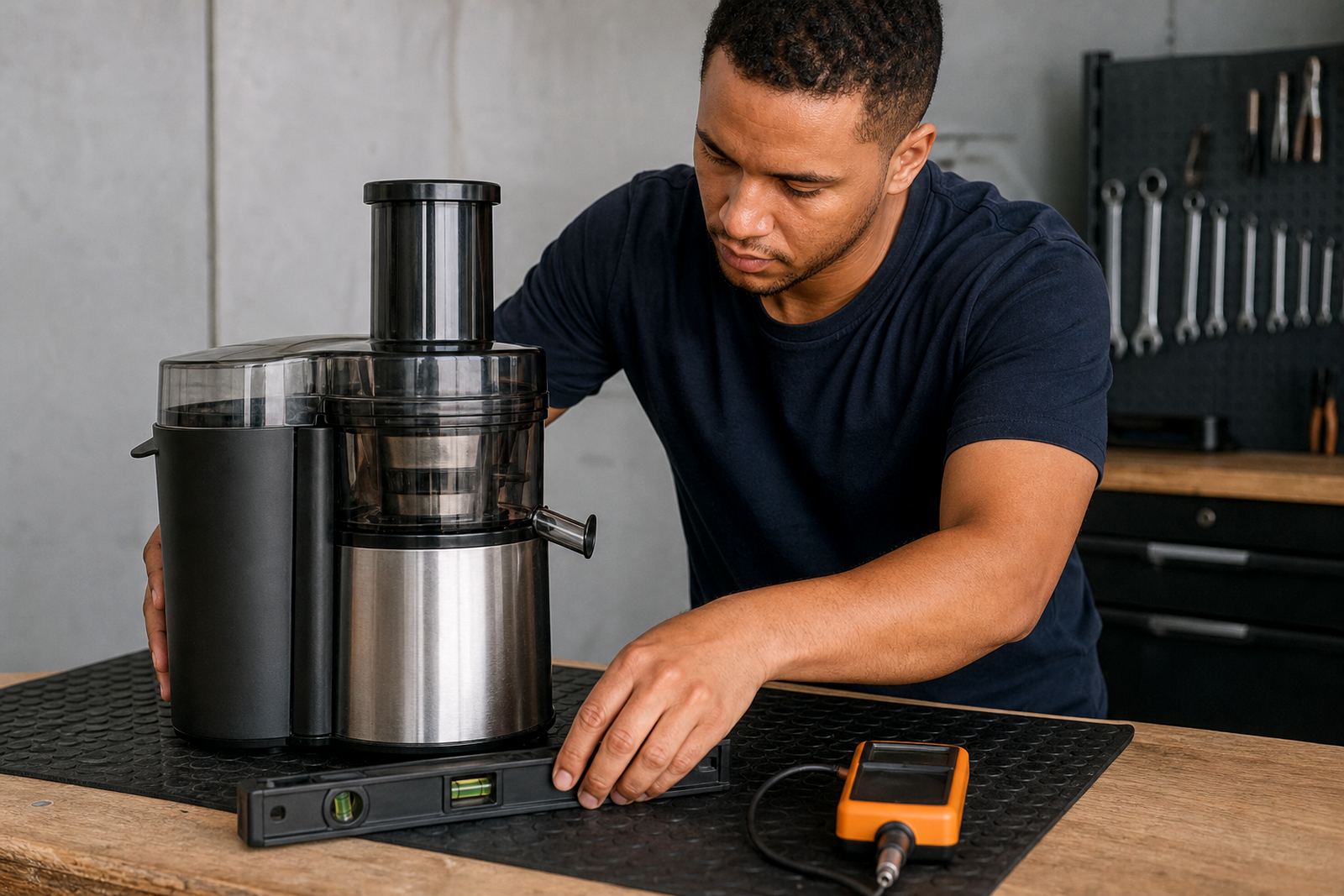
- Level placement on granite, tile, timber or laminate counters
- Assembly fit between bowl, auger, screen, lid and locking arms
- Load pattern for fruit, leafy produce and harder pieces
- Foot grip, mat contact and cabinet resonance
How the service is carried out at our Paarden Eiland base
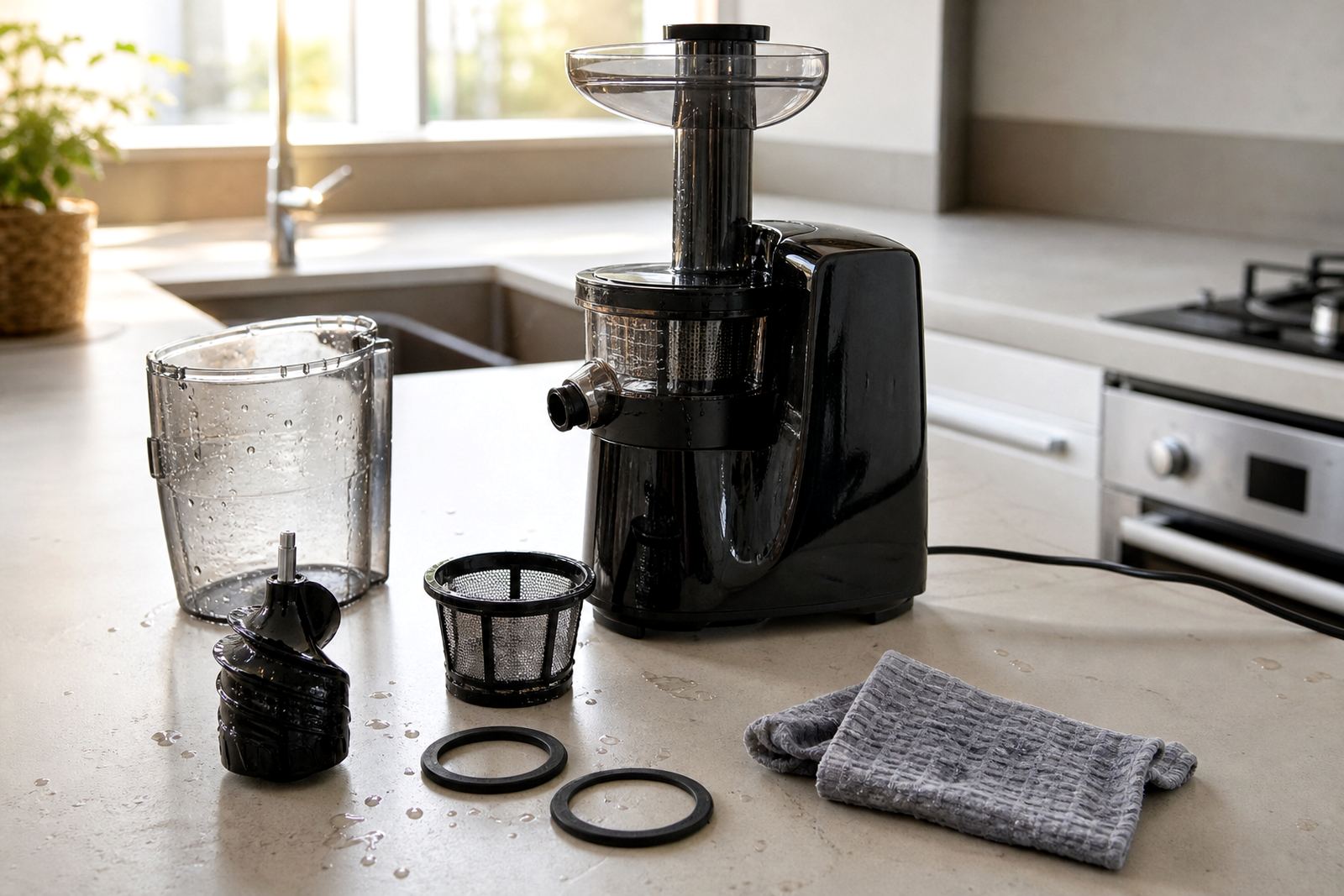
Most checks start with a short description of the sound, when it happens and whether it changes with load, speed or location in the kitchen. From there we inspect the machine on a clean surface and test each fit point by hand. That includes the base, drive coupling, screen, bowl, pusher, lid and any safety lock points. If the unit has a removable seal or gasket, that gets checked for twist, flattening or grit as well.
We also look at the surface it sits on. A solid counter can still amplify vibration if it is hollow underneath or if the feet are not all touching. In Cape Town apartments and smaller kitchens, that is common. Sometimes the fix is as basic as levelling the machine and changing the way produce is fed in, rather than replacing parts.
- Visual inspection of wear points and contact surfaces
- Dry test run to listen for chatter, scrape or imbalance
- Fit correction where parts are seated off-centre
- Guidance on loading smaller portions instead of overfilling
What causes the rattle in real kitchens
The usual causes are quite ordinary. A masticating unit can vibrate more if fibrous produce is fed too fast, or if soft ingredients are packed in behind harder ones. A centrifugal juicer can shake when the basket is not cleaned properly, when the lid is not locked evenly, or when the machine is sitting on a glossy counter without enough grip. Cold presses can show a low hum that turns into a louder buzz if the auger or pressing chamber is not seated firmly.
Food residue is another one. Dried pulp around the screen, housing or seals can throw off balance and add noise. We see this often after a busy weekend or after a machine has been rinsed but not fully brushed down. In coastal areas like Durban and George, moisture can also leave bits sticking where they should not, which changes how the parts sit together.
- Uneven loading of hard and soft produce
- Pulp build-up on screen, chamber or cutter area
- Loose latches, worn feet or lifted seals
- Surface resonance from light counters or shelves
Turnaround and pricing without hidden extras
For most checks, the turnaround is short because the work is diagnostic and practical rather than a full strip-down. If the issue is an adjustment, cleaning point or loading habit, it is usually handled in one visit or one support session. If a part needs replacement or further inspection, we explain the next step first so you know what is needed before anything is fitted.
Our pricing approach is based on the time needed, the machine type and whether the fault is a minor adjustment or a parts issue. A simple vibration check on a household juicer is priced differently from a deeper assessment on a higher-torque cold press unit. We keep the scope clear, and no one gets pushed into extra work that is not required.
- Quick diagnostic for standard home juicers
- Deeper inspection where the noise points to a fit or drive issue
- Part quote only if a worn item has to be replaced
- Clear feedback before any further work is approved
Safe handling, cleaner runs and better kitchen habits
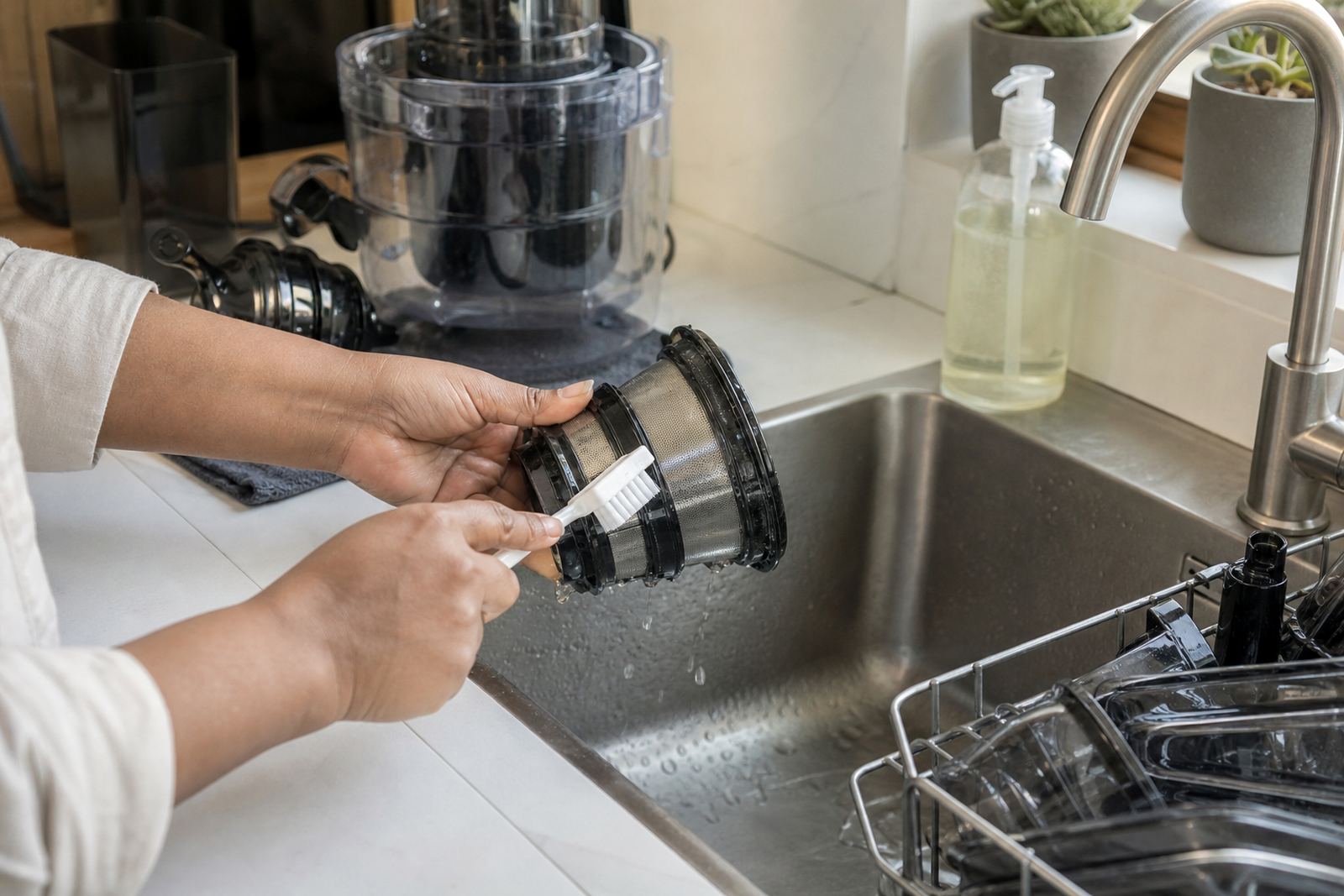
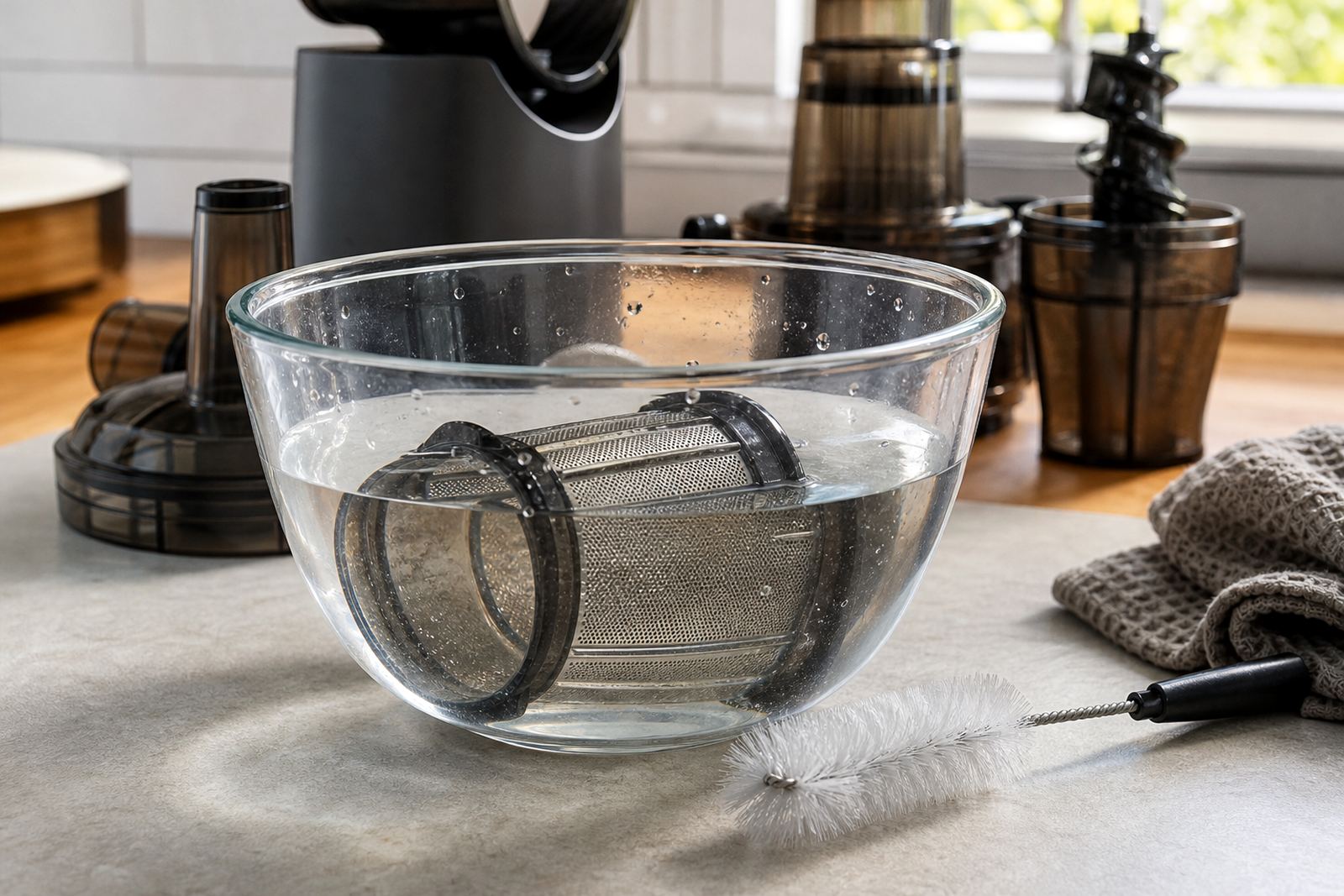
Noise and vibration often go together with food safety and cleaning practice, because the same residue that makes a machine unpleasant to use can also sit where it should not. We check that the feed chute, screen, bowl and press components are cleaned in a way that suits the machine type. A soft brush is often better than forcing a hard tool into mesh or narrow corners. For a home unit, clean parts should be fully dry before reassembly so seals seat properly and mould risk stays lower.
We also look at the way cables and plugs are routed. A unit that is tugged against the wall or stacked too close to the sink can pick up extra vibration or become awkward to use.
- Brush out pulp and fibre before it dries hard
- Check that bowls and lids are dry before reassembly
- Keep cords clear of water, heat and tight bends
- Store the machine on a stable shelf or counter edge with space around it
What to expect after the check is done
After the check, we explain what was found in plain language. If the machine was simply sitting unevenly or being loaded too aggressively, we will show the safer way to set it up and feed it. If we find signs of wear on a seal, screen, foot or coupling, we will point out the part and advise on the next step. You will not be left guessing why the sound changed or whether it is still safe to use.
The aftercare is practical. We give guidance on what sound is normal for your model, how to keep the base steady and how to avoid forcing ingredients through in a way that makes the unit dance across the counter. Where needed, we can also help with seal replacement, screen care, cable checks and routine care plans for homes in Cape Town, Johannesburg, Durban, Pretoria, George, Stellenbosch and Somerset West.
- Plain explanation of the noise source
- Use guidance for counter setup and ingredient loading
- Follow-up support if the same sound returns
- Linked help for related faults such as leaks or poor fit
Key facts
| Service name | Noise Vibration Checks |
|---|---|
| Appliance types | Slow masticating juicers, centrifugal juicers, cold presses |
| Base area | Paarden Eiland, Cape Town |
| Coverage | Online support and delivery across South Africa |
| Typical checks | Level placement, assembly fit, load pattern, feet and seals |
| Support options | First Time Setup, Deep Clean Guidance, Spare Parts Help, Seal Replacement, Screen Care, Cable Plug Checks, Video Support Call |