
Where the drip usually starts
Most leakage problems come from a small number of points: the feed chute area, the juice bowl join, the spout cap, the pulp outlet, or a seal that has dried out, twisted, or picked up grit. On home machines a tiny gap can let liquid escape once the unit is under load, especially when softer fruit, leafy produce or wetter cuts are processed in one batch.
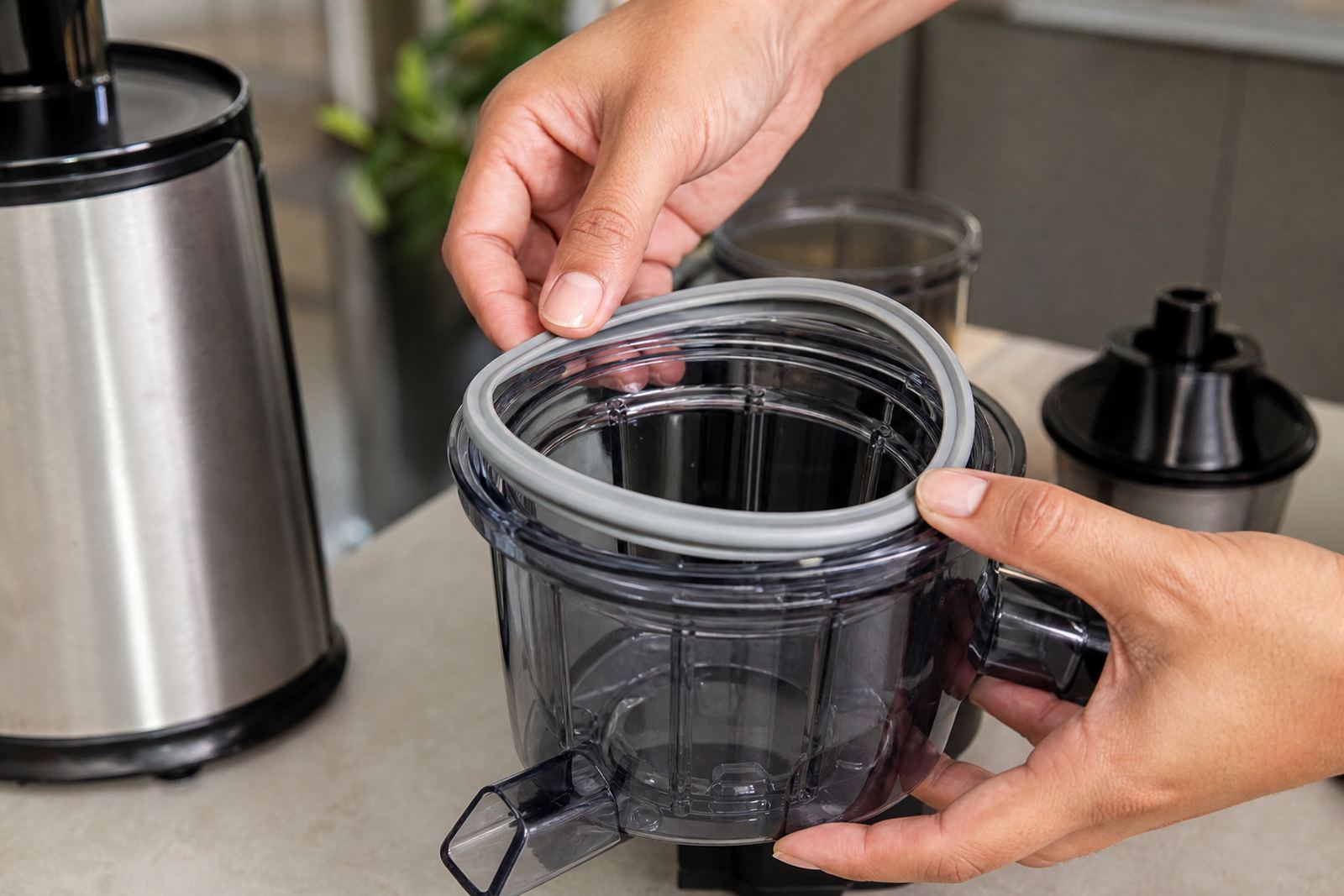
We inspect how the parts seat together, whether the locking arms or threaded sections are aligned properly, and if any residue is preventing a clean seal. For cold presses, the auger housing and juice cap get close attention. For centrifugal units, the basket, cover and outlet points are checked for splashes that look like a leak but may actually be an overrun from the spinning chamber.
- Seal wear, flattening or cracking
- Misaligned bowls, covers or locking tabs
- Overfilling above the marked working line
- Pulp build-up that holds parts open
- Hairline splits in a housing or jug
What the leak check covers in practice
The service is a hands-on inspection of the machine from the motor base to the juice outlet. We look at fitment, product residue, pressure points and wear marks, then test the machine with water or a safe dry run where needed. This helps show whether the leak is coming from a part that needs cleaning, reseating, replacement or further repair.
We also check the small details that are easy to miss at home: missing washers, stretched gaskets, loose caps, damaged threads, and juice paths that are blocked by fibre. If a unit has been washed in very hot water or left standing with citrus or salt residue, that can harden seals over time and make the next fill leak sooner.
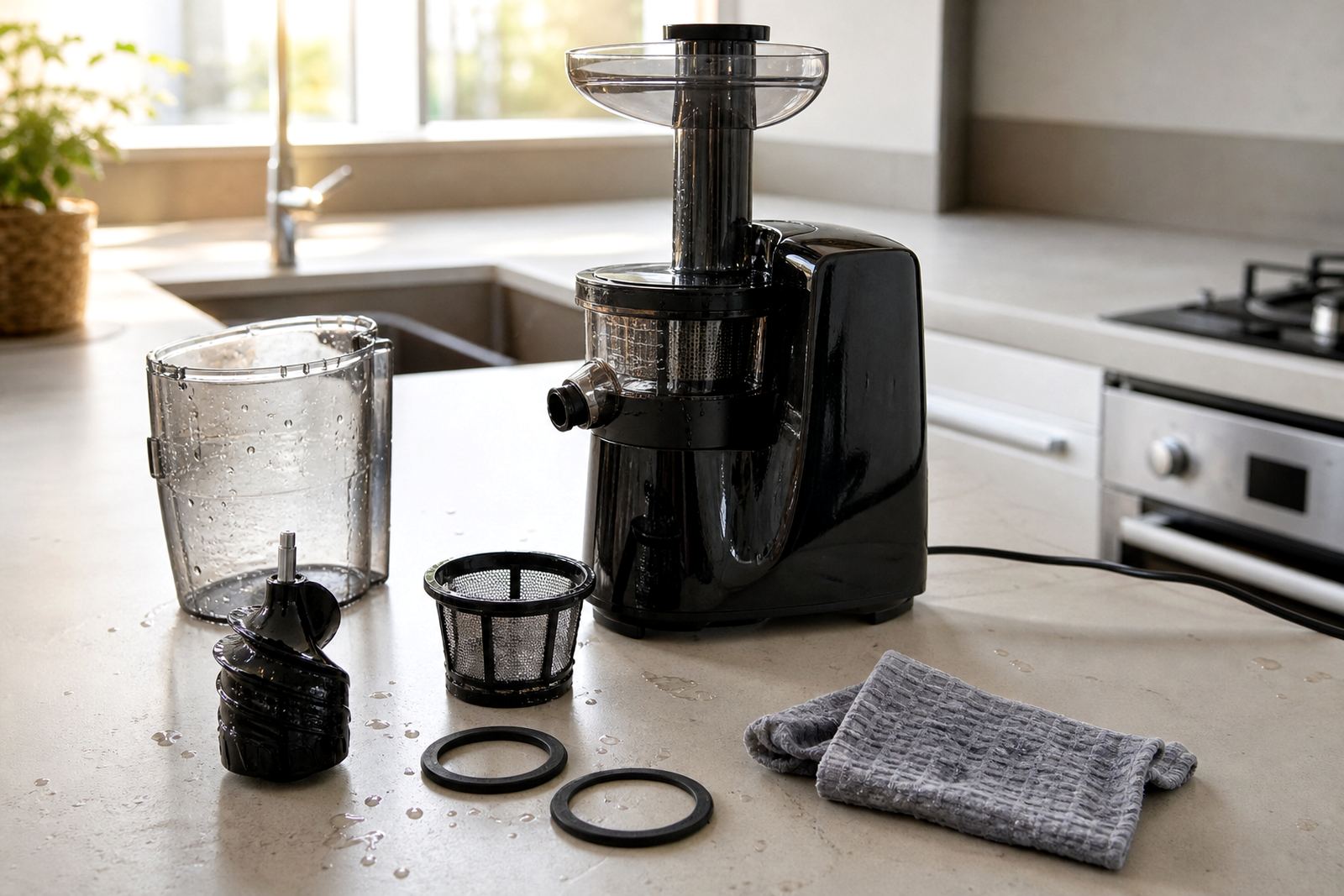
- Assembly check and part alignment
- Seal and gasket condition review
- Housing and chamber inspection
- Outlet and cap fit check
- Leak source notes for the next step
Slow masticating, centrifugal and cold press differences
Different juicers leak for different reasons. Slow masticating machines work at a lower speed and use pressure to crush and press produce. If the auger housing or seal ring is not seated correctly, liquid can track along the join and show up under the base. Centrifugal units spin fast, so splashing and froth can be mistaken for leakage when the basket cover, juice spout or pulp container is not correctly fitted.
Cold presses depend on controlled compression. If the feed chamber is overfilled, or if fibrous produce bridges across the chamber opening, juice can back up and escape around the lid. In coastal homes, humidity can also affect rubber parts over time, especially when the machine is stored away still damp after cleaning.
We explain the likely cause in clear terms and point to the exact part involved, so you know whether it is a cleaning issue, a seal issue, or a component that needs replacing.
How the fix is handled from Paarden Eiland
Our process is straightforward and suited to customers across Cape Town, Johannesburg, Durban, Pretoria, George, Stellenbosch and Somerset West. Once you send an enquiry through the contact page form, we review the symptoms and guide the next step. If the unit needs closer checking, we work through the leak points in a set order so nothing is missed.
- Step 1: Identify when the leak happens, during use, after use or while washing
- Step 2: Inspect seals, bowls, lids, caps and outlet parts
- Step 3: Test assembly and look for residue, wear or cracks
- Step 4: Confirm whether cleaning, seal replacement or another part is needed
- Step 5: Share the result and the practical follow-up
For many cases, the answer is a reseat, a proper clean, or a seal replacement. If a part is damaged or the housing is split, we will say so plainly and explain the next option.
Turnaround and pricing approach
Turnaround depends on the fault type and whether the issue is a straightforward fitment problem or a worn part that has to be sourced. Minor leak checks can often be assessed quickly once the details are clear, while deeper cases take longer if there is water ingress, thread damage or a hidden crack. We do not quote a fixed price without first understanding the machine type and the likely cause.
Pricing is handled according to the level of inspection needed, the parts involved and the amount of follow-up work. That keeps things fair for a small seal issue and for a more involved fault on a machine that has been overfilled or stored wet. If a spare part is needed, we explain the item and the reason for it before anything goes ahead.
There are no surprise add-ons. You get a clear view of the work required before the repair path is confirmed.
Aftercare that helps the leak stay gone
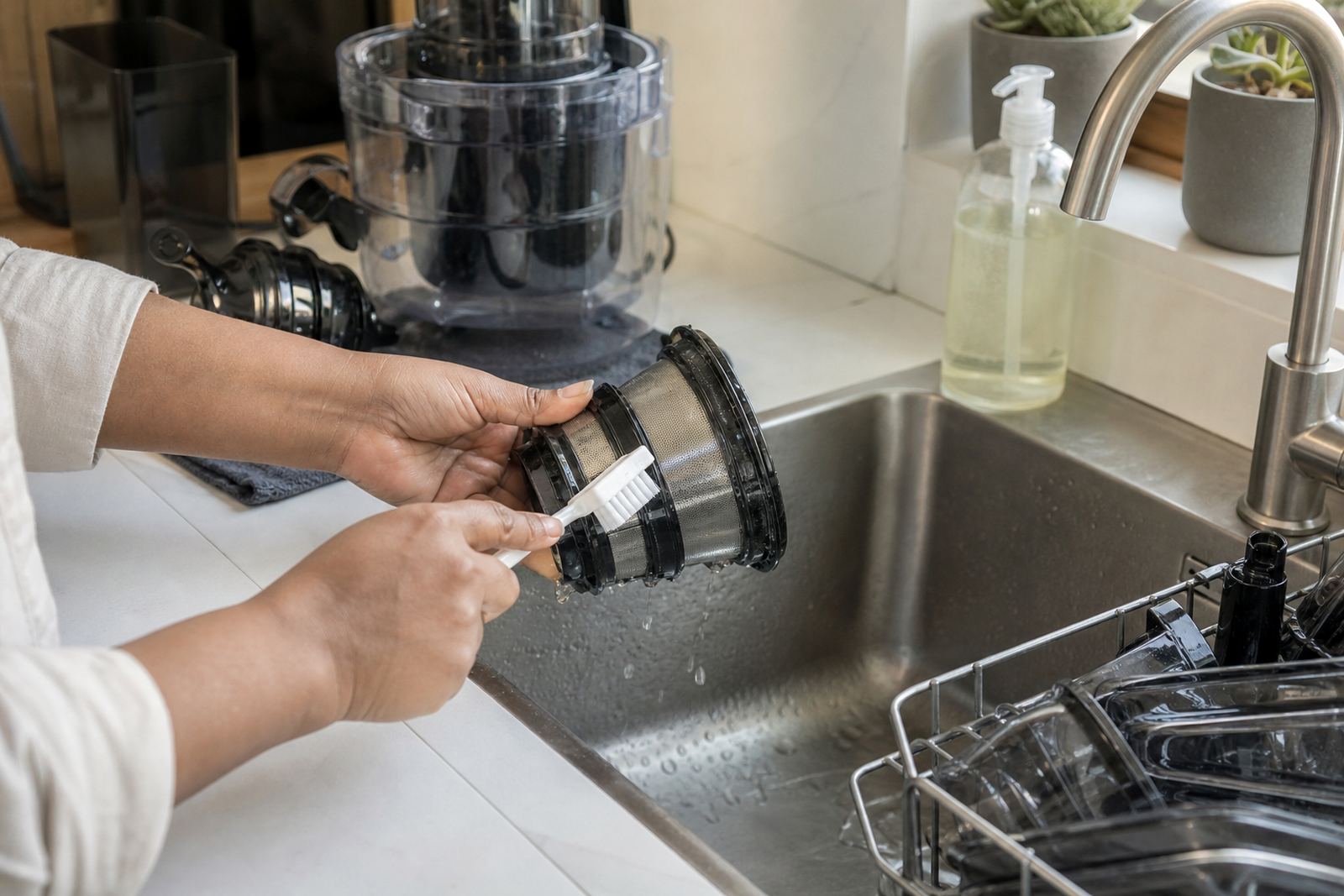
Once the fault is sorted, we give practical aftercare notes that fit normal kitchen use. The main points are drying the parts fully, checking that seals sit squarely, and avoiding overfilling the chamber or jug. If you clean with brushes or tools, use them gently around the seal grooves and fine mesh areas so the parts do not nick or deform.
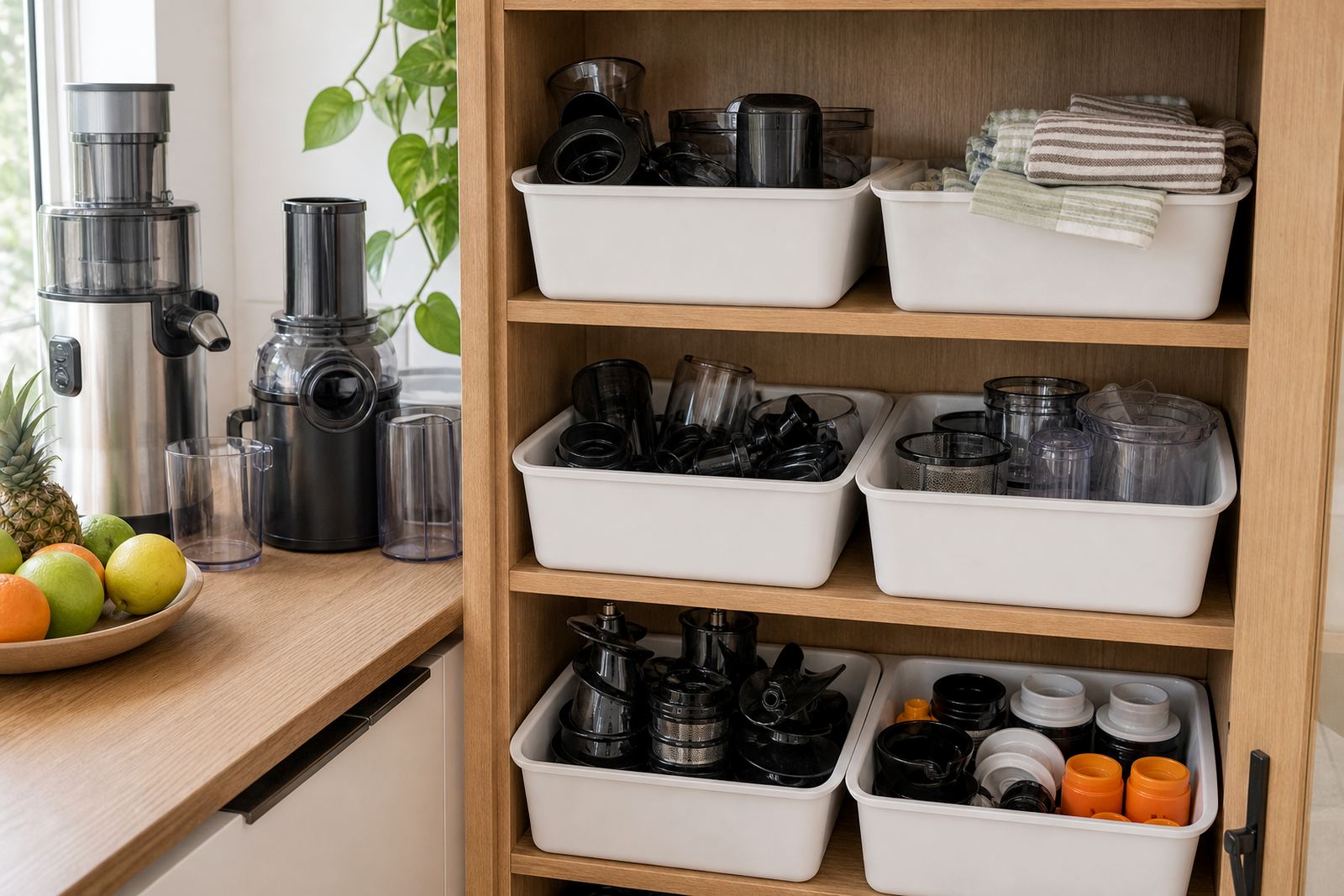
- Store the machine dry and open where possible
- Keep seal grooves free of pulp and sticky residue
- Check that lids and caps click or thread on properly
- Do not force worn parts into place
- Watch for new drips after heavy use or a full batch
For homes close to the coast, a little extra care with drying and storage helps reduce premature wear.
When to send the machine in for a closer look
If the leak returns after a proper clean and correct reassembly, or if you can see cracking, loose fitment or a worn seal, it is time for a more detailed check. A machine that leaves juice under the base, leaks into the motor area, or sprays from the outlet should not be used until the source is identified.
MiniPress supports home juicers and cold presses from Paarden Eiland with delivery across South Africa and service guidance that is direct, practical and specific to the fault. The goal is to stop the drip at the cause, not just wipe it away and hope it holds.
Key facts
| Service type | Leak troubleshooting for home juicers and cold presses |
|---|---|
| Appliance types | Slow masticating juicers, centrifugal juicers, cold presses |
| Common fault checks | Seal wear, assembly errors, overfilling, cracked housings, blocked outlets |
| Base area | Paarden Eiland, Cape Town |
| Coverage | Cape Town, Johannesburg, Durban, Pretoria, George, Stellenbosch, Somerset West |
| Support methods | Contact form enquiry, video support call, parts guidance, seal replacement advice |