
What we check before a seal goes back in
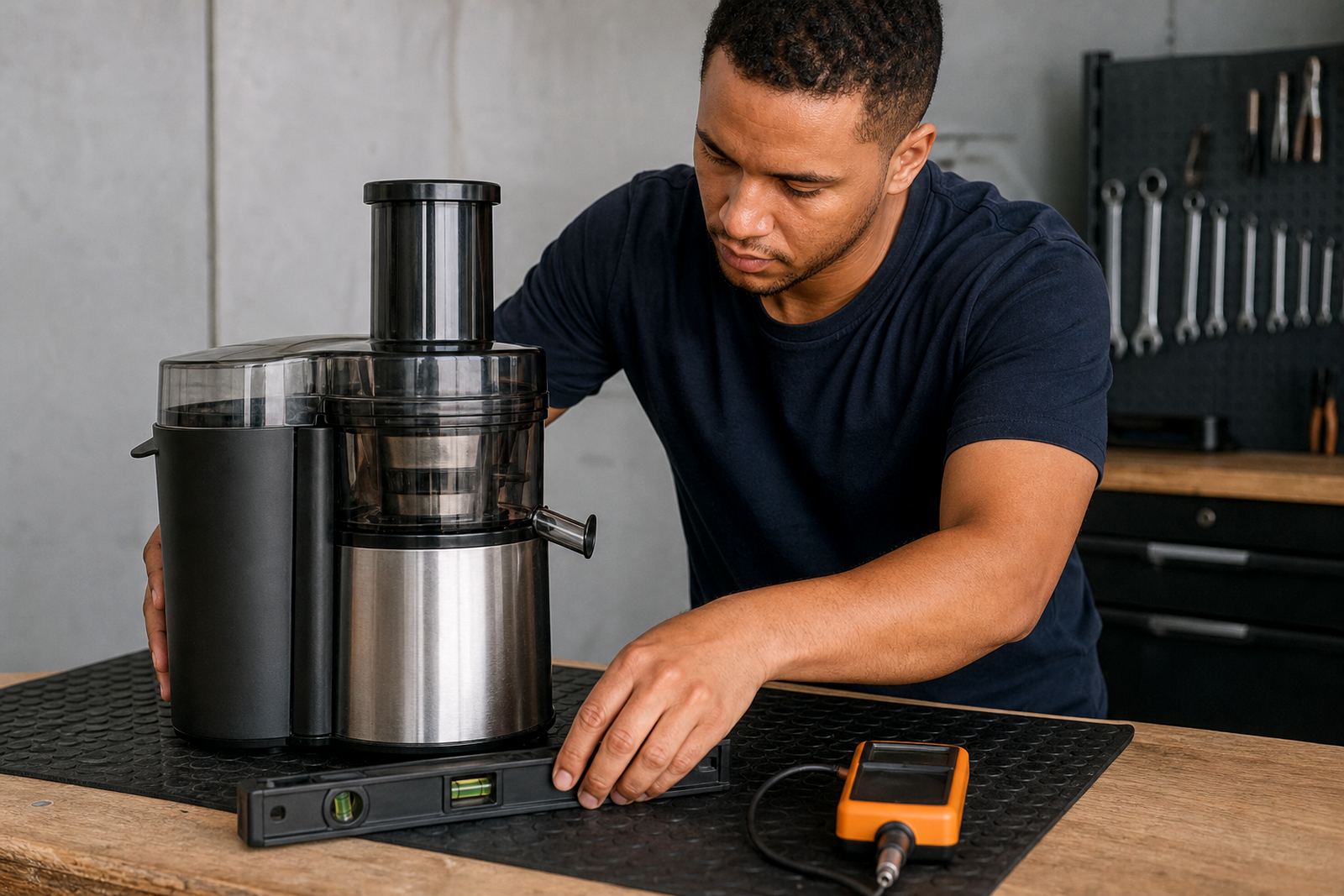
Seal replacement starts with a proper inspection, not just swapping rubber for rubber. We check the seal groove, the mating surface, the feed of the pulp outlet where relevant, and the cap or bowl edge that holds the seal in place. If a seal has stretched, flattened, split or hardened, it will often sit out of line and allow drips or vibration.
We also look at the surrounding parts for wear that can undo the repair. A seal that is fitted correctly but pressed against a rough edge or damaged housing may not hold under normal use. On units used often in Cape Town coastal air, Johannesburg dry conditions or Durban humidity, build-up and material ageing can appear differently, so the inspection matters.
- Seal condition and flexibility
- Groove cleanliness and correct seating depth
- Housing cracks, nicks or warped edges
- Signs of rubbing, leaks or loose assembly
How the replacement is handled at MiniPress
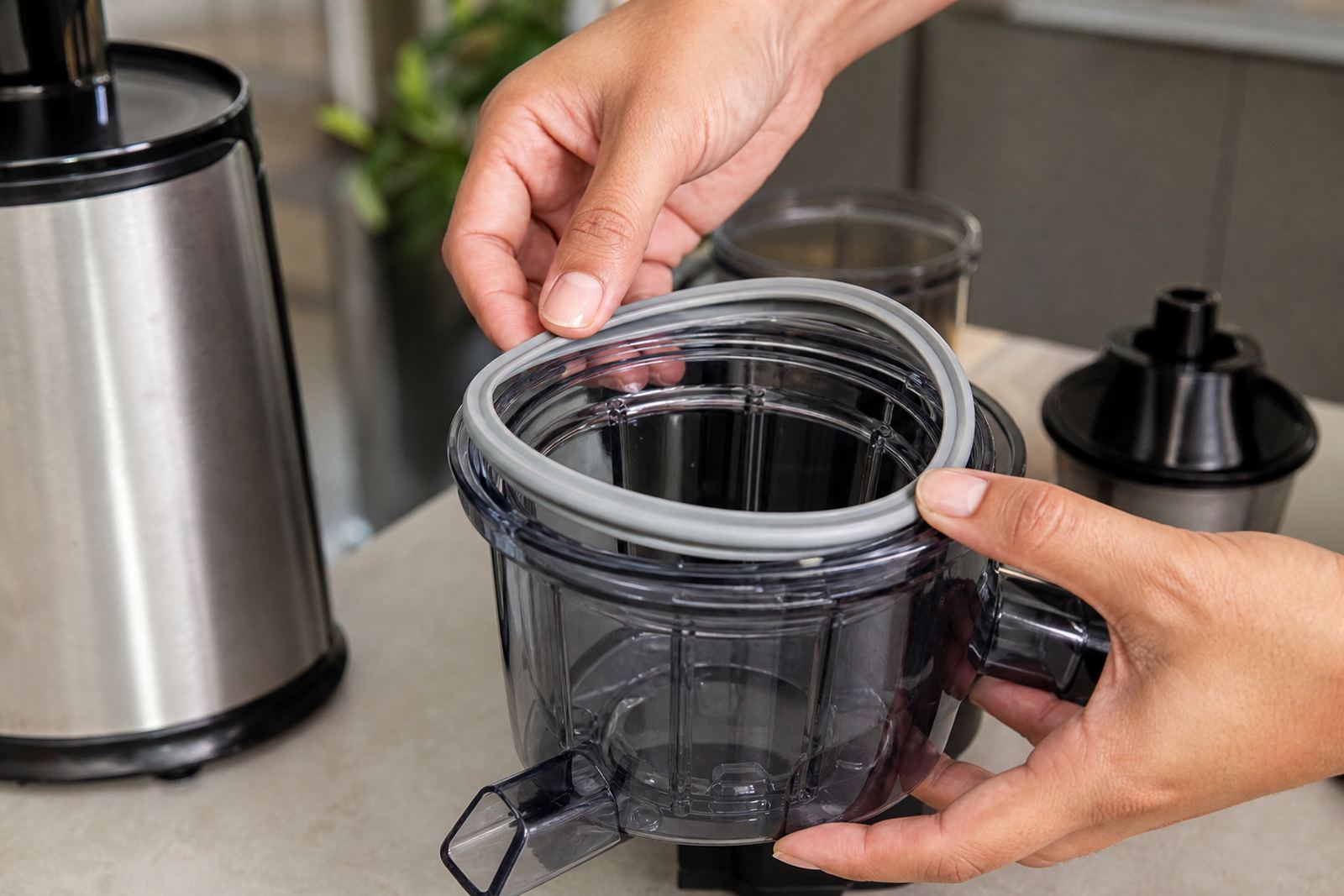
We guide you through removal, cleaning and refitting in a sensible order. The old seal is lifted without damaging the plastic or stainless steel around it, then the seating area is cleaned so pulp, oil and fine debris do not sit under the new seal. The replacement seal is then fitted by hand and checked for even contact all round.
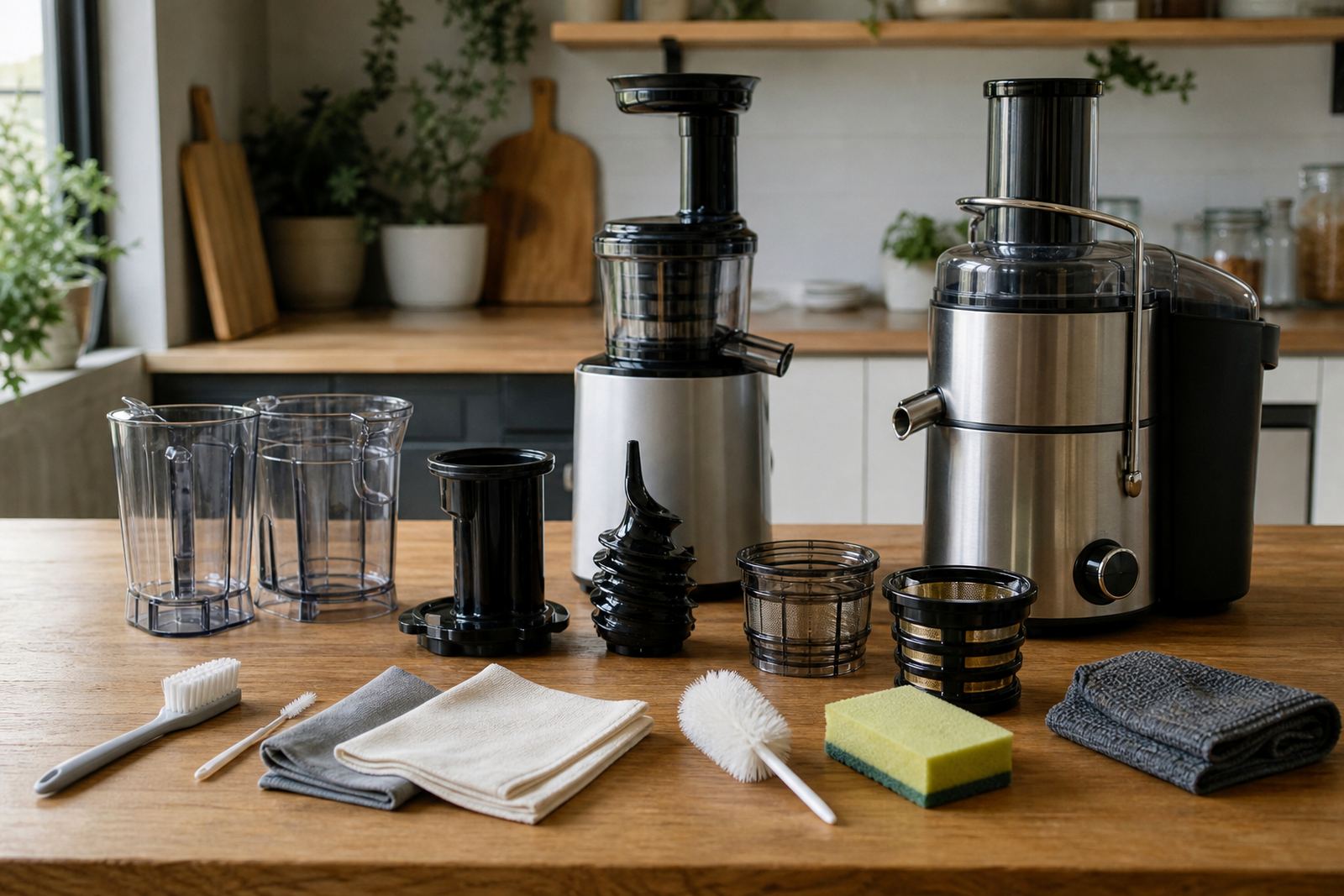
If the model uses a screen, auger, cutter basket or juice bowl that affects seal position, we explain how those parts should align before the machine is run again. For slow masticating units, the auger and bowl must turn freely without pinching the seal. For centrifugal units, the basket and lid must close without forcing the gasket out of place. On cold presses, we check the pressing chamber, outlet and any removable stopper or valve where sealing is critical.
- Removal of the worn seal
- Cleaning of the groove and nearby surfaces
- Correct orientation and seating of the new seal
- Functional check before first use
Juicer and cold press specifics that matter
Different machines need different seal care. A slow masticating juicer usually works at lower speed and has fewer moving parts, but the seal must still sit evenly or the pressure from the auger can create a leak path. Centrifugal juicers spin faster, so a slightly loose seal may show up as spray, wobble or liquid collecting where it should not. Cold presses often run with steady pressure and benefit from a seal that closes tightly without being over-compressed.
We match the guidance to the actual build of the machine, not a guess. That includes checking whether the unit uses a single lip seal, a ring gasket or a shaped silicone part. We also confirm that the replacement piece is clean, food-contact safe and sized to the correct diameter and thickness. If a seal is too soft, too thin or too large, it may appear fitted but fail once the machine is in use.
- Seal diameter and profile matched to the unit
- Food-contact safe material checked before fitting
- Pressure points reviewed for slow press and high-speed models
- Fit verified with the machine assembled
Turnaround that fits an online South African delivery rhythm
Because MiniPress supplies across Cape Town, Johannesburg, Durban, Pretoria and George, seal replacement guidance is handled with dispatch in mind. If a client is collecting from Paarden Eiland or needs help after delivery, we first confirm the exact model and the part shape. That reduces back-and-forth and helps avoid the wrong seal arriving in a sealed packet that cannot be used.
Turnaround depends on the machine type, whether the seal is already on hand, and whether the issue is only the seal or part of a larger fit problem. Straightforward cases are handled quickly, while units with stubborn residue, warped grooves or damaged housing take longer because the seating needs to be corrected first. Rushing that part usually causes repeat leaks, so the process is kept careful rather than hurried.
Pricing approach without guesswork
Seal replacement work is quoted according to the model, the part required and the amount of checking involved. A simple seal fit is priced differently from a unit that needs extra cleaning, alignment guidance or troubleshooting around the lid, outlet or screen. If a machine needs additional parts after inspection, that is handled separately and explained before anything is done.
MiniPress keeps the pricing approach practical: you pay for the work that is needed, not a one-size-fits-all job. This matters where the cause may be something small, like a twisted ring, or more involved, like a seal seat that no longer holds properly. We do not add unnecessary extras, and if a seal cannot be fitted safely we say so upfront.
- Quoted by model and condition
- Separate pricing for extra troubleshooting
- Parts confirmed before fitting where possible
- No hidden add-ons for basic seal checks
Aftercare once the new seal is in place
After fitting, we explain how to inspect the seal before the first run and what to look for during the first few uses. That includes checking for uneven edges, liquid seepage, lid movement and any change in sound. A seal should not be forced in or left twisted, because that can shorten its useful life and make cleaning harder.
We also cover safe cleaning and storage. Food residue should be washed out soon after use, then the parts dried fully before storage. In coastal areas such as Paarden Eiland or Stellenbosch, trapped moisture can encourage odour and surface wear, while in dusty inland areas fine particles can sit in grooves and affect seating. If you are unsure whether the seal is the issue or the housing is at fault, we can step through the check again with video support or a follow-up call.
- First-use inspection for seepage and alignment
- Cleaning guidance for seal grooves and lids
- Dry storage advice for humid and dusty conditions
- Follow-up support if the fit does not hold
Key facts
| Service | Seal Replacement |
|---|---|
| Products covered | Slow masticating juicers, centrifugal juicers and cold presses |
| Base | Paarden Eiland, Cape Town |
| Delivery areas | Cape Town, Johannesburg, Durban, Pretoria, George, Stellenbosch and Somerset West |
| Typical checks | Seal fit, groove condition, seating depth, leaks, vibration and housing wear |
| Support method | In-person guidance, video support call and parts-based troubleshooting |