A slim juicer for the corner of the counter
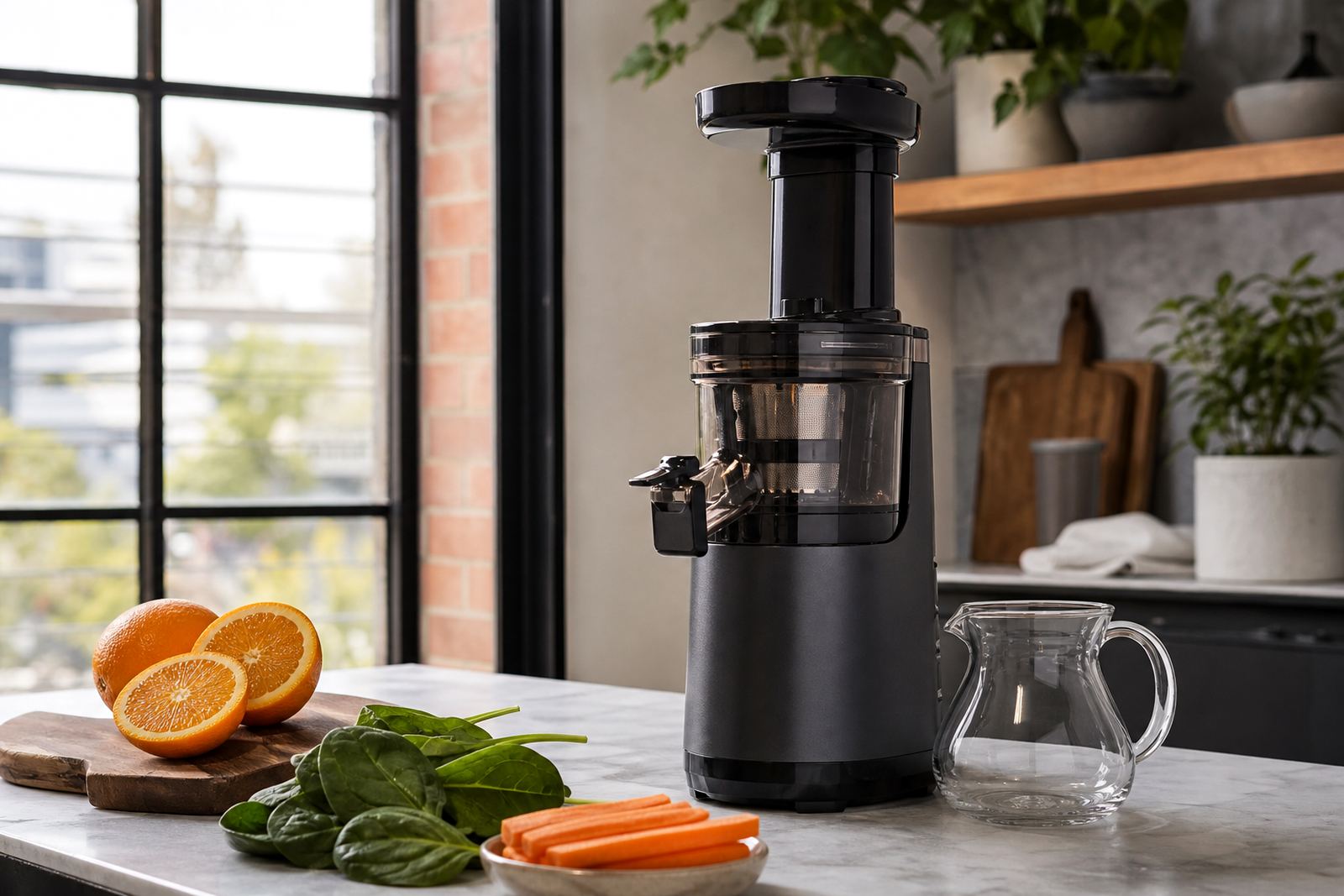
This compact slow juicer is a masticating model, which means it works with a turning auger that crushes and presses fruit and vegetables through a screen rather than spinning them fast. For many households, that slower method is chosen for better control over texture, less froth in the jug and a cleaner pulp exit. It is a good fit for a small flat in Sea Point, a family kitchen in Pretoria East, or a holiday home in George where storage space is tight.
The housing is usually narrower than a standard centrifugal juicer, so it sits neatly beside a kettle or toaster without taking over the whole counter. It is suited to regular home batches of citrus, apples, pears, celery, carrots, beetroot and leafy greens. Because the feed chute is more compact, ingredients are generally prepared in smaller pieces, which helps keep the feed even and the motor under steadier load.
MiniPress supplies and supports compact slow juicers for delivery to Cape Town, Johannesburg, Durban, Pretoria, George, Stellenbosch and Somerset West.The team can also guide you on first time setup so the seals, pulp outlet and lid lock are fitted correctly from the start.
When a slow press makes more sense than a fast spinner
A centrifugal juicer uses a fast spinning basket to fling juice away from the pulp. That can be useful for quick batches, especially when speed matters more than yield. A slow juicer works differently. It compresses produce at a lower speed, which is often preferred for softer fruit, fibrous greens and regular home juicing where the user wants more control over the feed and less splatter on the splash guard.
For compact kitchens, the slow juicer format usually brings a few practical advantages:
- lower splash around the feed area and jug
- more even processing of leafy produce and soft fruit
- smaller footprint on narrow counters
- separate pulp outlet for tidier use
- simpler handling when the machine is moved in and out of a cupboard
That said, it still needs proper prep. Hard roots should be trimmed and cut to size, pips should be removed where needed, and very tough fibre may need to be fed in small portions. A compact model is a practical choice when you want manageable daily use, not a bulky machine with a large feed throat and extra parts to store.
Sizes, parts and what usually comes with it
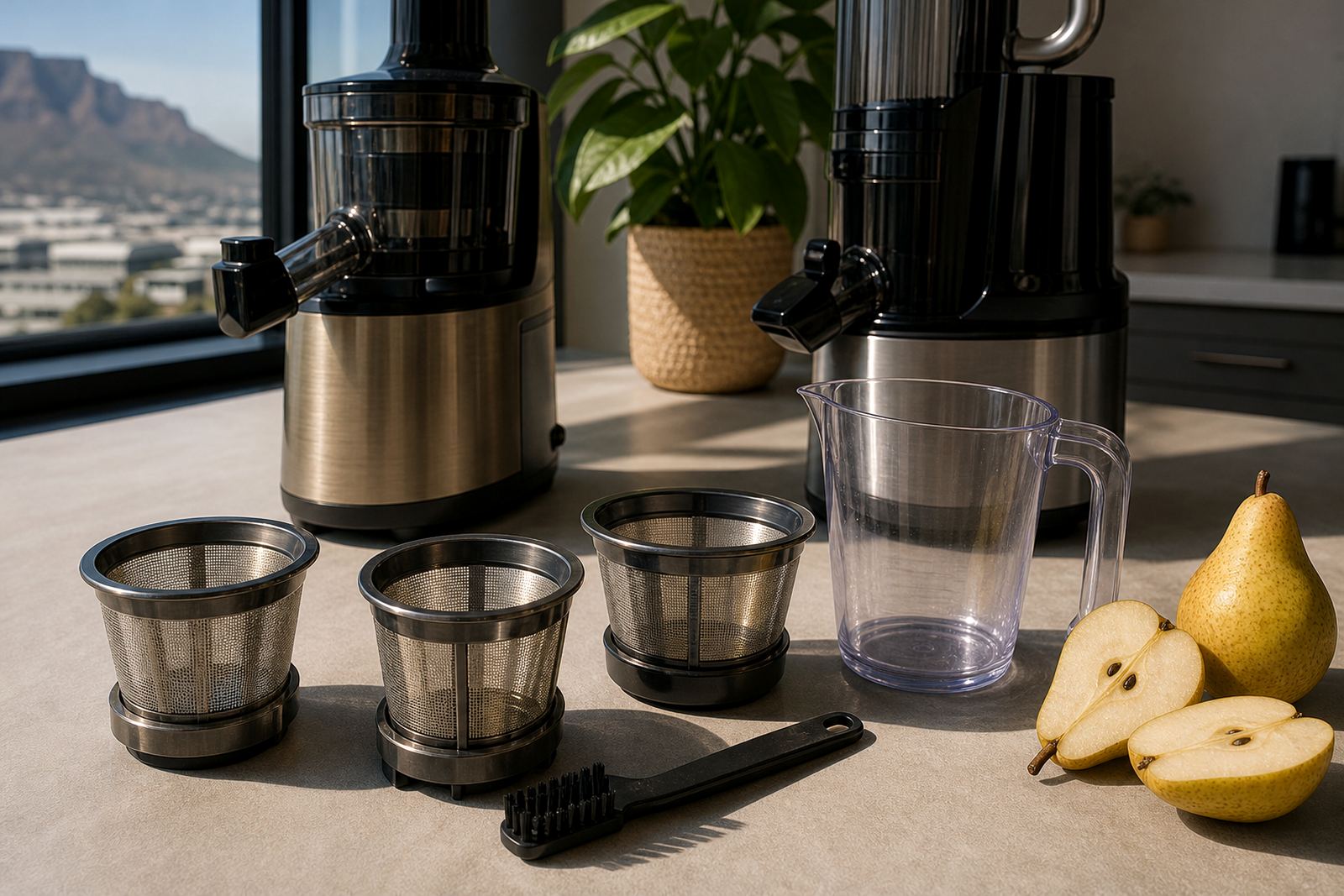
MiniPress compact slow juicers are typically supplied as a countertop unit with a motor base, feed housing, auger, strainer screen, juice bowl, pulp outlet, pusher, and collection containers. Some models include separate fine and coarse screens, which can change the texture of the juice and the amount of pulp that passes through. Where a model includes a reverse function, it helps release stuck pieces of produce during use.
Common size notes to confirm before ordering include the body width, overall height with the chute fitted, and the space needed to open the lid for cleaning. In small kitchens, those few centimetres matter, especially when the machine must stand under wall cupboards or next to a microwave. Check the weight too if the unit will be lifted in and out of a pantry after use. A compact juicer is often easier to store, but it still needs enough clearance for the container and brush set.
- motor base footprint for the counter
- feed chute opening and lid height
- juice container and pulp container capacity
- screen type, fine or standard
- auger material and chamber size
- cord length and plug position
Fitting, power checks and daily kitchen placement
This product uses mains power, so the plug point and cable route need to be checked before installation. In older houses around Woodstock or Parktown North, and in flats with limited counter access, it helps to know whether the cord reaches without crossing a sink or stove. If the unit will sit near a window or coastal kitchen wall in Durban or Blouberg, it should be kept away from direct spray, damp cloth storage and salt air build-up on the plug pins.
Keep the base on a level surface and make sure the rubber feet grip properly, so the juicer does not creep across polished stone or laminate tops. If a client wants help with first-time setup, seal replacement or noise and vibration checks, the support team can talk through the practical points step by step, including whether the screen sits squarely and the lid lock is fully engaged.
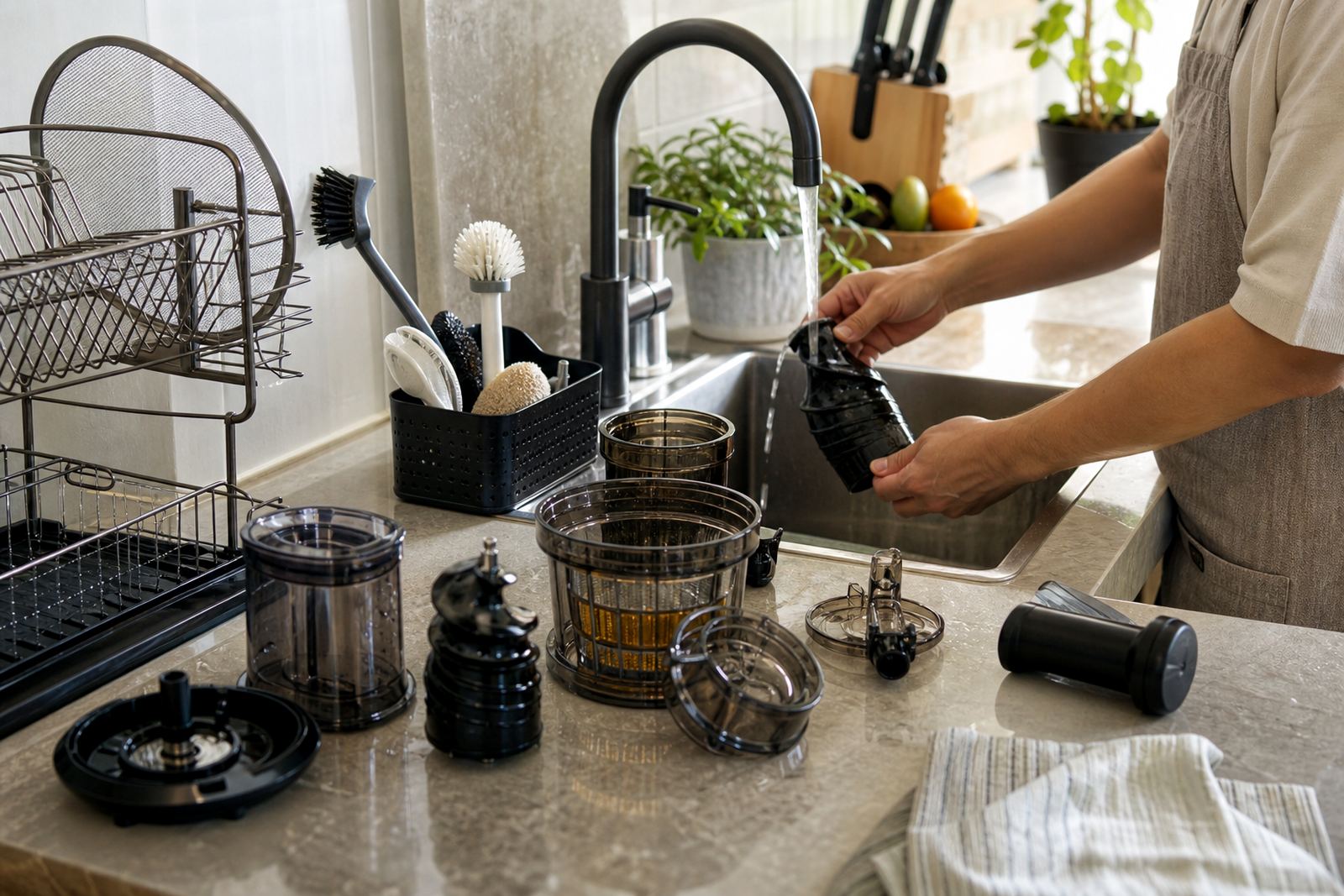
For homes with municipal water restrictions or strict kitchen cleaning routines, it is worth planning where rinse water will be handled after use. A small bowl of clean water nearby helps with the quick rinse between ingredients, and a drying rack keeps the parts off the sink ledge while they dry. That saves time and helps keep the work area neater after juicing.
Cleaning habits that protect the screen and seals
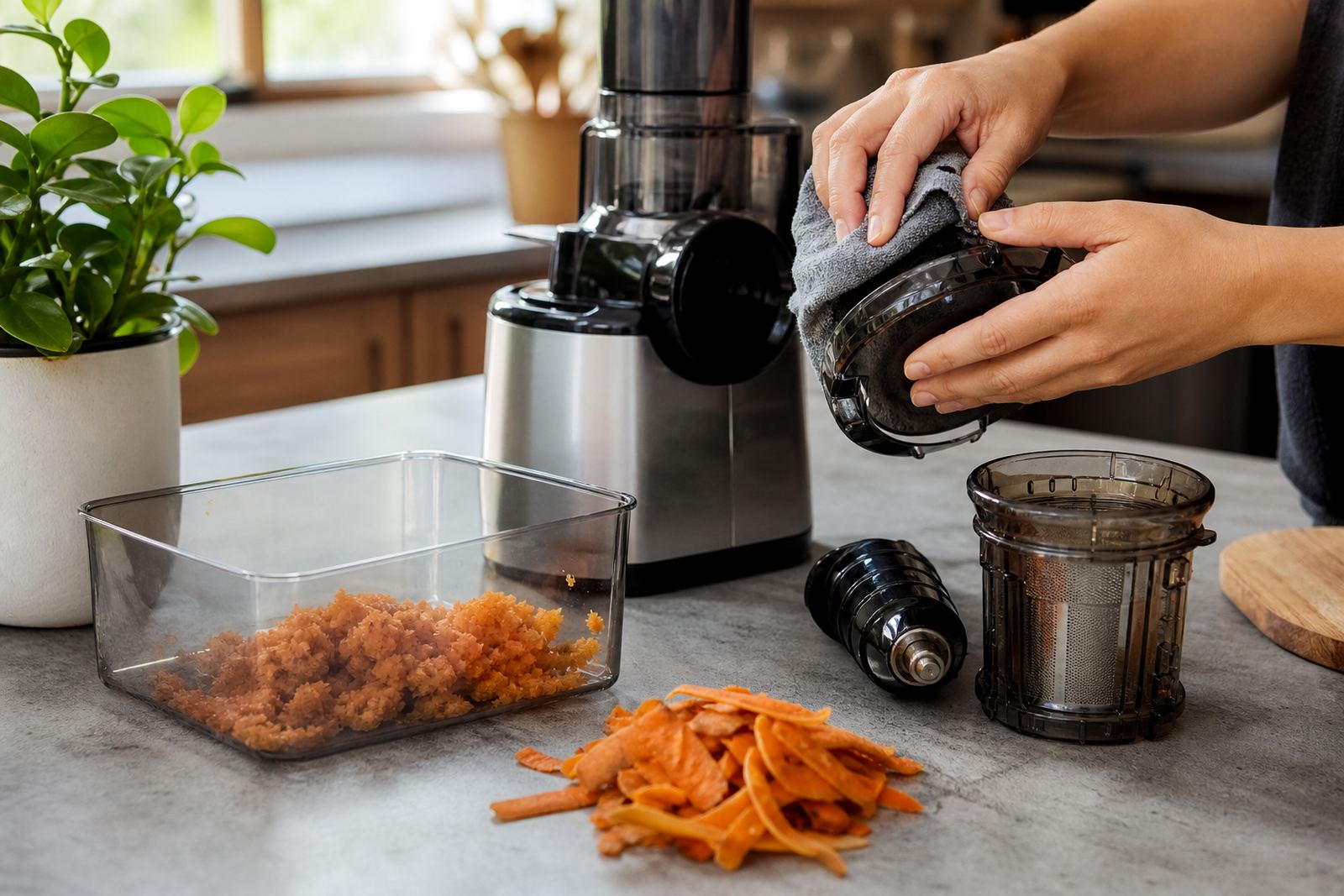
Good care starts straight after use, before pulp dries inside the chamber. The parts should be taken apart, rinsed and washed with mild soap and warm water, then dried fully before storage. A soft brush helps clear the screen holes and the grooves around the auger, while a narrow brush is useful for the pulp outlet and the corners of the juice bowl. Never use a hard scourer on the screen, because it can damage the fine openings and affect flow.
Food safety matters with any home juicer. Fresh produce should be washed before feeding, the cutting board should stay clean, and the juice should be handled in clean containers. If fruit has bruised spots or soil marks, trim those sections first. For households that use the juicer often, a routine care plan can help with seal checks, cable plug checks and screen care, especially if the machine is moved in and out of storage a few times a week.
- rinse pulp from the chamber without delay
- check the seal for wear if juice starts to drip
- let all parts dry fully before reassembly
- store the screen where it wont bend or knock against other cutlery
- keep the motor base dry and wipe it with a lightly damp cloth only
What to check before you place the order
When ordering a compact slow juicer, confirm the kitchen space available, the power point position and the kind of produce you want to process most often. It also helps to state whether the home setup needs support for a first time user, a spare screen, a replacement seal, or guidance on pulp levels and noise. If the juicer will be used in a shared home, you may want to ask about basic training by video support call so the main parts are handled correctly from day one.
MiniPress handles online orders and delivery across South Africa, including Cape Town, Johannesburg, Durban, Pretoria and George, with support from the Paarden Eiland base. The team includes operations, technical support, online sales, warehouse and dispatch, customer care and content support, so the order details can be checked properly before it leaves. That is especially useful where the buyer needs a small machine but still wants the right chamber, screen and container setup for the way the kitchen is used.
For a home that needs a space-saving juicer with practical parts and steady everyday use, this compact slow juicer is a sensible fit. It gives you a smaller footprint without losing the familiar masticating format that many households prefer for careful, controlled juicing.
Key facts
| Product type | Compact slow juicer, masticating style |
|---|---|
| Power | Mains powered kitchen appliance |
| Typical use | Home juicing for fruit, vegetables and leafy produce |
| Footprint | Small counter footprint for tight kitchens |
| Cleaning | Removable parts, screen brush care, hand wash recommended for key components |
| Support | First time setup, seal replacement, screen care, leak and vibration checks |