Leafy work, steady feed, less fuss at the sink
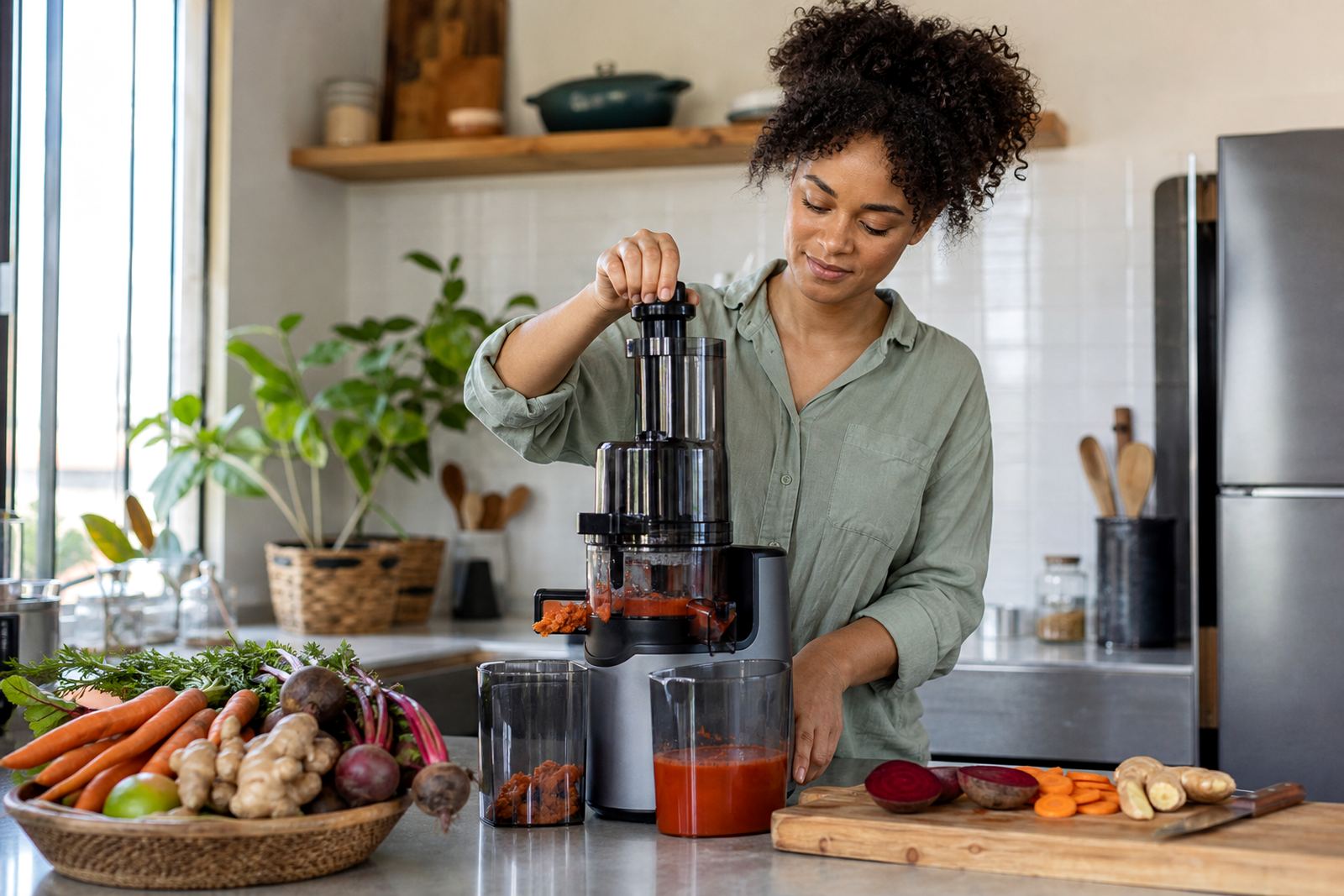
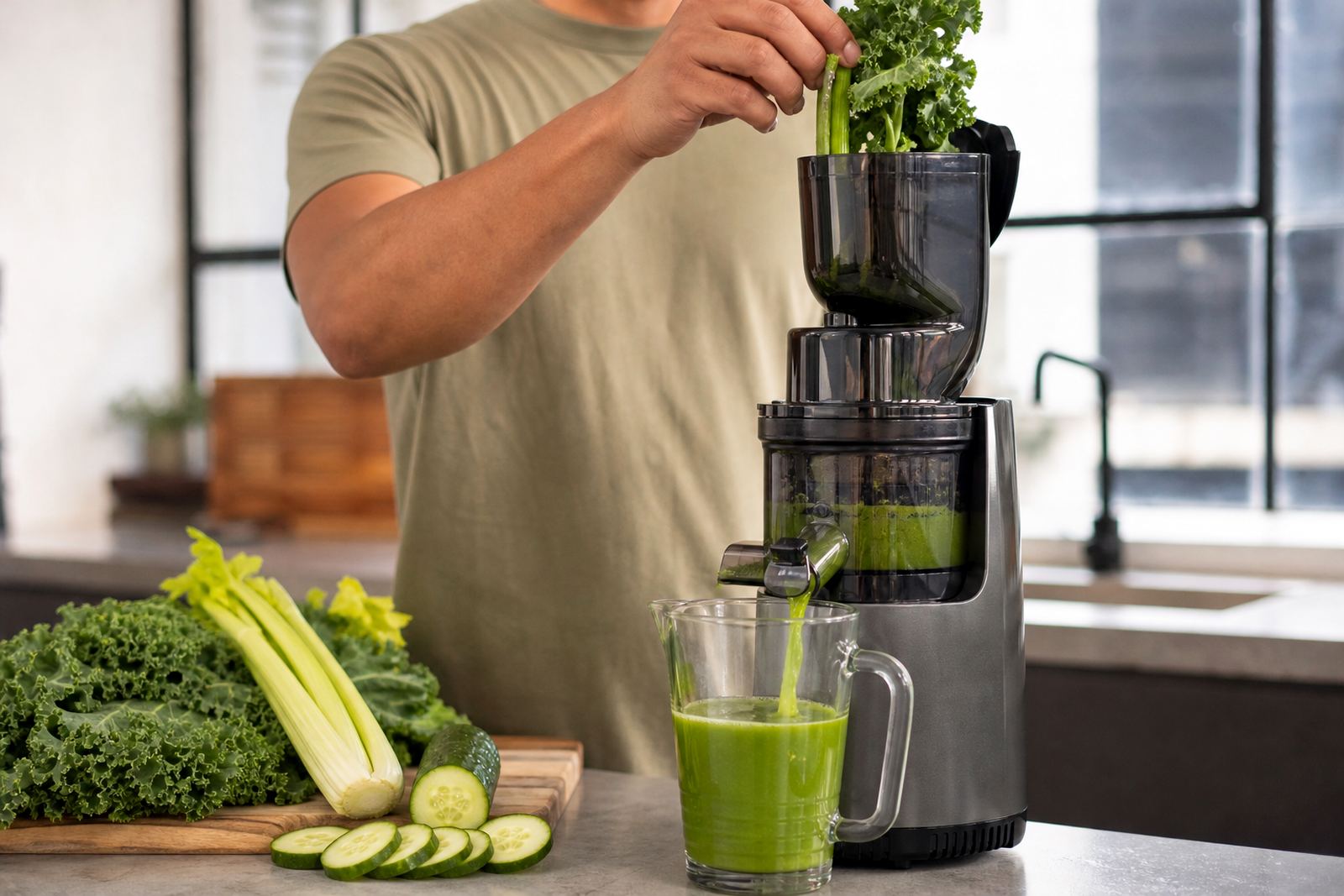
The Everyday Green Juicer is a slow masticating model for home use where spinach, kale, parsley, celery and similar greens are part of the regular basket. It works with a measured feed rate so the auger can draw ingredients through at a controlled pace, which helps with efficient extraction and a drier pulp than many fast spinning machines.
This model is aimed at people who want a calmer juicing process for everyday batches, not big commercial volume. It suits kitchens where one or two glasses at a time is the norm and where a neat fit on the counter matters. The feed chute, pulp path and collecting parts are arranged for practical daily use, with a layout that is easier to rinse down after each session.
- Slow masticating action for leafy ingredients and mixed home juicing
- Measured feed rates for steadier operation
- Designed for routine kitchen use rather than bulk production
- Helpful where space is tight in flats, townhouses and compact family kitchens
How this model compares with centrifugal and cold press units
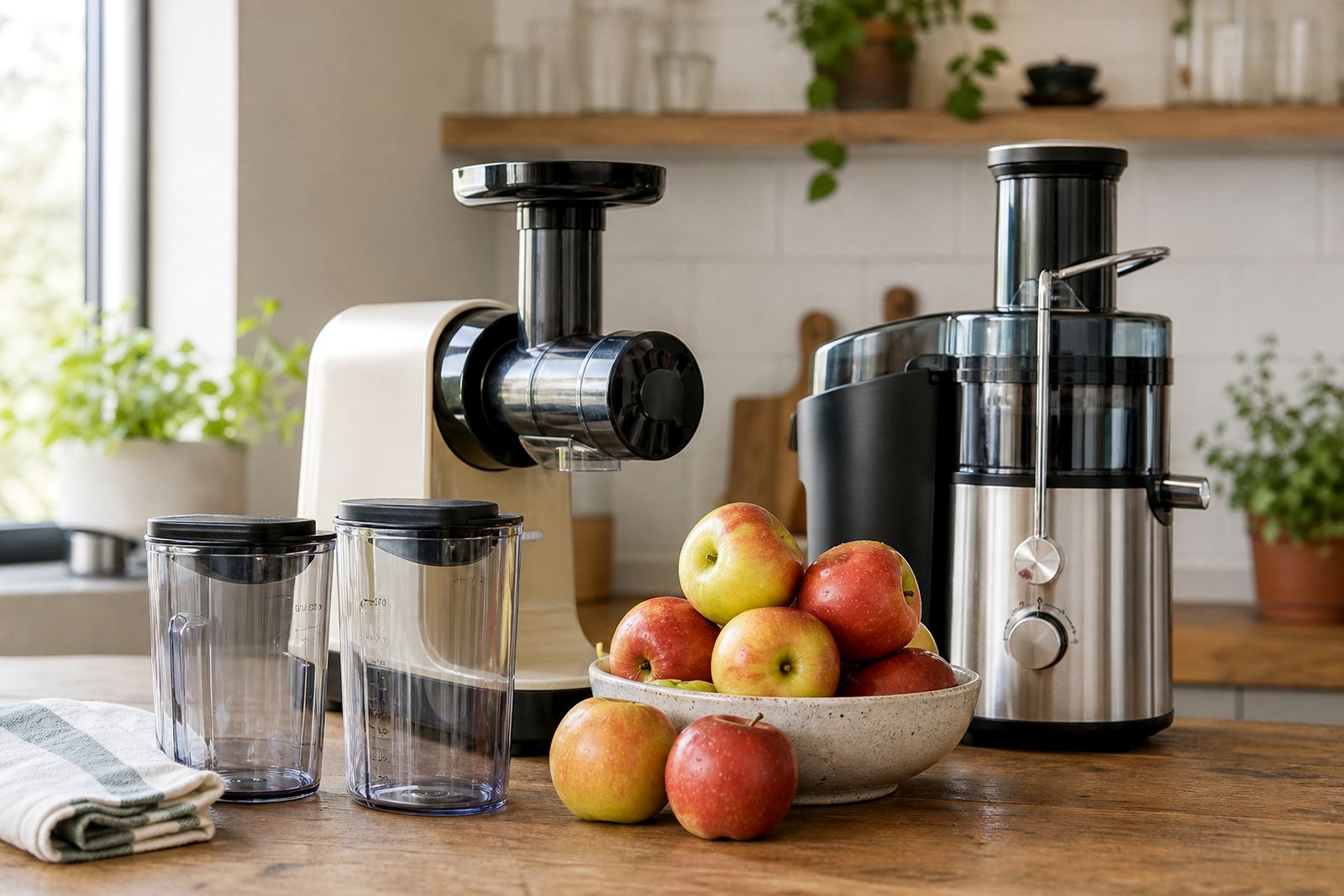
A centrifugal juicer uses a fast spinning basket and is often chosen where speed matters and the ingredients are mainly hard fruit. It can be handy for a quick breakfast batch, but the fast action generally gives a lighter yield from leafy greens and can be noisier on a tiled kitchen floor. The Everyday Green Juicer uses slow extraction instead, which is why it is better aligned with softer greens and mixed produce where you want a more controlled feed.
Cold press juicers is a phrase many customers use for slow masticating machines, including single auger styles like this one. The difference in day to day use is in the pace, the pulp handling and the type of ingredients it suits best. If your household rotates between apples, citrus, cucumber and green leaves, this model keeps the process measured without needing the hurried feeding that a centrifugal unit expects.
- Better suited to greens than a standard centrifugal juicer
- Works well with softer fruit, cucumber and celery
- Lower speed style, so the process feels calmer on the counter
- More suited to regular small batches than large-volume entertaining
Sizes, options and the version most homes ask for
The Everyday Green Juicer is supplied as a compact countertop machine for home kitchens, with a footprint that suits apartments in Stellenbosch, Somerset West and George as much as it suits larger family homes. The body is typically finished in neutral kitchen colours, and the parts are sized for ordinary household use with a feed chute, auger chamber, juice outlet and pulp outlet. The main choice is usually between the standard home unit and the accessory set that includes extra brushes and tools for cleaning and seal care.
When ordering, confirm the preferred plug type, the available counter depth and whether the household wants extra screening parts for finer juice texture. If the machine will sit near a sink or under a wall cabinet, measure the height with the lid open so there is enough working room. A few centimetres can make the difference between a comfortable fit and a cramped corner.
- Compact countertop format for home kitchens
- Suitable for standard SA household power supply
- Optional care items may include cleaning brushes and spare seals
- Allow extra height clearance for loading fruit and greens
Where it fits best in South African kitchens
This model suits households that juice several times a week and want an appliance that is not fussy about leafy ingredients. It is a good match for coastal homes where humidity can affect storage, and for inland homes where a dry counter, stable power and a tidy rinse routine are part of the day. In Paarden Eiland, Durban or Pretoria, the same practical rule applies: keep the machine on a level surface, away from direct splash and where the cord is not strained across the worktop.
It is also useful for buyers who prefer a slower machine when there are children around or when the kitchen is shared. The measured feed rate gives the operator more control over what goes in, and it helps reduce the temptation to overload the chute. That said, it still needs normal kitchen discipline, as soft overripe fruit and fibrous stems can create a strain if fed too quickly.
- Suited to daily home juicing in small to medium kitchens
- Works well in coastal and inland conditions with proper storage
- Best on a level counter with enough room for feed and juice containers
- Handy for households that want quieter operation than a fast juicer
Cleaning, food safety and the parts that need attention
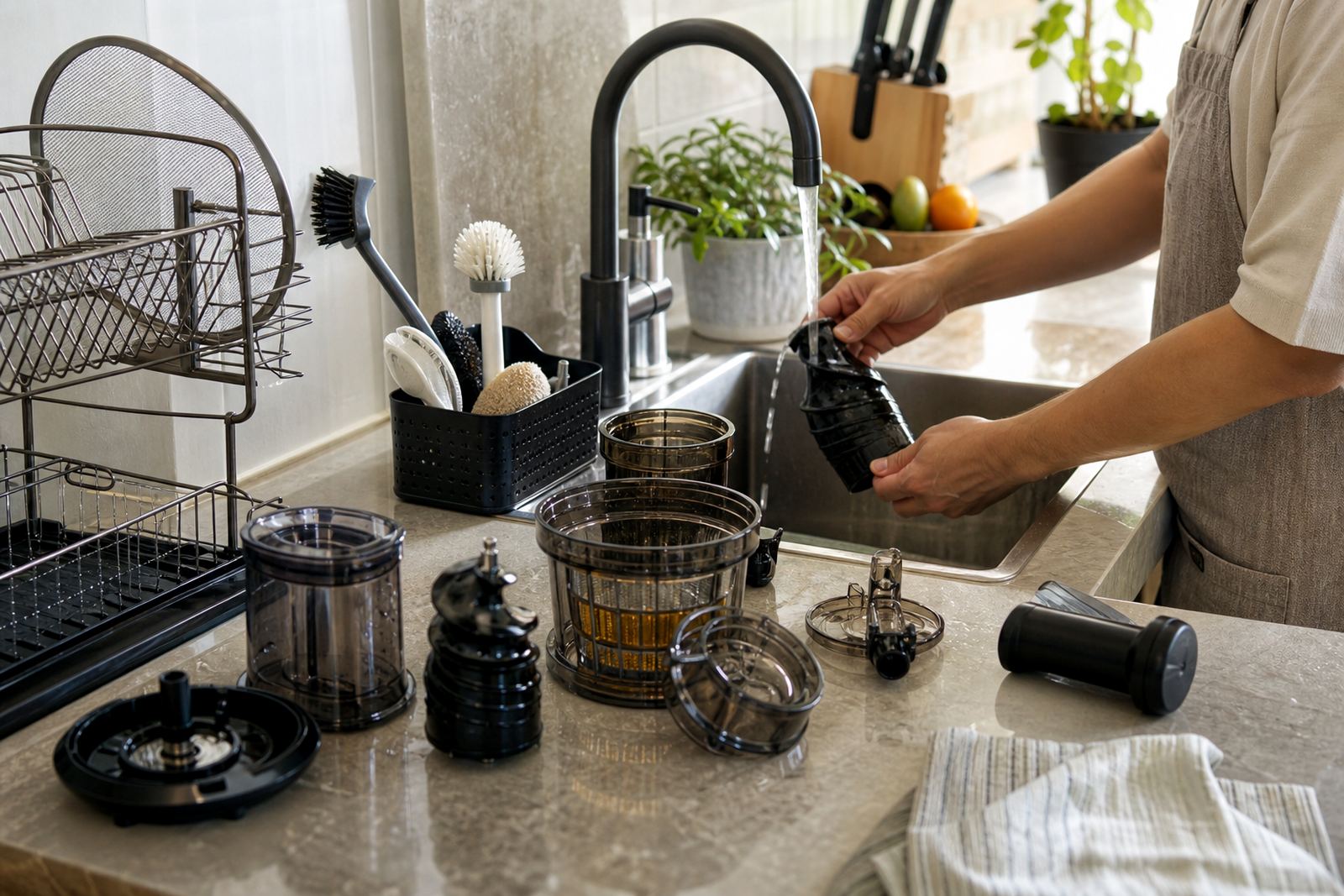
Cleaning matters with any juicer, especially when leafy pulp and soft fruit residue are involved. After use, switch off the machine, remove the working parts and rinse them before the residue dries hard on the screen or auger. Food contact parts should be washed in warm water with mild detergent and allowed to dry fully before reassembly. A soft brush helps with the screen and narrow pulp channels, while a careful wipe on the motor base keeps moisture out of the electrical section.
For food safety, avoid storing juice in the machine components and do not leave wet pulp sitting in the chamber for long periods. If you are juicing after a power interruption, check that the unit is dry, seated correctly and free of debris before starting again. In busy homes the quickest problem is often not the motor, but a screen that was not cleaned properly the previous day.
- Rinse it soon after use so residue does not set
- Wash food contact parts with mild detergent and dry fully
- Use brushes on the screen and narrow channels
- Keep the motor base dry and unplug before cleaning
What to confirm before placing the order
To make sure the right unit is supplied, confirm the kitchen power point location, the preferred plug arrangement and the counter space available for the machine. Also check the usual produce list, because spinach, celery, apple, pear and citrus all behave differently in the feed chute. If the household wants help with first time setup, deep clean guidance, leak troubleshooting or seal replacement later on, those support options are available through the enquiry form on our contact page.
For deliveries to Cape Town, Johannesburg, Durban, Pretoria and George, the order should also note the area and any building access details that affect receiving the parcel. In some flats and sectional title units, lift access, security gates or municipal delivery rules can delay handover. A clear note saves time and helps the warehouse team pack the right parts the first time.
- Confirm plug type and available power point location
- Measure counter height and the open-lid clearance
- List the main ingredients you expect to use most often
- Note delivery area and building access details if relevant
Key facts
| Product type | Slow masticating home juicer |
|---|---|
| Best for | Leafy greens, soft fruit and routine small batches |
| Feed style | Measured feed rate with controlled loading |
| Power | Standard household electric appliance |
| Included parts | Juicing body, feed chute, auger chamber, juice and pulp outlets |
| Support | First Time Setup, Deep Clean Guidance, Spare Parts Help, Seal Replacement, Video Support Call |