
Built for a bigger kitchen rhythm, not a once off squeeze
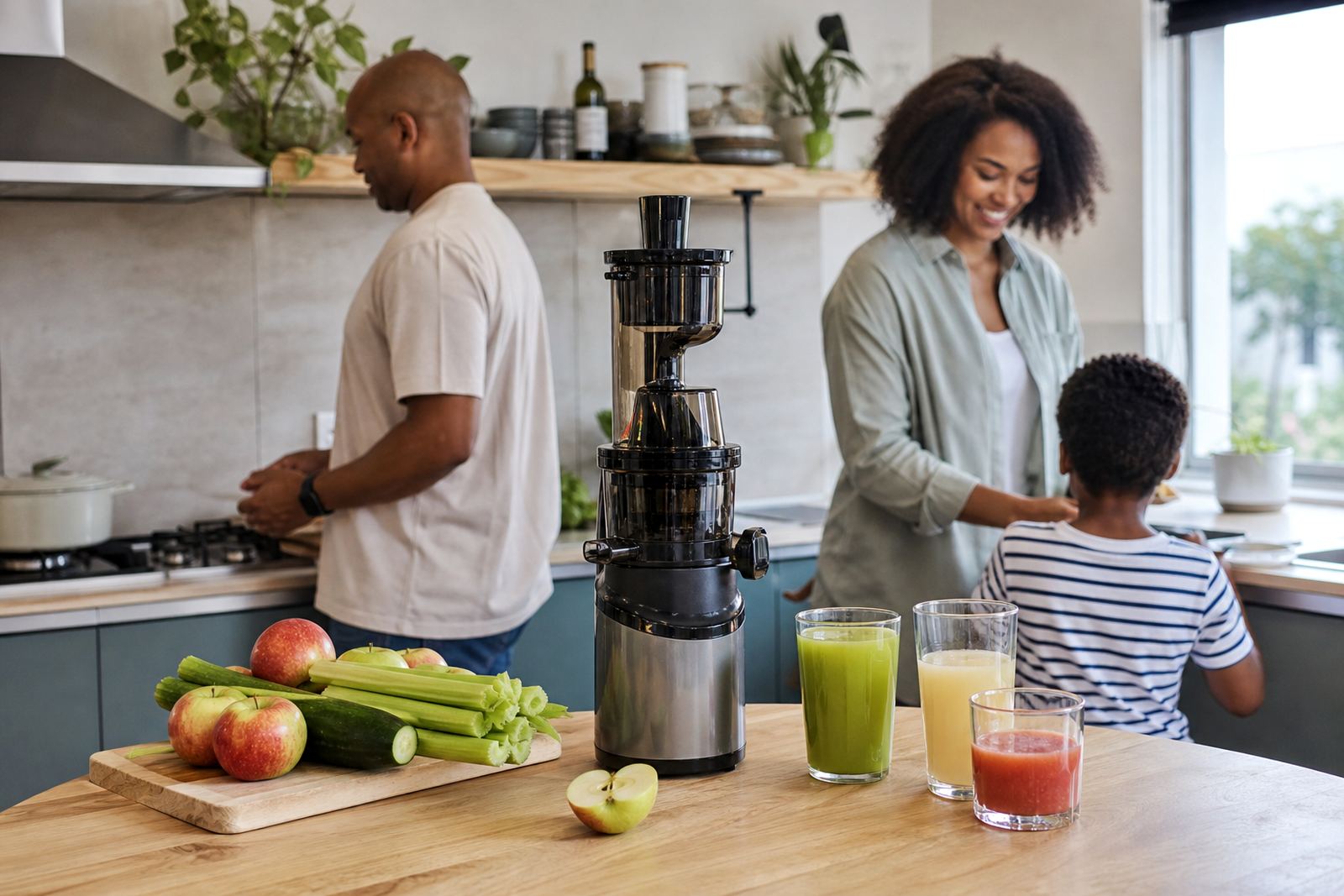
This model sits in the slow masticating category, which means the auger works the ingredients through at a lower speed than a centrifugal unit. That slower movement helps handle softer fruit, leafy ingredients and harder produce with less froth in the jug, while the pulp is ejected as the machine works. For many homes, that makes it a practical choice when juice is prepared in batches for the week or for a few people at once.
It is also a better fit where prep time matters. The wider chute on many family slow juicers takes larger pieces, so there is less fine chopping before loading. In a Paarden Eiland household demo or a Cape Town delivery drop, the first question is often how much prep is needed, and this type of machine is usually chosen by people who want a calmer process than a high speed juicer. It is still a countertop appliance though, so you need a stable surface and enough space for the feed tube, juice outlet and pulp bin.
How it compares with centrifugal and cold press models
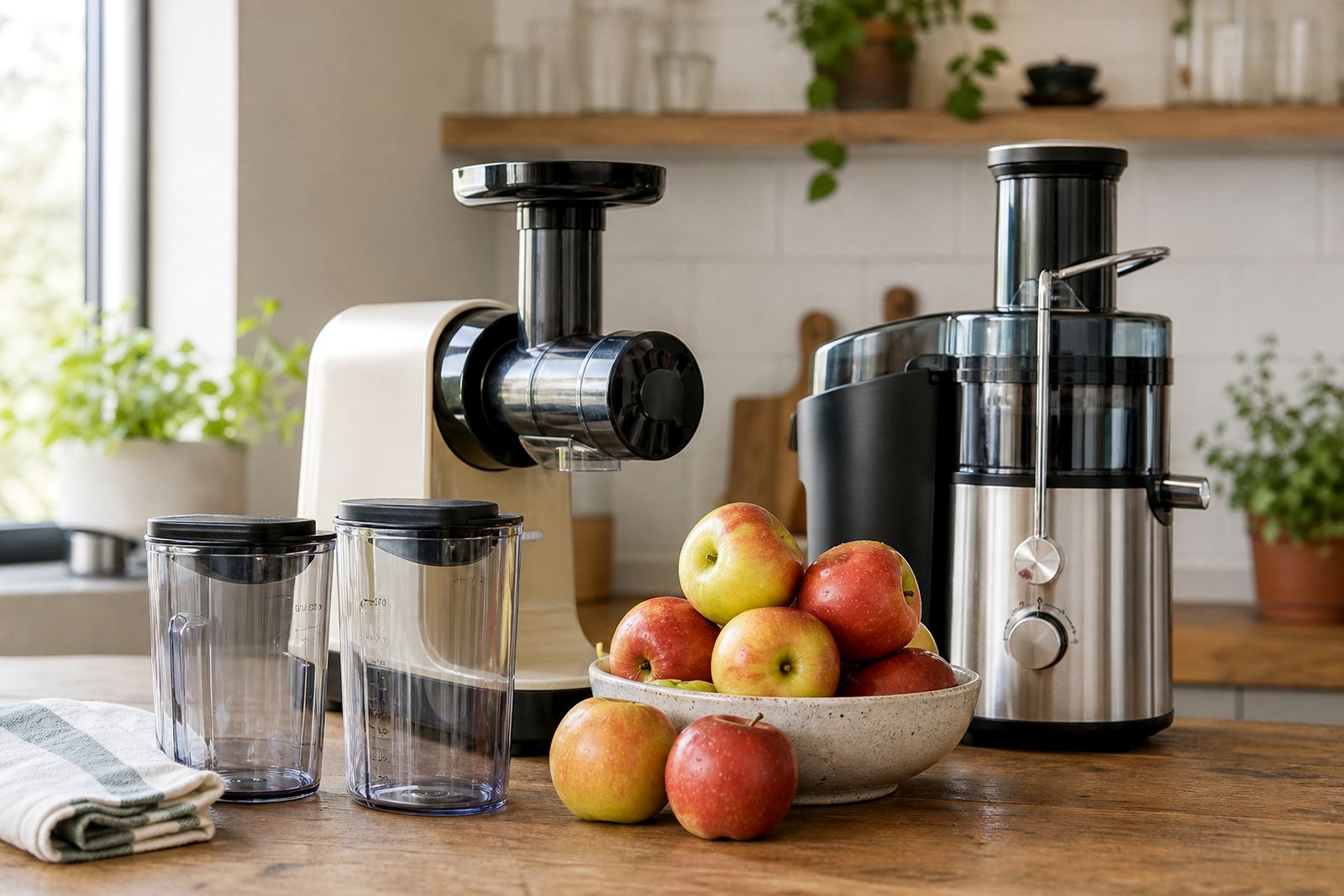
A centrifugal juicer uses a fast spinning basket and blade system. It is handy for quick juicing and usually suits harder fruit and vegetables, but it can be louder and may create more foam. A slow masticating juicer turns ingredients through a single or twin auger path, which is why it is often preferred for mixed household use and a more controlled result. Cold press is a common trade term used for slow juicers that press rather than grind in the usual fast spin way, so customers often use the words interchangeably when asking for one machine that does not rush the process.
For this model, the working parts are intended for regular kitchen duty, not industrial service. If your household in Johannesburg, Durban or Pretoria is comparing options, the real differences usually come down to noise, prep size, pulp dryness, cleaning time and how much space sits beside the sink. A family slow juicer is a sensible middle ground when you want more control than a centrifugal machine and a simpler layout than a large commercial unit.
- Slow extraction for everyday home batches
- Better suited to mixed produce than a basic high speed unit
- Usually quieter than centrifugal styles
- More compact than larger multi stage pressing systems
Where this size fits best in South African homes
The Family Slow Juicer suits homes where the kitchen worktop is used often and the appliance will stay within easy reach. It is a good fit for Stellenbosch, Somerset West and George homes with steady family use, and for apartment kitchens in Cape Town where a large machine would crowd the counter. In coastal areas, the housing and removable parts should be dried properly after washing so moisture does not sit in hidden joins or around seals.
Because this is an electric kitchen machine, it should be used on a stable supply and plugged into a sound wall socket or protected point, especially if the household already runs kettles, microwaves and fridges on the same circuit. If you are placing it in a business kitchen or shared staff area, check the available counter depth, the space needed for safe cord routing and whether there is enough clearance above the lid for a taller feed chute.
- Households doing regular batch juicing
- Kitchen counters with enough depth for a wider body
- Homes that want a quieter, slower process
- Coastal homes where drying and seal care matter
Fitting, first setup and the checks that save time later
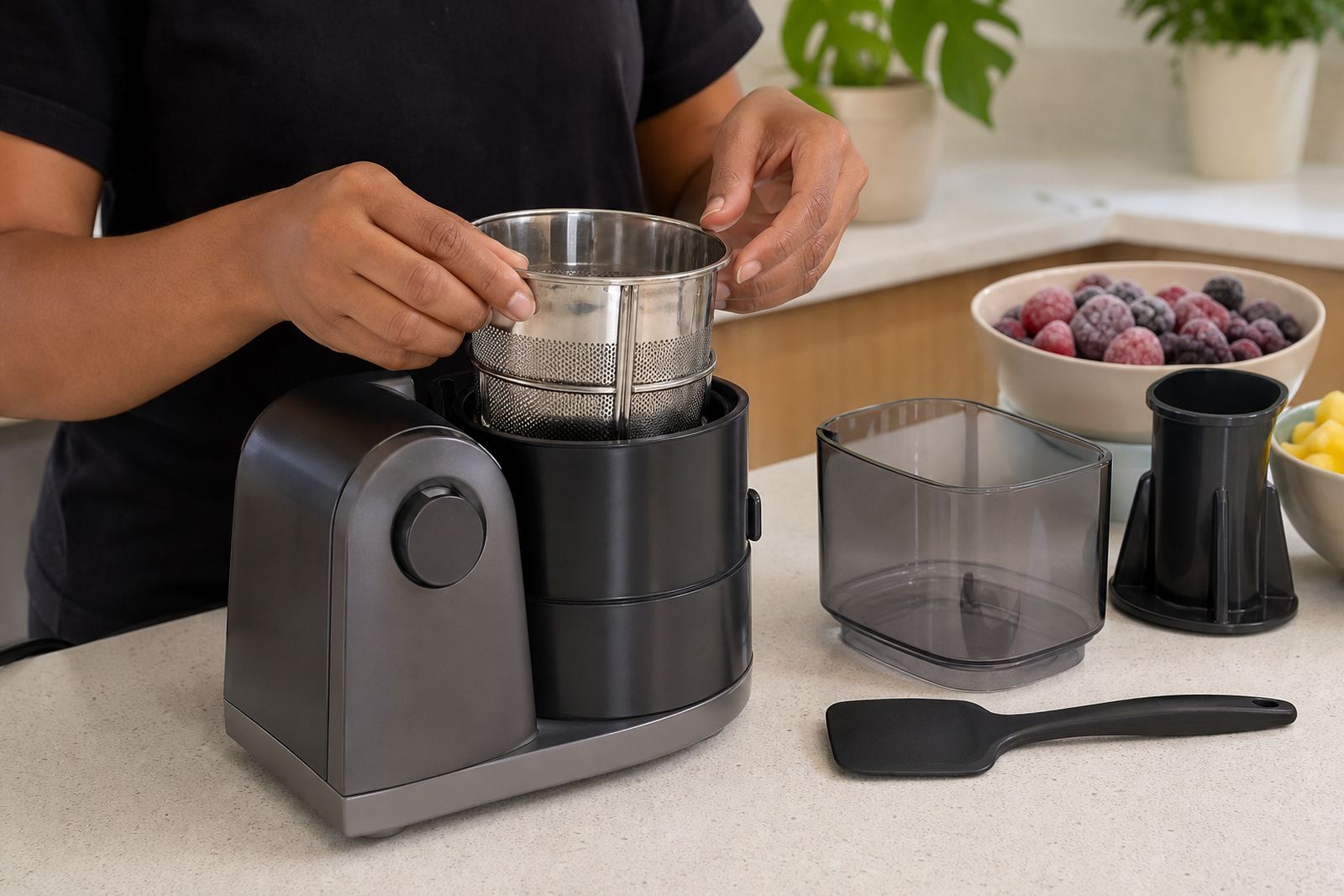
Most family slow juicers are supplied as countertop appliances with a base unit, auger, screen, juice bowl, feed chute, pusher and pulp container. Setup usually involves washing the removable food contact parts before first use, locking the bowl in place, fitting the screen correctly and checking that the lid and chute assembly sit square. If the model includes a safety lock or reverse function, the switches should be tested before the first full batch. For homes in Paarden Eiland and across Cape Town, our first time setup support is useful when a customer wants the machine positioned correctly and the parts explained in plain steps.
When ordering, confirm the outlet side, cord length, overall footprint and any special storage tray or brush package. If the unit will live near a sink, ask about the direction of pulp ejection and whether there is enough room for a collection jug at the front. If the machine is to be used by several people in one household, a clear label on the parts and a routine for assembly helps keep things consistent. A small mistake in screen placement can cause poor flow or extra vibration, so the fit should be checked before the motor is run at full load.
- Base unit and removable bowl assembly
- Auger and fine screen or juicing screen
- Pusher, pulp container and juice jug
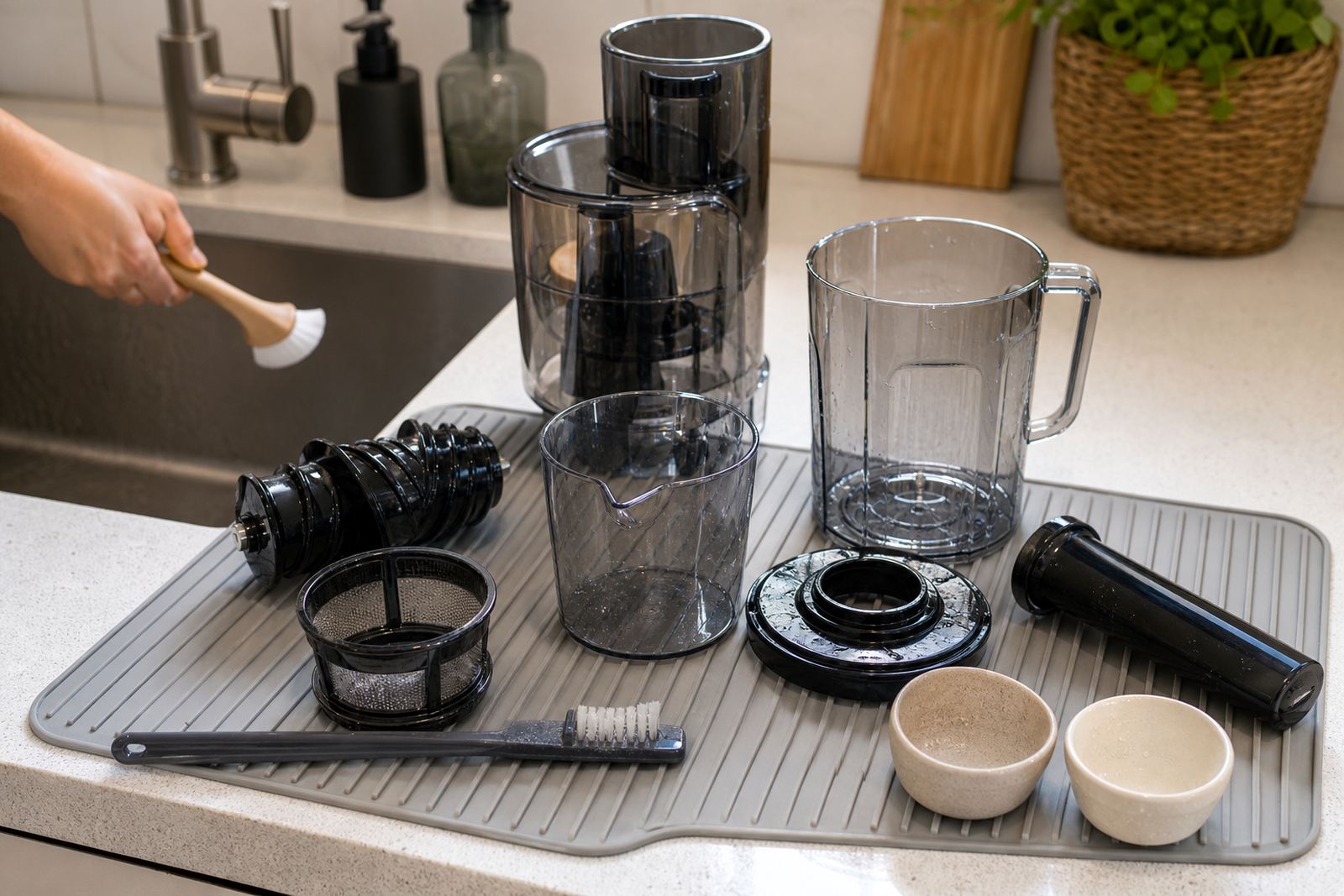
- Brushes and tools for daily wash-down
- Seal and lock points that should be checked on setup
Keeping the inside clean and food safe
Food safety in a home juicer starts with clean produce, clean hands and parts that are washed soon after use. Do not leave pulp sitting in the screen or chute for long, especially in warm weather. Rinse the removable parts under running water, use the supplied brush on the mesh and dry everything fully before reassembly or storage. In humid coastal homes, putting the parts away while still damp can lead to smells or staining around the seals and screen edges.
The family slow juicer should be opened carefully after use and the screen inspected for tiny fibres or trapped pulp. If the juice chamber or outlet shows residue, a deep clean can be done with warm water and a mild kitchen detergent, then a thorough rinse. Never use harsh scouring pads on fine screens because they can damage the mesh. If the auger starts to squeak, the lid does not sit neatly, or the unit leaves more wet pulp than usual, a seal check or screen care review may be needed. Our support team handles deep clean guidance, seal replacement and noise vibration checks for customers who want help without guesswork.
What to check before you place the order
Before ordering from MiniPress, it helps to confirm the produce you plan to juice most often, the amount of counter space available, and whether the machine must suit one person or a full household. Also check if you want a wider feed tube for less cutting, a finer screen for smoother flow, or a model with easier reverse action for fibrous ingredients. If you have had leak trouble with another machine before, ask about the seal points and how the pulp outlet is arranged, because those details affect daily use.
For delivery across South Africa, please confirm the town and whether access is straightforward at the address. We deliver from our Paarden Eiland base to Cape Town, Johannesburg, Durban, Pretoria and George, and also to Stellenbosch and Somerset West. If you need spare parts help, a cable plug check, video support call or routine care plan, mention that in the enquiry so the right parts and guidance are prepared. Small details matter with a family slow juicer, and getting them right at the start saves time later.
- Household size and expected batch volume
- Space for the body, bowl and pulp container
- Preferred screen type and feed chute size
- Delivery town and access notes
- Any help needed with setup or care
Key facts
| Juicer type | Slow masticating family juicer / cold press style |
|---|---|
| Use case | Regular household batches and mixed produce |
| Feed opening | Wide feed chute for larger pieces, model dependent |
| Motor style | Electric countertop unit with reverse function on many models |
| Main parts | Base, auger, screen, bowl, pusher, pulp bin and juice jug |
| Care | Removable parts, brush cleaning, seal and screen checks, air dry before storage |