
A calmer press for early starts
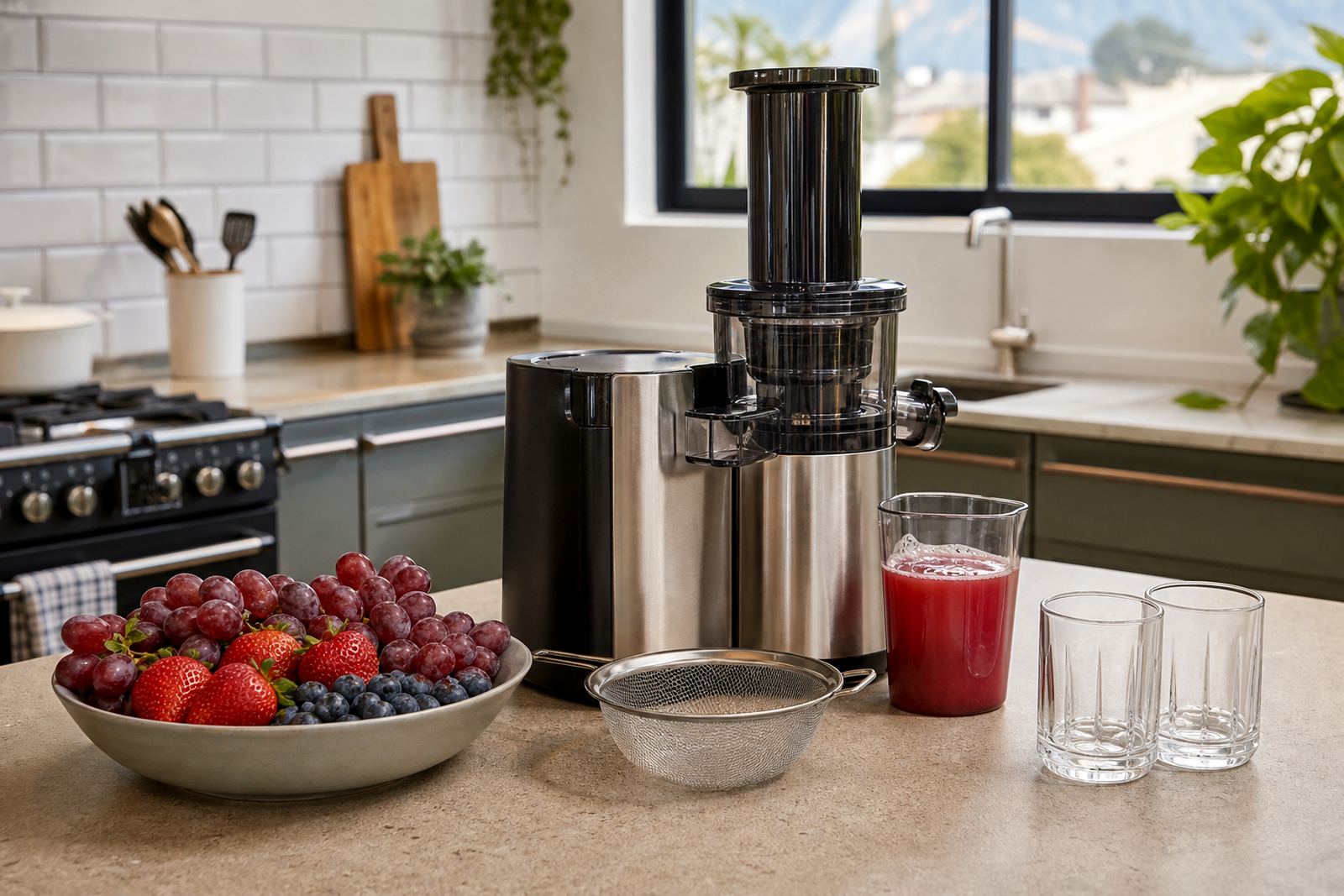
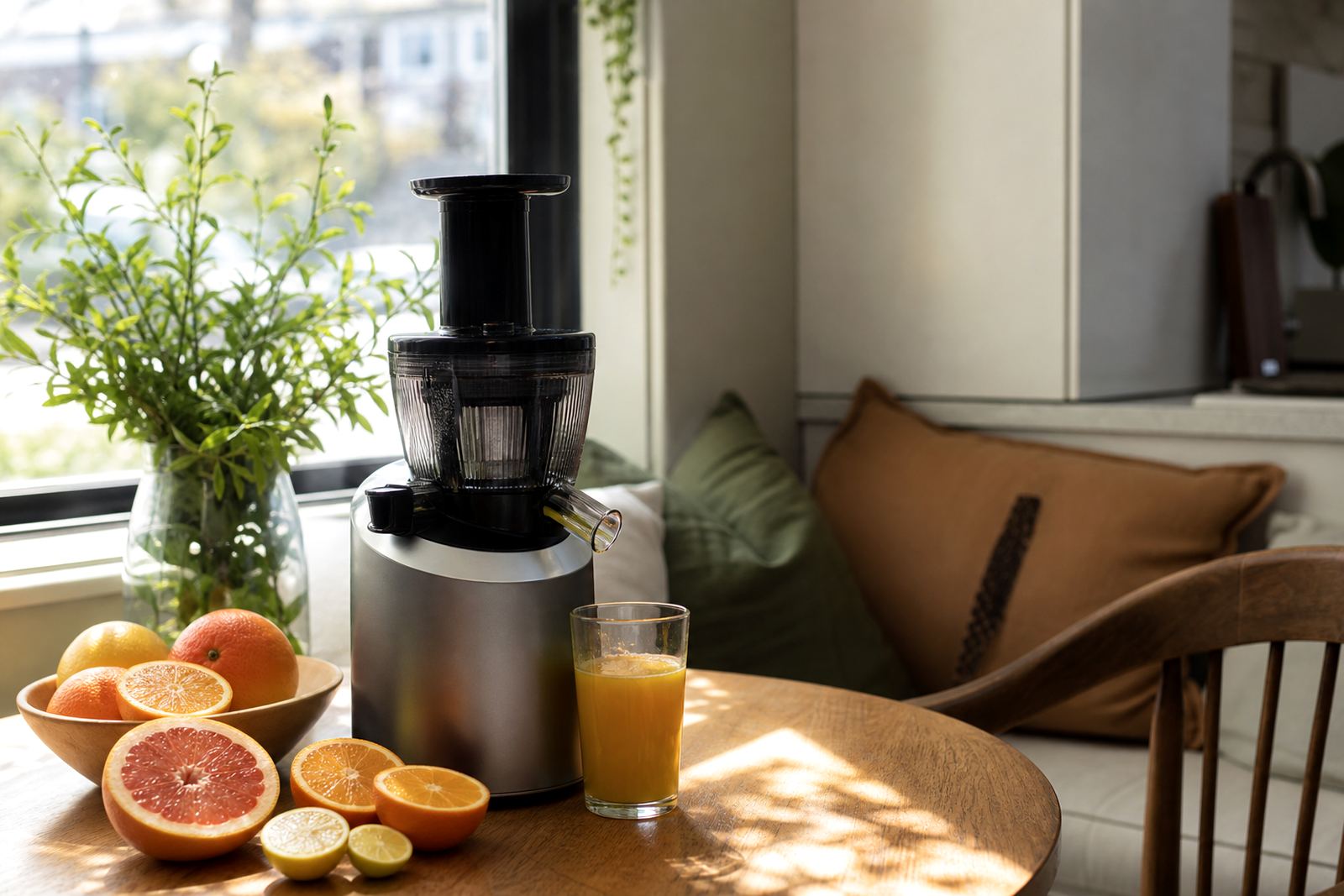
The Quiet Morning Juicer is chosen for customers who want a slower, controlled juicing routine with less clatter on the counter. It suits a masticating style of juicing, where produce is fed through in a measured way and the auger works at a low speed. That slower movement helps reduce foam and gives the operator more control over soft fruit, leafy greens, celery and firmer veg like carrot or beetroot.
Compared with a centrifugal juicer, which spins fast and is better suited to quicker batches, this unit is the better match where noise matters and the kitchen is close to bedrooms or open-plan living space.The machine is built for home use, with a footprint that fits onto a counter without taking over the whole work area.
For buyers wanting a tidy, everyday juicing setup, this model is usually a good fit for one to three people making smaller batches, or for households that juice in stages. The feed chute, pulp outlet and juice outlet are arranged for ordinary kitchen handling, and the parts that touch food are selected for routine washing and safe contact with fresh produce.
Where this unit settles in best
This juicer suits compact kitchens, apartments, family homes and holiday places where the sink space is limited and the washing up has to be done quickly. In Paarden Eiland, many customers use this sort of unit for a practical home setup where the counter is shared with kettles, bread bins and lunch prep. In Stellenbosch and Somerset West, it is often chosen for daily use in smaller kitchens with limited storage height, while in Durban it is useful where humidity can make storage and drying a bit more important.
Because it runs through a motorised base and plug-in operation, it should be set up on a dry, level counter near a standard wall socket. Leave enough space at the back for the cable and enough room at the front for juice collection, pulp handling and the lid to open cleanly. If the kitchen has unstable shelving, keep the unit on a firm section of the counter so vibration stays low and the feet grip properly.
- Good for early morning juicing in shared homes
- Works well for smaller batches and mixed produce
- Useful where lower sound is preferred over very fast output
- Fits a standard home counter in most South African kitchens
Centrifugal or slow masticating, what changes
Customers often compare a quiet masticating unit with a centrifugal juicer before ordering. The main difference is speed and handling. A centrifugal juicer spins the produce quickly and is handy when speed matters and the batch is large. It usually suits firmer fruit and veg, and the basket can need more cleaning after fibrous produce. A slow masticating unit works at lower speed and is preferred by many households for softer noise, smoother handling of leafy items and a more measured feed through the machine.
Cold presses take that slower approach further by pressing produce rather than relying on rapid spinning. For a home user, the practical point is not the label alone but the routine around it. Lower speed usually means a calmer kitchen, less splatter around the lid and more time spent on prep rather than chasing juice spray off the wall tiles. It also helps when the unit is used at the same time as a baby sleeping, school prep or early shift routines.
When a client asks which type suits them, we look at the kitchen space, the kind of produce they buy, how often they juice and whether the household values speed or quieter operation more. That keeps the choice grounded in daily use instead of guesswork.
Sizes, feed openings and what the box should include
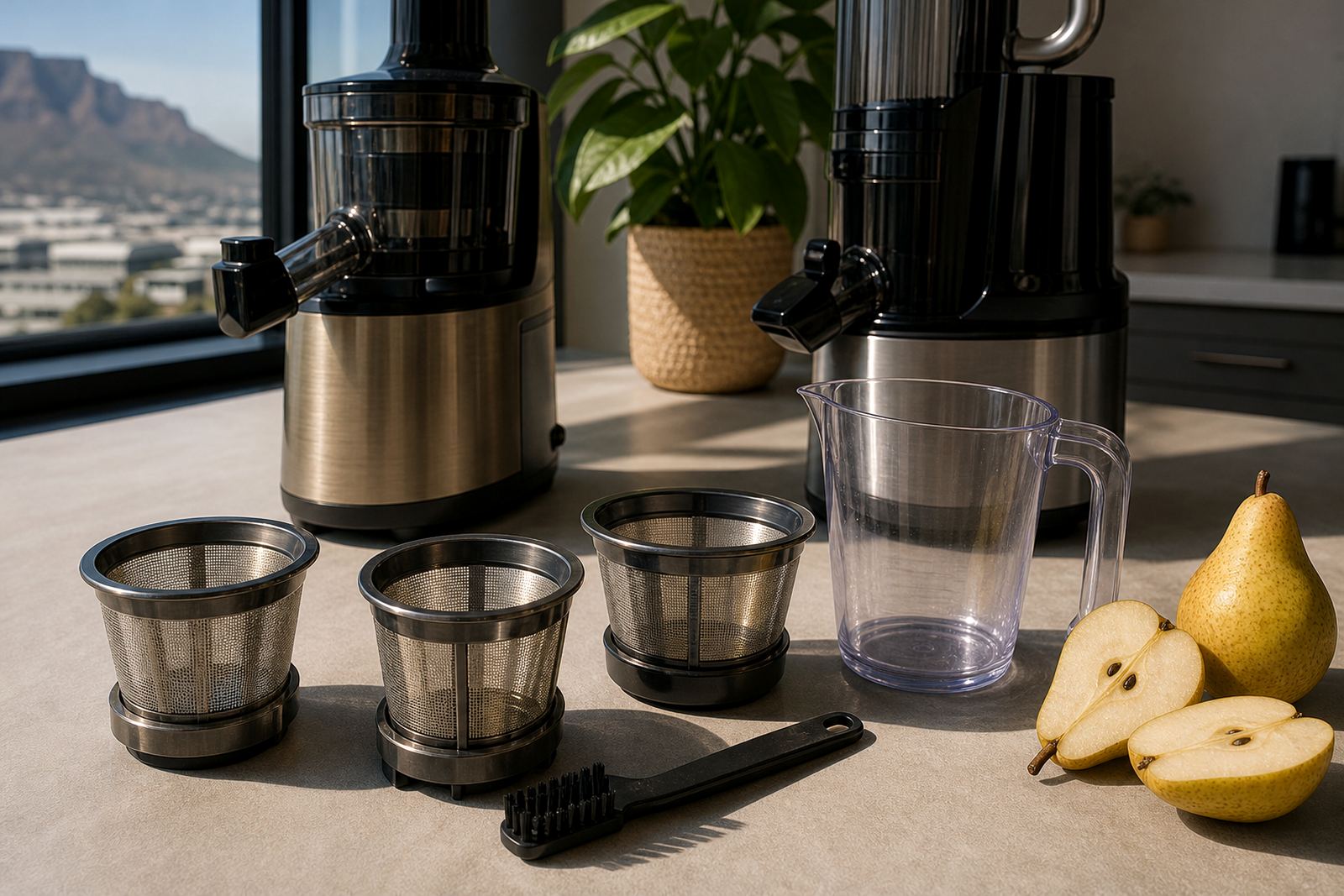
The Quiet Morning Juicer is usually supplied as a compact home unit with one main motor base, one juicing chamber, an auger or spinning basket depending on the style, a lid, push tool, juice jug and pulp container. Some sets include extra strainers, cleaning brushes or a fine mesh screen for users who want to vary the finish of the juice. The exact setup should be checked before ordering, especially when a client wants a particular feed opening or a separate pulp collector.
For home kitchens, the most useful details are size, assembly order and the amount of counter space needed when the lid and containers are fitted. A smaller footprint is easier for apartment kitchens in Cape Town City Bowl, while a slightly wider base may suit family homes in Pretoria or George where the machine is kept on a fixed prep area. If the unit comes with a taller feed chute, that can reduce the amount of pre-cutting needed, although hard produce still needs sensible sizing for safe feeding.
- Motor base with stable feet for counter use
- Juicing chamber with lid and feed chute
- Juice collection jug and pulp container
- Push tool for safe feeding
- Cleaning brush or screen tool, where supplied
Cleaning habits that keep the machine in good order
Food safety starts with clean parts and dry storage. After juicing, the chamber, lid, strainer and outlet parts should be rinsed before residue dries on. Pulp left sitting in warm weather can become sticky quickly, especially in Durban or on a humid Highveld day, so a short rinse straight after use saves time later. Wash detachable parts with warm water and a mild dishwashing liquid, then let them dry fully before reassembly or storage.
The motor base should never be soaked. Wipe it with a lightly damp cloth and keep the vents free of fibre and dust. If the unit uses a fine screen or mesh, check it for clogged pulp after every few runs and use the brush supplied or a soft cleaning tool to clear the holes. This helps maintain flow and keeps the machine from straining unnecessarily. If the feed chute shows staining from beetroot, carrot or greens, clean it before the marks set in.
For households that juice a few times a week, a routine clean is usually enough. For heavier use, a deeper clean at regular intervals helps with hygiene and helps prevent odour buildup around seals and corners.
Details to confirm before placing the order
Before ordering the Quiet Morning Juicer, confirm the plug type, overall footprint, container size and the type of produce you plan to run through it most often. If the kitchen has limited top space, measure the width, depth and height with the lid open as well as closed. In homes with children, it is worth checking the feed chute size and the safety lock arrangement so the unit suits your routine.
It also helps to confirm whether you want a centrifugal juicer, a slow masticating unit or a cold press style, because the cleaning steps, feed speed and sound level are not the same. If you are buying for a coastal home in George or Durban, ask about storage care and drying after use, since damp air can affect parts that are put away too soon. For customers in Paarden Eiland and nearby areas, we can also help with first-time setup, seal replacement, screen care, leak troubleshooting, noise vibration checks, cable plug checks and routine care guidance through the enquiry form on our contact page.
- Kitchen space available, including lid clearance
- Preferred juicing type and sound level
- Plug and socket position near the counter
- Preferred container sizes for juice and pulp
- Any need for spare parts, brush sets or deep clean guidance
How this fits a working home routine
In a practical South African home, this juicer is best treated as a daily workhorse rather than a showpiece. It should be stored where it can dry properly, used on a stable counter and cleaned before the next meal prep starts. If the machine is moved often, keep the cord wrapped neatly and avoid placing weight on the feed chute or the screen basket. That helps the parts last longer and keeps operation smoother over time.
MiniPress supplies home juicers and cold presses online from Paarden Eiland, with delivery across South Africa including Cape Town, Johannesburg, Durban, Pretoria, George, Stellenbosch and Somerset West. If you need help matching the Quiet Morning Juicer to your kitchen setup, the team can assist with technical checks, spare parts help, brush and tool guidance, storage care and video support call arrangements where needed.
Key facts
| Juicer type | Slow masticating home juicer with low-speed operation |
|---|---|
| Typical output style | Single-serve to small family batches |
| Feed opening | Wide feed chute, size to be confirmed at order |
| Materials | Food contact parts in washable, food-safe materials |
| Power | 240 V mains plug-in motor base |
| Cleaning | Detachable chamber parts for rinse and hand wash |