The small parts that keep the press together
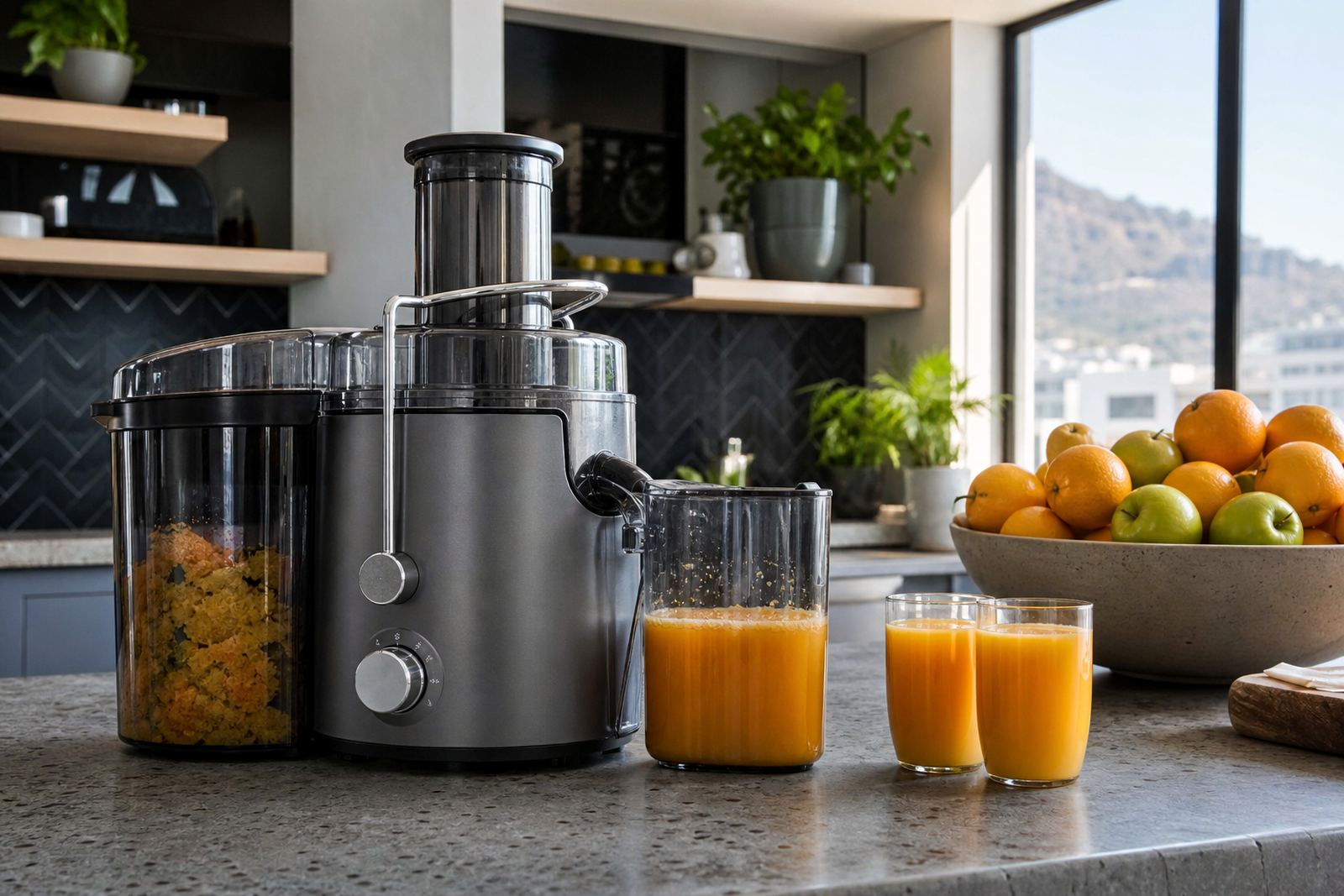
A seal and gasket kit replaces the soft wearing parts that sit between housings, strainers, juice chambers and outlet points. In slow masticating juicers, centrifugal juicers and cold presses, these pieces help create a snug join so liquid, pulp and air stay where the machine design expects them to be. When a seal hardens, flattens or splits, you may notice dampness around the chamber, a loose fit or a bit of wobble during assembly.
Our kits are suited to home juicing equipment used in kitchens across Paarden Eiland, Stellenbosch, Somerset West and other delivery areas. They are supplied as replacement consumables, not as a full machine part set, so it helps to match the shape and size against your existing unit before fitting.
- Replacement seals for common juice path points
- Gaskets for chamber, lid and outlet interfaces
- Parts intended for home juicers and cold presses
- Useful for wear from regular cleaning and daily use
Sizes and fitting styles that need checking first
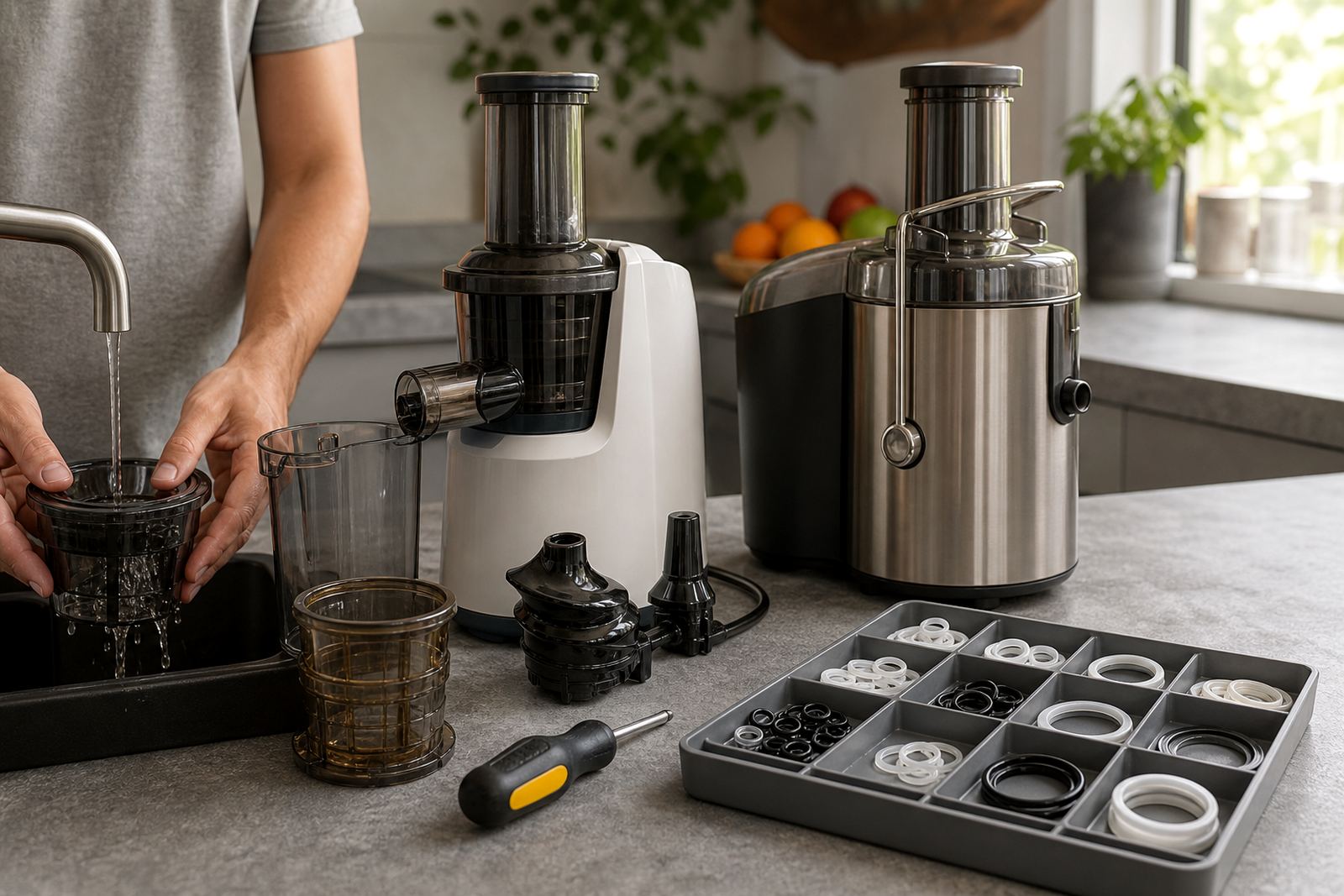
Seal and gasket shapes vary by juicer design. Some models use round O-rings, some use flat washers, and others use shaped gaskets with lips or ridges that sit into a groove. The wrong size may pinch, leave a gap or wear out too fast, so the fit must be checked carefully before ordering.
For customers in South Africa, the main details to confirm are the inner diameter, outer diameter, thickness and the profile of the seal. If the part is seated in a groove, measure the groove width as well. If the machine uses a locking lid, filter bowl or juice spout, check how the gasket sits once the unit is closed. A quick photo of the old part laid flat often helps when comparing options.
- Inner diameter and outer diameter
- Thickness or cross section
- Flat, round, lip style or shaped profile
- Position on the machine body, lid or outlet
Where this kit suits best in the kitchen
This product suits households using home juicers and cold presses for regular kitchen prep, especially where the machine is opened and cleaned often. It is helpful on units that are used most days, where seals can dry out from repeated washing or become compressed from constant assembly and disassembly. Coastal humidity in Durban or salt air in George can also make careful storage and drying more important.
Slow masticating machines use a squeezing motion and often depend on several snug contact points inside the juice path. Centrifugal machines usually have a faster spinning chamber and can put different stress on lids, spouts and retaining rings. Cold presses rely on controlled pressure and a tidy seal helps keep the unit aligned during that process. If a machine starts leaking after a clean, a worn gasket is one of the first parts to inspect.
- Slow masticating juicers
- Centrifugal juicers
- Cold press machines for home use
- Units showing seepage around the chamber or outlet
Fitting notes for a clean and steady seal
Fitting a replacement seal is usually straightforward, but it needs care. Remove the old part fully, clean the groove, and check for pulp residue, detergent film or tiny cracks in the seating area. A new gasket must sit flat without being twisted. If it feels tight, do not force it, because that can distort the shape and shorten its working life. A little food safe lubricant may help on some designs, but only where the machine maker allows it.
After fitting, check the lid, chamber and outlet before running a full batch. Start with a small amount of water to confirm that the join is holding and that there is no seepage at the base or around the spout. If the unit has clips, tabs or a locking ring, make sure each one closes properly. If the machine vibrates more than expected, check that the seal is seated evenly and that no pulp is trapped under it.
Cleaning, storage and food safety habits that matter
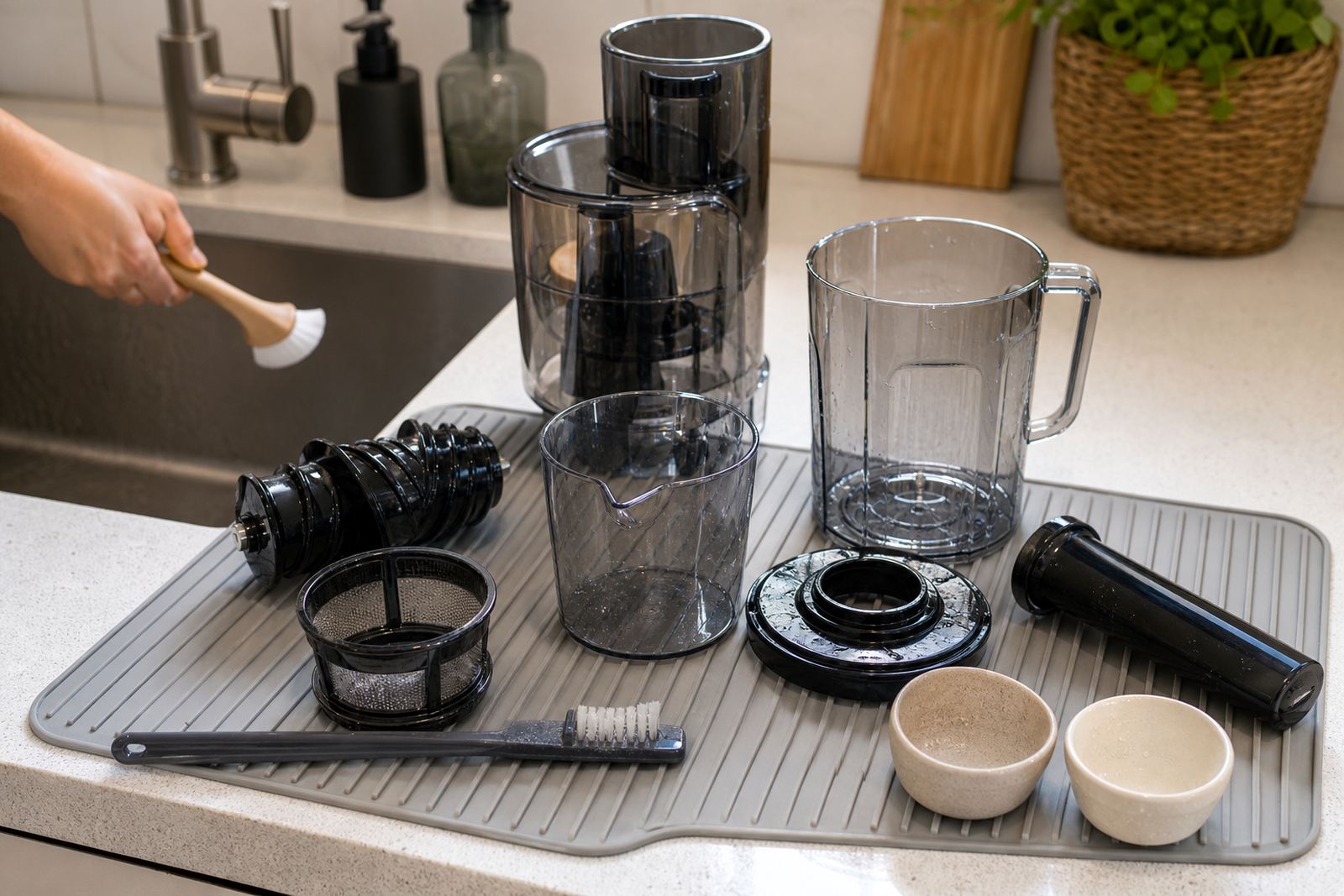
Seals and gaskets last longer when they are cleaned soon after use, rinsed free of pulp and dried before storage. Warm water and a soft brush are usually enough for routine care. Harsh scourers, boiling water and strong chemicals can harden rubber or distort softer compounds. If the part has a groove or lip, clean around the edges where residue often hides. Keep it away from direct sun and not pressed flat under heavy items in a drawer.
Food contact parts should stay free of cracks, mould, sticky residue and strong odours. If a seal becomes tacky, brittle or starts shedding bits, replace it.That makes the next clean-up easier too.
- Rinse promptly after juicing
- Dry fully before storage
- Avoid harsh chemicals and abrasive pads
- Replace if cracked, sticky or misshapen
What to send through before you order
To match the right kit, include the machine type, the location of the seal and the measurements if you have them. A clear photo next to a ruler can be enough for many enquiries. If the machine was assembled incorrectly at some point, tell us which part leaks and whether the issue appears during use, after cleaning or while the machine is standing still. That helps narrow down the correct size and shape.
For delivery across Cape Town, Johannesburg, Durban, Pretoria and George, it is best to confirm the full unit model details and any visible markings on the old part. If the seal has split, send the thickness and the inside opening size if possible. Our team can also assist with seal replacement guidance, screen care, leak troubleshooting and routine care plans for home juicing equipment.
- Machine type and model details
- Seal location and shape
- Measurements or a photo with a ruler
- Where the leak appears and when it happens
Support from Paarden Eiland for spares that fit right
MiniPress works from Paarden Eiland, Cape Town and supports home users nationwide through online ordering and delivery. When a seal or gasket starts failing, the aim is to get the machine closing correctly again without unnecessary guesswork. A well matched replacement helps reduce leaks, supports smoother assembly and keeps the juice path neat for everyday use.
If you need help identifying the right part, our team can guide you through the details before dispatch. That includes first time setup advice, spare parts help, seal replacement support and video support calls when a closer look is needed. For households that rely on a juicer or cold press most days, a correctly sized kit is one of the most useful spare items to keep on hand.
Key facts
| Product type | Replacement seal and gasket kit |
|---|---|
| Use | For home juicers and cold presses |
| Common seal styles | O-ring, flat gasket, lip seal, shaped profile |
| Key measurements | Inner diameter, outer diameter, thickness, groove width |
| Material focus | Food contact sealing materials suited to juicer use |
| Care | Wash gently, dry fully and store out of direct sun |