What this auger pack does inside a slow juicer
An auger is the corkscrew-shaped part that turns produce through the juicing chamber and pushes it against the screen or squeezing surface. In a slow juicer, that controlled movement is what helps separate juice from pulp in an even way, especially with leafy greens, celery, apples, carrots and softer fruit. When the auger wears down, you may notice more pulpy juice, rough feeding, slipping, or a build-up of fibres around the chamber.
This spare auger set is made for household cold press and masticating machines that use a single auger drive path. It is a replacement component, not a full juicer, and it is selected to match the inside shape, shaft profile and locking points of the original part. In practical use, a correct auger keeps the feed steady, reduces strain on the motor and helps the juicer work the way it was built to work.
- Used in slow juicers, masticating juicers and some cold press units
- Designed for steady feed and controlled pulp movement
- Helps restore normal contact between produce and the screen
- Useful when the original auger shows wear, cracks or rounding
Size checks that matter before you order
Augers are not one-size-fits-all. The difference can be a few millimetres on the shaft, the locking tab, the top drive end or the chamber diameter, and that is enough to stop the part from fitting properly. For that reason, the best way to order is to match the old auger exactly, or compare the juicer model details and the internal part shape before confirming.
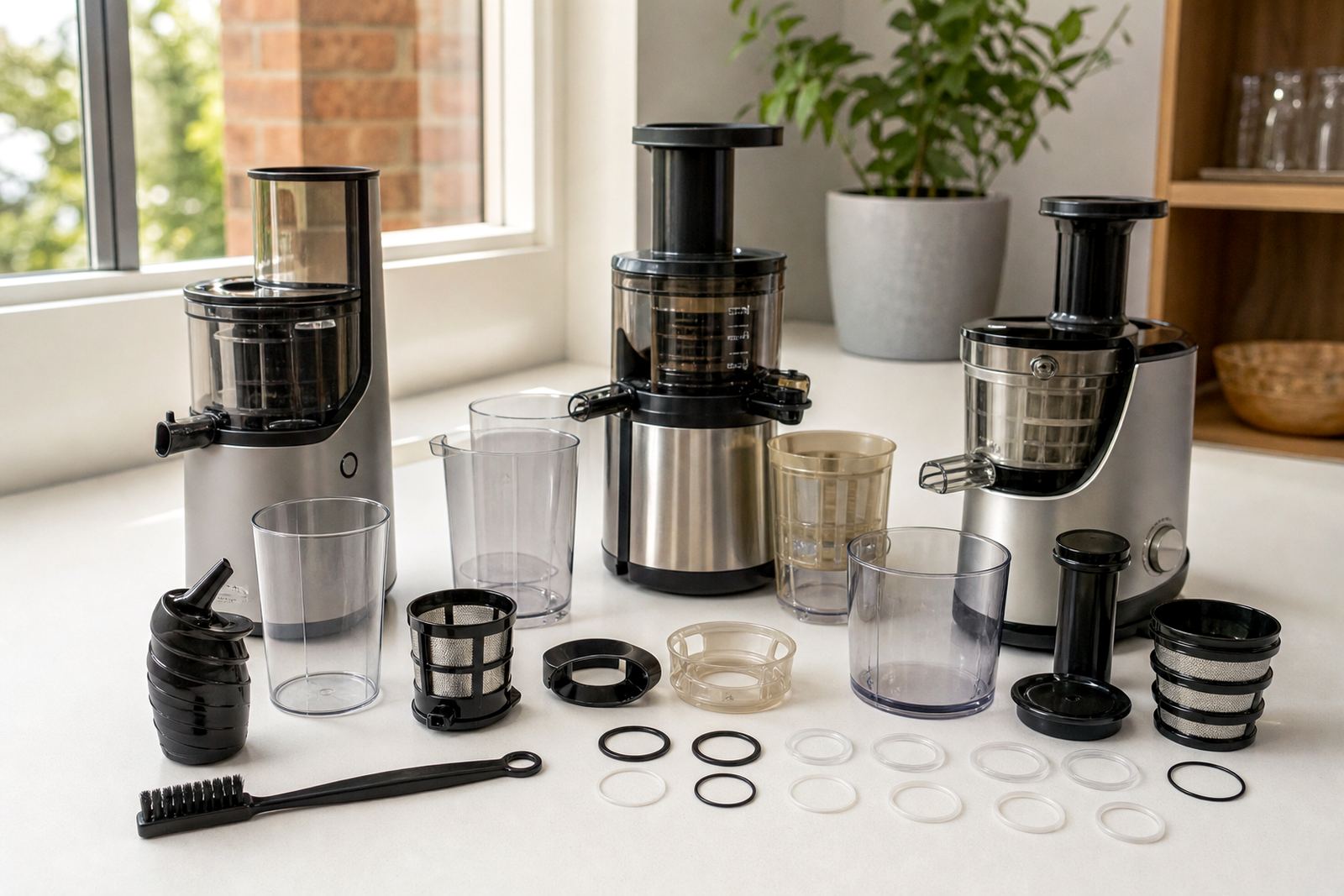
Most household replacements fall into compact and full-size formats, with variations for vertical slow juicers and horizontal slow juicers. Some models also use a different auger for softer produce handling or for dual-stage squeezing. If you are unsure, send the model details and clear photos of the existing part through the enquiry form on our contact page, then the fit can be checked before dispatch.
- Check overall height and diameter
- Check the top drive end, base end and locking features
- Compare the number of ribs or spirals
- Confirm whether the juicer is vertical or horizontal
Where this replacement suits best in the kitchen
This spare set suits home users in Cape Town, Johannesburg, Durban, Pretoria and George who use a slow juicer often enough to notice wear on the working parts. It is also suitable for households dealing with mixed produce, from hard root vegetables to softer fruit, where the auger takes daily load and cleaning is done after each session. Coastal humidity in places like Durban and the Cape can also make regular care important, because moisture left in the chamber can mark or stain parts over time.
For customers in Paarden Eiland, Stellenbosch and Somerset West, the part can be matched for domestic machines used at home or in small prep spaces.The part itself works as a mechanical drive component, so the fitting must be accurate and the surrounding screen, seal and hopper area should also be checked if performance has changed.
- Suitable for regular home juicing routines
- Works well where produce load is moderate to frequent
- Relevant for both inland and coastal homes
- Useful when the machine is still sound but the auger has worn
Fitting notes for a clean and secure install
Installing a replacement auger is normally a straight swap, but the chamber should be cleaned first so grit, fibre and dried residue do not damage the new part. The auger must seat properly on the drive end, turn freely by hand where the design allows, and align with the screen, pulp outlet and locking cover. If the old part failed because of impact or a jam, the surrounding parts should be inspected as well, because a damaged screen or cracked housing can put the new auger under extra strain.
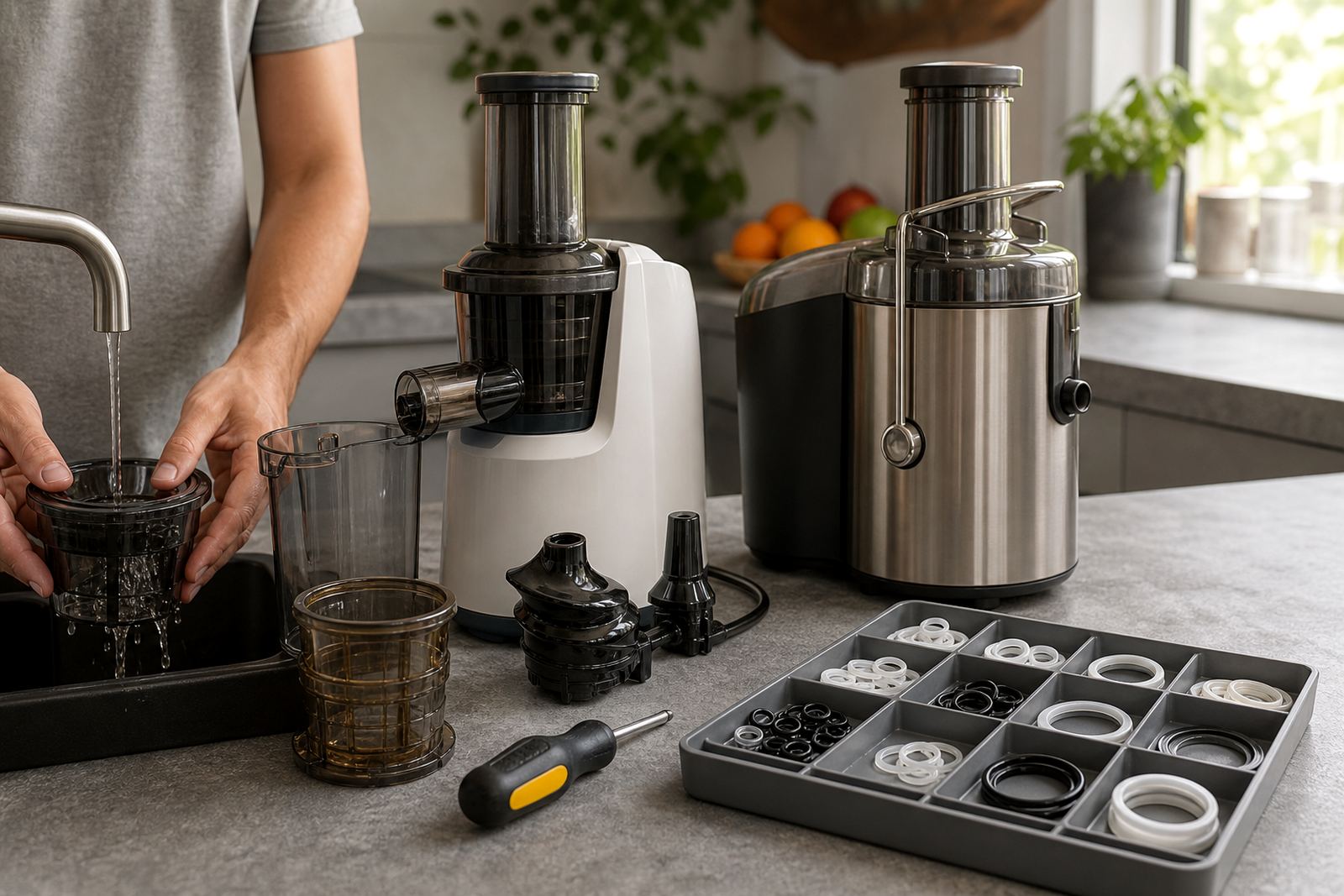
We can help with first time setup, deep clean guidance, seal replacement, screen care and leak troubleshooting if the machine has been noisy, shaking or leaving excess pulp. A slow juicer should not be forced into position. If the auger does not sit correctly, the cause is often a mismatch in size, a worn coupler, or a chamber that still has old residue around the edges.
- Wash and dry the chamber before fitting
- Inspect the screen, seal and drive points at the same time
- Make sure the auger locks in without forcing it
- Test with a small amount of produce first
Care that keeps the new part in good order
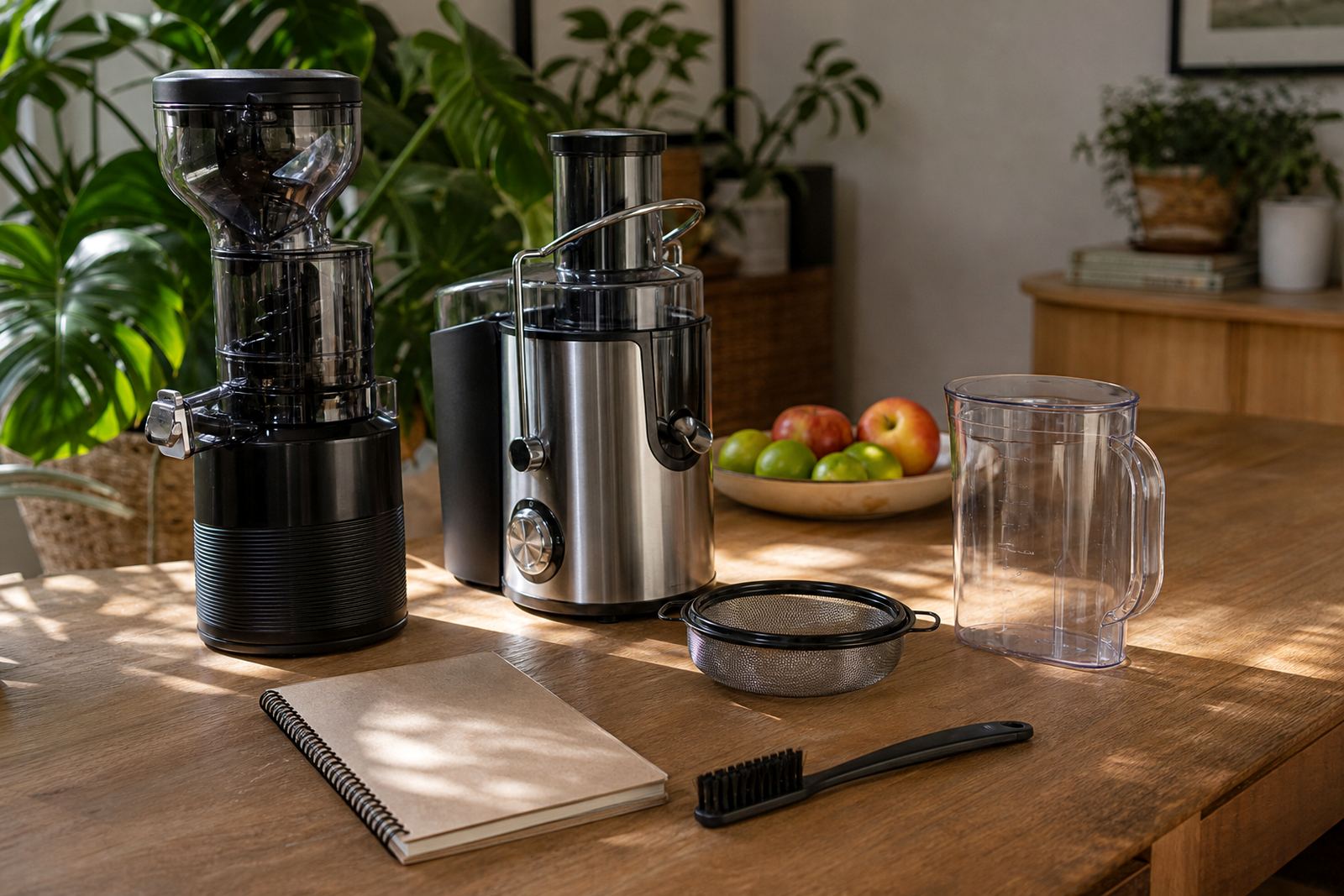
After use, rinse the auger promptly so pulp does not dry into the grooves. A soft brush helps clear fibre from the spiral and the shaft end, while a mild washing liquid and warm water are usually enough for routine cleaning. Avoid harsh scouring pads, metal tools or anything that can nick the surface, because scratches can hold residue and make future cleaning harder.
For food safety, all juice-contact parts should be fully clean and dry before storage. If the machine is put away damp, especially in a coastal area, the auger and nearby parts can take on a stale smell or light staining. Store the part in a clean cupboard or the original chamber if that is how the machine is kept, and do not leave fruit pulp sitting in the assembly after juicing.
- Use a soft brush to clear the spiral and shaft end
- Dry all juice-contact parts before storing
- Keep the part away from heat sources and sunlight
- Check for wear marks during regular cleaning
Details to confirm before placing the order
To supply the correct spare auger set, we need the juicer type, the full model details, and a clear view of the old auger from more than one angle. A photo of the chamber and the drive end is helpful too, because some parts look alike from the front but differ where they connect. If the juicer has been making noise, slipping, leaking or vibrating, it helps to mention that as well, because the issue may involve another part alongside the auger.
Our team in Paarden Eiland handles spare parts help, cable plug checks, routine care plans, video support calls and dispatch across South Africa. Deliveries go to Cape Town, Johannesburg, Durban, Pretoria, George, Stellenbosch and Somerset West. When ordering through the enquiry form on our contact page, please include the machine details, the part condition, and whether you need guidance on fitting or cleaning afterwards. That saves time and reduces the chance of an incorrect match, especially where the old part is worn smooth or slightly misshapen.
- Juicer model and type
- Photo of the old auger from top and side
- Approximate size or measurements if available
- Any signs of wear, cracking, slipping or noise
Key facts
| Product type | Replacement auger set for slow juicers and cold press machines |
|---|---|
| Use case | Spare part for restoring normal feed and squeezing performance |
| Typical fit | Household masticating and centrifugal juicer applications where the model matches |
| Material profile | Food-contact plastic or composite, depending on the machine design |
| Installation | Manual fit into the juicing chamber with correct alignment to the drive end |
| Care | Wash, brush and dry after use before storage |