A kitchen with neat lines and very little spare height
The townhouse is in Durbanville, where many kitchens are fitted tightly under wall cupboards and breakfast shelves. The client had measured the counter area carefully and needed a juicer that would sit low enough for the cupboard run, while still leaving space to lift the top, empty the pulp and rinse the working parts without scraping the underside of the units.
The brief was practical. The household wanted a home juicer that could handle weekday use in the early morning, with less noise than a high speed machine and no drama around cleaning up.
What we matched to the space
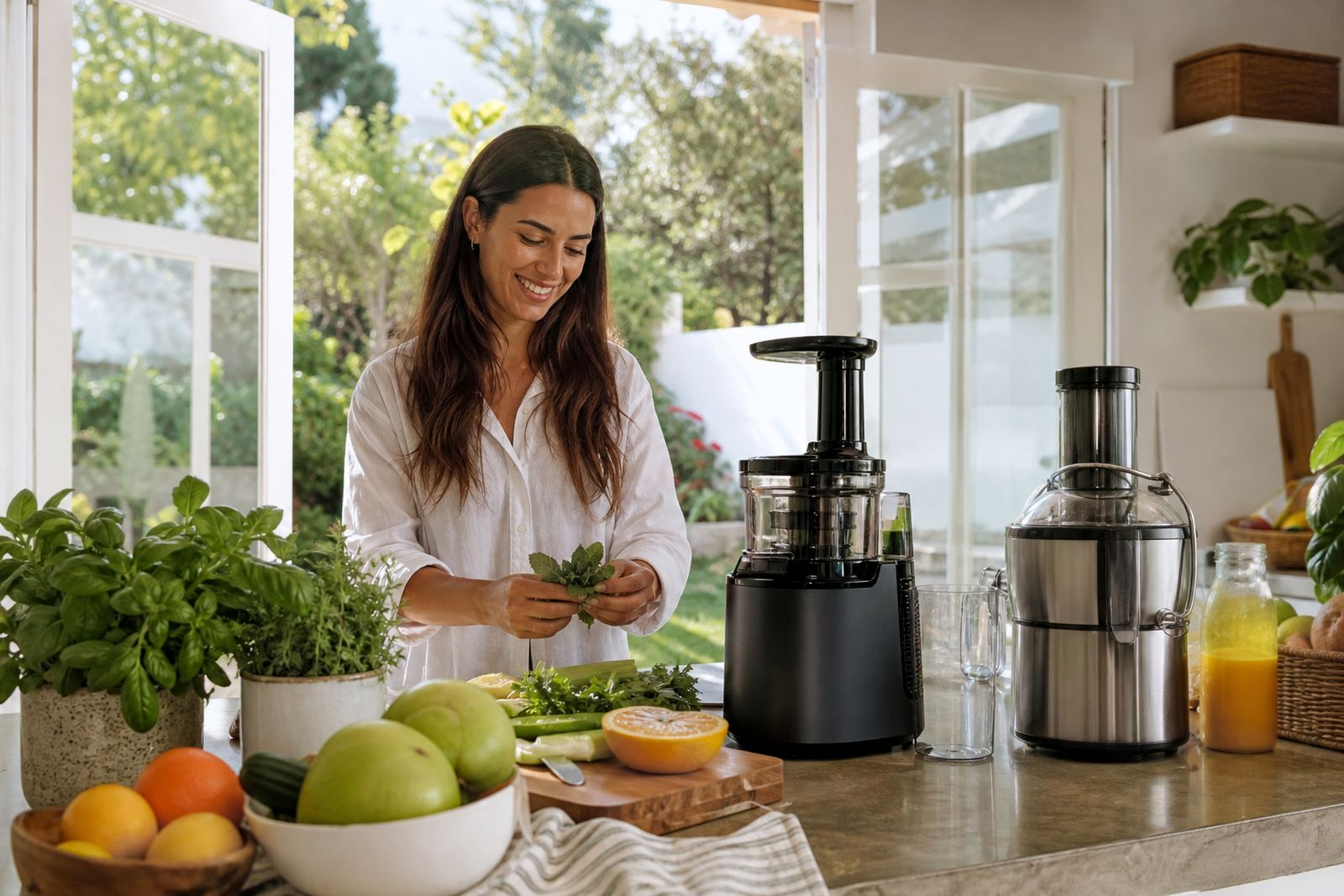
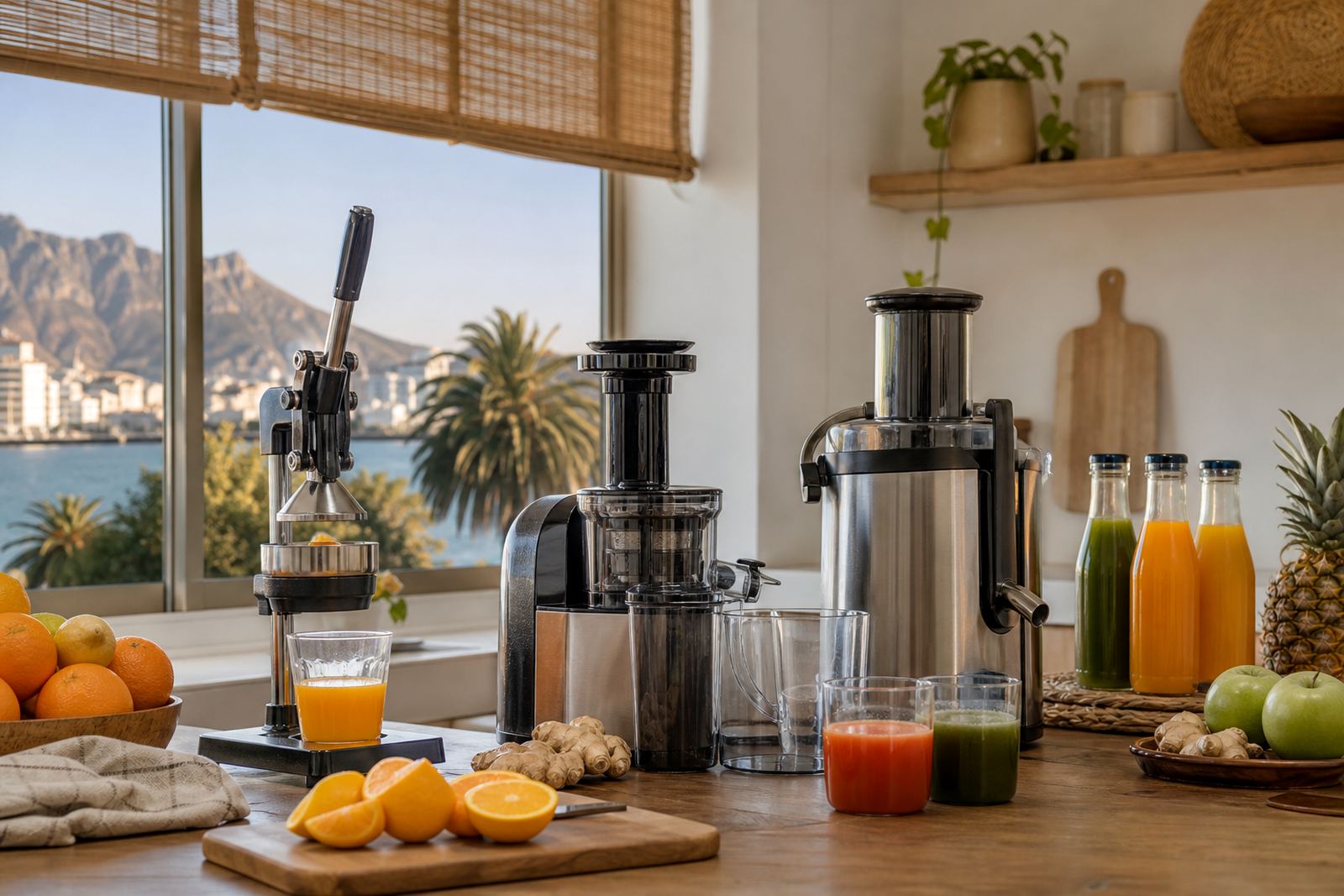
We looked at slow masticating juicers, centrifugal juicers, and cold presses, then matched the recommendation to the cupboard height, noise preference and expected cleaning time. A slow masticating unit was the best fit for this townhouse because it runs at lower speed, usually around 40 to 80 rpm depending on the model, and that suits a quieter household. It also gives a smoother, less aerated juice and works well for leafy produce, citrus, apples and harder vegetables when prepared properly.
A centrifugal juicer remains a useful option when speed matters more than low noise. These machines spin much faster, often several thousand rpm, and they are generally quicker for larger batches. The trade off is more sound and a bit more foam, which is why they are better for households that want rapid use rather than a quiet routine. A cold press is the broader category that includes many slow juicers, and the key benefit is the gentle extraction method rather than high speed cutting.
- Low profile body for under-cabinet placement
- Wider feed opening to reduce pre-cutting where possible
- Detachable parts for a faster wash-down after use
- Stable feet to cut down on movement on tiled counters
Quiet weekday use without the kitchen sounding like a workshop
The townhouse had neighbours close by and a family schedule that starts early, so noise mattered. We checked the sound behaviour of the unit in a normal kitchen setting and explained how produce prep affects the result. Softer fruit and smaller cuts reduce strain on the motor, while firm produce should be fed steadily rather than forced through. That gives a better rhythm and helps keep vibration down.
We also spoke through cable and plug placement, because a tight kitchen can leave leads hanging over the edge or near a kettle point. The setup had to stay clear of splashes, be easy to switch off in a hurry, and not block the path to the sink. In a townhouse kitchen, those details matter more than people think.
- Keep the base on a level counter, not on a draining board edge
- Leave enough space above the lid for safe lifting and removal
- Use a dry cloth under the machine if the countertop is glossy
- Do not run the unit while the feed chamber is overloaded
Cleaning, food safety and the parts people often overlook
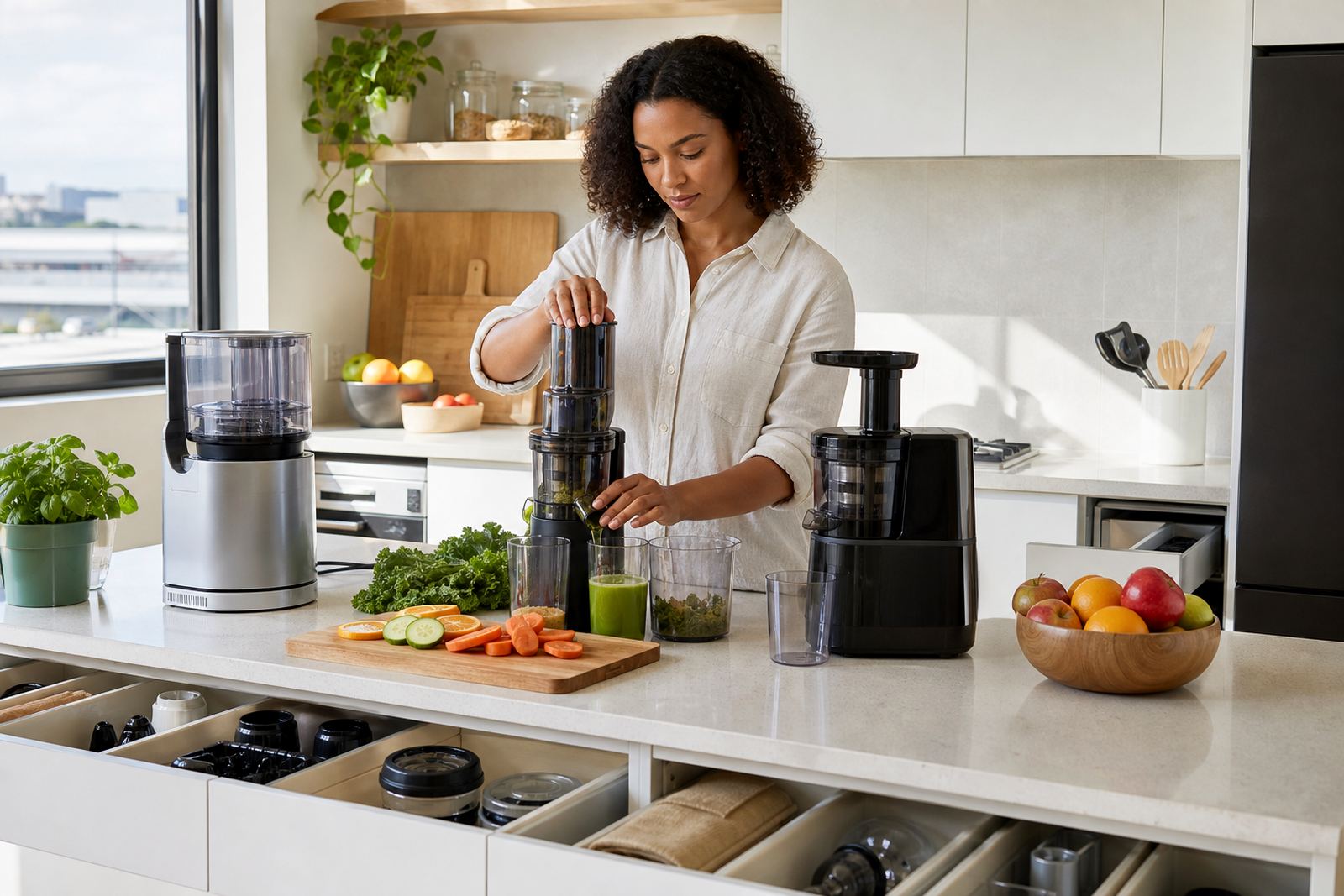
We gave the client first time setup guidance and deep clean guidance, with a focus on the small parts that can collect pulp or moisture. Food contact parts should be washed soon after use, then dried properly before reassembly or storage. That helps reduce staining, odours and unwanted residue building up in seals, screens and feed components.
We also covered routine care for seals, screen care and storage care. If a juicer is put away damp in a coastal area like Durbanville's wider Cape Town climate, moisture can hang around longer than expected, especially in a closed cupboard. In those cases, leaving parts to dry fully on a clean rack before packing them away is just common sense. The household appreciated that the guidance was practical and not overcomplicated, which is often what busy weekday kitchens need.
Spare parts support and the small checks that keep things steady
Because the client planned regular use, we also covered spare parts help, seal replacement, leak troubleshooting, noise vibration checks and cable plug checks. A home juicer can work well for a long time, but only if the seals remain seated correctly, the screen is not blocked, and the base is not wobbling on the counter. Even a small misfit can lead to drips or a louder buzz than expected.
The project was handled over two weeks from initial brief to final handover guidance. The first week covered product matching, measurements and the clearance check. The second week was used for setup support, cleaning guidance and a short video support call so the household could ask about the day to day routine. That kept the process tidy and saved time on site.
- Seal seating checked before first full run
- Screen inspected for fibre build-up after testing
- Noise level reviewed against the townhouse kitchen layout
- Storage plan set for cupboard use after cleaning
What changed in the townhouse after setup
The main result was fit and ease of use. The unit sat neatly below the cupboards, with enough clearance to work without bumping the overhead joinery. The quieter running style suited early weekday use, and the family found the cleaning routine manageable because the parts came apart in a sensible order. That matters when there is school traffic, work calls, and not much spare time before everyone heads out.
For this kind of home, the best outcome is not a fancy feature list. It is a machine that fits the kitchen, behaves properly on a tiled counter, and does not become another job for the end of the day. The Durbanville townhouse got exactly that, plus a clearer routine for daily care and a better sense of how to keep the machine ready for the next use, rather than leaving it half-washed in the sink.
What paid off in the Durbanville townhouse
If we were handling another townhouse with similar constraints, we would repeat the same measured approach: confirm cupboard clearance first, match the machine to the noise tolerance of the household, and walk through the cleaning steps before the first full use. That order prevents unnecessary returns, confused setup and awkward counter placement.
We would also keep the delivery and support plan simple. MiniPress serves Durbanville, Cape Town, Johannesburg, Durban, Pretoria and George, with online ordering and delivery across South Africa. For townhouse kitchens, the practical touchpoints are the same every time: enough space above the machine, safe cable routing, dry storage, and a routine that suits the household rather than fighting it.
Key facts
| Project | Durbanville Townhouse |
|---|---|
| Client type | Private townhouse household |
| Kitchen constraint | Low under-cabinet clearance |
| Noise requirement | Quiet weekday use |
| Timeline | 2 weeks |
| Supplied support | Setup guidance, cleaning guidance, parts care and troubleshooting |