A small Cape Town flat with strict lease rules
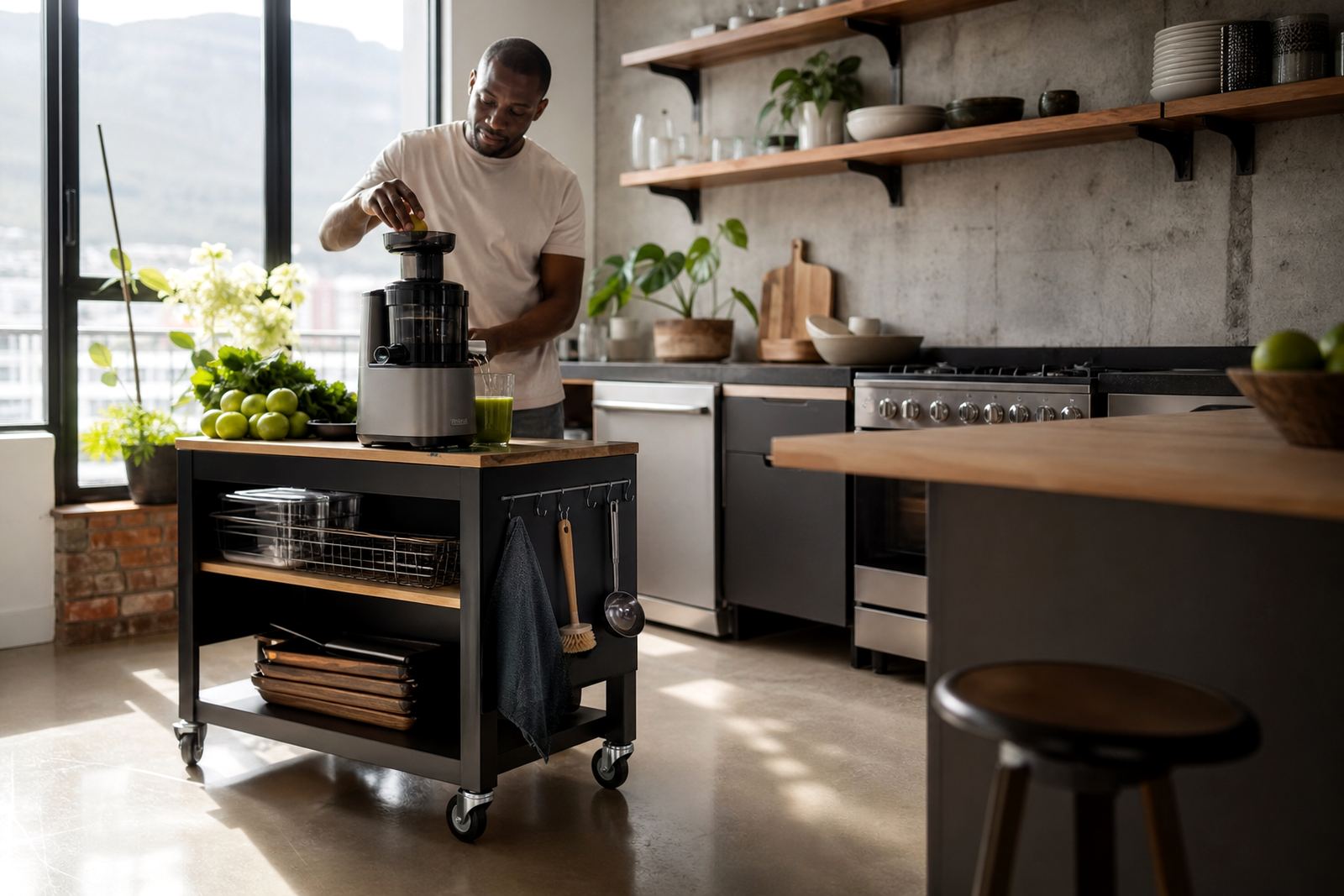
The client lived in Gardens, Cape Town, in a narrow kitchen with very little counter room and a lease that ruled out drilling, wall fittings or permanent changes to the plumbing. The brief was clear enough: build a rental-friendly set-up for a home juicer and cold press that could sit on a trolley, move aside when needed, and leave counters and cupboards unmarked.
The flat had standard 230V power, a narrow prep area and a sink that had to stay clear for washing up. We also had to account for shared building noise limits, so the setup needed to be steady on the counter top and not rattle across the tiles when running. In a place like Gardens, where kitchens are often compact and ventilation can be limited, the layout had to be practical first.
Masticating, centrifugal and cold press for one kitchen
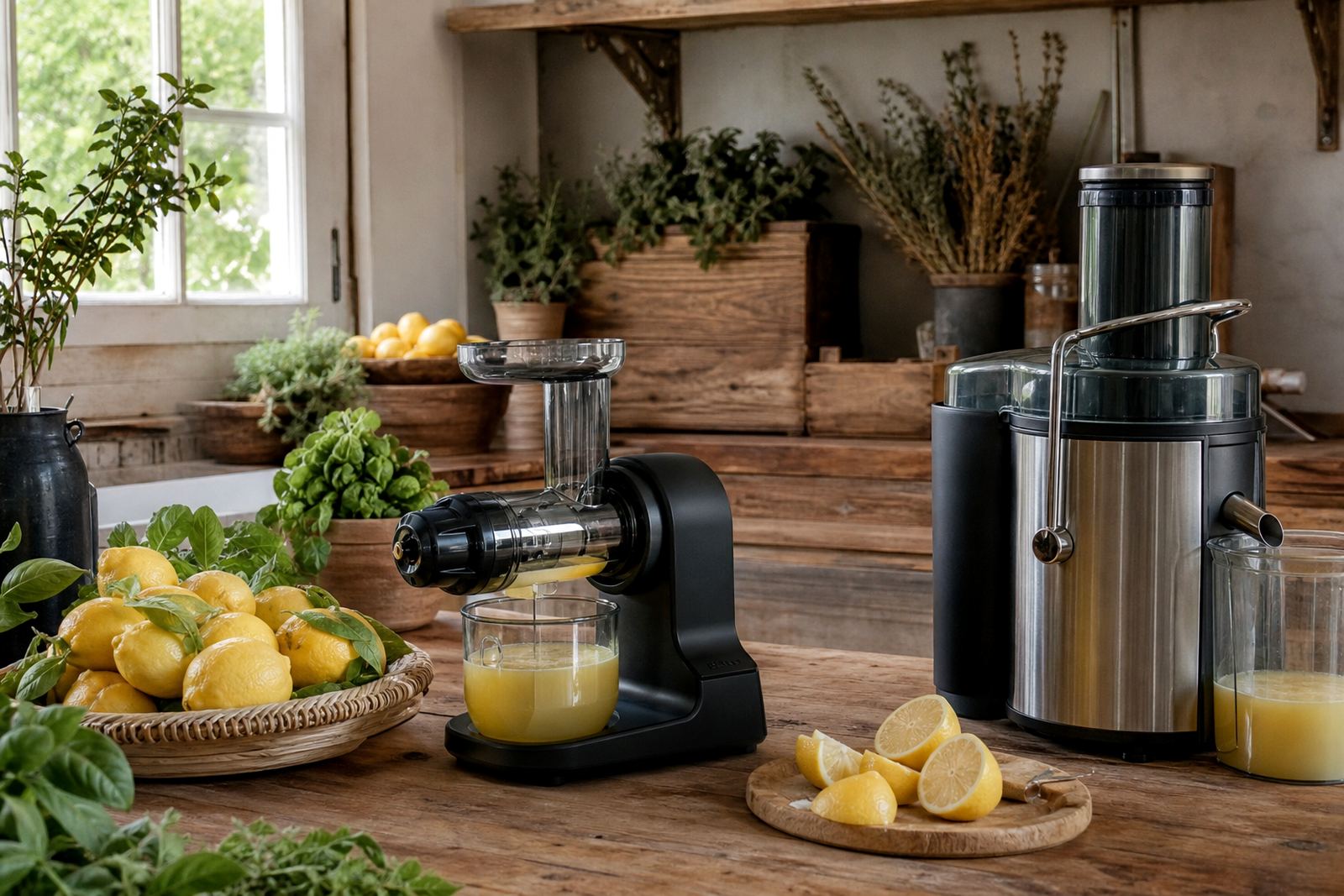
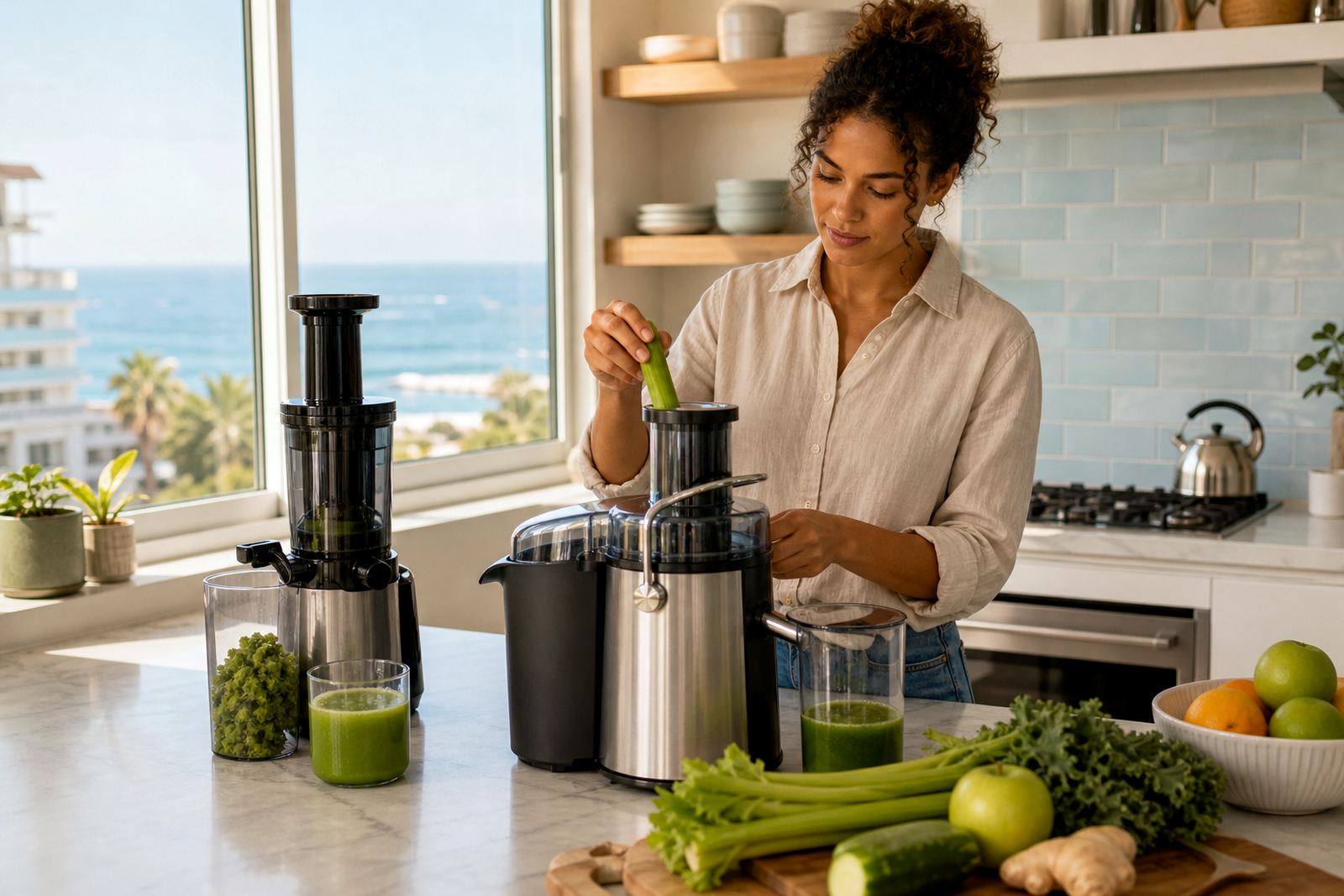
The client wanted options. A slow masticating juicer was better for leafy produce and softer fruit, while a centrifugal juicer suited quicker batches and harder vegetables. We also included a compact cold press arrangement for low-speed extraction and fuller control over feed size. That gave the household a choice between speed, quieter operation and a slower press depending on the day.
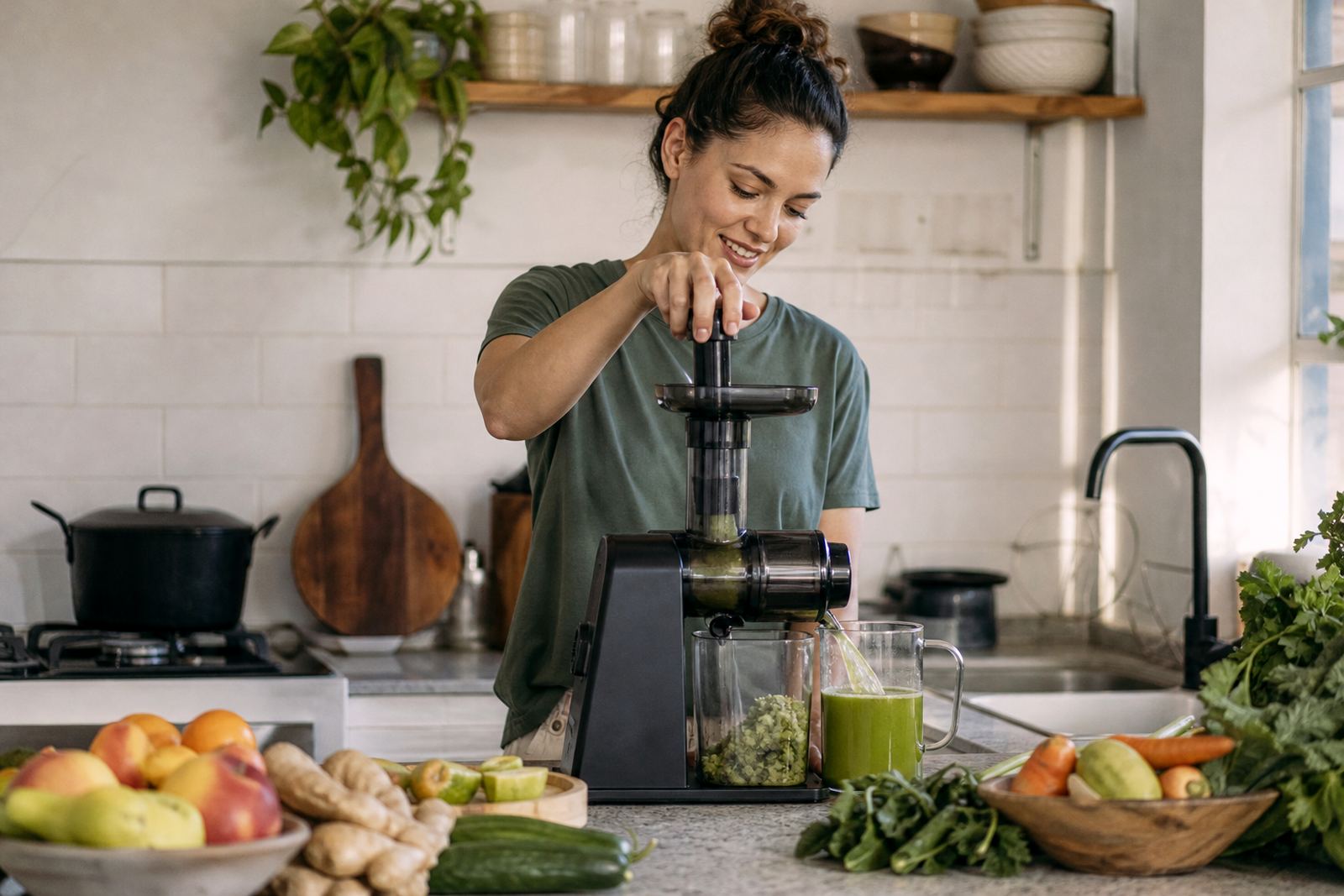
We explained the basic differences in plain terms and showed how each machine behaves with peel, cores and fibrous produce. Slow masticating units use an auger to crush and press ingredients through a screen. Centrifugal units spin a cutting basket at high speed and separate juice by force. Cold press systems work at low speed with minimal heat build-up, which can suit those who prefer a gentler extraction method. No medical claims, just the facts of how the machines operate.
- Slow masticating unit for lower speed juicing and leafy ingredients
- Centrifugal unit for quicker batches and firmer produce
- Cold press arrangement for gentle extraction and compact batch making
- Portable tray and drip mat so the kitchen stayed protected
What we put in place without altering the flat
We supplied a non-slip appliance mat, a removable catch tray, a lidded juice jug, a pulp container, a bottle brush set and a compact storage crate for seals, strainers and cleaning bits. The machines were positioned on a wheeled utility stand with locking castors so the client could roll it to the sink for cleaning and then park it against the wall after use. Nothing was drilled or screwed into the unit, and the rental agreement stayed untouched.
Because the flat had a single main prep socket, cable routing mattered. We checked plug reach, kept leads away from water and left enough slack for safe movement. The arrangement also allowed the client to open cupboard doors without shifting the machine every time. Small thing, but it makes daily use much easier when space is tight.
- Non-slip mat sized for a small counter or trolley top
- Locking castors for easy movement and stable parking
- Separated storage for seals, screens and brushes
- Wipeable tray to catch drips and pulp spill
Cleaning, food safety and daily handling
We focused on easy cleaning because rental kitchens often have limited drying space. The client was shown how to strip the juicing parts, rinse them soon after use and avoid letting pulp dry hard inside the screen or feed tube. We also covered food safety basics: clean hands, clean produce, no cross use of dirty cloths and no storing wet parts inside closed containers.
The team gave guidance on screen care, seal replacement checks and routine deep cleaning. We also covered noise and vibration checks, because a loose foot or an unbalanced basket can turn a quiet machine into a nuisance. For the plug, cable and storage, we kept the routine dead simple: inspect, clean, dry and store. That is usually enough to keep a home unit in decent nick in a humid coastal city.
- Wash removable parts straight after use
- Dry screens and seals fully before storage
- Keep the motor base away from splashes
- Inspect cables, plugs and feet for wear
Two weeks from brief to working setup
Week one was the assessment and layout planning. We measured the available counter area, checked the socket position and looked at how the client moved through the kitchen. Week two was delivery, setup and handover. That included first time setup, a short video support call for reminders, and a practical run-through of batch size, feed pace and safe cleaning. There was no need for a follow-up fix because the layout was right the first time, which saved time and kept the flat tidy.
The result was a stable, rental-friendly juicing station that could be used on a busy weekday and packed away after. The client could make small batches without clearing half the kitchen, and the cleaning routine stayed manageable. The machines were easy to store, the counter stayed protected and there was no damage to the property. A clean setup, no fuss.
What paid off in the Gardens rental flat
We would use the same approach again for any rental flat in Cape Town, Johannesburg, Durban, Pretoria or George: keep it portable, keep it washable and avoid permanent changes. For a compact unit, that means a trolley or stand, a protected prep surface, spare seals on hand and a clear routine for rinsing and drying. It also means making sure the machine choice matches the household rhythm, not just the counter space.
For this Gardens project, the mix of a slow masticating machine, a faster centrifugal option and a cold press setup gave the tenant enough flexibility without cluttering the flat. That balance is what matters in a lease-bound kitchen, especially where space, noise and cleanup all have to work together.
Local support from Paarden Eiland to Gardens
MiniPress handles home juicers and cold presses online from our Paarden Eiland base in Cape Town, with delivery across South Africa and service support for Cape Town, Johannesburg, Durban, Pretoria and George. For this project, the team handled first time setup, seal guidance, screen care, leak troubleshooting and routine care advice through our enquiry form. The work fitted a rented flat because it respected the property, the lease and the day to day realities of a small city kitchen.
It was a practical job, and that's usually what rental spaces need most: equipment that works hard, stays tidy and can be moved out of the way without drama.
Hand-over notes from the job
- Project town: Gardens, Cape Town
- Space type: rental flat kitchen with limited prep area
- Modification level: none, all items remained portable
- Support supplied: setup, care guidance and storage advice
Key facts
| Project type | Rental-friendly juicer arrangement |
|---|---|
| Town | Gardens, Cape Town |
| Timeline | 2 weeks from assessment to hand-over |
| Power | Standard 230V household socket |
| Setup style | Portable trolley, non-slip mat, no permanent fixings |
| Machine mix | Slow masticating, centrifugal and cold press options |