
What the Sea Point kitchen needed to handle
The client was a private apartment owner in Sea Point, Cape Town, working with a compact kitchen and very little free surface space. The brief was clear enough: keep the juicing station close to the sink, use one main counter only, and avoid a set-up that would need moving every time the stove or prep board came out.
The apartment sits in a coastal area, so we also looked at humidity, salt air and the reality of daily use in a small home. In tight kitchens, wet pulp, drips and stray cords can become a nuisance fast, so the layout had to support fast wipe-downs and safe storage between uses.
- Client type: private apartment owner
- Town: Sea Point, Cape Town
- Use case: home juicing on a compact counter
- Main concern: storage and clean-up in limited space
Choosing a vertical cold press for a slim counter
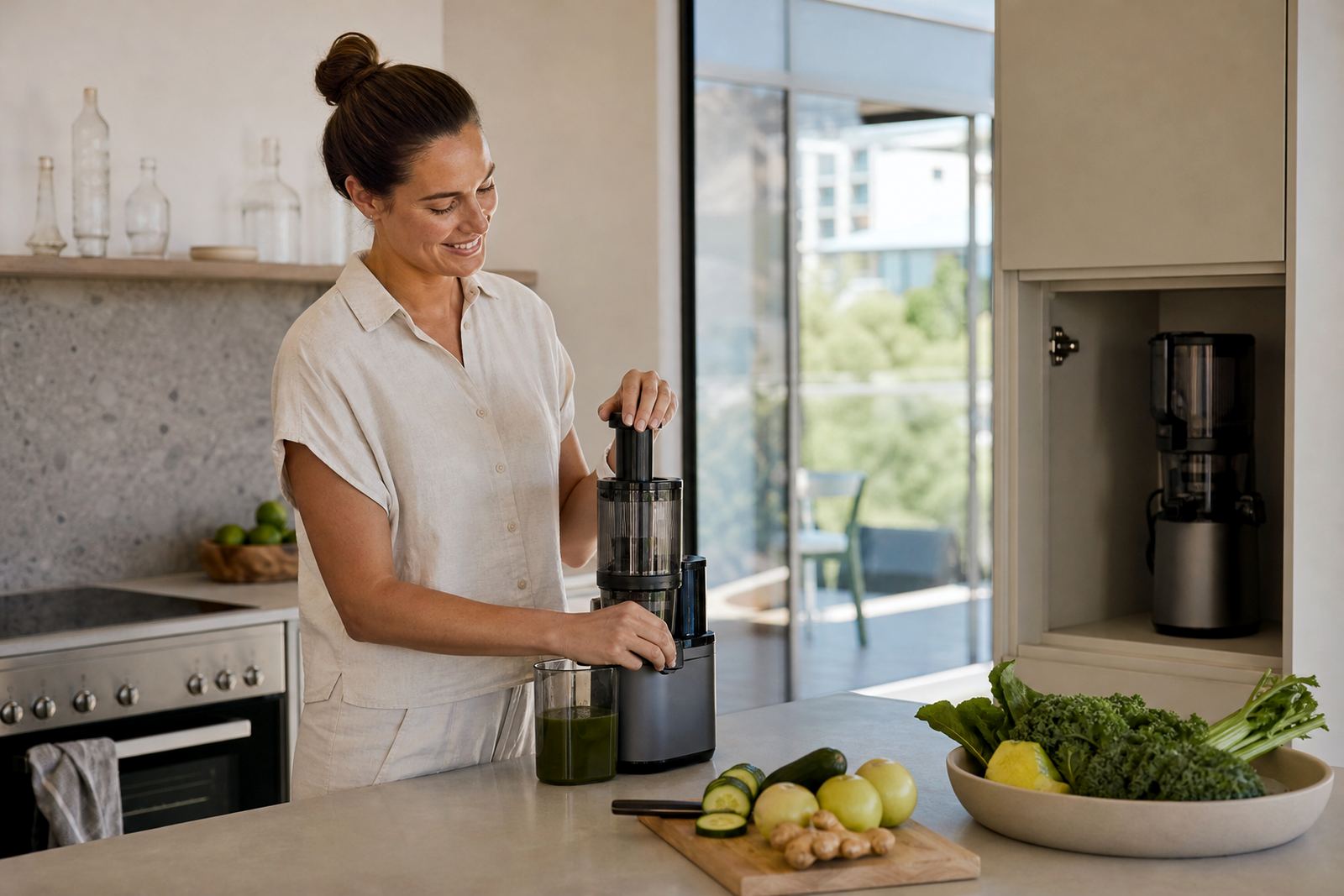
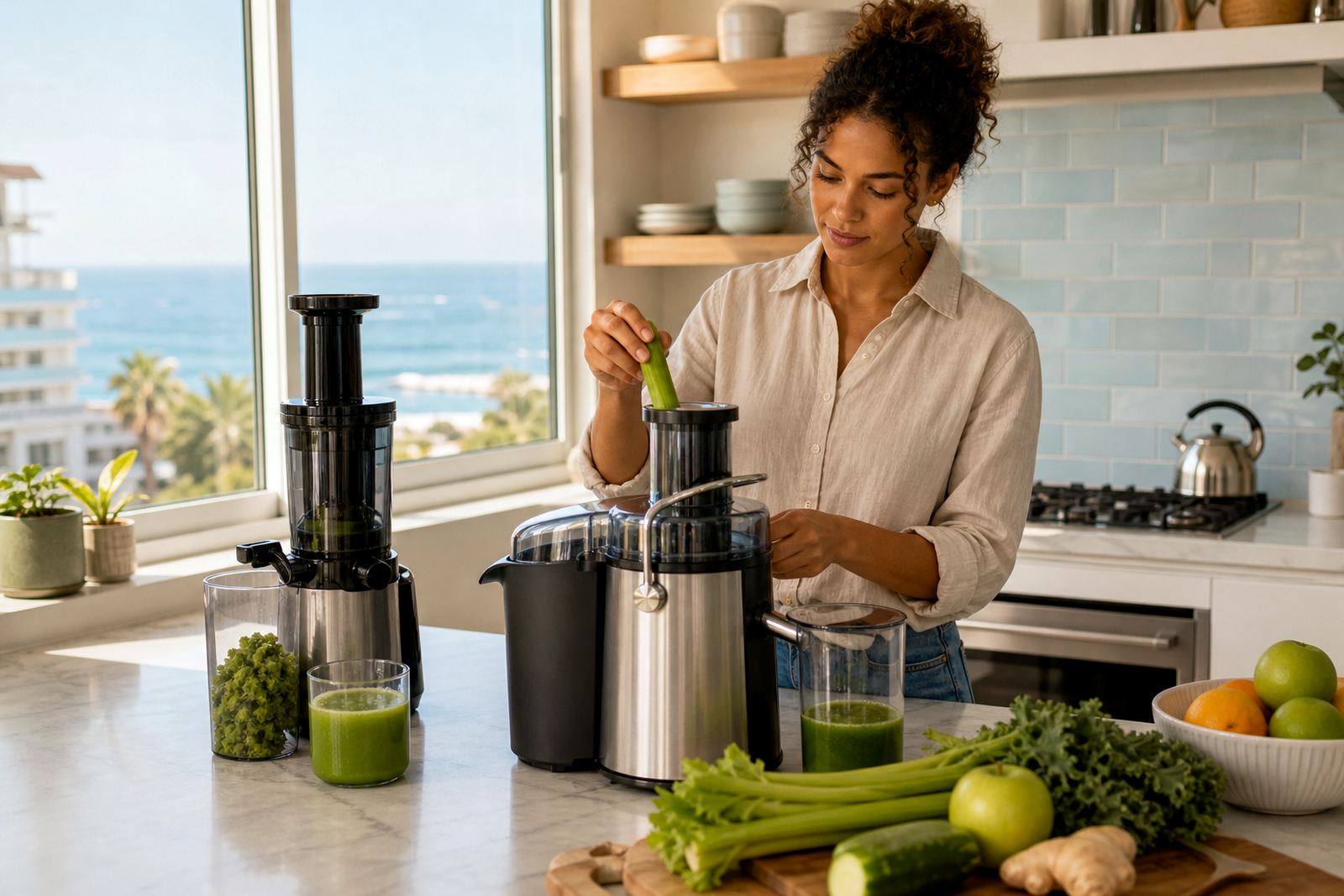
For this project we supplied a vertical cold press rather than a centrifugal unit. In plain terms, a slow masticating juicer works by crushing and pressing produce at a slower speed, while a centrifugal juicer uses a fast spinning basket to separate juice from pulp. A cold press is often better suited to a smaller kitchen when the user wants quieter operation and a more controlled feed opening, though it does take a little longer to prepare fruit and vegetables.
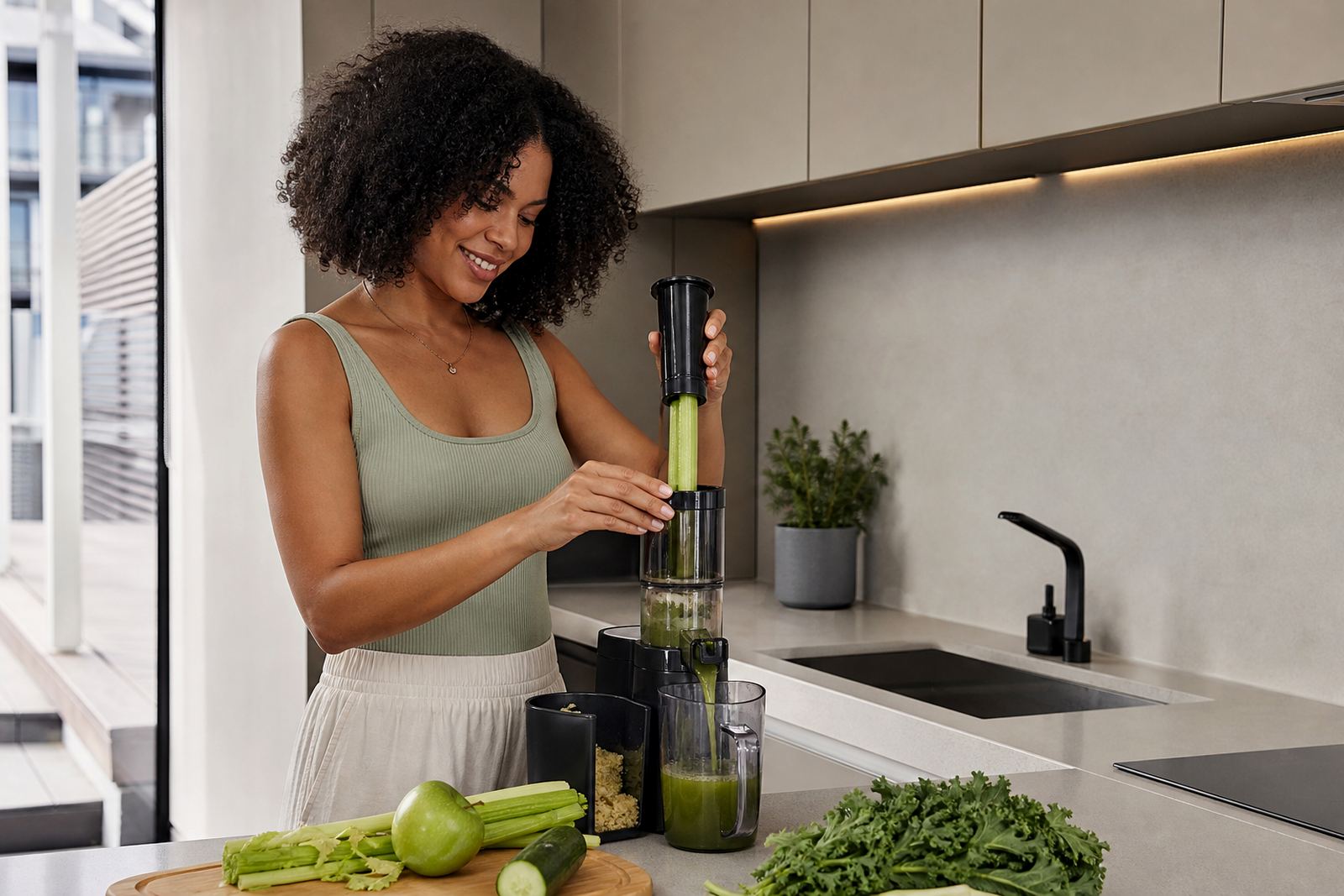
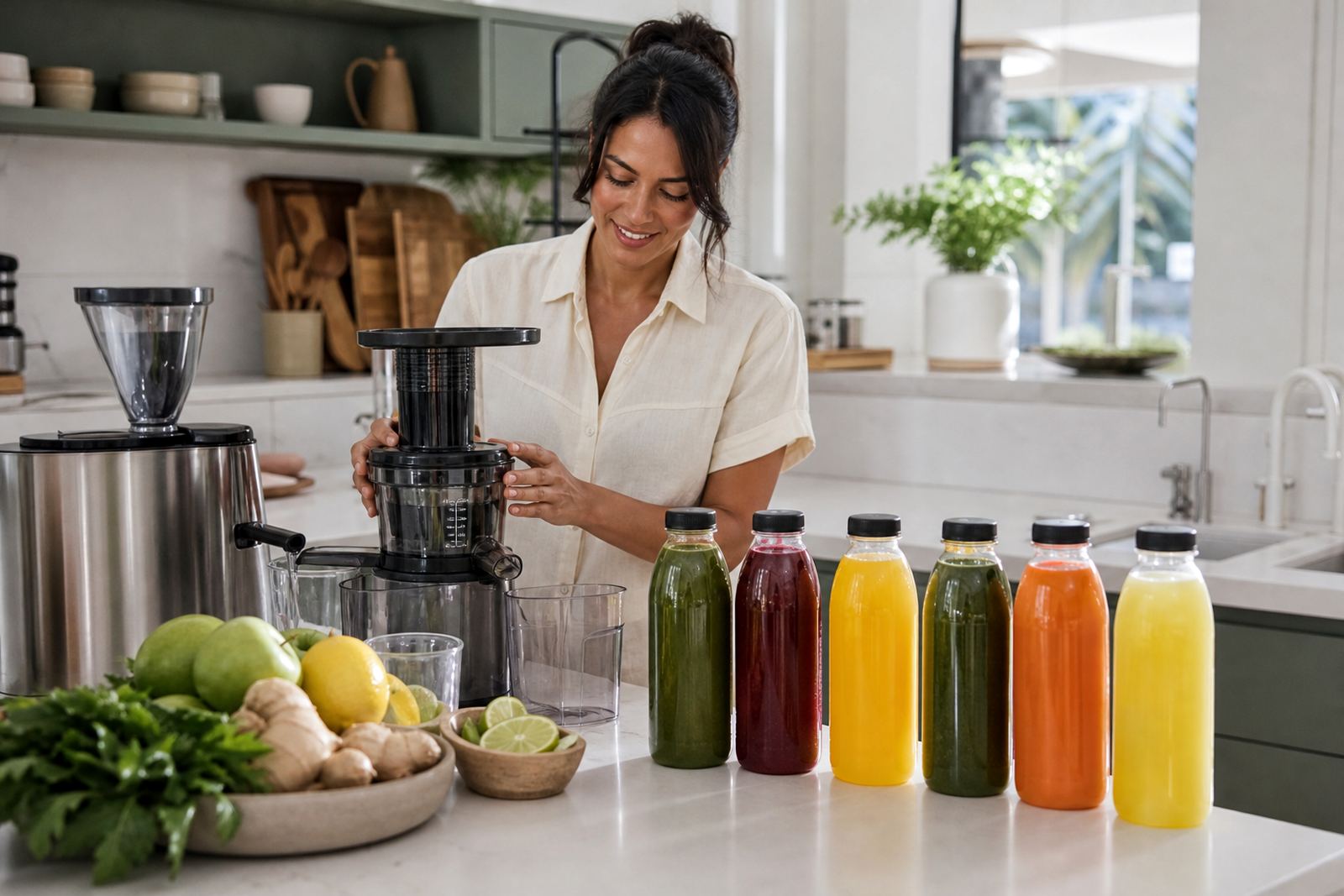
The unit selected for the flat had a narrow footprint, a top feed chute, removable juice bowl parts and a pulp outlet that could be directed into a container. We paired it with bottle storage that sat neatly beside the machine, so the workflow stayed in one line rather than spreading across the counter.
- Vertical slow masticating design
- Single-serve and small batch use
- Removable parts for washing by hand
- Stable base for a narrow worktop
How the layout was arranged in the flat
The counter in the Sea Point flat was narrow, so we worked from the back wall outwards. The machine was placed where the cord would not cross a wet area, and the bottle storage sat close enough for quick filling, but not so close that it crowded the feed area. The result was a tidy station that could be used without shifting other kitchen items around first.
Because apartments can have smaller sinks and limited draining space, we kept the cleaning path short. Rinse water, brushes and the wash basin all stayed within arm's reach.
- Machine placed beside the sink zone
- Bottles stored upright on the same slim counter
- Cord kept clear of splash areas
- Cleaning tools stored within easy reach
What we supplied and set up
Our team handled the first time setup, screen care guidance, seal checks and basic noise and vibration checks on site. We also showed the client how to seat the auger correctly, lock the chamber, and check that the pulp outlet and juice spout were aligned before use. That is important for any home juicer, because a small misfit can lead to leaks or a noisy run.
We left practical care items in place and explained which parts should be washed immediately after use, and which can be removed and dried separately. Food safety in a home kitchen starts with clean hands, clean produce, clean surfaces and dry components before storage. It also helps to keep the machine away from raw meat prep areas and to use a fresh cloth for wiping juice residue.
- First time setup and fitment check
- Brushes and tools for daily cleaning
- Seal replacement advice if needed later
- Leak troubleshooting and cable plug checks
The schedule from enquiry to handover
The project ran over two weeks from the first enquiry through to handover. Week one covered the brief, counter measurements and product match. Week two covered delivery, setup and the working demonstration in the apartment kitchen. That pace suited the client, who wanted the space ready without turning the whole room upside down.
We also used the time to confirm storage for bottles and spare parts, so there would be a clear home for everything. In a small flat, if the lid, pusher and cleaning brush each end up in a different cupboard, the machine often gets used less. Keeping the set together makes daily use a lot more practical.
- Week 1: brief, measurements and product match
- Week 2: delivery, setup and handover
- Outcome: one counter zone, one storage point
What changed after the setup
Once the machine and bottles were in place, the kitchen felt less crowded and the daily clean-up was more straightforward. The client had a defined prep zone, less visible clutter and a clear routine for washing, drying and storing the juicer parts. That is often the difference between a machine that lives on the counter and one that gets packed away after every use.
The final result suited the apartment well: neat, quiet enough for close neighbours and easy to manage in a coastal setting. The bottle storage also made it easier to portion juice straight after pressing, without needing extra containers spread across the room.
- Cleaner counter layout
- Less handling between pressing and storage
- Better use of a small kitchen footprint
- More straightforward daily maintenance
the approach we keep using in a similar flat
For another Sea Point apartment, we would follow the same approach: measure first, keep the station close to water and wash-up space, and choose a vertical cold press with easy-to-remove parts. We would also recommend a bottle rack or tray that keeps the storage stable, because loose bottles on a slim counter can tip when the kitchen gets busy.
If the flat had a different layout, we would still keep the process practical. That means checking the plug position, planning for cable length, allowing enough room for the pulp container, and making sure the lid and chamber can be opened without scraping cupboards. Small details like that save time later.
- Measure the counter before selecting the machine
- Keep the juicer near a sink and drying space
- Plan for bottle storage before delivery
- Check plug position and cable reach
Key facts
| Project | Sea Point Flat |
|---|---|
| Location | Sea Point, Cape Town |
| Machine type | Vertical cold press juicer |
| Layout | Slim counter with bottle storage |
| Timeline | 2 weeks |
| Support included | Setup, cleaning guidance, seal checks, leak troubleshooting |