
A kitchen that had to work harder on Saturdays
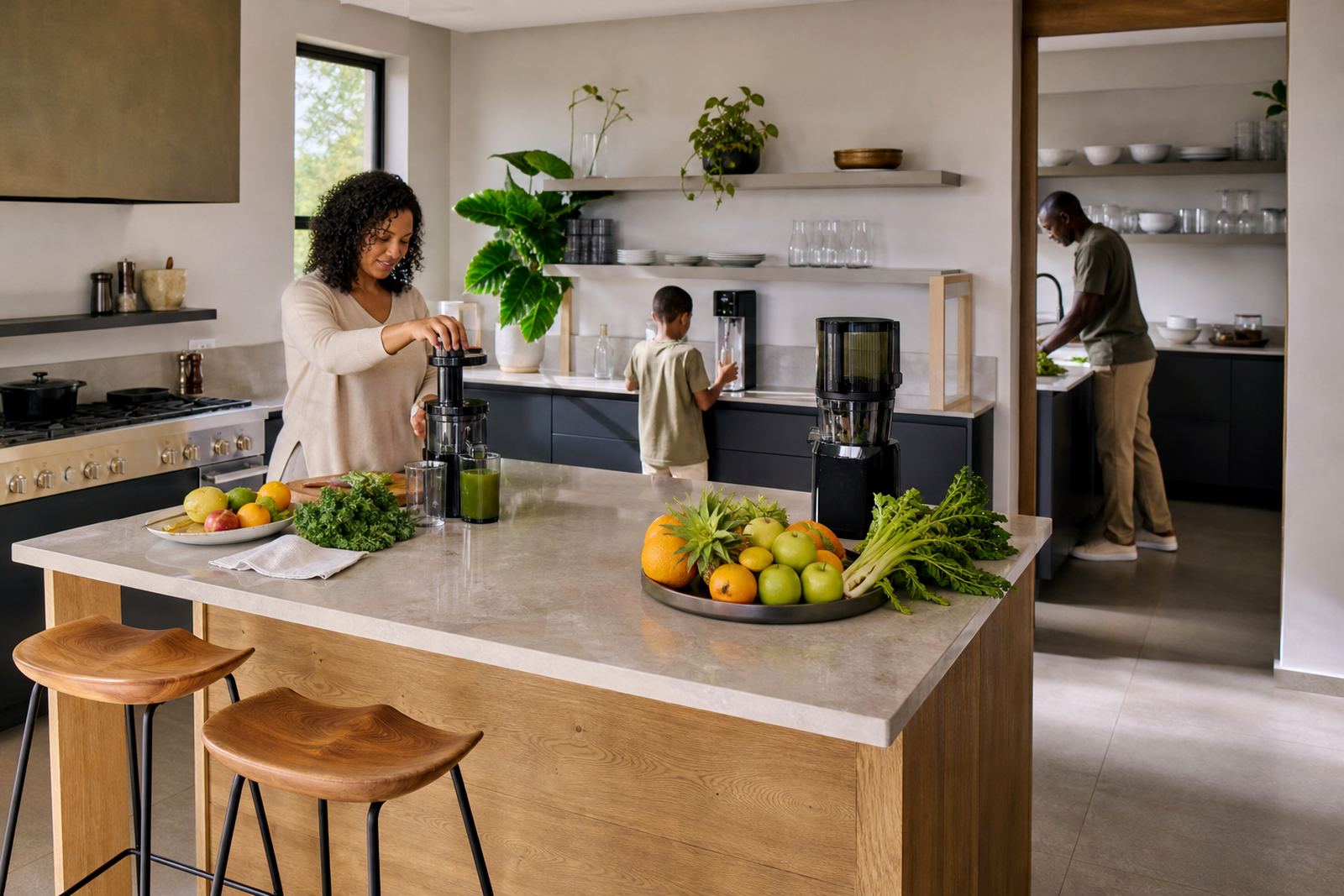
The brief came from a private home in Somerset West where the owners wanted a proper weekend batch-prep point for juice and cold-pressed blends, plus enough storage for bottles, pulp trays and cleaning tools. The kitchen was already well used, so the new setup had to sit neatly beside the sink run and still leave space for food prep, kettle use and school-lunch packing.
The main request was practical: keep the workflow short, keep the mess under control, and make it easy for different family members to use the equipment without guesswork. The client also asked for a quieter machine where possible, because early morning blending and juicing in a close packed home can carry through the house more than people expect.
What had to be fitted around the room
The kitchen layout had a few limits. There was a fixed splashback, a narrow section of counter by the stove, and only one good plug point close to the intended juicing station. Somerset West humidity also means seals, strainers and stored parts need proper drying so they do not hold damp smell or build up residue. We planned around that by keeping the storage open and visible rather than packing everything into a closed cupboard.
- Counter space measured for a small appliance footprint and a separate bottle shelf
- Power kept close to the work zone to avoid loose extension leads across walkways
- Cleaning space left beside the sink for brushes, drip trays and rinsing parts
- Ventilation kept clear so the area could dry out after use
The juicers and cold presses that made sense here
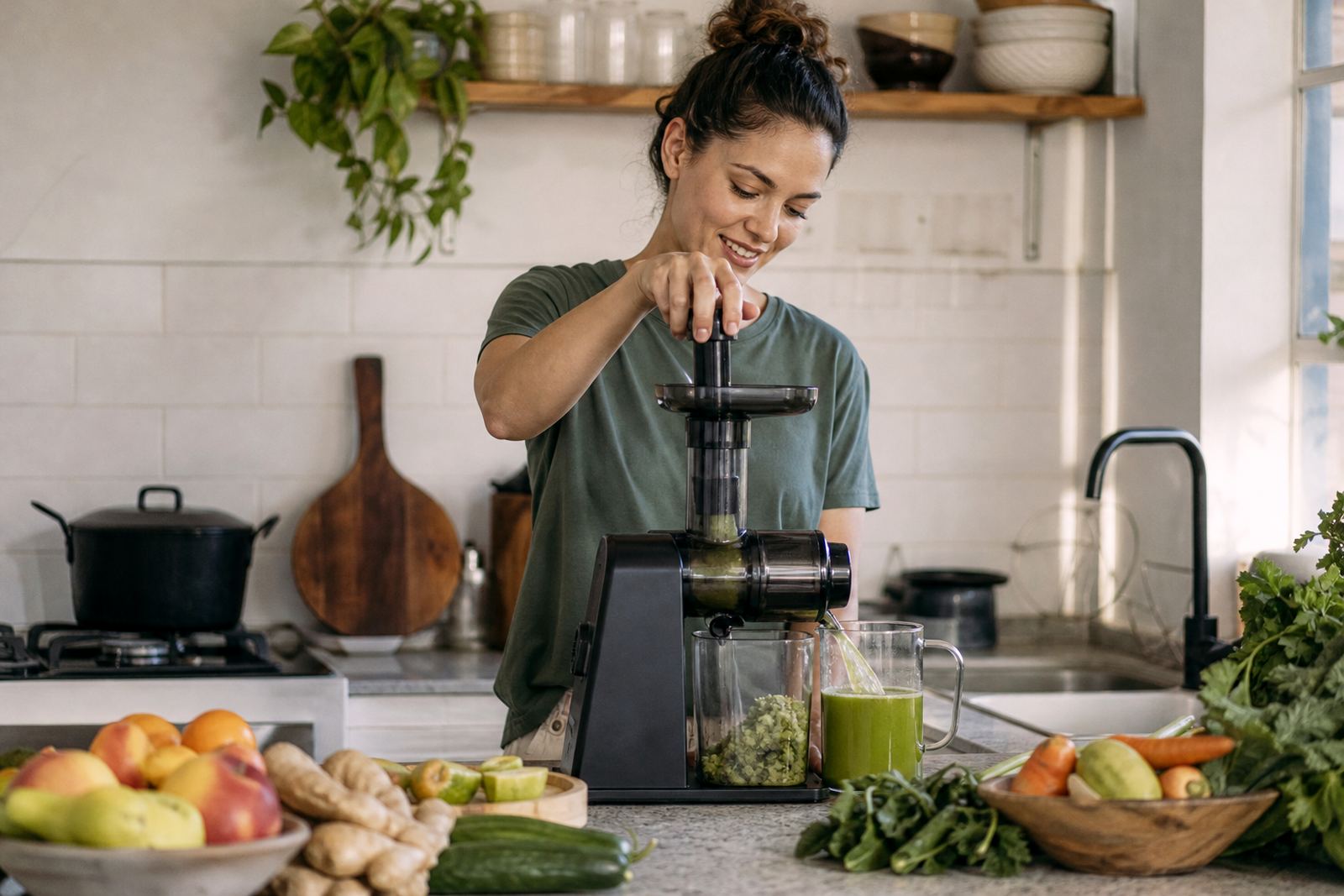
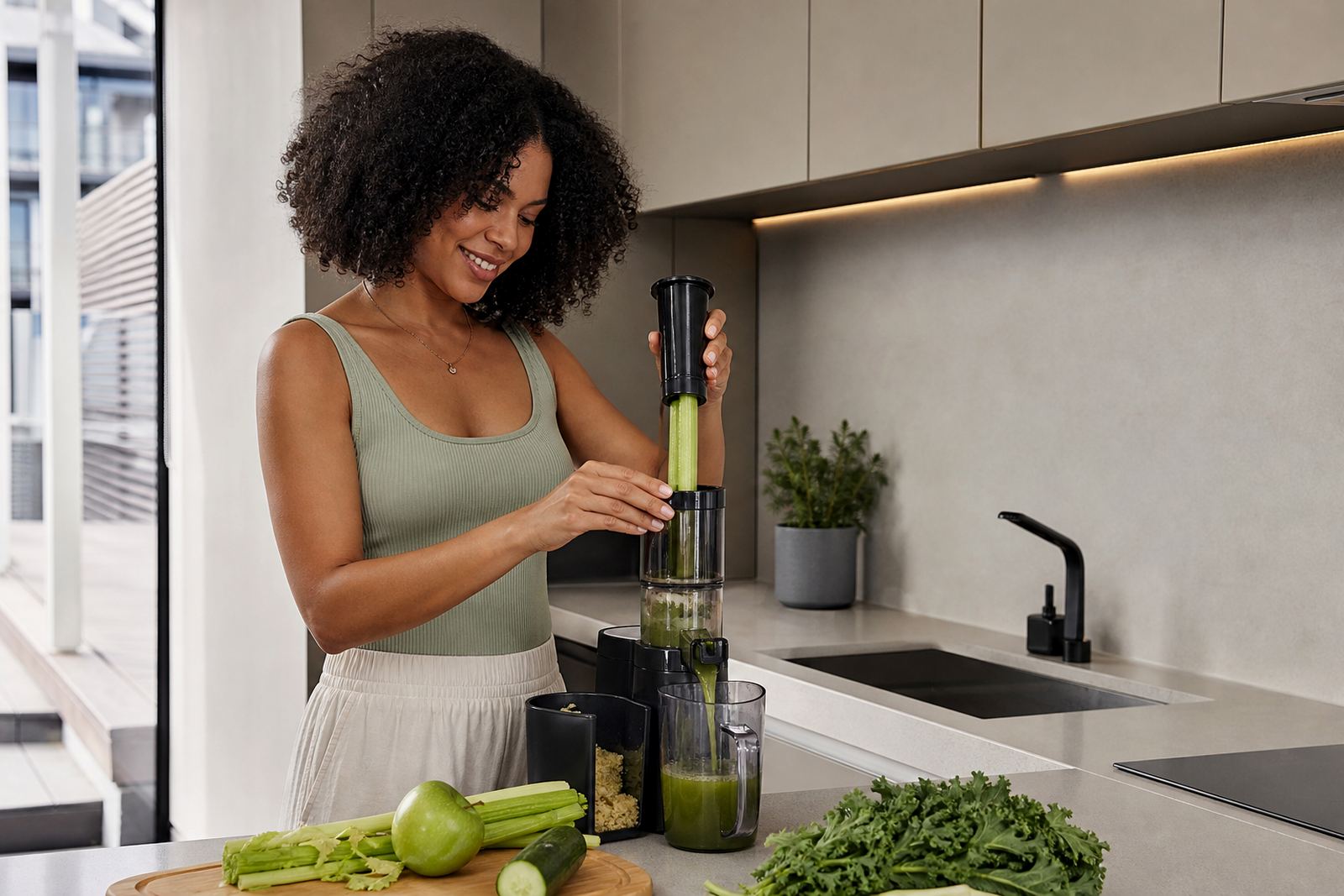
For this home we supplied guidance around two main machine types and a cold press option. A slow masticating juicer works by crushing and pressing produce at a lower speed, which usually gives a quieter run and can handle leafy ingredients and softer fruit with less splatter. A centrifugal juicer uses a faster spinning basket and tends to suit harder produce and quicker turnaround, though it is usually louder and can introduce more foam.
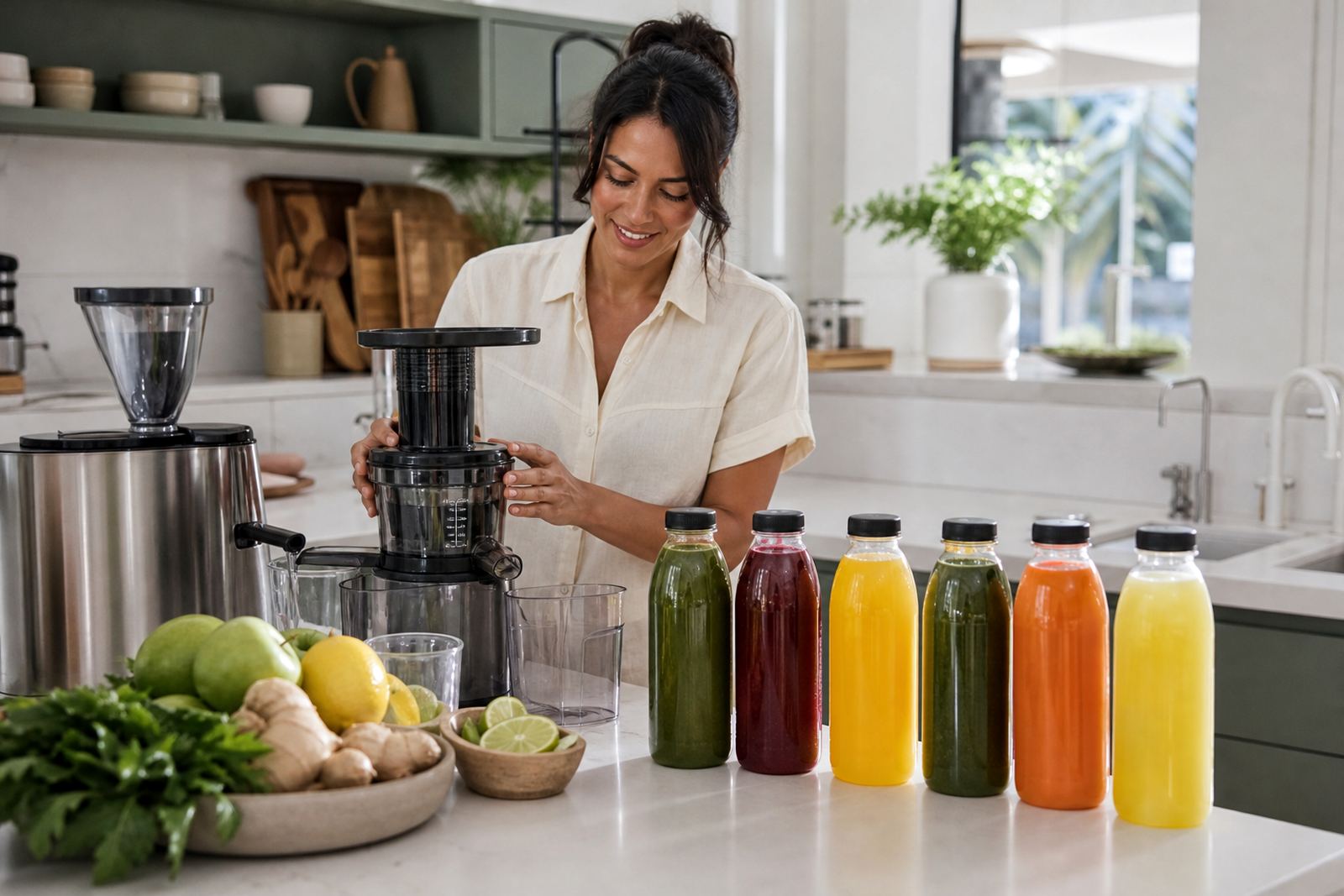
The cold press side was chosen for the weekend batch-prep routine because it fits a slower, more controlled pace and gives better separation of juice and pulp for storage. In a family kitchen, that matters when bottles need to be filled, capped and placed in the fridge in a tidy line.
- Slow masticating option for leafy greens, herbs and mixed produce
- Centrifugal option for fast prep with firmer fruit and vegetables
- Cold press use for larger batch sessions and cleaner bottle filling
- Food-safe contact parts that can be washed and dried straight after use
Cleaning, safety and the small things that save time
A clean juicing station is not just about looks. Leftover pulp, wet seals and trapped bits around the screen can shorten the working life of a machine and create unpleasant odours. We showed the household a cleaning pattern that starts straight after use, while the parts are still easy to rinse, not later when dried residue has set hard.
We also covered safe handling and storage. That included keeping cables clear of water, checking the plug and lead for wear, and making sure parts were fully dry before they went back on the shelf. In a coastal area like Somerset West, that extra drying time matters more than people think.
- Screen care and soft-brush cleaning for fine mesh parts
- Seal replacement guidance where wear or leaks appear
- Leak troubleshooting and simple checks at connection points
- Noise and vibration checks if a machine starts to move or rattle on the counter
How the setup was put in and tested
The work was completed over two weeks from first assessment to final handover. Week one covered measurements, layout planning and machine selection advice, followed by a check on storage for bottles, cutters, brushes and spare seals. Week two was used for setup, first time guidance and a practical test with mixed produce to confirm that the counter height, bottle shelf and cleaning space all worked together.
We also ran through basic cable and plug checks, because a home appliance area should not depend on guesswork. The final result was a tidier workflow with less back-and-forth between sink, counter and fridge. One or two details were adjusted after the first test run, which is normal in a lived-in kitchen and saved hassle later on.
What changed after the first weekend batch
The biggest change was order. Bottles now have a fixed landing spot, the working area clears faster, and the family does not need to search for brushes or a spare seal before starting. The slower press routine suits the weekend prep session, while the faster juicer option remains available for smaller weekday runs.
For a home like this, the result is not about turning the kitchen into a workshop. It is about making sure the equipment, cleaning tools and storage all sit where they should, so the job can be done without clutter spreading across the room. That makes a difference when the kitchen is used by more than one person and the counter has to reset quickly.
- Shorter setup time before each run
- Cleaner bottle filling and storage
- Less clutter on the main prep counter
- Clearer routine for cleaning and drying parts
The Somerset West setup, in hindsight
We would use the same approach again for any Somerset West home that needs a juicing point with real kitchen traffic around it: measure the counter properly, keep the power close, leave room for drying, and make the bottle shelf part of the plan from the start. That combination works well where the kitchen has to serve both daily meals and weekend prep.
MiniPress supports home juicer and cold press buyers across South Africa, with delivery to Cape Town, Johannesburg, Durban, Pretoria, George, Stellenbosch and Somerset West. If a household needs first time setup, spare parts help, brush guidance or a video support call, the process is kept straightforward and practical.
Key facts
| Project location | Somerset West, Cape Town metro |
|---|---|
| Home type | Larger family kitchen with weekend batch-prep station |
| Equipment type | Slow masticating juicer, centrifugal juicer and cold press guidance |
| Storage detail | Dedicated bottle shelf with drying space for parts |
| Timeline | 2 weeks from assessment to handover |
| Support included | First Time Setup, Deep Clean Guidance, Seal Replacement, Leak Troubleshooting, Video Support Call |