
How the Noordhoek brief was framed around real kitchen traffic
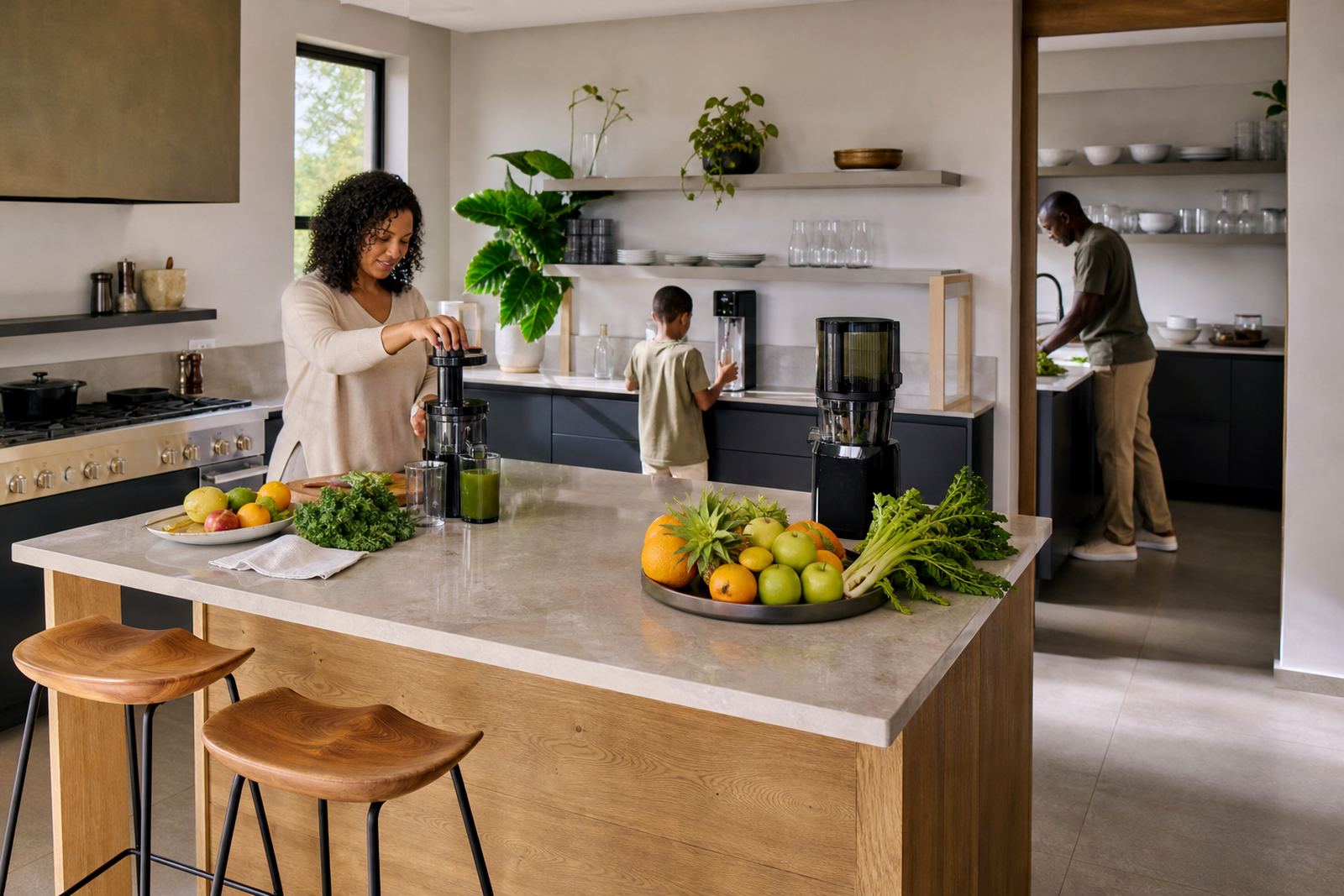
This was a family home in Noordhoek, Cape Town, with a clear request: keep produce washing away from bottle filling, and make both tasks easy enough for everyday use.
We planned the layout around two zones, one for washing and sorting fruit and veg, the other for juicing, pressing and filling bottles. The family also asked for equipment that was straightforward to clean, not too loud for early mornings, and simple enough for different people in the house to use without a long handover.
- Town: Noordhoek, Cape Town
- Project type: family kitchen equipment and workflow setup
- Use case: produce washing, fresh juice, bottle filling and storage
- Project duration: 2 weeks from first call to handover
Choosing between slow masticating, centrifugal and cold press units
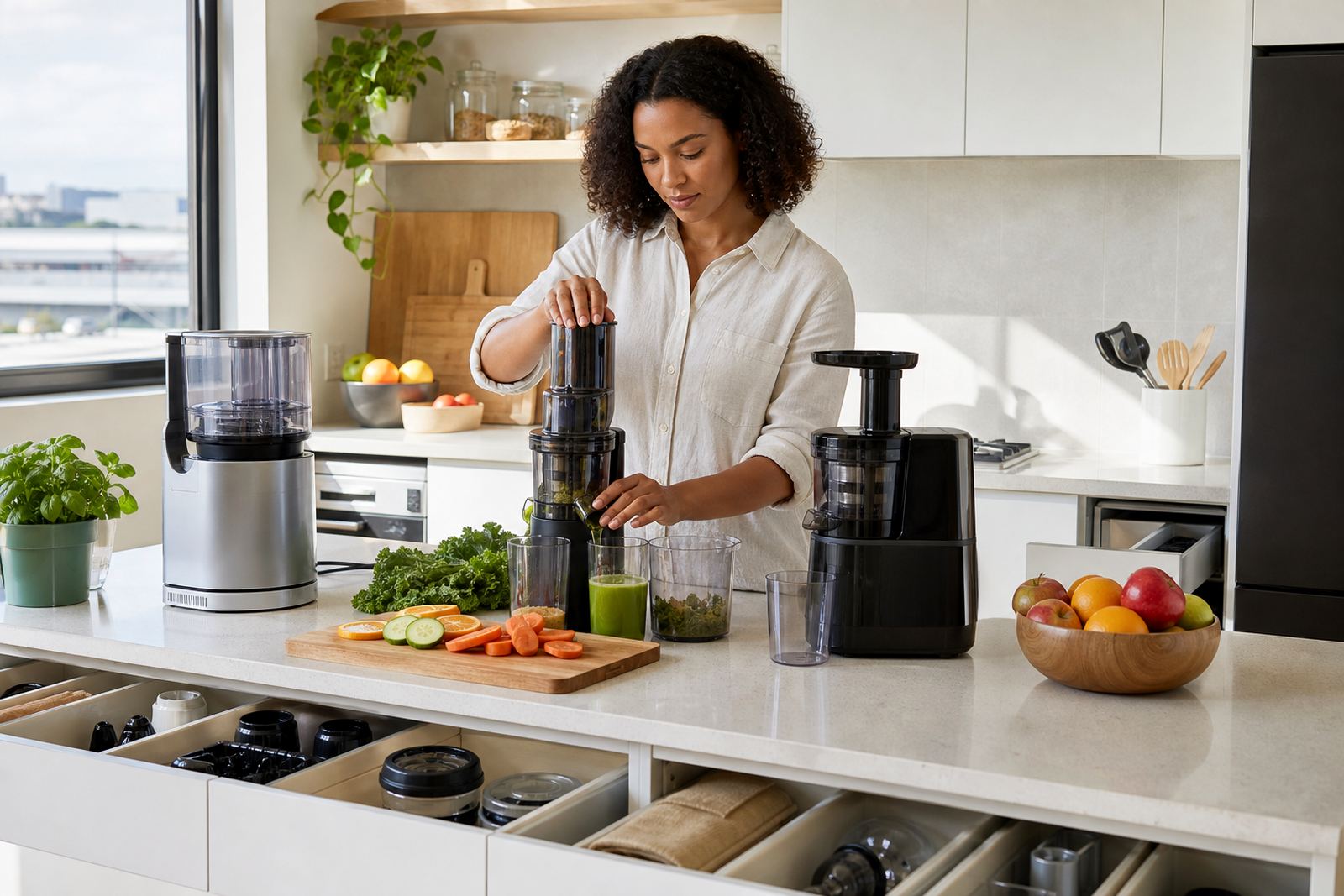
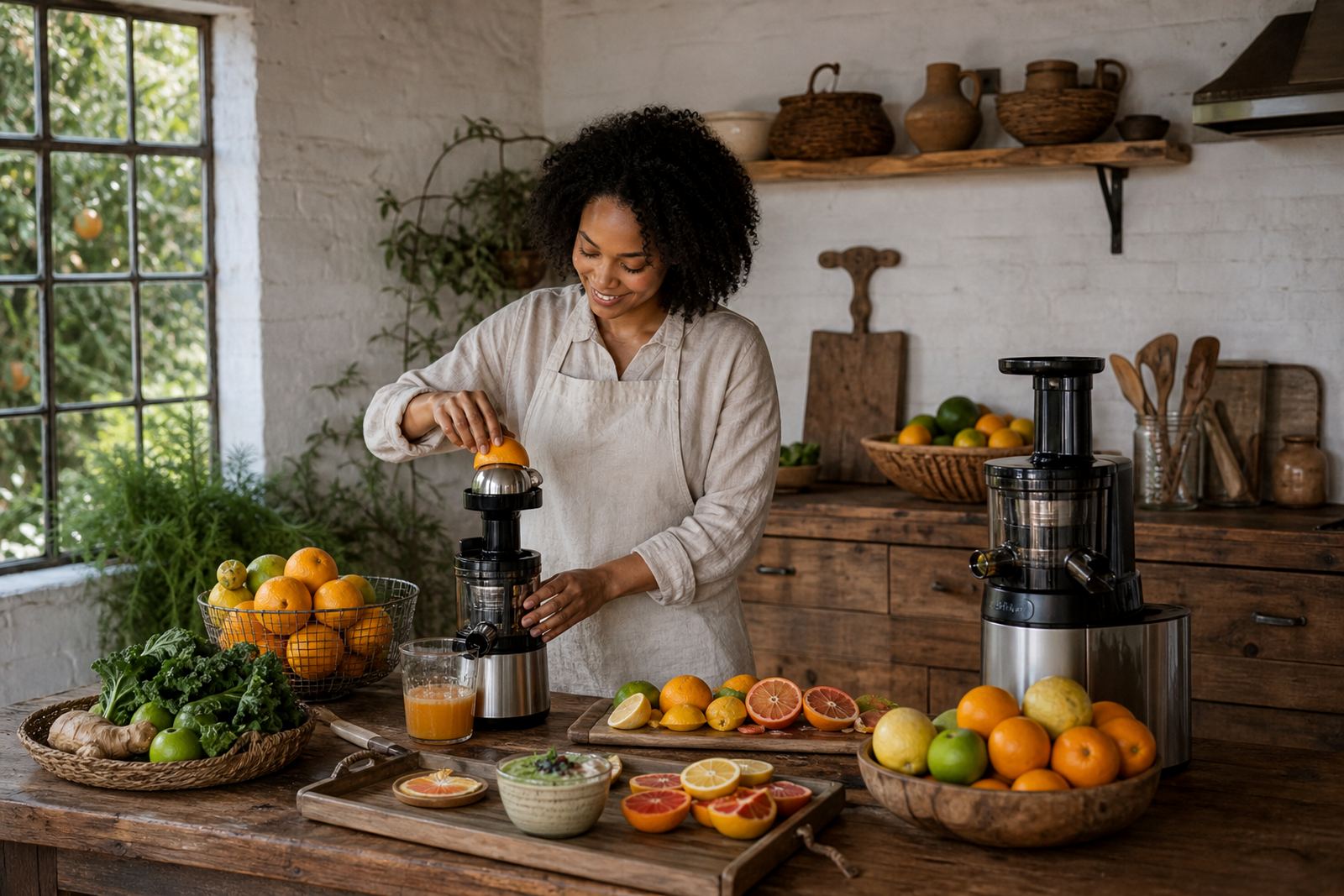
The brief needed a mix of juicing styles. We supplied a slow masticating juicer for leafy produce and softer fruit, a centrifugal juicer for quicker batches, and a cold press unit for slower extraction where the family wanted less foaming and more control over the feed rate. Each machine was chosen for home use, with parts that are practical to wash and reassemble.
For a coastal area like Noordhoek, we also looked at how the equipment would sit in a kitchen with humidity, salt air and frequent door opening. That means keeping seals dry, storing screens properly and not leaving juice residue in hidden corners, because small build ups can become sticky fast and smell off.
- Slow masticating unit for low-speed feeding and finer pulp control
- Centrifugal unit for faster daytime use and larger volumes
- Cold press unit for batch work with a steadier, manual pace
- All units supplied with removable parts for cleaning and drying
The two-zone layout that stopped cross-traffic
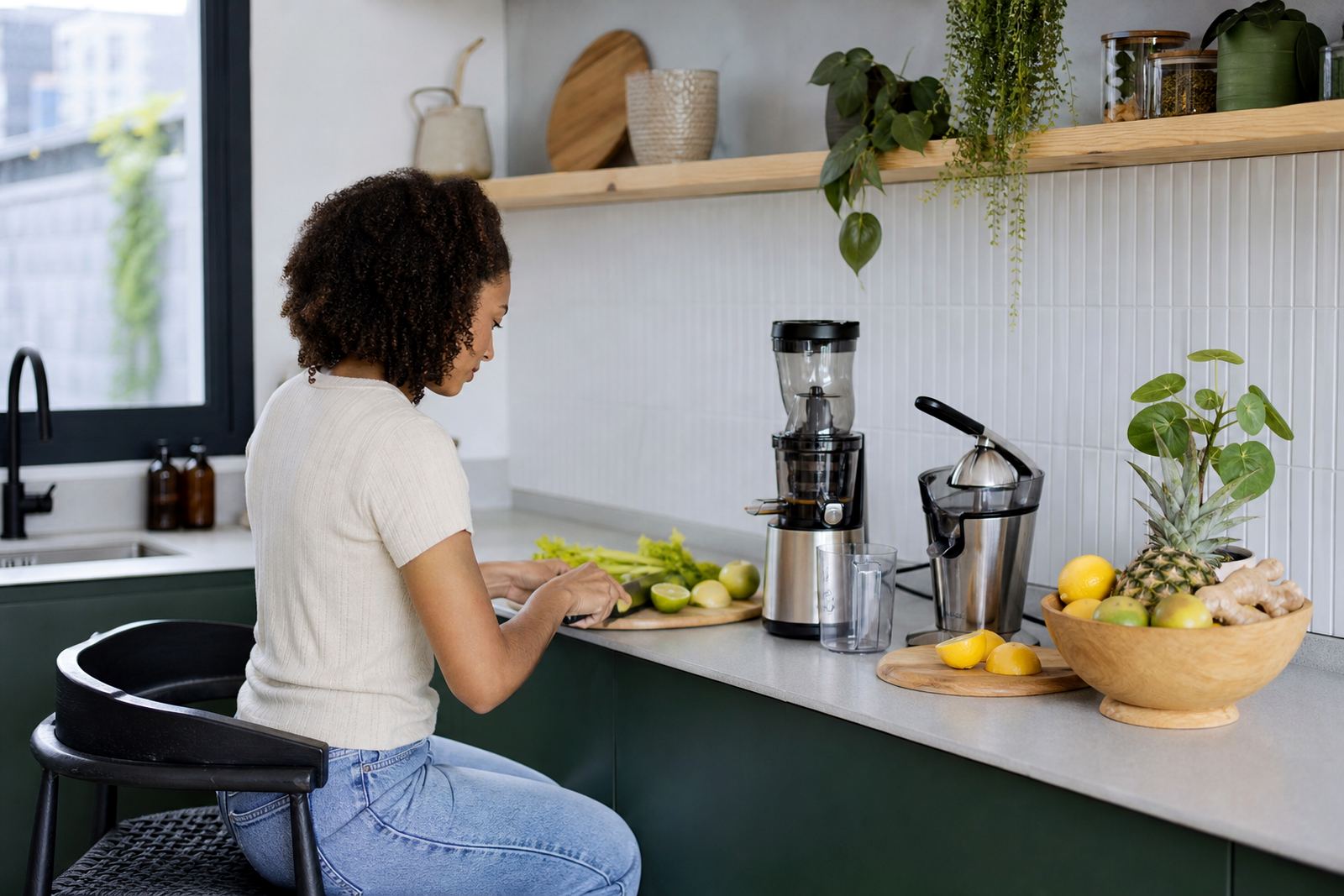
The home had enough counter space, but not enough sensible counter flow. We split the work so the washing side sat close to rinse water and produce storage, while the juicing side stayed near plug points and bottle staging. That kept wet produce, clean bottles and electrical equipment from competing for the same patch of counter.
We placed the washing station with a rinse basin, colander space and brush storage, then marked the juicing side for feeding, pressing and immediate bottle filling. The family could move from one side to the other without carrying dripping produce across the kitchen, which made the whole routine less messy and a bit calmer too.
- Separate wet and dry work zones
- Counter layout matched to plug positions and cord reach
- Bottle staging kept off the main prep path
- Cleaning tools stored within arm’s reach but out of splash range
Food safety habits that fit a busy household
We focused on practical food safety rather than fancy instructions. That meant clean hands, clean surfaces, separate wash and fill areas, and a clear routine for rinsing removable parts after use. For the family, the most useful part was knowing which bits to wash immediately and which parts should dry fully before being packed away.
We also went through the handling of bottle caps, seals and contact surfaces. Anything that touches juice needs regular cleaning and a dry storage spot, because trapped moisture can lead to odours or surface residue. It sounds obvious, but in a busy kitchen people often skip the boring steps. Then the mess builds up.
- Wash and dry removable components after each use
- Keep bottle caps and seals off damp cloths and wet surfaces
- Use separate cloths for washing area and juicing area
- Store parts fully dry before putting them away
Setup day, checks and the small fixes that mattered
The install and setup phase ran over 2 weeks, including site check, equipment placement, first time setup, and a follow-up visit for minor adjustments. We tested plug access, lid fit, feed tube comfort, screen seating and leak points, then showed the family how to take the machines apart and put them back together without forcing clips or over-tightening lids.
We also looked at noise and vibration, which matters in a family kitchen where someone may be making breakfast while another person is packing school lunches. A stable base, level counter and correct assembly cut down on wobble. The screen care and seal replacement advice was especially useful because if those bits are treated roughly, performance can drop off in a way that is easy to miss at first.
- First time setup and operating walk-through
- Noise vibration checks on the main counter positions
- Leak troubleshooting at seals, spouts and fit points
- Video support call arranged for one later family member training session
What changed for the Noordhoek household after handover
The result was a kitchen that felt less cramped and more deliberate. Produce washing no longer competed with bottle filling, and the family could choose between a slower press or a quicker centrifugal run depending on the size of the batch. Because the cleaning routine was built into the setup, there was less leave-it-for-later behaviour, which is usually where mess starts.
For a home near the coast, that matters. Salt air and humidity can be hard on stored parts, so the storage care advice and routine care plan were a useful follow-through. The family ended up with a setup that suits ordinary use, not just a once-off weekend project.
MiniPress is based in Paarden Eiland, Cape Town, and delivers across South Africa, including Cape Town, Johannesburg, Durban, Pretoria and George. We also support Stellenbosch and Somerset West deliveries, with local help available for setup, spare parts, brush and tool guidance, cable plug checks and seal replacement where needed.
Key facts
| Project name | Noordhoek Family Kitchen |
|---|---|
| Town | Noordhoek, Cape Town |
| Project timeline | 2 weeks |
| Equipment supplied | Slow masticating juicer, centrifugal juicer, cold press unit |
| Key layout | Separate produce washing and bottle filling zones |
| Support provided | First time setup, cleaning guidance, leak checks and routine care plan |