
A Pretoria annex with shared hands on the counter
The brief came from a family in Pretoria building a small annex kitchen for visiting grandparents. The room had to do a lot in a tight footprint: basic food prep, a kettle, storage for dry goods, and a place to make juice without crowding the sink or leaving cords in the walkway. The family wanted equipment that was easy to understand, easy to rinse down, and quiet enough for early mornings. Nothing flashy, just practical kit that could be used without fuss.
We also had to account for mixed users. Some days it would be a parent helping out, other days it would be older hands doing the prep on their own. That meant a setup with clear parts, stable footing and controls that did not ask for a lot of explanation. The family did not want a machine that needed a long setup each time, or one that would become a chore to wash after a quick glass or two.
What the room could take and what it could not
The annex had a narrow counter run, one double wall socket and a small sink set close to the prep zone. There was no room for a bulky footprint, and the family wanted to avoid dragging water across the floor in winter.
- Counter depth: 600 mm
- Clear working space left open: about 450 mm
- Power point reach: within 1.2 metres of the prep area
- Storage target: one shelf and one sealed container for parts
- Cleaning plan: rinse, brush, dry and store before the next use
The kitchen sits inland, so humidity was not the main issue, but the family still wanted parts dried properly before packing away. That reduces odour, staining and sticky residue, especially when fruit is handled daily. They also wanted guidance on keeping seals, screens and strainers in good order, because small parts are often where a busy room gets slowed down.
Juicers chosen for quiet mornings and quick clean-ups
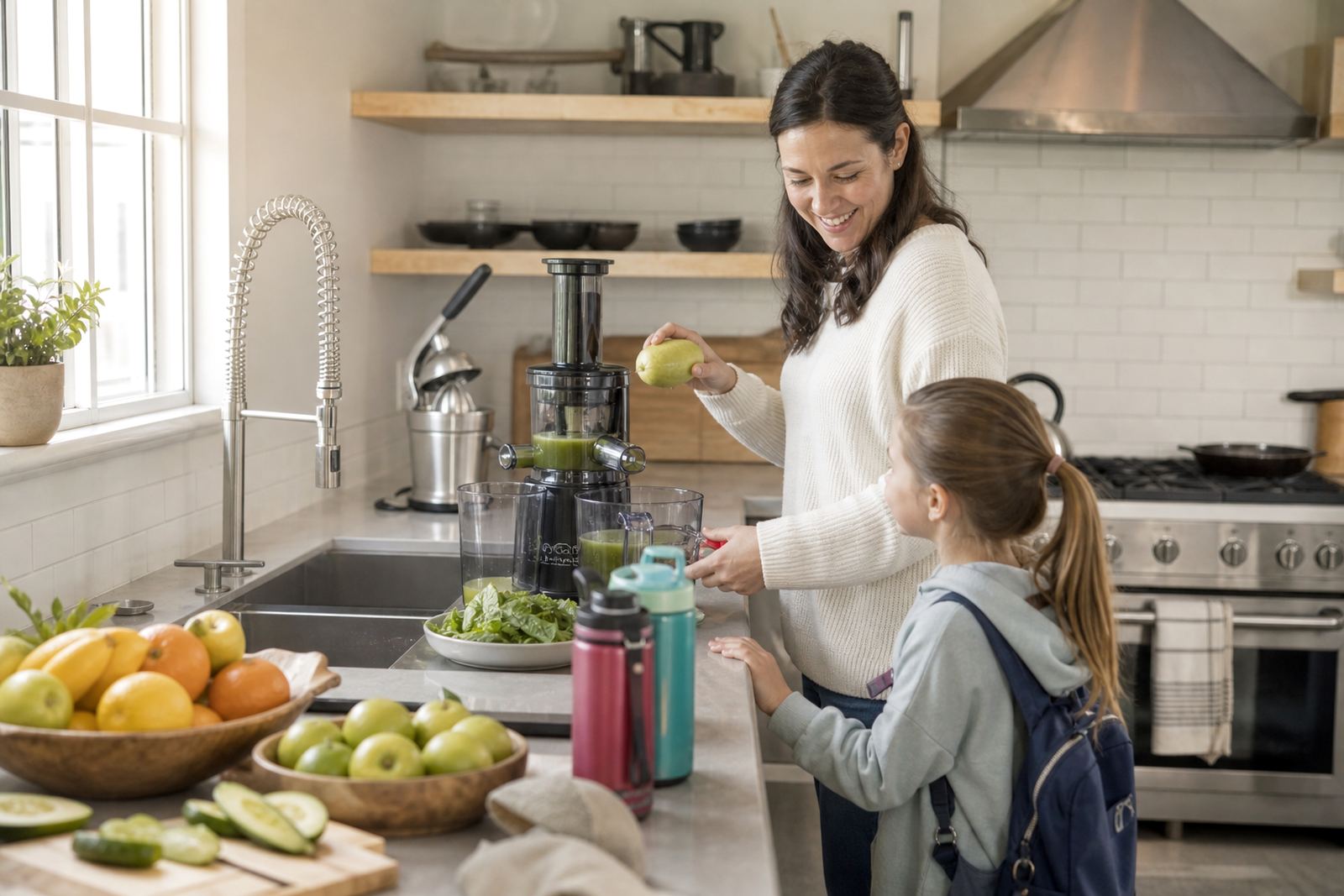
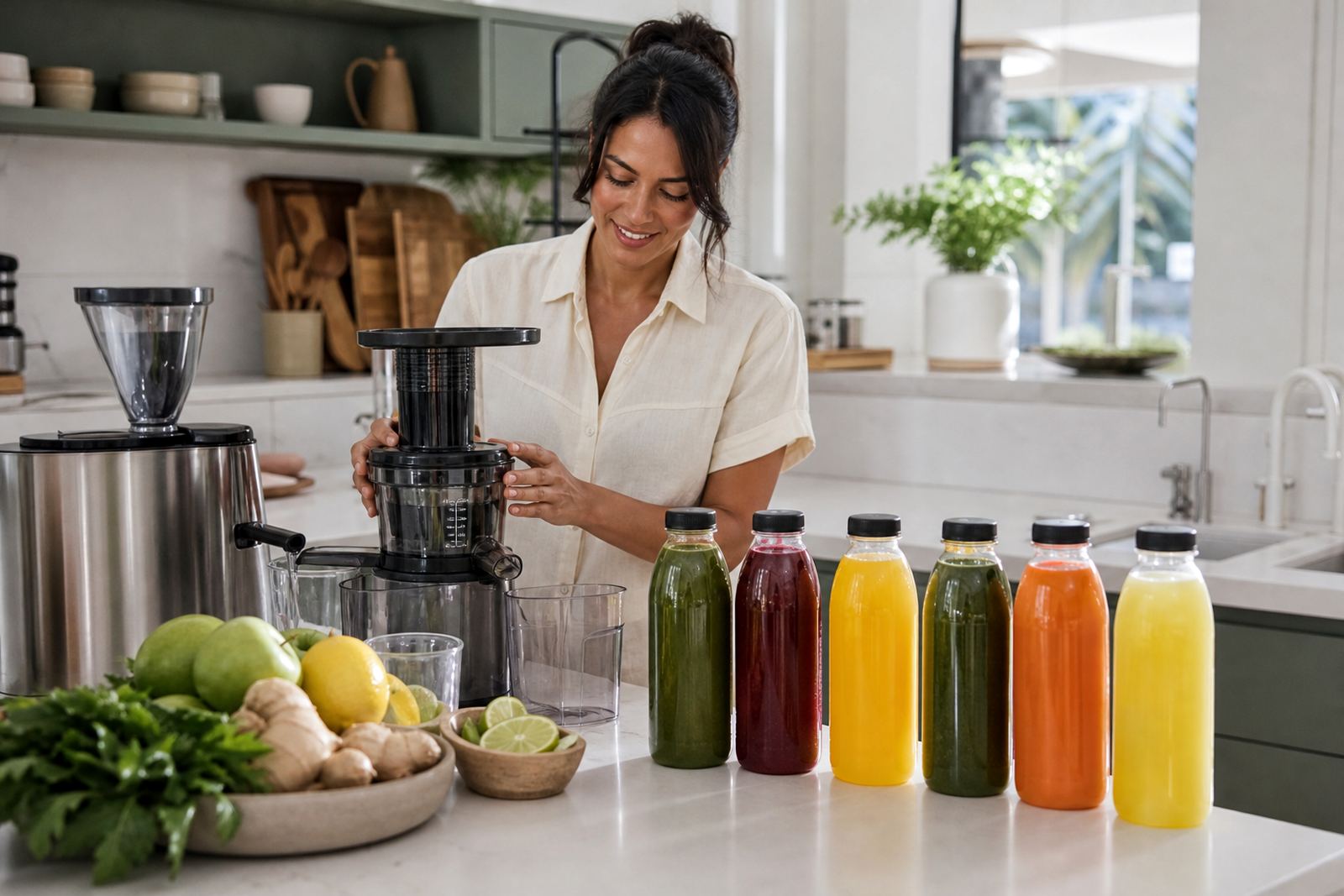
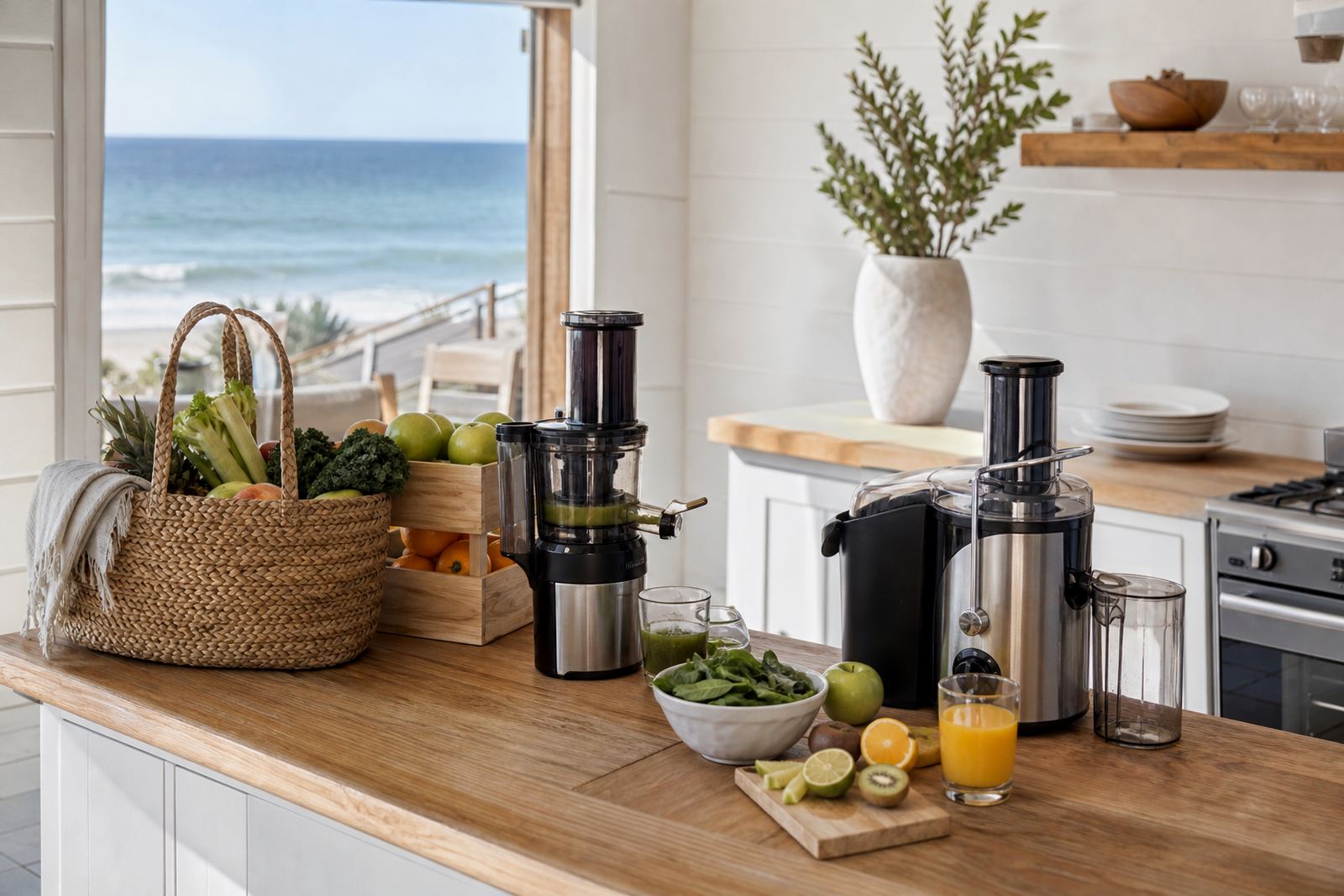
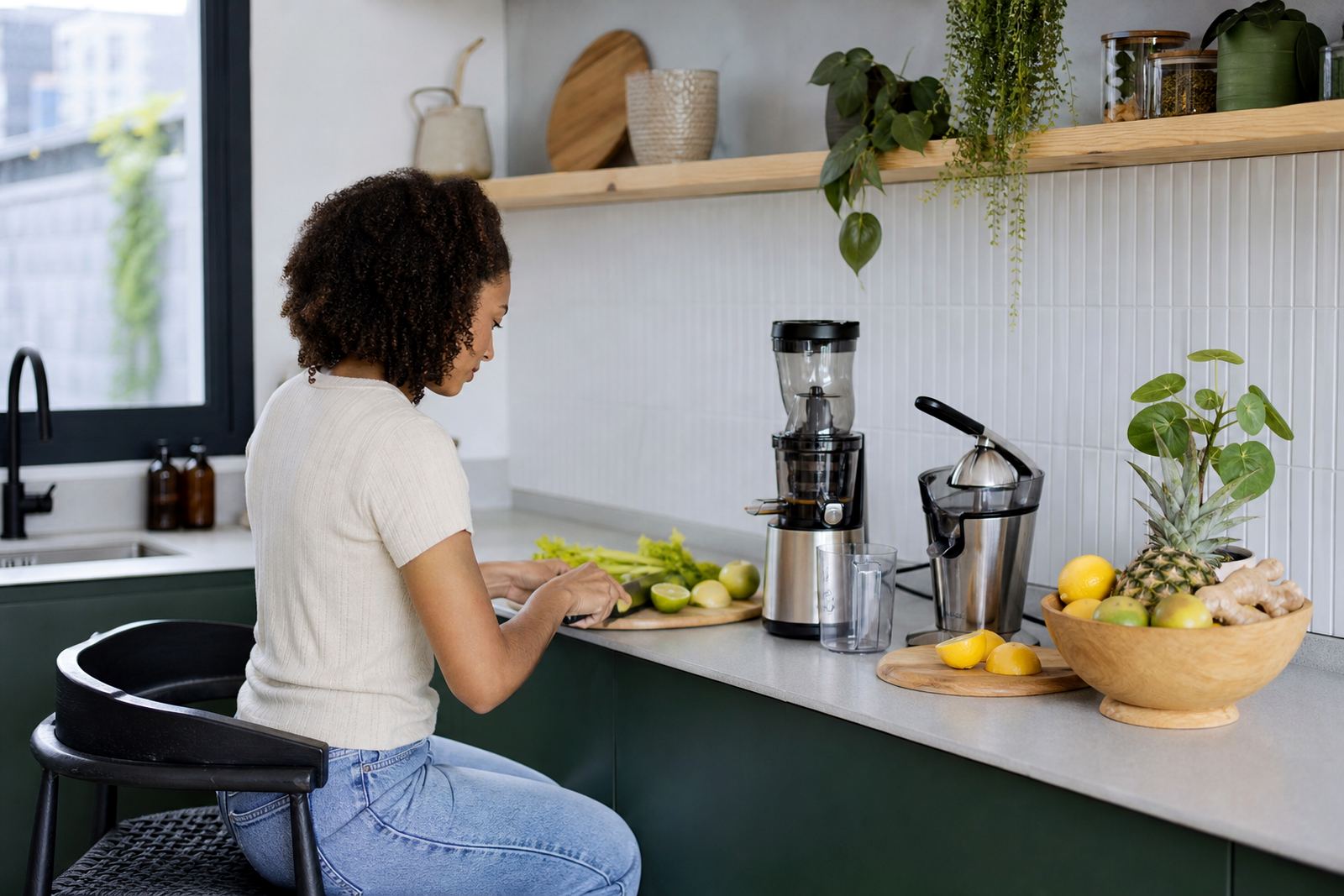
We supplied a mix of home juicing options suitable for a small family annex, including a slow masticating juicer, a centrifugal juicer and a cold press unit for those who prefer a slower extraction process. The slow masticating machine works with a turning auger that compresses produce and feeds it through at a measured pace. The centrifugal model uses a fast spinning basket and is better for quick batches. The cold press unit gives very controlled pressure and is well suited to leafy produce, herbs and softer fruit when the user wants a slower routine.
For this project, the main benefit was not theory, it was how the machines behaved in the room. The slow juicer made less noise during early use, the centrifugal option gave speed when visitors arrived, and the cold press was kept for the family member who likes a calmer prep flow. Each unit had removable parts, food-contact surfaces that could be washed properly, and a footprint that would not take over the counter. We also made sure the family understood how to assemble the feed parts, lock the cover and check the pulp outlet before switching on.
Clean lines, safe handling and fewer surprise drips
Food safety in a home kitchen starts with clean surfaces, washed fruit and vegetables, and dry hands before handling plugs or switches. We went through the usual care points: separate raw produce from ready-to-drink juice, avoid topping up a dirty jug, and do not leave pulp sitting in the chamber between uses. The family also needed advice on where to place the machine so that splashes would not hit the wall socket or sit under the cupboard lip.
- Use a clean chopping board for prep, then wipe the counter before assembly
- Rinse removable parts soon after use so residue does not dry on
- Keep the motor base dry and clear of sink spray
- Dry screens and strainers fully before storing
- Check seals and latches for wear if the machine starts leaking
We also discussed practical handling around glassware and storage. The annex was meant for daily living, so we suggested a small tray for parts and a labelled tub for brushes and tools. That way the grandparents could find what they need without opening several cupboards, and the prep area stayed neater between uses.
The setup week and the handover routine
The project moved from first call to handover over three weeks. Week one covered the room measurements, power point position and the way the family planned to use the space. Week two covered supply, checking of the juicing units and side-by-side testing of parts, lids and strainers. In week three we did the handover, showed the cleaning steps and stayed with the family through a full first run so they could see what to do when the produce is soft, fibrous or a bit too large for the feed chute.
We also set up a simple care routine for the annex. That included brush use after each session, checking the seal before storage, and listening for any new noise or vibration that might mean the machine is sitting unevenly. The family asked for plain guidance, so we kept the notes direct and left out any fuss. That helped the grandparents feel more confident using the machines on their own.
What the family gained from the final layout
The finished annex now has a clean place for daily juicing without crowding the rest of the kitchen. The quieter machine is there for smaller early-morning batches, while the faster unit is ready when the household wants to make more in one go. The cold press option gives them another route for slower prep days. The equipment sits neatly, the cords are shorter and tidier, and the clean-down time is manageable for older users.
The result was not about piling on appliances. It was about giving the family the right tools for their room and their routine. The grandparents can use the space without needing help for every step, and the household has fewer spills, less clutter and fewer questions about what goes where. For a compact annex, that matters more than any extra feature.
- Better use of limited counter space
- Clearer cleaning steps for mixed-age users
- Lower noise in a shared home setting
- Less clutter around the sink and power point
How we would handle a similar Pretoria annex again
For a similar project, we would keep the same order of work: measure the room properly, match the machine type to the daily routine, and sort the storage before the first use. That approach saves time later and keeps the annex easier to live with. We would also keep the first handover in the room itself, because small details like lid clearance, outlet position and where to park the brush matter more than people expect.
In a family setting, the best outcome comes from making the setup plain and repeatable. A compact kitchen with grandparents in mind needs equipment that starts easily, cleans well and does not demand extra effort after every glass. That was the right fit here, and it would be the same call again for another Pretoria home or any small annex where the room has to stay calm and usable.
Key facts
| Project type | Family annex kitchen for visiting grandparents |
|---|---|
| Town | Pretoria |
| Equipment supplied | Slow masticating juicer, centrifugal juicer and cold press unit |
| Working footprint | Compact counter setup suited to a narrow prep zone |
| Timeline | 3 weeks from measurement to handover |
| Support included | First time setup, deep clean guidance, seal checks and video support call |