The Rondebosch kitchen brief, with breakfast traffic in mind
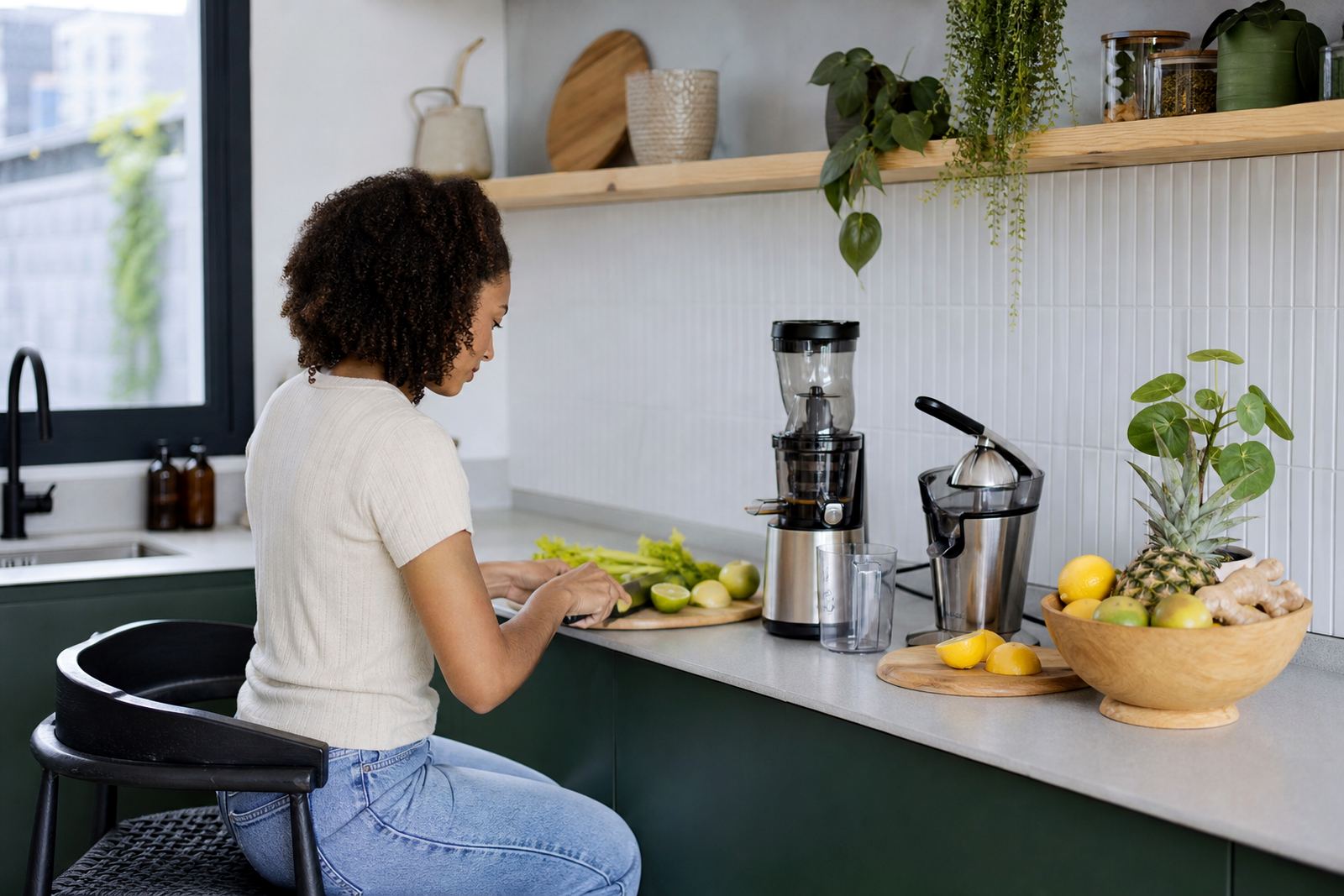
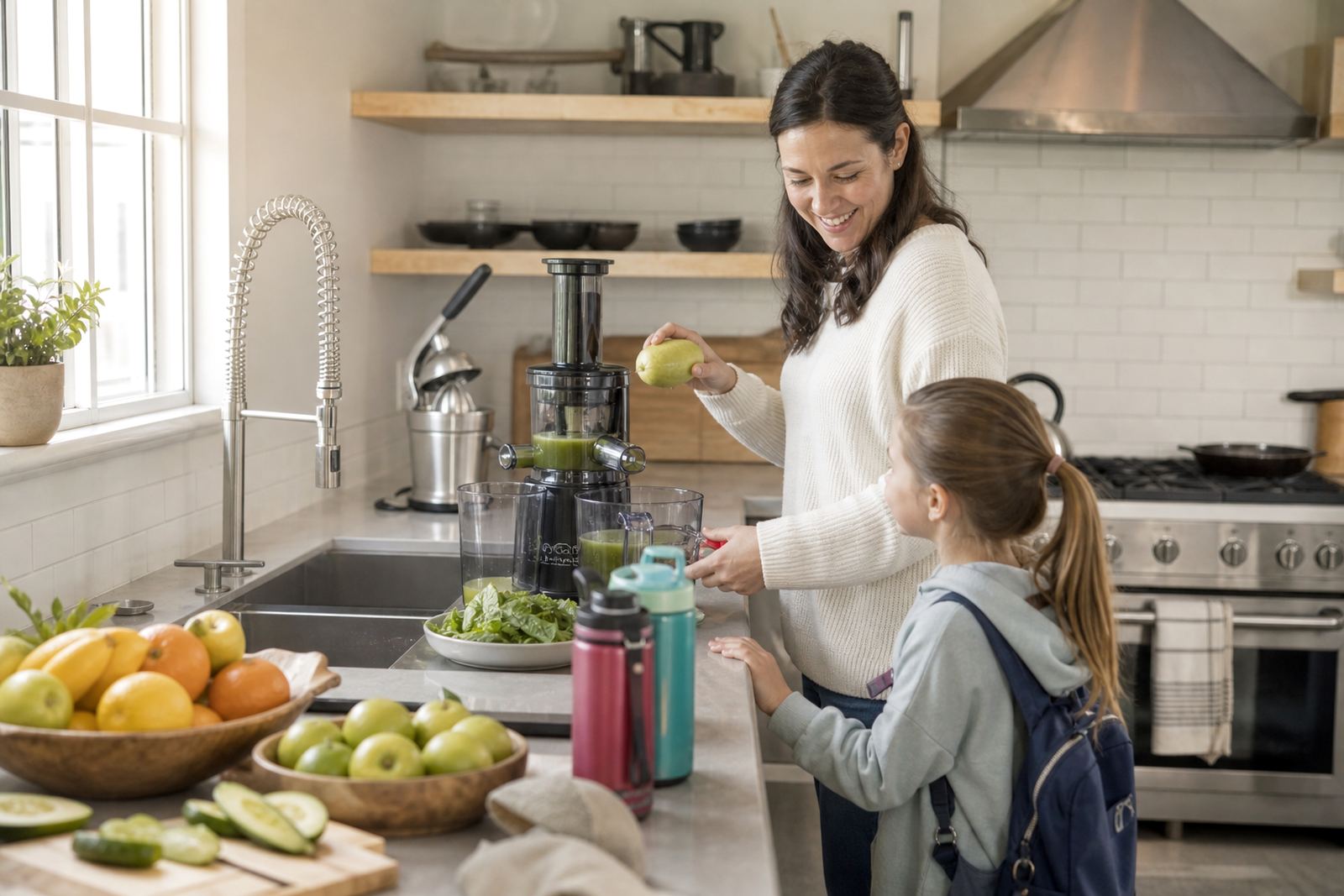
The client was a family home in Rondebosch, Cape Town, with a kitchen that handles early breakfasts, school lunches and the usual weekday rush. They were looking at a slow masticating juicer for everyday use, and wanted the cleaning routine to be as organised as the juicing itself. They also asked us to look at how a cold press could fit into the same household rhythm, without crowding the counter or making the sink area untidy.
The key brief was practical: keep the machine near the sink, allow enough space for rinsing parts, and store brushes, screens and spare seals within easy reach. The family did not want a complicated setup. They wanted something that could be used before work and cleaned up quickly after, without leaving pulp, drips or loose parts across the counter.
- Location: Rondebosch, Cape Town
- Client type: private family home
- Primary use: breakfast juicing and daily clean-up
- Placement focus: sink-side storage and counter order
Why the machine choice mattered in a small working kitchen
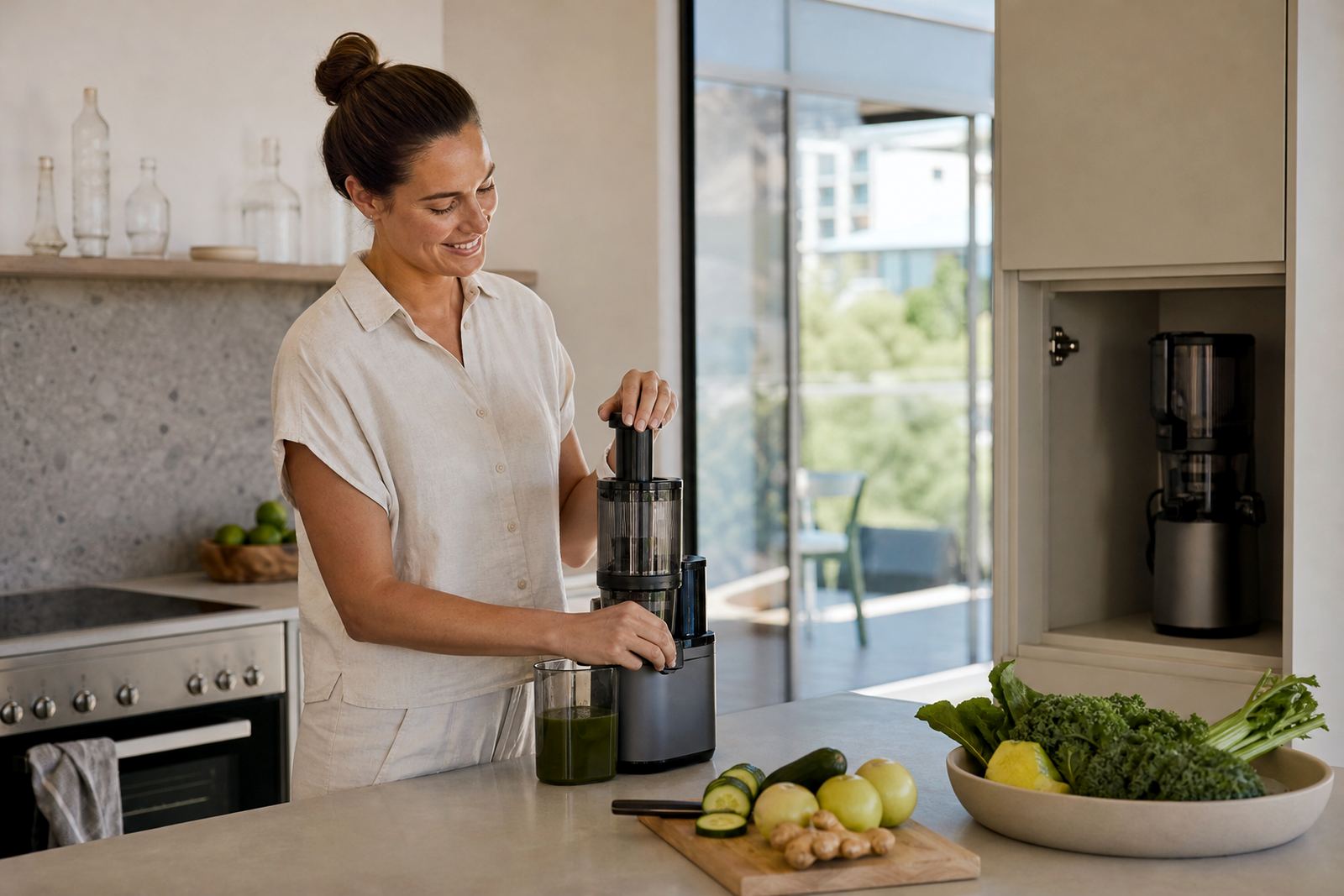
We discussed the difference between slow masticating juicers, centrifugal juicers and cold presses in plain household terms. A slow masticating juicer works at a lower speed and uses an auger to press produce through a screen, which is useful when the family wants less splatter and a steadier kitchen routine. A centrifugal juicer uses a fast spinning basket and suits quicker prep, though it can be noisier and more active on the counter. A cold press is often used as a general term for low-speed extraction, and in a family kitchen the real question is how the machine fits the cupboard space, noise tolerance and clean-up time.
For this home, the preference was a machine that could handle apples, carrots, citrus and leafy greens, while remaining manageable for daily cleaning. We also checked the size of the feed chute, the parts that come apart for washing, and the way the pulp container sits on the counter. Small details matter when there is breakfast to get on with and not much time for faffing around.
- Low-speed juicing suited the family’s quieter morning routine
- Counter space had to stay open for kettles, cutting boards and toast prep
- Cleaning parts needed to dry fast near the sink
- Noise control mattered in a home with early starts
What we supplied and how the space was set up
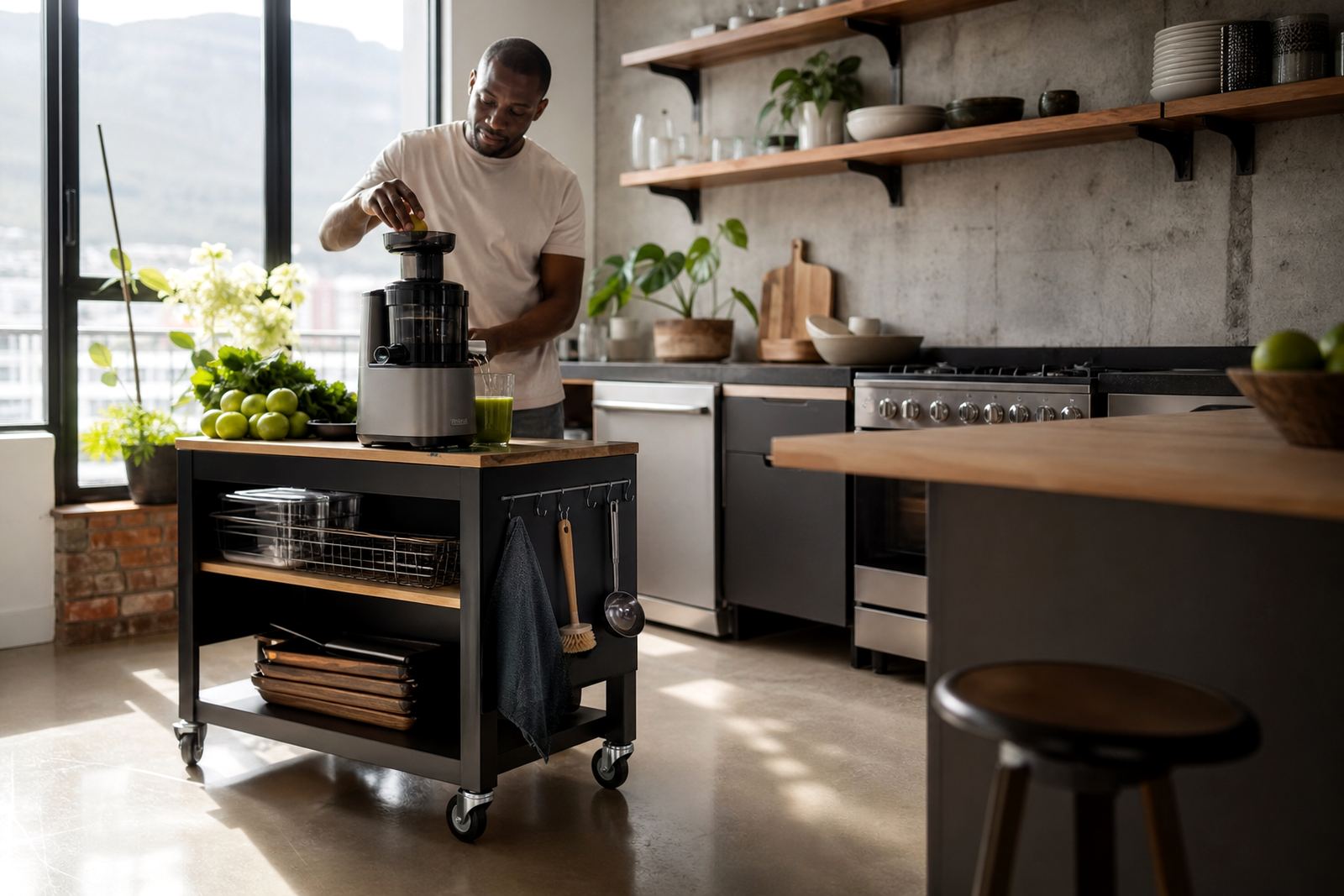
We supplied a home juicer package with the parts the family needed to get started, together with guidance for cleaning, storage and routine care. The setup included a juicing screen, cleaning brushes, a food pusher, pulp handling guidance and spare seal support so the household could keep things running without waiting for a messy breakdown. We also advised on where to store the machine so it stayed dry and easy to lift, especially because the kitchen sits close to the sink and sees a lot of daily use.
The family wanted a clear spot for washing and air drying, so we recommended a tray-and-basket arrangement beside the basin. That kept wet parts off the counter surface and made it easier to keep the area food-safe. We explained how to rinse straight after use, how to separate soft fruit residue from fibrous pulp, and how to avoid leaving wet seals in closed containers where odours can build up.
- Juicer unit with standard working attachments
- Cleaning brush set for screen and chute care
- Seal and gasket guidance for wear monitoring
- Storage plan for parts, cord and daily accessories
Cleaning guidance that fitted around the sink
The cleaning side was a big part of the project. In a family home, a juicer must be easy to clean or it quickly becomes a cupboard item nobody wants to use. We showed the household how to break the machine into simple sections, rinse pulp before it dries, and wash the screen before residue hardens into a stubborn film. The family also asked about food safety, so we discussed basic handling such as keeping raw produce separate from clean parts, drying components fully before reassembly and storing brushes away from drip zones.
There was also a small amount of leak troubleshooting advice, because any wet patch around the base can cause unnecessary worry. We checked plug cable placement near the sink, talked through noise vibration checks on a tiled surface, and showed them how a stable mat can help reduce movement during operation. The sink area now works as a proper clean zone, not just a place to stack items after breakfast.
- Rinse screens and filters immediately after use
- Dry all parts before storing them
- Keep seals out of standing water
- Place the machine on a stable, level surface
Timing, handover and the little adjustments that helped
The full project took two weeks from first chat to handover, with most of the time spent on choosing the right setup for the space. The first week covered the family brief, machine comparison and storage planning. The second week covered supply, setup guidance and practical checks around the sink area. Because the home already had a busy kitchen rhythm, the handover focused on speed and order rather than a complicated installation.
We also gave the family a routine care plan, so they had a clear way to keep the machine ready without guessing. That included how often to inspect seals, when to brush the screen, and what to look for if vibration or dripping starts to change. The plan was simple enough for everyone in the home to use, including the person who usually makes breakfast before sunrise.
- Week 1: brief, machine selection and layout planning
- Week 2: supply, setup guidance and care handover
- Extra support: video support call available if needed
What changed once the family started using it
After setup, the kitchen felt less cluttered and the sink area became easier to manage. The family found that having brushes, seals and spare parts in one place reduced the stop-start feeling that often happens with home juicing. Breakfast prep became more predictable, and the machine was used more often because it no longer felt like a big clean-up job afterwards.
The result was not only about juice output. It was about a cleaner workflow in a home where counter space is valuable and mornings move fast. The family now has a setup that suits regular use, handles the wet work near the basin and keeps the machine stored properly between uses. That makes a real difference in a coastal city where humidity can affect drying time and where a tidy, dry storage spot matters.
- Cleaner counter flow around the sink
- Faster daily clean-up after juicing
- Better storage for parts and tools
- Less confusion over what belongs where
A Rondebosch family home planned around juicing
For another Rondebosch family, we would repeat the same practical approach: start with the sink layout, measure the storage space, and match the machine to the household routine rather than the other way round. A slow masticating juicer is often the better fit where mornings are quiet and cleaning space is limited, while a centrifugal unit may suit a faster, more occasional pattern. The important thing is not only the machine type, but the way it sits with the rest of the kitchen.
We would also keep the same emphasis on cleaning guidance, seal care and a proper place for brushes and tools. In a home setting, that is what keeps the system workable over time. A good juicing setup is not just about the first day. It is about whether the family can rinse, dry and store it without hassle every day after that.
- Measure the sink zone before choosing the machine
- Keep spare seals and cleaning tools together
- Plan for daily rinse and dry time
- Match the machine to the family’s actual morning routine
Key facts
| Project | Rondebosch Family Home |
|---|---|
| Town | Rondebosch, Cape Town |
| Machine focus | Slow masticating juicer and cold press setup |
| Support included | First time setup, deep clean guidance and seal replacement advice |
| Timeline | 2 weeks |
| Delivery area | Cape Town Delivery |