
A small kitchen with salt in the air and no room for clutter
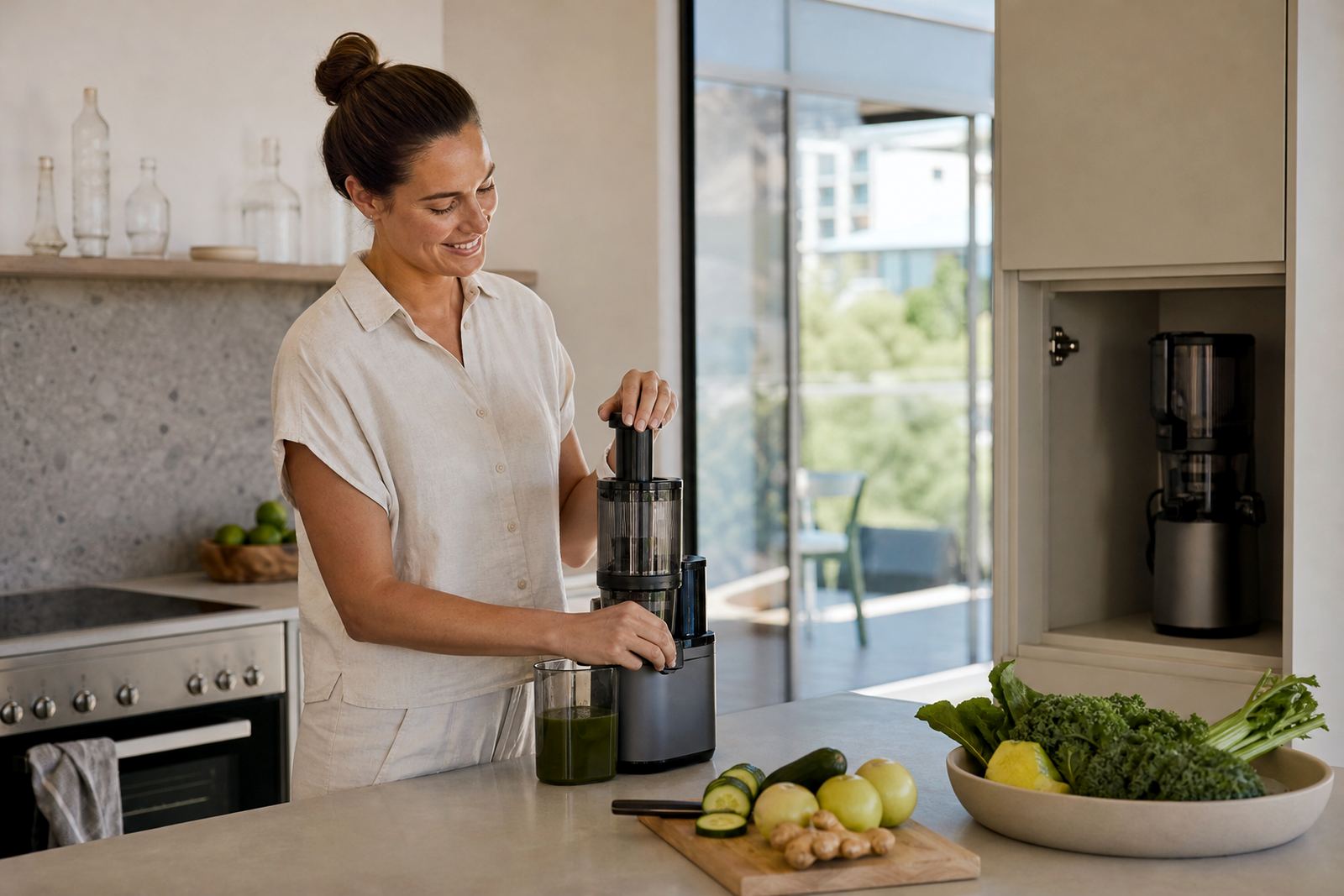
The client was a private apartment owner in Milnerton, Cape Town, working with a kitchen that had limited counter space and a closed cupboard run along one wall. The brief was to store a home juicer and a cold press in a way that kept them easy to reach, but out of sight when not in use.
Because the apartment sits close to the coast, the main concern was sea-air exposure. Salt, moisture and fine kitchen dust can build up quickly on plugs, screens and removable parts if they are left open on shelves. The client wanted a tidy layout that would reduce the need for constant wiping while still allowing quick access for everyday use.
What the Milnerton household asked for
The storage plan had to handle two different machines and the parts that normally travel with them, including feed chutes, pulp containers, juice jugs, brushes and cleaning cloths. The client also wanted a home for spare seals and screens, because those small items are easy to misplace in a flat.
- Enclosed shelving for the main machines and loose accessories
- Clear separation between dry storage and wash-up items
- Space for cables, plugs and short cleaning tools
- Access that would suit weekly deep cleaning without moving heavy items around
- Room for a slow masticating juicer and a centrifugal juicer without crowding the shelf
The layout also had to keep food-contact parts off the floor and away from the sink splash zone. That point mattered more here than in a free-standing home unit, because the room was compact and there was less margin for damp surfaces.
The shelves and fittings we put in place
We supplied and installed enclosed shelving with a neat front profile and enough internal depth for the main appliance bodies. The shelf set was arranged to give each machine its own bay, with a lower section for accessories and a small upper section for care items. The doors close fully, which helps cut down on dust and keeps the setup looking tidy in an open-plan apartment.
We also set up a dedicated cleaning zone inside the cupboard. That included a container for brushes and tools, a safe spot for spare parts help items such as seals and screens, and a plain tray for drip control after washing. The parts were arranged so the client could remove and return items without bending around awkward corners.
- Approximate shelf depth: 320 mm for compact appliance storage
- Clear shelf height: 360 mm on the main bay for taller juicer bodies
- Ventilation gap at the rear for cables and heat release
- Moisture-resistant lining on the lower storage section
- Front access doors for quick closing after use
Cleaning, food safety and the bits people forget
In a kitchen like this, the tricky part is not only the machine body, but the small food-contact parts that need proper drying before they are packed away. We showed the client how to separate wet and dry pieces after use, and how to store screens, seals and juice paths so they do not pick up stale odours. A light wipe-down routine is usually enough, but only if parts are dried fully first.
We also checked that the cable plugs were not being pinched behind the cupboard frame, because that can lead to wear over time. For the cold press, we made sure the heavier components had a lower resting point so they would not slide when the door was opened. It sounds ordinary, but in a small apartment every little movement matters.
Food safety in home juicing starts with clean hands, clean surfaces and dry storage. It is also helped by having a routine that does not leave pulp or wet residue sitting overnight. That was the reason for the separate tray and the extra space for cloths and brushes, no one wants to hunt for a sponge after the fact.
How the work ran over the three weeks
The project ran over three weeks from first site review to final handover. Week one covered measurements, cupboard layout and checking the appliance footprints. Week two was for supply, fitting and first time setup guidance. Week three dealt with final adjustments, cable checks and a practical clean-down run-through.
- Week 1: site measure and storage planning
- Week 2: installation and first time setup
- Week 3: fine-tuning, noise vibration checks and handover
The apartment remained usable through the process, which mattered because the client was working around a normal household schedule. We kept the fitting compact and avoided any changes that would have made the kitchen feel boxed in.
What settled better after the install
After the shelving went in, the kitchen looked calmer and the client could reach the juicer and cold press without shifting other appliances around. The enclosed storage also made the room easier to keep clean, especially with coastal damp and the usual Cape Town dust that moves in on open shelves.
The client reported that cleaning took less time because the parts had a fixed place to dry and return to. There was also less clutter on the counter, which meant the prep area stayed open for normal cooking. The setup did what it was meant to do: store the machines properly, protect the parts, and keep the apartment tidy without making access awkward.
- Less counter clutter
- Cleaner storage for removable parts
- Better control of damp and dust
- Quicker packing away after use
- Safer cable and plug positioning
A Milnerton flat layout for salt air
We would use the same enclosed layout for another sea-facing apartment, with a slight bias toward moisture control and simple access. In a place like Milnerton, the combination of salt air and small kitchen footprints means the storage needs to do more than just look neat.
If we were repeating the work in another flat, we would keep the same split between main machine storage, cleaning items and spare parts. We would also leave a little extra clearance around the heavier cold press base, because that makes daily handling easier and reduces wear on the shelf surface. The result is practical, and it stays practical even when the kitchen is busy.
Key facts
| Project | Milnerton Apartment |
|---|---|
| Town | Milnerton, Cape Town |
| Timeline | 3 weeks |
| Scope | Enclosed shelving and juicer storage planning |
| Machines Stored | Slow masticating juicer and centrifugal juicer plus cold press components |
| Key Focus | Sea-air protection, tidy access and food-safe drying storage |