Start with a landing spot before the first drop falls
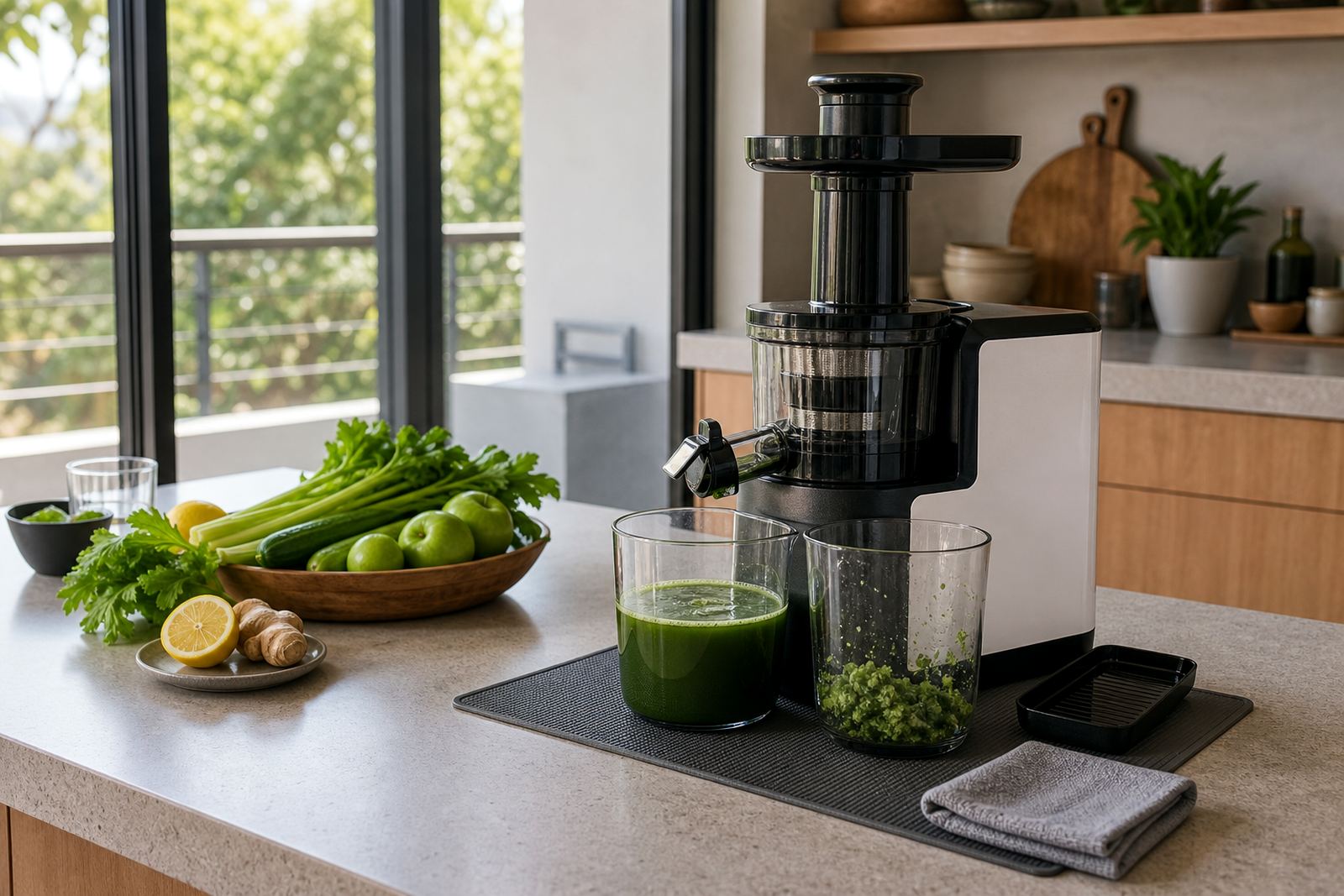
The easiest way to cut sink mess is to set up a landing spot before you switch the machine on. A shallow tray or rinsing mat beside the basin keeps wet parts in one place, so the drip line does not spread across the counter. In Paarden Eiland kitchens, where salt air and quick wipe downs are part of daily life, that extra layer also helps protect laminates, steel and painted surfaces from sticky pulp and water marks.
For juicers and cold presses, the tray should be wide enough for the feed chute parts, collecting cups and smaller bits like strainers or screens. A mat with raised edges works well because it catches the little run-off that always seems to travel further than expected. If your counter slopes slightly toward the sink, place the mat on the higher side so any splashes move in one direction instead of pooling under the machine. It sounds small, but it saves time when the taps are busy and someone else needs the basin.
Rinsing order matters more than most people think
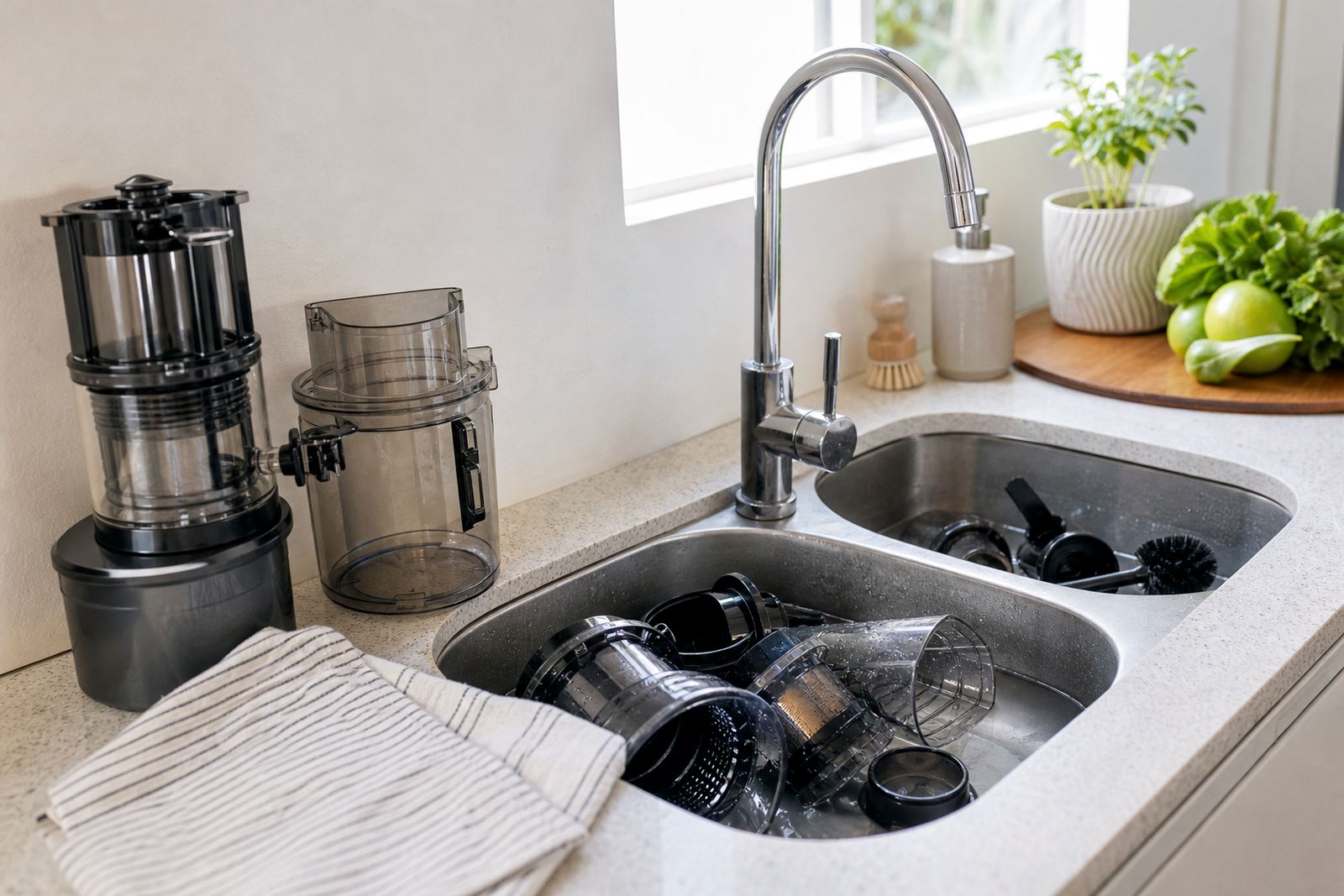
The order in which you rinse parts can reduce clogged drains and stop pulp from smearing over every surface. Start with the driest pieces first, then move to the wetter parts. That way, loose residue is dealt with before it becomes a paste. For slow masticating units, remove the auger, screen and cap in a clear sequence so each part gets a quick rinse before the next one is handled. For centrifugal juicers, the basket and lid usually hold more spray, so keep those parts for last and rinse them over the sink, not next to the drying rack.
Food safety also depends on sensible handling. Put cleaned parts on a clean towel or rack that is separate from the raw produce bowl, and do not leave residue sitting in warm water for long periods. In summer, especially inland in Pretoria or Durban’s humidity, dried pulp can turn tacky fast and make the next wash harder. A little attention to order keeps the job calm and the basin cleaner, which is what most home users want after a long day.
Why slow masticating and centrifugal machines make different kinds of mess
Not all juicers leave the same sort of clean-up. Slow masticating models tend to produce a finer, wetter pulp and often use several interlocking parts, so cleanup is slower but usually more contained. Centrifugal juicers spin faster, which can fling fine spray onto the lid, counter and even the wall if the fruit is very soft. Cold presses sit in another category again, with a pressing chamber and mesh or filter parts that need careful rinsing so fibres do not lodge in corners.
Knowing the type of residue helps you choose the right tray, cloth and brush. A soft brush is useful for screens and mesh areas, while a narrower tool helps around seals and small corners. If your machine has a chute, cap or rubber seal, check those areas for trapped juice before stacking the parts away. This is where many people miss a spot and later find a sticky ring on the counter or in the drip tray. A quick check now is easier than scraping later, and it keeps the whole area neater.
- Use a wider tray under centrifugal units because spray spreads further.
- Use a mat with edges for slow masticating and cold press parts that drip after rinsing.
- Keep a small brush near the sink for screens, seals and fine pulp in corners.
- Rinse one part fully before picking up the next piece, so residue does not transfer.
Set up a washing line that does not crowd the basin
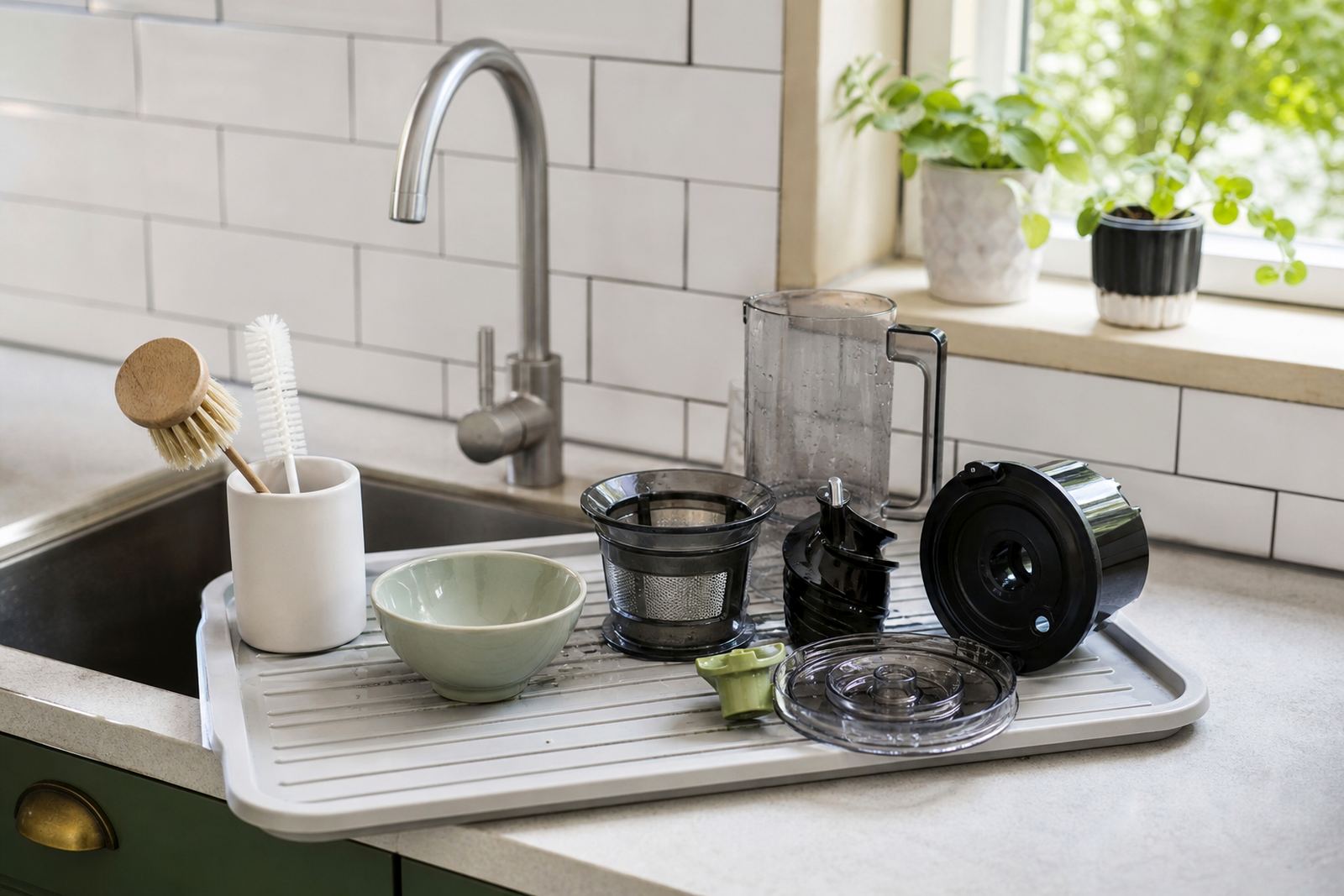
Sink mess often comes from having too many items in one place at once. A better setup is to divide the space into three zones: one for dirty parts, one for rinsing, and one for drying. That way, the basin itself stays open and you are not stacking wet pieces on top of each other. If the kitchen is small, a foldable rack or narrow drip tray can sit beside the sink without taking over the counter. In many Cape Town flats and townhouse kitchens, that extra bit of order makes daily cleaning far less awkward.
Keep the drying zone away from the tap splash line. Stainless counters can show water spots quickly, and wooden surfaces do not like standing moisture. If you are working near an open window in windy areas like Somerset West or George, place a cloth under the rack so the lighter parts do not shift or tip over. This is one of those small household habits that pays back every day, because the sink area stays easier to wipe and there is less chance of parts ending up on the floor.
- Use one towel for drying parts and a separate cloth for counter wipe-downs.
- Do not dry filters or screens on top of each other, as trapped water can linger.
- Leave enough space for the plug, cords and any cleaning tools to stay dry.
- Empty the tray or mat after each session so stale liquid does not build up.
Clean hands, clean parts and fewer slip ups
A neat sink area is not only about looks. It helps reduce the chance of slipping, knocking over parts or touching a wet cable plug with soapy hands. Before you start cleaning, switch the machine off and unplug it. Wipe the outside first so loose juice does not fall into the sink while you are handling internal parts. If you use a detachable basket, bowl or pusher, keep them together in the order they came off, because that makes reassembly faster and lowers the risk of missing a seal or screen piece.
Food residue should not sit in hidden corners. Once the parts are rinsed, check the underside of the tray, the rim of the sink and any grooves in the mat. This is especially useful where municipal water pressure changes through the day, because a weak rinse can leave film behind. A quick second pass with clean water is usually enough.
A Paarden Eiland routine that works in real homes
Think of a weekday kitchen in Paarden Eiland, where a family has a compact counter, a basin that sees plenty of use and a juicer that needs cleaning before supper starts. A tray sits near the sink, a mat catches the drips, and the parts are rinsed in a set order. The screen goes first, then the lid, then the bowl and the smaller fittings. A brush clears the fine pulp, and the drying rack stays clear of the tap splash. It is a plain routine, but it keeps the sink from turning into a second job.
For customers who want help with setup, deep clean guidance, seal replacement, screen care, leak troubleshooting or noise and vibration checks, practical support can make day-to-day use less frustrating. That matters whether the machine is used in Cape Town, Johannesburg, Durban, Pretoria or George. A little planning around trays, mats and rinsing order can make washing up easier, and it keeps the whole kitchen feeling more under control.