Start with the dirtiest parts first
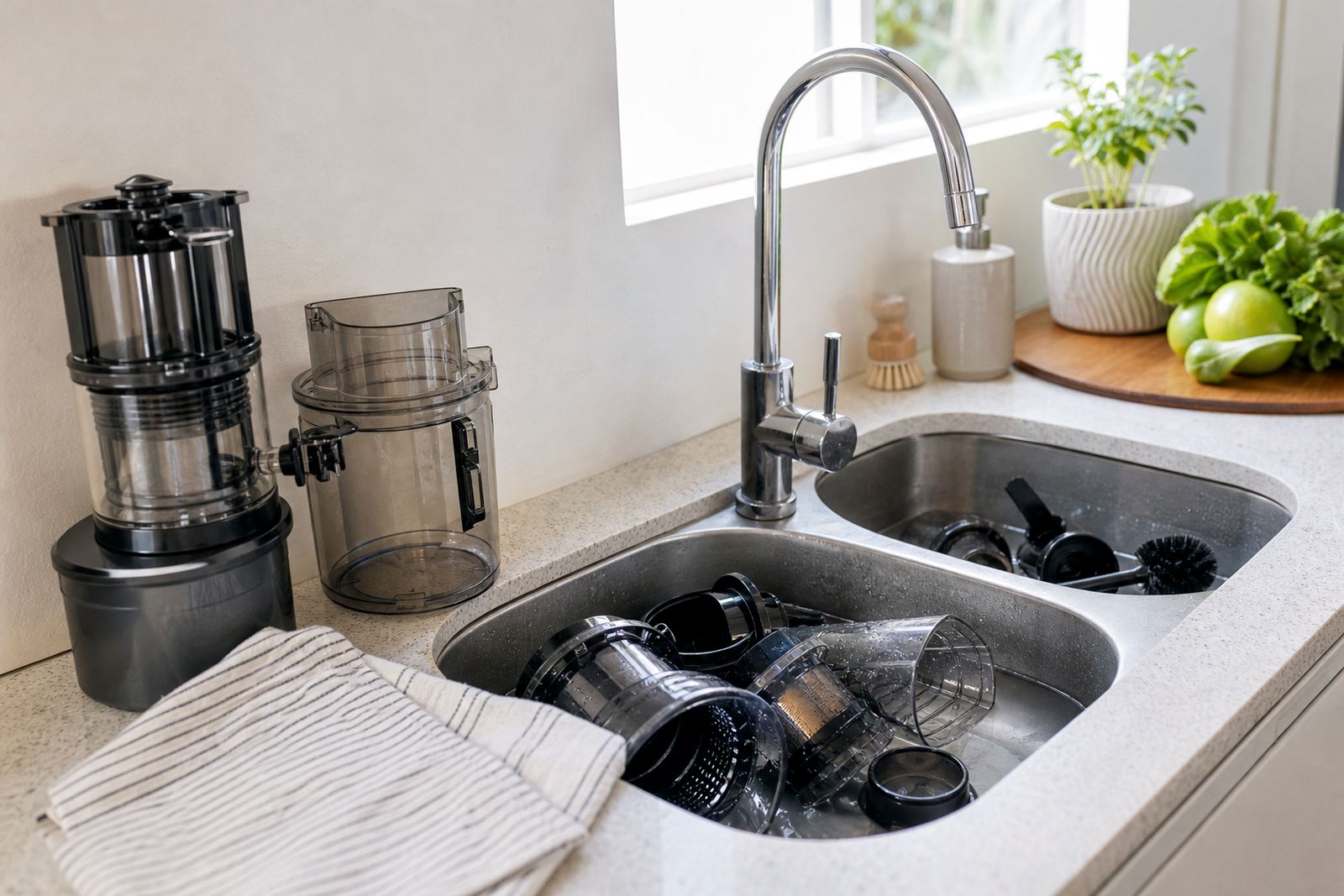
Once the last bottle is filled, switch the unit off and unplug it before you touch any moving parts. Remove pulp, fruit skins and leaf fibre first, because they dry fast and cling to screens, augers and feed chutes. If you let that material sit while you wash other items, it becomes harder to clear and may leave a smell behind.
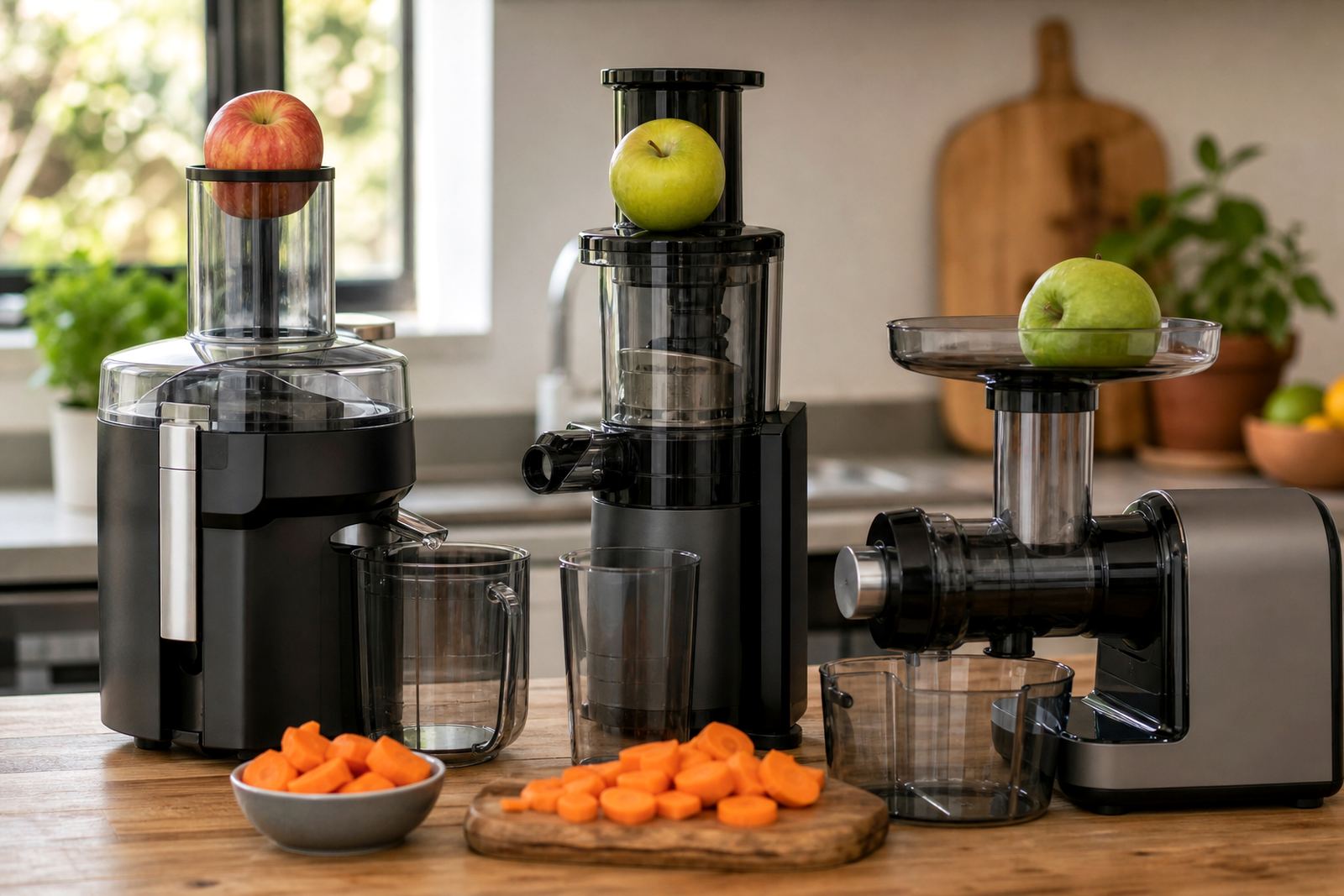
On a slow masticating juicer, the screen and auger usually need a careful rinse straight away. On a centrifugal juicer, the basket and lid often need more attention because fine pulp can lodge in the mesh. A cold press tray or chamber should be checked for pooled juice too, especially after leafy batches or soft fruit.
- Unplug before lifting any lid or housing.
- Empty pulp containers before they overflow onto the counter.
- Keep a small bowl ready for screws, seals and removable plugs.
- Use cool or lukewarm water first, not boiling water.
A wash order that keeps the sink from backing up
It helps to work from clean to dirty in a set order. That way you do not move sticky residue from one part to another. If you are cleaning several bottles and a juicer in the same session, keep the bottle caps, the juice jugs and the machine parts in separate groups.
A practical order is to rinse the juice-contact parts first, then wash the container pieces, then wipe the outer body. The motor base must never go under running water. Use a damp cloth for the outside and dry it well before storage, because moisture near plugs and switches can become a food safety issue.
- Rinse juice-contact parts before soap is used.
- Wash one part at a time so nothing gets missed.
- Dry seals, screens and lids fully before reassembly.
- Leave the motor base for last, and only with a cloth.
What to scrub and what to leave alone
Not every part should be treated the same. Brushes are useful on mesh screens, pulp outlets and small corners, but a hard scourer can damage fine surfaces. If a part has a silicone seal, check it for nicks or stretching while you clean. A worn seal can lead to leaks during the next batch.
Food safety is not only about looks. Any trapped juice left in a seam or under a gasket can become sticky and attract insects. In a warm Durban kitchen or a damp coastal storeroom, that residue can become unpleasant very quickly. If a part has a hidden channel, tilt it and flush it until the water runs clear.
- Use a soft brush on screens and pulp paths.
- Check seals for cuts, flattening or loosening.
- Wipe the outside foot pads and underside too.
- Dry hidden corners, not only the visible surfaces.
Handling pulp and liquid without making a mess
Batch washing is easier when waste is contained from the start. Keep a small bin or compost tub nearby for peel and pulp, and do not let it sit in the sink basket where it blocks drainage. If the pulp is very wet, press it lightly in a sieve before you dispose of it so it does not drip across the floor.
For juice spills on the counter, wipe them before they dry. Sugar in fruit juice can leave a sticky film on laminate, granite and stainless steel. In a Paarden Eiland warehouse area with dust moving through open doors, that film can gather grit fast and make the whole clean-up feel bigger than it is.
- Empty pulp containers before rinsing the sink.
- Keep waste separate from the washing water.
- Wipe counters and splash zones at once.
- Check the floor around the machine for drips and peel.
A Cape Town kitchen example after a weekend batch
Picture a Somerset West household that juices for the week on a Sunday afternoon. The batch includes carrots, apples, cucumber and spinach, so there is both fibrous pulp and soft residue. If the family waits until later to clean, the screen can stiffen, the juice tray can stain and the feed chute can start to smell. A quick rinse immediately after the last bottle makes the rest far easier.
That same routine works in Johannesburg or George, but the kitchen conditions change. Dry inland air can leave a thin crust on parts, while coastal humidity can slow drying. Either way, an orderly wash, a full dry and a neat reassembly are better than rushing and hoping the pieces will be fine on their own.
For anyone running a weekly batch, it helps to keep the same towel, brush and drying spot ready each time. That small habit avoids missing a seal or leaving a damp corner in the tray.
When a part needs attention before the next run
Some signs are worth checking before you pack the machine away. A lid that no longer fits tightly, a screen with damaged mesh, a cable with a loose plug end or a motor base that vibrates more than usual all deserve a look. These issues do not always stop the machine at once, but they can make the next batch messier and less safe.
If you are unsure whether a noise is normal, stop using the unit until it has been checked. A short inspection now can save you from a leak or a poor seal at the next cleaning cycle.
- Check the fit of lids, jars and feed chutes.
- Look for cracks around seals and gaskets.
- Inspect the plug, cable and switch area for wear.
- Note any new noise, shaking or slow running.
Keeping the next clean-up shorter than the last one
The best after-batch routine is the one you can repeat without thinking. Rinse promptly, wash in order, dry fully and store the parts where air can move around them. That keeps sticky residue from building up and makes the next session faster. It also helps if you keep a small brush set with the machine so you are not hunting through a drawer when the jug is already filling.
If a screen blocks often, a seal starts leaking or a part is showing wear, it may need replacement rather than another scrub. MiniPress supports customers across Cape Town, Johannesburg, Durban, Pretoria and George with setup help, deep clean guidance, spare parts help, seal replacement, screen care, leak troubleshooting, noise and vibration checks, storage care, cable plug checks, brushes and tools, routine care plans and video support calls.
For help, use the enquiry form on our contact page. A clean machine is easier to live with, and after a batch wash it should be ready for the next job without fuss.