
Start with the cupboard gap, not the brochure photo
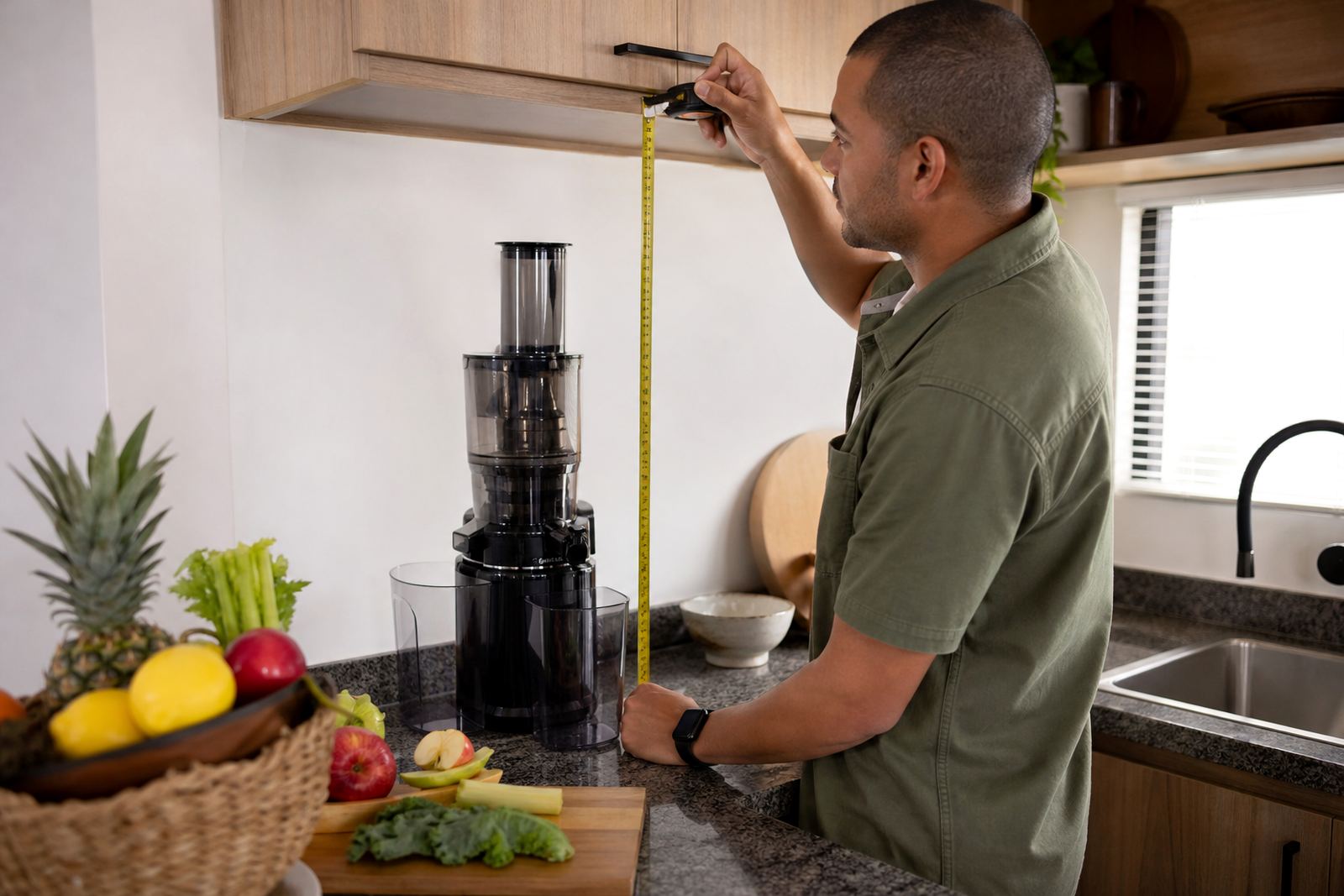
Under cabinet fit is mainly about the actual space between your countertop and the bottom of the wall units. Measure from the counter top to the lowest point of the cupboard, then check for taps, tiles, windowsills and socket positions that cut into usable height. A juicer that sits neatly in a showroom can feel cramped once it is under a South African kitchen cupboard with a tiled splashback and a kettle parked nearby.
For tighter kitchens in Cape Town flats, townhouses in Stellenbosch, or compact apartments in Johannesburg, the useful measurement is not only the machine height. You also need room to tilt the lid, remove the bowl, and reach the pulp container without scraping the cupboard above.
- Measure the full height from counter to cupboard base
- Check the space in front of the machine for the feed chute and lid lift
- Leave room to pull the jug or collection container out from beneath the cupboards
- Watch for low hanging rails, power points and splashbacks that reduce clearance
Slow masticating, centrifugal or cold press: fit changes with the design
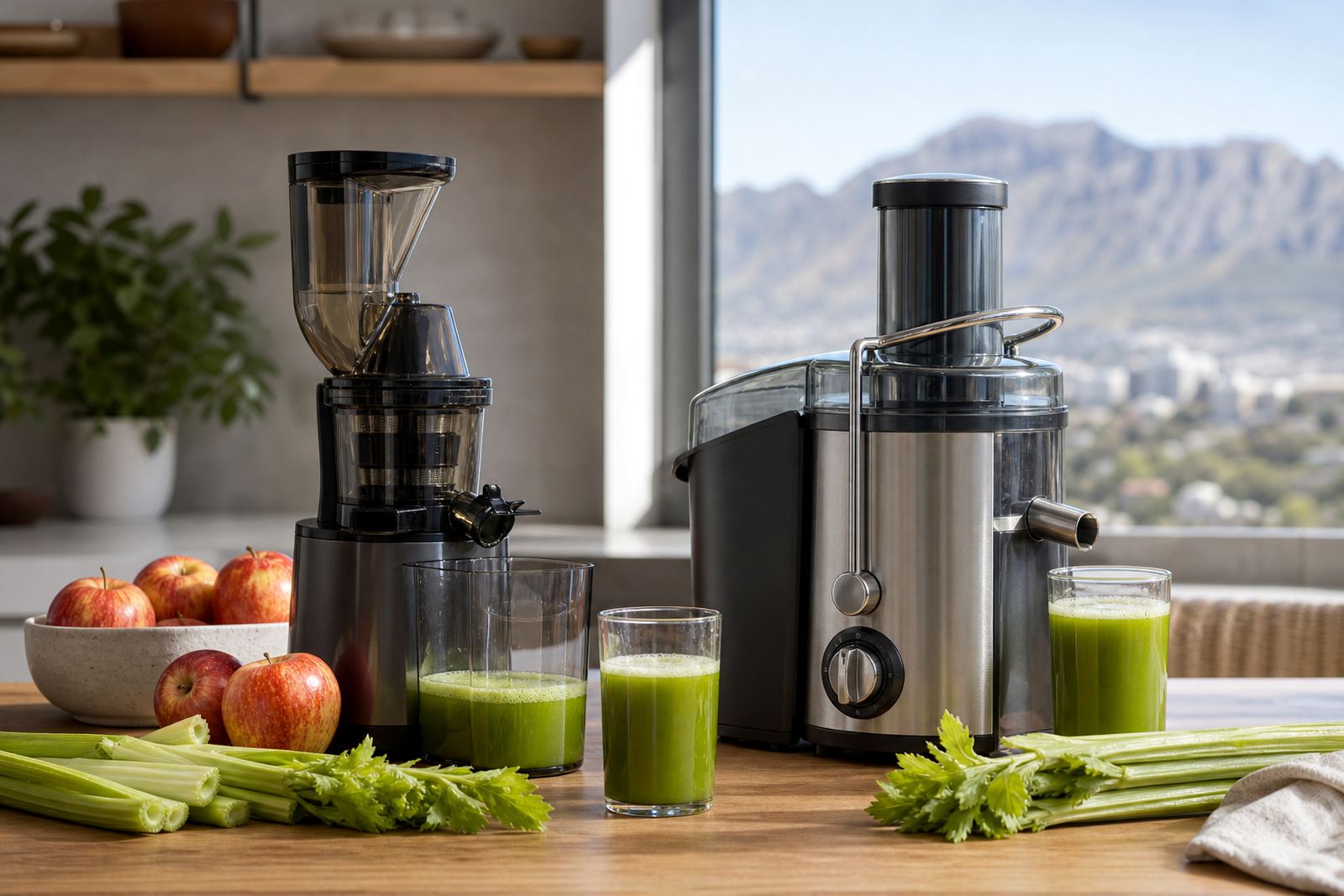
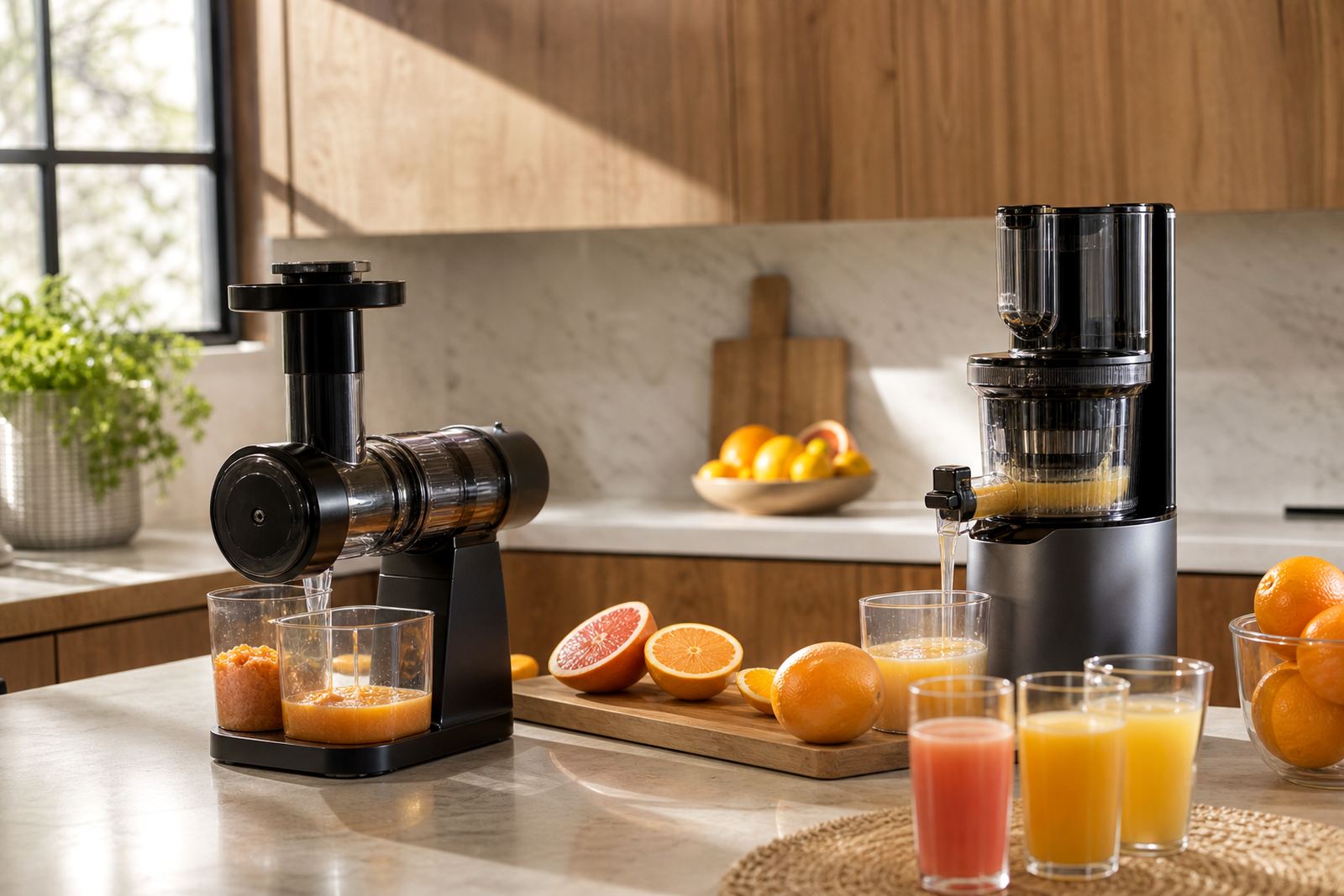
Slow masticating juicers usually work with a taller body and a narrower opening, while centrifugal juicers often have a wider top section and a different lid shape. Cold press machines can vary a lot in height depending on whether the feed chute sits upright or leans forward. In a low cabinet gap, that shape matters more than the name on the box.
A slow masticating unit may suit a kitchen where the machine can stay in one spot and the user has enough headroom to open the top and remove the auger assembly. A centrifugal juicer can be easier to use for fast daily runs, but the lid and locking arms may need more upward clearance. If the cupboard is very low, a shorter profile model is usually easier to live with than one that looks small from the front but rises sharply at the top.
- Check the highest point of the machine when the lid is open
- Allow space for locking handles, juice spouts and pulp outlets
- Compare the footprint as well as the height
- Think about where the cord exits so it does not sit under a hot kettle or trail across the working area
Cleaning room is part of the fit, not an afterthought
A juicer that fits under a cabinet but cannot be cleaned properly is not a good match for everyday use. Food safety starts with cleaning surfaces, baskets, screens and juice paths soon after use so residue does not dry onto the parts. That is especially important in humid coastal areas like Durban and George, where damp conditions can leave parts smelling stale if they are packed away while still wet.
Screen care, brush access and space to rinse parts all matter. If the cupboards sit very low, there may be no comfortable way to lift a wet bowl straight up without knocking the underside of the cabinet. A small gap also makes it harder to air dry the parts on a rack. Look for a layout that lets you wash, rinse and store without balancing pieces on the edge of the sink.
- Make sure you can remove the screen and bowl without twisting awkwardly
- Leave space for a drying rack or tea towel beside the sink
- Plan where clean parts will rest before reassembly
- Use the right brushes so fine mesh screens can be cleared without damage
The real test is the lift, the pour and the pull-out
Under cabinet fit is not only about whether the juicer stands under the cupboards. You also need to lift the lid, pour juice into a jug, and pull out the pulp bin without sliding the whole machine forward every time. If the front edge of the cupboard hangs too low, the lid may open, but only by a few degrees, which makes daily use frustrating.
At our Paarden Eiland base, we often hear from people fitting a juicer into a narrow kitchen where the counter is already shared with a toaster, spice rack and dish rack. In those cases, a shorter machine with a tidy footprint can make more sense than a larger unit with more features. A practical check is to place a tape measure on the counter, mark the height with the lid open and then see whether your hand can still move comfortably above the machine.
If the jug sits in front of the unit, add enough depth so the spout clears the cup and the cupboard does not interfere with pouring. That small bit of planning prevents spills and stops the machine from feeling wedged in.
Noise, vibration and the kitchen next to it
Fit is not only visual. A juicer that shakes across the counter or hums loudly can feel worse in a tight kitchen because the cupboard above reflects sound and makes the space feel busier. Centrifugal juicers often run faster and can sound sharper, while slow masticating machines usually work at a lower speed with a different kind of hum. The right choice depends on how the kitchen is used and who is nearby early in the morning.
In homes where the kitchen opens into the lounge, or in a shared flat where the juicer sits under a cupboard beside a breakfast counter, noise and vibration checks are worth doing. A level surface, stable feet and enough breathing room around the machine help it sit properly. If the counter is thin or the cabinet above is low, even a small vibration can feel more noticeable.
- Use a flat counter top, not a chipped or sloping section
- Check that the feet grip the surface properly
- Keep the machine away from the counter edge where it can walk forward
- Allow space so the cupboard does not amplify the sound
A Cape Town kitchen example that makes the point
Picture a small apartment in Cape Town with a counter under fixed wall cupboards and a splashback that leaves very little room above the worktop. The owner wants a juicer that can stay out during the week, not one that has to be lifted in and out of a lower cupboard each time. In that setup, the first step is to measure the clearance, then check the open height of the lid and the space needed to remove the screen for cleaning.
If the cupboard sits low, a compact centrifugal model may fit better for quick use, while a shorter slow masticating design can be better when space is tight but the user still wants a more deliberate juicing process. The best answer is not always the smallest machine. It is the one that can be used, cleaned and stored without a fight every morning.
For homes in Pretoria, Durban or George with different counter heights and cabinet styles, the same rule applies. Measure first, compare the machine in its open position, and only then decide whether it suits the space.