
When citrus deserves its own corner on the counter
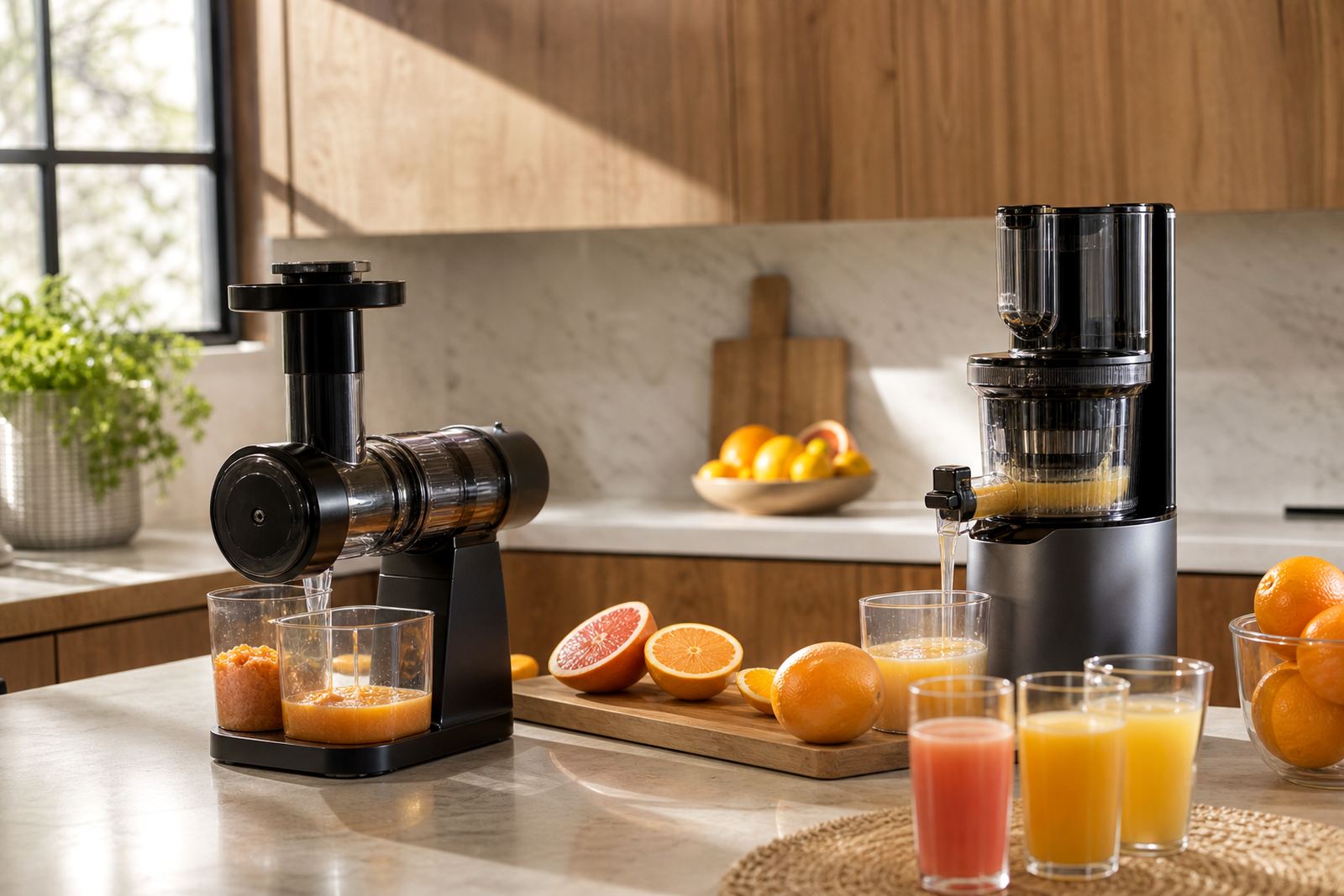
Citrus behaves differently from apples, carrots and leafy greens. The fruit is soft, juicy and usually used in smaller bursts, which is why a dedicated citrus press can feel more practical than putting everything through one all-purpose machine. A good press handles halved fruit directly, so you are not peeling, chopping or feeding small pieces into a feed chute before breakfast.
In a Cape Town apartment kitchen or a family home in Pretoria, that small difference saves time and reduces drips across the counter. It also means fewer moving parts in contact with sticky pulp, which can help keep cleaning under control when the machine is used often. If you only make citrus juice now and then, a manual hand press may be enough. But if oranges or naartjies are part of the weekly routine, a dedicated press starts to earn its place.
- Less preparation than a multi-fruit juicing process
- Useful for quick portions before school or work
- Helps keep citrus residue away from a larger juicer's feed system
- Often easier to rinse after use than a full juicing assembly
How slow masticating and centrifugal juicers treat citrus differently
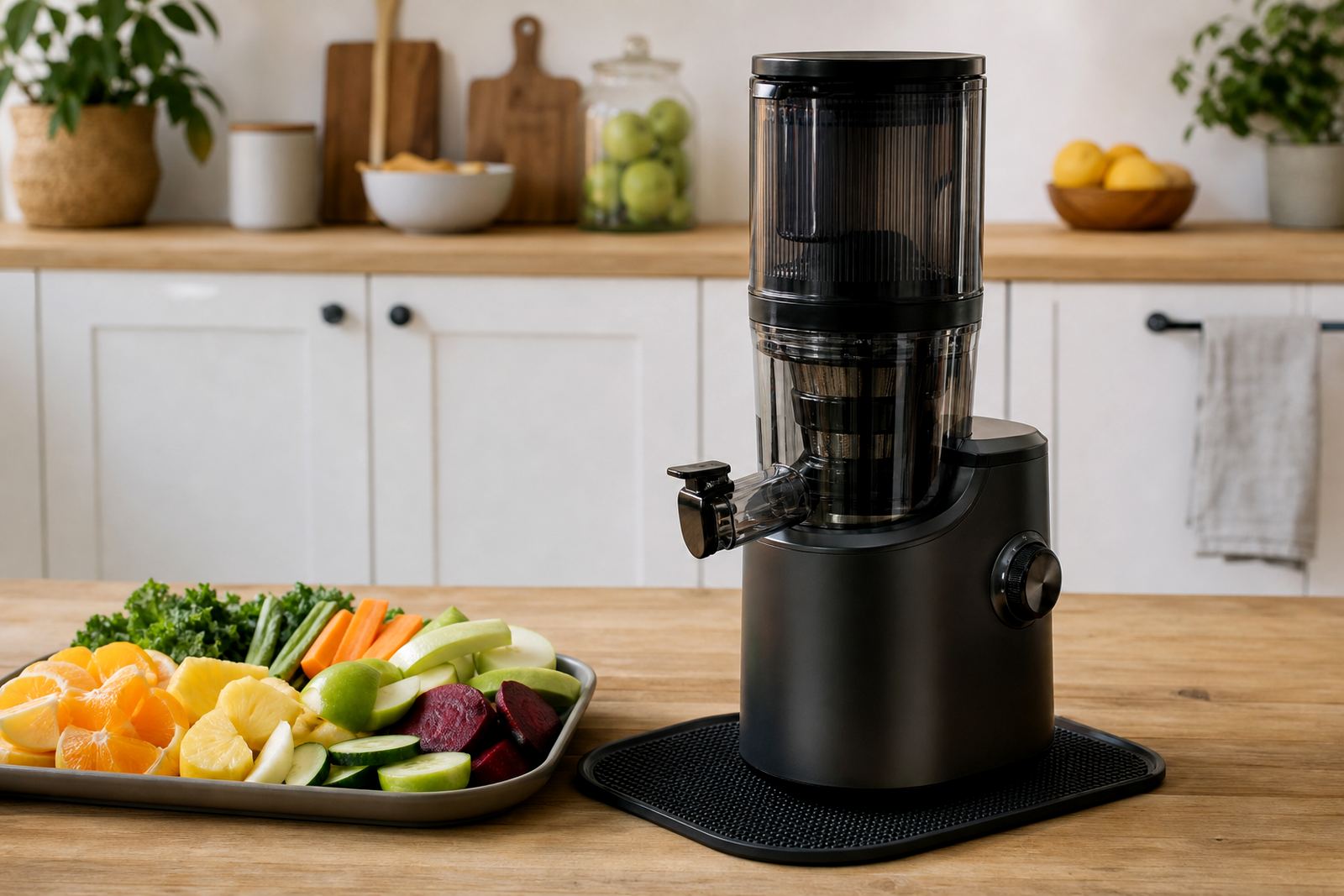
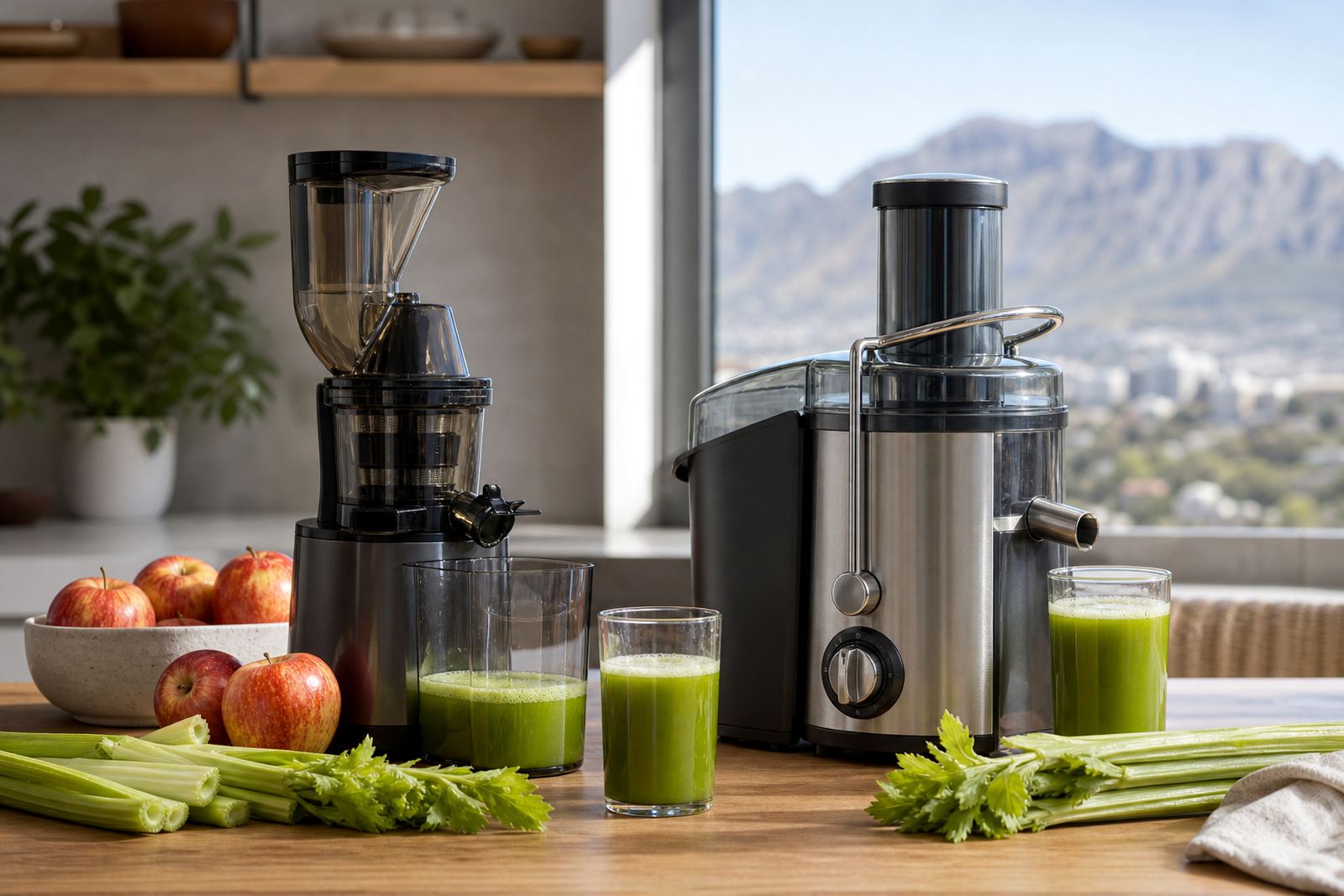
Slow masticating juicers and centrifugal juicers can both handle certain citrus jobs, but neither is always the best match for the fruit on its own. A slow masticating juicer uses a turning auger to crush and press produce at low speed. That can work well for softer fruit, although some citrus needs peeling first and the pith can add bitterness if too much is included. A centrifugal juicer spins fast and is built for speed, but citrus often throws more froth and may need more trimming before feeding.
That is where a dedicated citrus press stands apart. It is shaped around halved fruit and the pressing action is direct, so you are dealing with a cleaner, more specific task. For a household in George where the kitchen runs early and the day starts with a quick glass of juice, the difference is practical, not fancy. You get a machine that suits the fruit instead of adapting the fruit to the machine.
- Slow masticating: lower speed, more controlled pressing, generally better for mixed produce
- Centrifugal: fast spinning action, good for volume, but citrus can create more foam
- Dedicated citrus press: made for halved citrus, quick to use and straightforward to clean
What makes a citrus press worth the cupboard space
Kitchen space is valuable, especially in flats, garden cottages and busy family kitchens where the air fryer, kettle and toaster already compete for the same counter. A citrus press earns its keep when it is easy to pull out, quick to rinse and dependable for regular use. If the juicing routine is usually a few oranges for breakfast, or a mix of lemons and naartjies for cooking, a dedicated press can feel more efficient than setting up a larger juicer every time.
There is also the matter of consistency. Citrus fruit varies in size and softness through the seasons, and a press gives a familiar result from one fruit to the next. For households in Durban, where humidity can leave sticky residue on handles and lids, fewer fiddly parts is a welcome thing. It is not about replacing every other juicing method, only about making the common jobs easier.
- Faster for small daily batches
- Less handling of slippery fruit skins
- Better fit for kitchens with limited prep space
- Useful when you want juice without setting up a larger appliance
Cleaning habits that matter more than the machine badge
Whatever type of juicer or press you use, cleaning is part of food safety. Fruit juice can leave sugars and pulp in corners, and those traces should not sit around for long in a warm kitchen. Wash removable parts soon after use with warm water and a mild detergent, then dry them properly before storage. If parts are dishwasher-safe, that can help, but hand washing is often kinder to screens, seals and softer components.
Watch for areas where residue hides, such as spouts, strainers, rubber seals and the underside of pressing parts. In coastal areas like Paarden Eiland and Somerset West, salt air and humidity can speed up surface wear if a machine is put away damp. A quick dry cloth, a clean brush and an open drying rack go a long way.
- Rinse pulp away before it dries hard
- Dry metal and plastic parts before packing them away
- Check seals and strainers for sticky build-up
- Store brushes and tools where they stay clean and visible
Food safety around fresh juice at home
Fresh juice is best treated as a perishable food. Clean fruit before use, keep hands and surfaces tidy, and avoid cross-contamination with raw meat boards, dirty knives or unwashed containers. If you are pressing fruit with peel that carries spray residue or dust, a proper rinse under running water is sensible. For lemons used in cooking, the same rule applies, especially when the peel might end up in a recipe.
It is also worth using the right container. A clean jug or bottle with a tight lid helps during short storage, but juice should still be handled carefully and kept cool. In a busy household in Johannesburg, where breakfast can happen in shifts, a press that is easy to clean after each use makes hygiene easier to keep up with. Food safety often comes down to routine, not expensive equipment.
- Wash fruit before pressing
- Keep juice containers clean and covered
- Use separate tools for raw food prep and juicing
- Do not leave fresh juice sitting out longer than needed
A Paarden Eiland example that makes the choice plain
Picture a Cape Town household with two kinds of juicing needs. During the week, the family may want a quick orange press before school runs and traffic on the way out of town. At the same time, someone in the kitchen might still use a larger juicer for carrots, apples or celery when there is more time on a Sunday morning. In that setup, a citrus press is not a duplicate. It is the specialist tool for the short, repeat jobs that happen often.
From a base in Paarden Eiland, it is easy to see why this matters for customers across South Africa. Delivery needs to work for city apartments, suburban homes and coastal areas alike, and the same is true of the appliance choice. A citrus press should fit into daily life without becoming a chore to clean or store. If the machine can be checked for seals, screens, cables and general care when needed, it is more likely to stay useful for the long haul.
For many kitchens, the right answer is not one machine for everything. It is a sensible mix: a slow masticating juicer for broader produce, a centrifugal juicer where speed matters, and a dedicated citrus press for the fruit that shows up most often on the table. That is the practical way to build a juicing setup that suits the way South Africans actually cook and live.