Choose a container that does not work against the juice
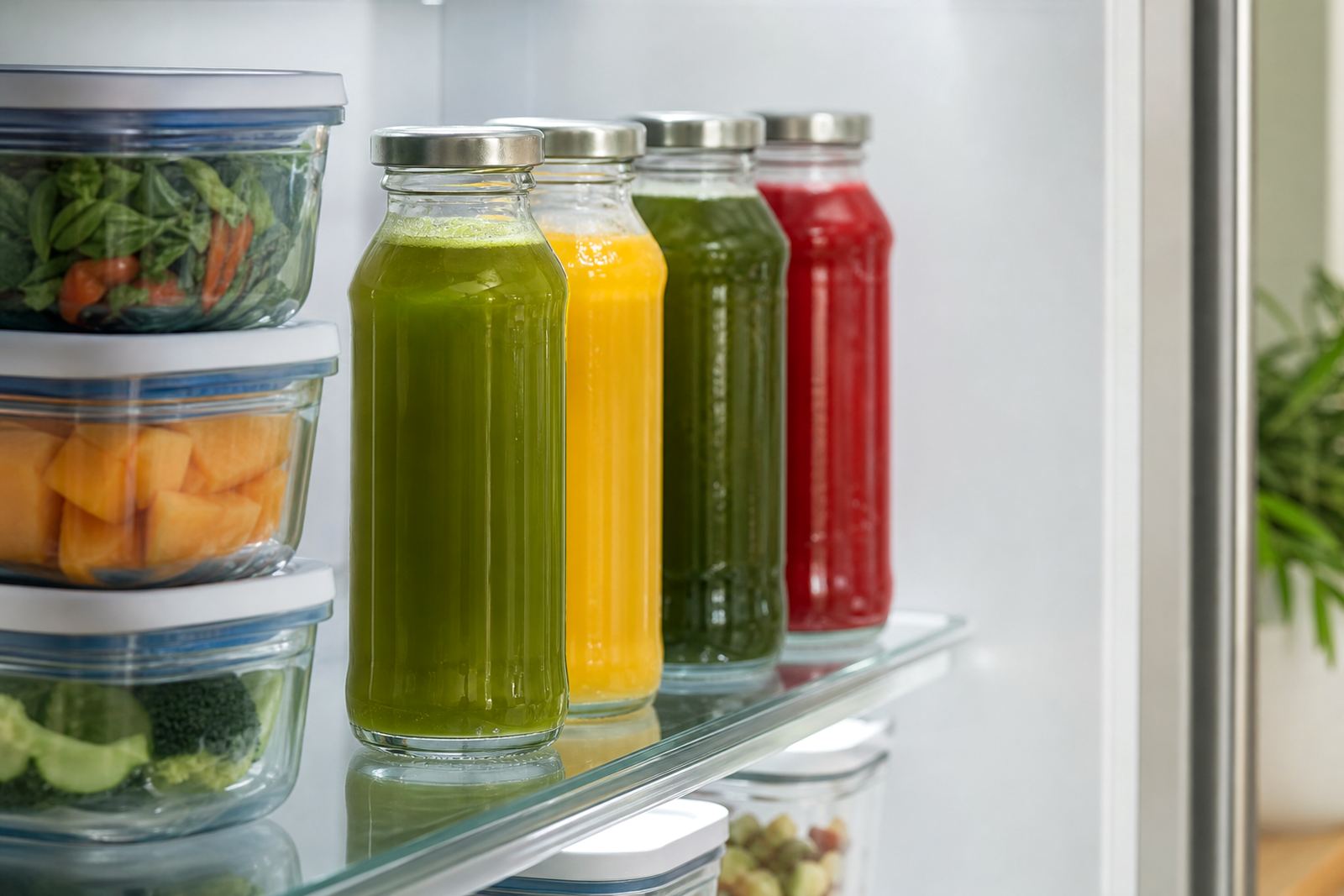
Storage starts with the vessel. Glass with a tight lid is often a solid choice because it does not pick up smells easily and it is simple to inspect for cleanliness. Food grade plastic can also work if it is made for cold food storage and is kept in good condition, without deep scratches or clouding that can trap residue.
Use a clean container that matches the amount of juice you have. If the bottle is half full, there is more air inside and the juice can pick up oxidation faster. A smaller container, filled closer to the top, usually leaves less headspace. That matters when you have pressed a small batch for breakfast and want to keep the rest for later in the day.
- Wash the container and lid in hot soapy water, then rinse well.
- Let it air dry fully or dry with a clean cloth reserved for food items.
- Check seals and caps for cracks, warping or sticky residue.
- Avoid metal containers unless they are made for food and cold storage.
Refrigeration is the main line of defence
Fresh juice should go into the fridge as soon as possible after juicing. Leaving it on the counter, even for a short time in a warm kitchen, gives it more time in the temperature range where bacteria can grow more quickly. In a Cape Town home near the coast, a warm afternoon and a kitchen with direct sun can speed this up, so the fridge should not be treated as an afterthought.
Keep the juice in the coldest practical part of the fridge, usually near the back rather than in the door.If the power is out for a while, keep the fridge closed as much as possible and avoid moving the juice in and out.
- Cool the juice quickly after juicing and store it at once.
- Keep the fridge at a steady cold setting and do not overpack it.
- Use the back shelf, not the door shelf, for prepared juice.
- During outages, keep the bottle closed and the fridge shut.
Keep oxygen, light and odours out of the bottle
Juice changes once it is exposed to air. Even when it is still safe to drink, the colour, smell and taste can shift. That is one reason a covered container is better than a bowl with cling film over the top. A tight lid cuts down on air movement and helps protect the juice from fridge odours such as onion, fish or leftovers.
Light also plays a part, especially with clear bottles left in a bright fridge or near a window. If possible, store juice in an opaque container or keep it away from direct light. For households that prepare juice in batches on a Sunday and use it through the week, this small detail can make a noticeable difference to the flavour by Tuesday or Wednesday.
- Fill containers with as little air space as practical.
- Use lids that close firmly, with no drips around the rim.
- Keep juice away from strong smelling foods in the fridge.
- Shade clear bottles from direct light where you can.
Clean juicer parts properly before the next batch
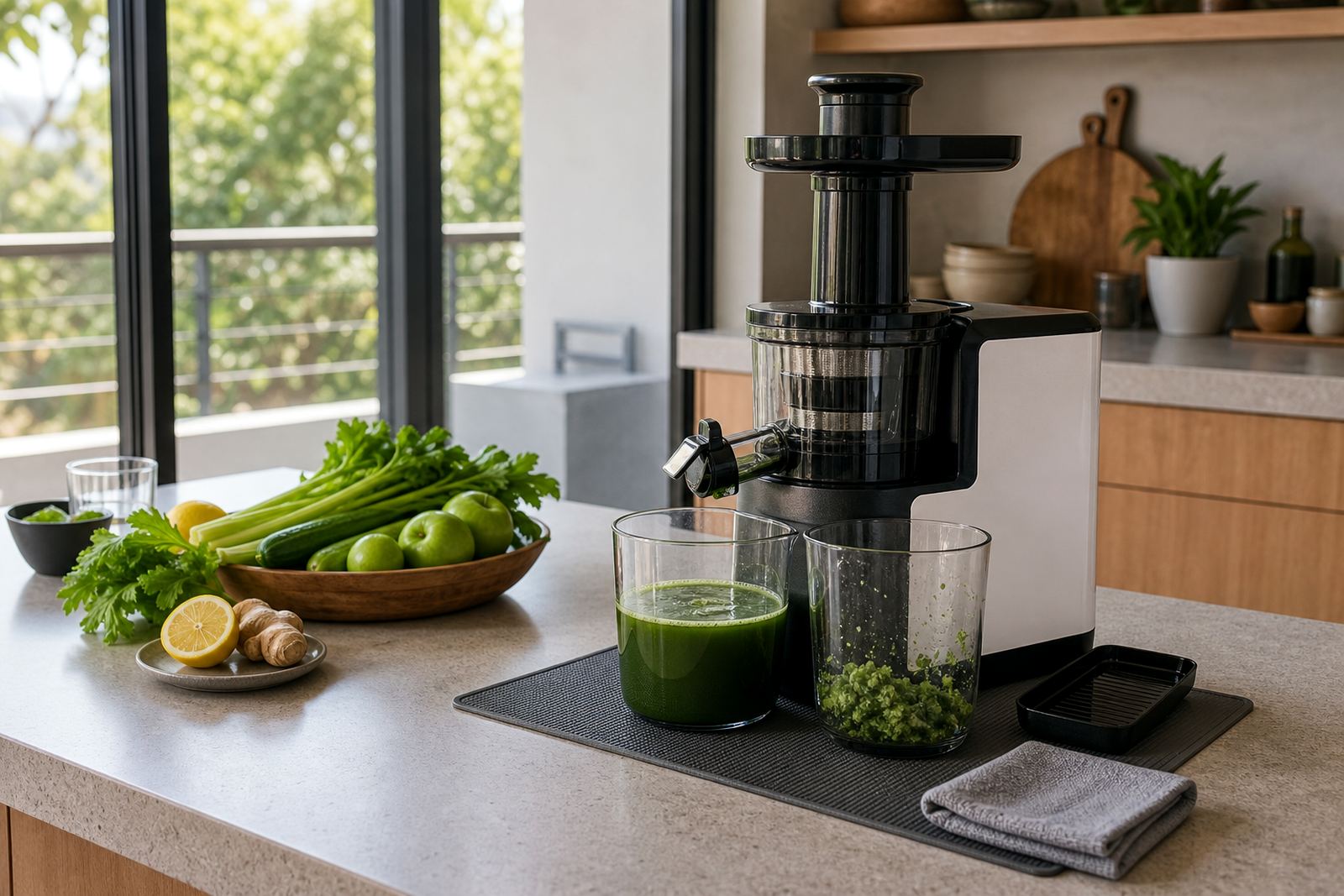
Storage does not only depend on the bottle. It also depends on how clean the juicer or cold press is after use. Pulp left in screens, spouts and seals can dry out fast and become harder to remove later. That residue can also affect the next batch, so a quick rinse right after use saves a proper clean later on.
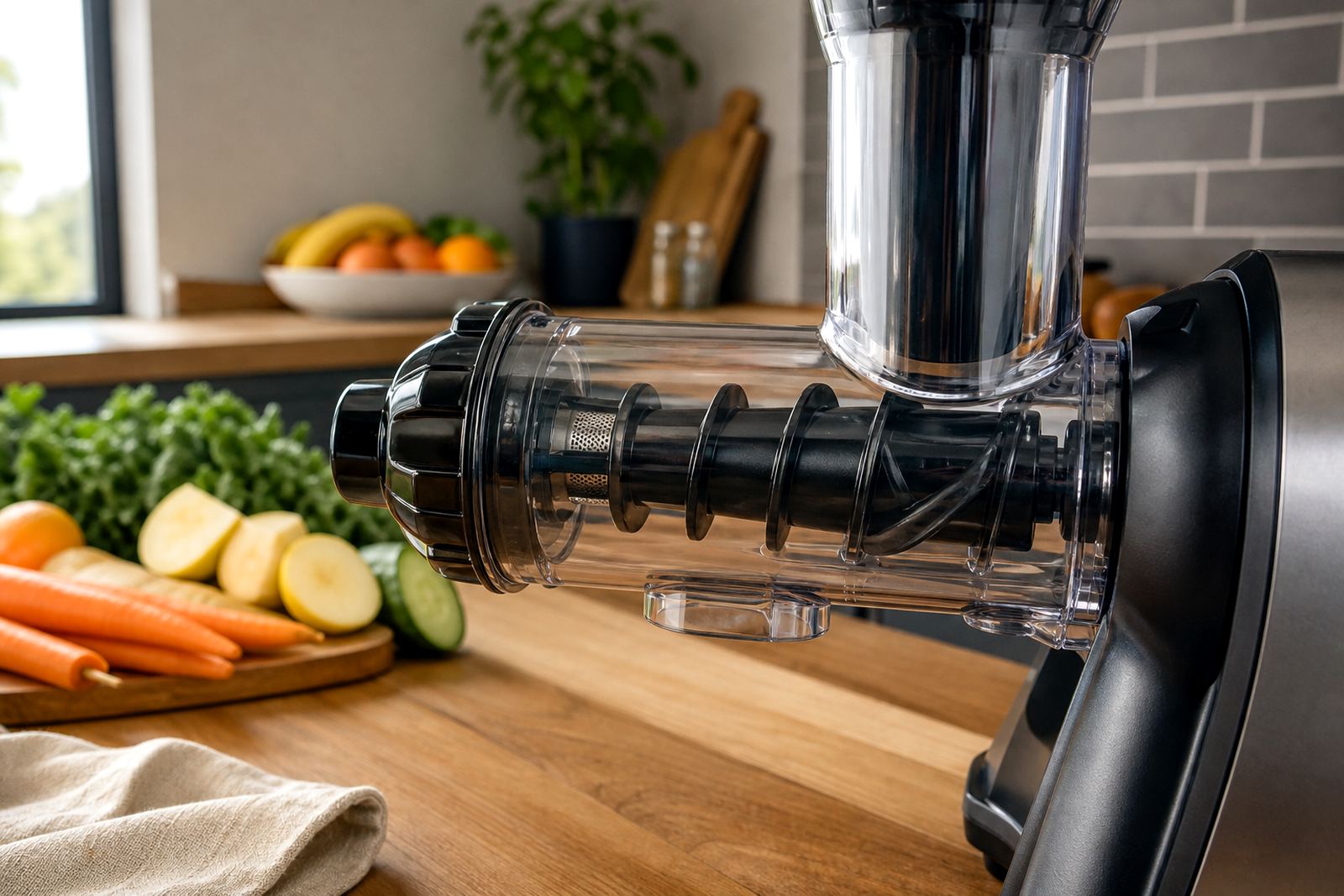
Slow masticating juicers, centrifugal juicers and cold presses all need a careful wash of the parts that touch food. Screens and fine mesh pieces need special attention because trapped fibre can affect flow and hygiene. If the machine has removable seals or a juice outlet cap, check those areas too. Good cleaning habits matter even more in summer, and in places with coastal humidity or dust from a garage or scullery area.
- Rinse parts immediately after juicing so residue does not dry hard.
- Use the supplied brush or a soft food-safe brush on screens and fine openings.
- Dry parts fully before reassembly and storage.
- Check seals and lids for trapped pulp before the next use.
How long fresh juice usually stays at its best
There is no single rule that suits every juice, because ingredients, washing, temperature and storage all play a part. In general, freshly made juice is best used sooner rather than later. A juice with more air exposure, more pulp or more handling will usually change faster than one that was sealed quickly in a clean bottle and chilled right away.
Instead of guessing, use your senses. If the smell has changed sharply, the lid is puffed, the texture has separated in an unusual way or the taste is clearly off, it should not be served. Separation on its own is common in juice and often normal, so a quick shake may be enough if the smell and appearance are still right. The point is to watch for real spoilage signs, not to rely only on appearance.
In a family kitchen in Pretoria, for example, a bottle made in the morning and kept cold for an afternoon school run will usually fare better than one left on a counter until supper. The same goes for a George home where the weather changes through the day and the fridge gets opened often during meal prep.
Batch prep for the week without wasting juice
Some households prefer to juice in batches to save time during the week. That can work well if the storage step is planned before the machine even starts. Have the bottles washed and ready, clear space in the fridge and label the containers if you need to track which batch was made first. Small organisation helps when there are several people in the home taking juice from the same shelf.
It also helps to make only what can be chilled and used in a reasonable time. Oversized batches often lead to waste, especially when the fridge is busy with other food or when the household is moving between work, school and sport. If you are also storing fruit and vegetables for the next juicing session, keep them separate from raw meat or strong-smelling items.
- Prepare clean bottles before juicing begins.
- Label containers with the day and time made if needed.
- Store juice in smaller bottles for easier use and less air inside.
- Keep fresh produce and raw foods separated in the fridge.
When a stain, smell or lid problem needs attention
Sometimes the issue is not the juice at all, but the container or machine part. A stained lid, a worn seal or a loose cap can let air in and make storage less reliable. If a bottle keeps leaking, if the lid does not sit flat, or if the juicer spout drips after use, it is worth checking the part before the next batch. A small fault can quickly become a mess on a kitchen shelf or in a car on the way to work.
For homes along the Cape Town coast and in inland cities alike, keeping prepared juice covered and chilled is mostly about discipline, not complication. Clean gear, a cold fridge and a proper lid do the heavy lifting. If you use a home juicer regularly, those habits are part of making food safely and avoiding waste.