
The counter layout that saves five minutes before coffee
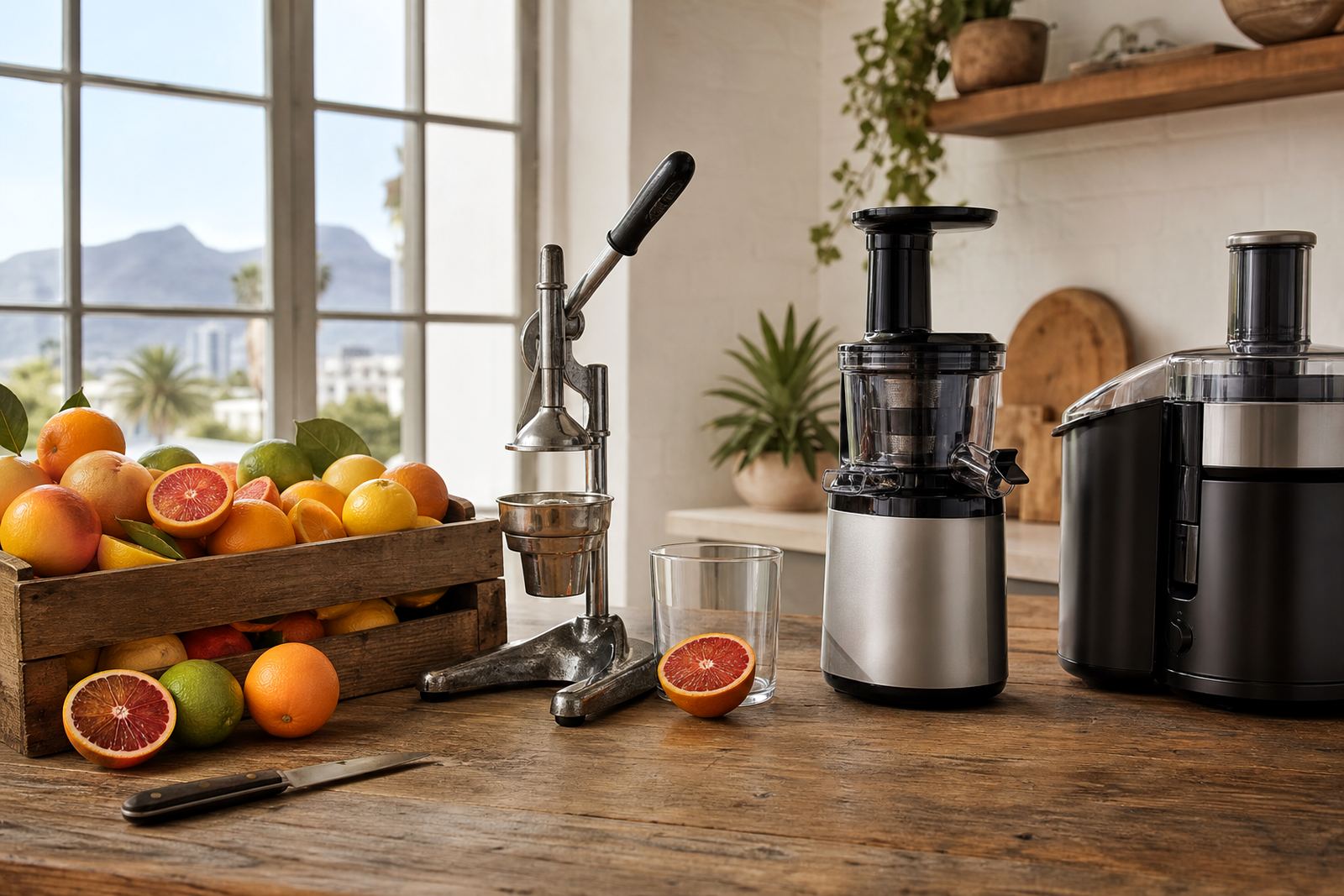
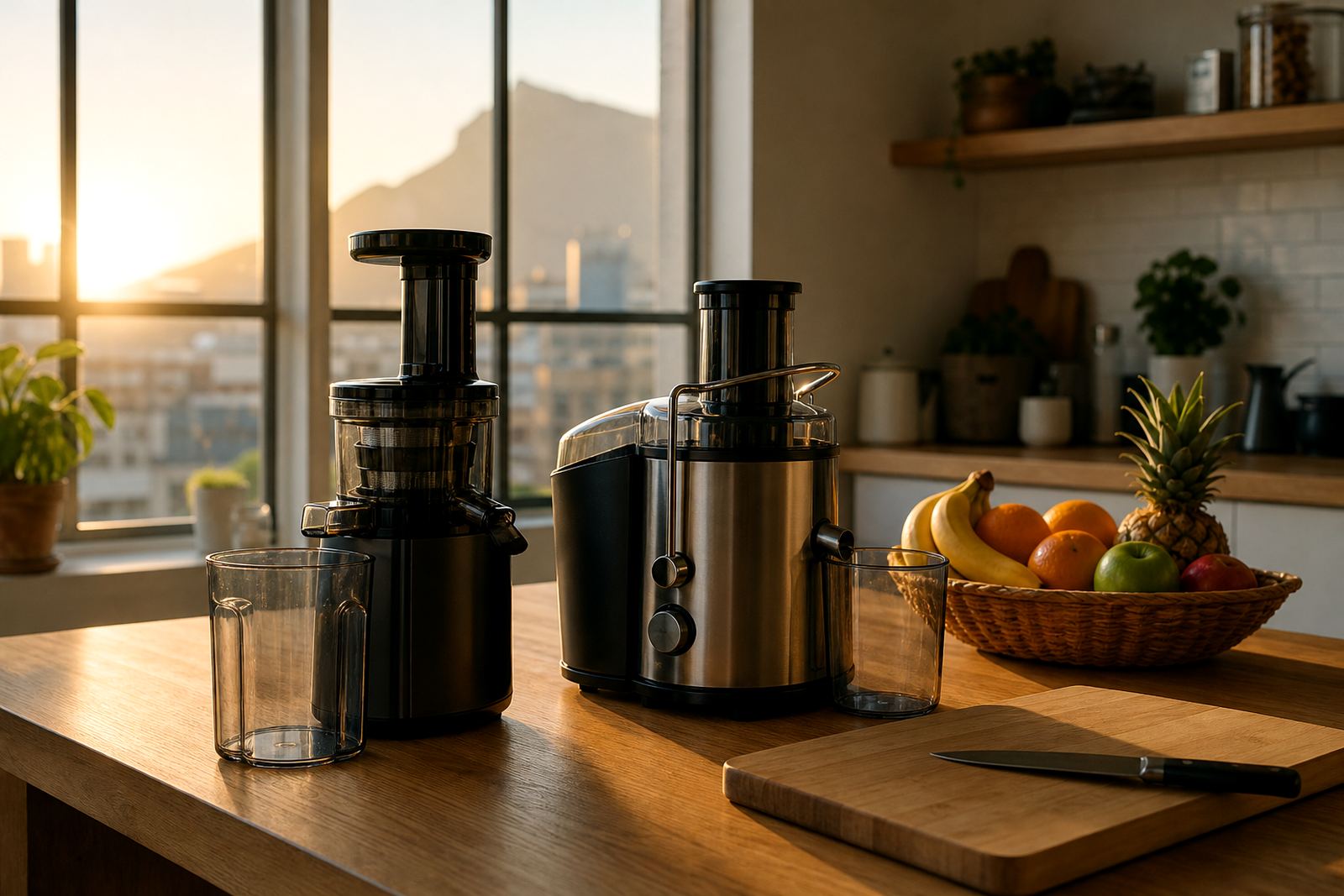
Most early delays happen before the machine even starts. A jug tucked behind the toaster, a fruit bowl on the far side of the sink, or the wrong blade left in place can turn one glass of juice into a small scramble. A better rhythm starts with a fixed spot for the juicer, a washable tray underneath and a bowl for produce that is already rinsed and ready.
In a Paarden Eiland kitchen, where space is often shared between storage, packing and breakfast prep, this matters even more. Keep the unit close to a power point, with enough room for the feed chute, pulp bin and jug.
- Keep washed fruit and vegetables in one container.
- Place the juice jug, lid and pulp bin together the night before.
- Leave a drying cloth and brush within arm's reach.
- Use a non-slip mat if the counter surface is smooth.
Slow masticating machines and why they suit a repeatable morning
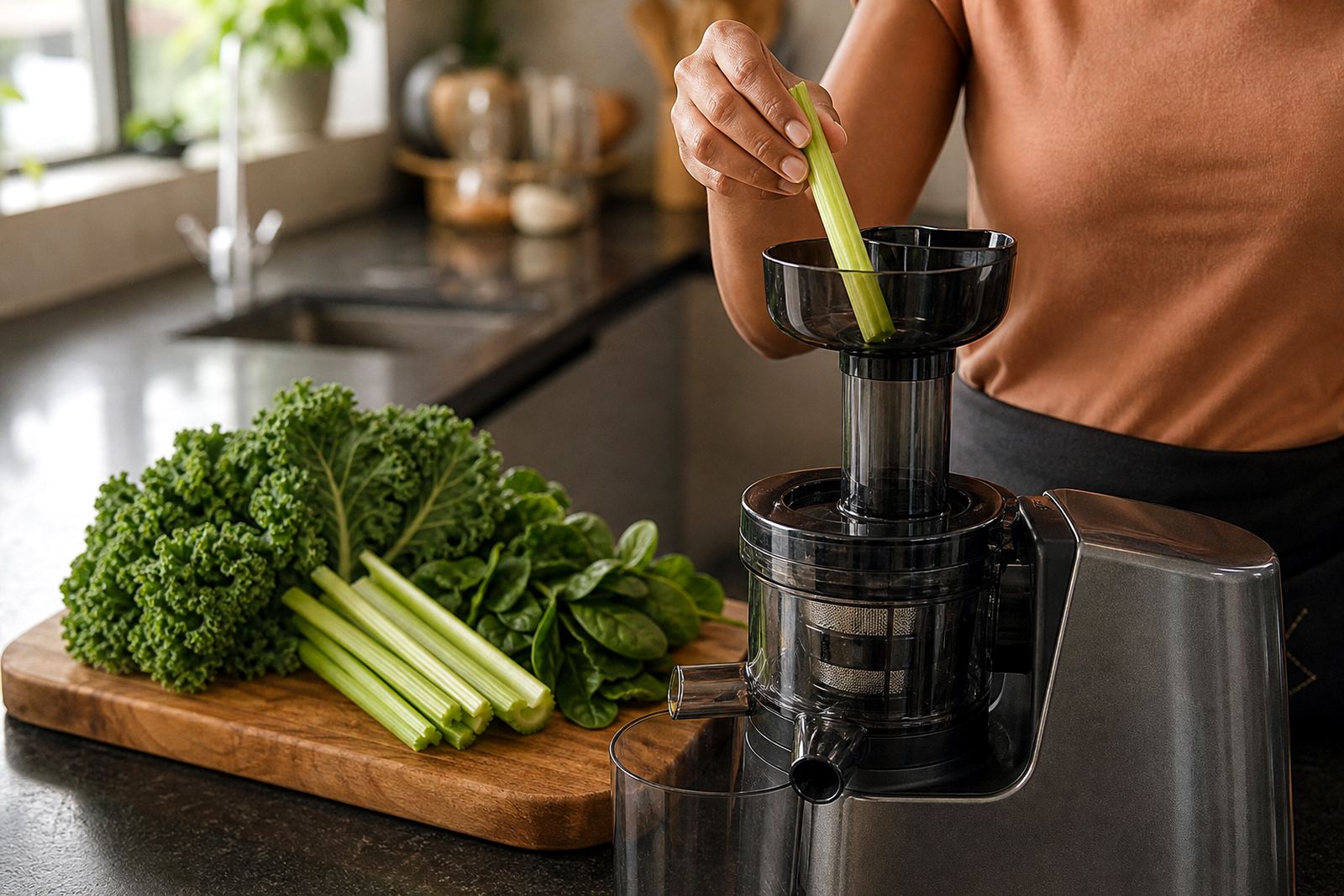
Slow masticating juicers work by pressing produce at a lower speed, which helps when you want less foam and a calmer process. They tend to suit leafy greens, herbs, soft fruit and mixed vegetable blends. Because the feed is steadier, the morning routine can feel less rushed and the pulp often comes out drier. That does mean a little more chopping up front, so uniform pieces help the chute work properly.
For households that prefer a quiet start, this type of machine is often easier to use before the rest of the house wakes up. The slower motion also makes it simpler to watch for blockage or stringy fibre. If a carrot is cut too thick or a celery stalk bends instead of feeding through, you see it quickly and can stop without strain on the motor.
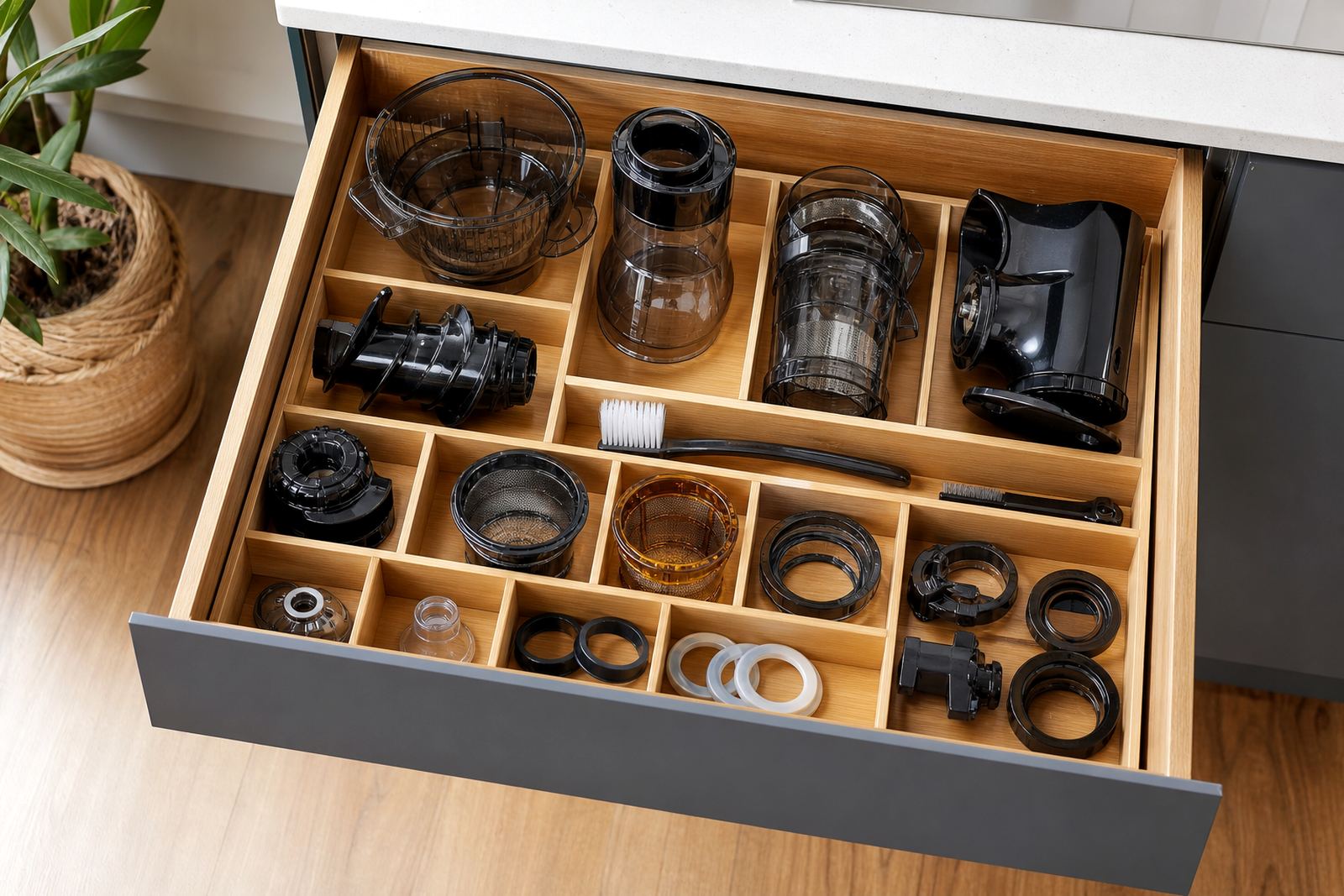
Cleaning is part of the rhythm too. Rinse the screen and auger soon after use, before juice residue dries. A soft brush works better than a hard pad, especially on fine mesh parts. If seals, screens or feed components show wear, it is better to deal with them early rather than let sticky residue build up around the moving parts.
When a centrifugal juicer makes the rush hour easier
Centrifugal juicers are built for speed. They grate the produce and spin the juice away from the pulp, which makes them useful when breakfast has to happen quickly. For apples, citrus, carrots and similar firm produce, they can handle larger batches with less pre-cutting than many slower machines. That can suit families, guest houses and busy households where the first person up is trying to get everyone moving.
The trade-off is noise and foam, plus a more immediate clean-up. A centrifugal unit is easier to keep moving if you feed it in steady batches rather than forcing too much at once. If the machine starts vibrating, check that the lid is seated properly, the bench is level and the basket is free of residue. Small issues tend to show up as wobble or a rattling sound before anything major happens.
- Cut hard produce into manageable pieces, but not too small.
- Feed one item at a time if the machine bogs down.
- Stop and rinse the basket if pulp starts clogging the mesh.
- Dry the parts fully before storage to avoid odour and staining.
Cold press habits for slower mornings and less waste at the sink
Cold press machines are built for pressing rather than fast spinning, which suits people who prefer a more controlled process. They can handle a wider mix of produce and often leave a drier pulp than many expect. Because the process is slower, the setup matters more. Once the press area is organised, though, the morning runs on repeat and the chance of spillage drops.
A good cold press habit starts with sorted produce. Soft items go in one bowl, firm items in another, and anything stringy is pre-cut so it does not wrap around the mechanism. Keep the drip tray aligned and check that the outlet is clear before switching on. If the kitchen has a salt-air feel from a coastal location like Cape Town or Durban, wipe metal parts dry after rinsing to reduce surface marks and sticky residue.
Food safety is mostly about clean handling. Rinse raw produce properly, keep counters clear of soap residue and use separate cloths for dishes and juice parts. If a machine is used daily, a deeper clean once or twice a week helps stop old pulp from catching in hidden corners.
A Cape Town example: the same breakfast, less faffing
A household in the Paarden Eiland area might have one person leaving for an early shift, another packing orders, and a third trying to get the kettle on before traffic builds. In that setting, a fixed juicing routine makes sense. The machine stays on one shelf, the chopping board stays beside it, and the produce is washed the night before. The result is not about rushing harder, but about removing the extra decisions.
For many South African homes, delivery timing also shapes the routine. If a machine arrives from Cape Town to Johannesburg, Pretoria, Durban or George, it helps to set it up once and then keep the same workflow every time. That means checking the plug, reading the assembly order carefully and using the right brush for each removable part. A small habit like this can save more time than buying a second appliance.
- Keep the same jar, jug or bottle for collection each morning.
- Use one drying rack area for all removable parts.
- Store the manual or setup notes near the appliance, not in a drawer elsewhere.
- Set a routine for quick inspection of seals, screens and cables.
Cleaning habits that protect the machine and the food
Juicers last longer when cleaning is part of the process rather than an afterthought. Rinse off pulp straight after use, especially from screens and narrow channels. If fruit acid or vegetable residue dries on the parts, it becomes harder to remove and can affect the smell of the next batch. A gentle brush and warm water are usually enough for most removable components, provided the parts are dried properly afterwards.
Power cords, plugs and switch areas should stay dry. If a machine is showing unusual sound, wobble or leaking, stop using it until the cause is checked. A loose seal, worn screen or damaged fitment can make a clean kitchen feel untidy very quickly. That is where practical support helps, whether the issue is a first-time setup, a seal replacement or a leak troubleshooting call. It also helps to keep brushes and tools in one place, because hunting for them in the morning slows everything down.
Making the first glass part of a steadier household rhythm
The point of a morning juicing routine is not perfection. It is a repeatable way of getting breakfast moving without extra mess, noise or guesswork. Whether the household uses a slow masticating juicer, a centrifugal machine or a cold press, the real gain comes from the same place: set out the parts, keep them clean, and follow the same order each time.
That is why proper care matters just as much as the machine itself. Regular checks on noise, vibration, screens, plugs and storage keep the appliance ready for the next morning. And if a household wants help with setup, deep cleaning, spare parts, screen care or a video support call, having one clear process makes the next batch feel far less faffy.