

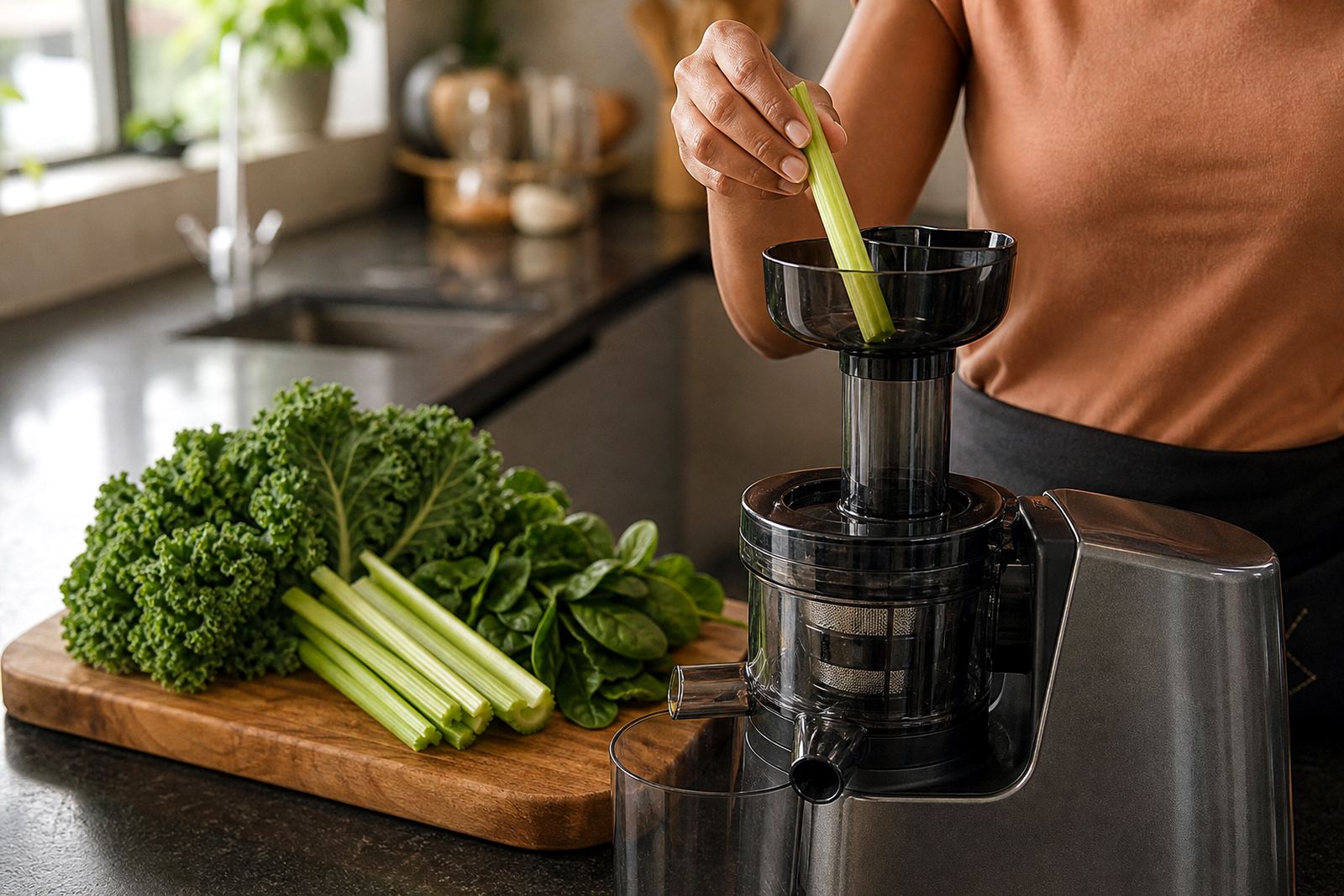
Start with greens that are clean, dry and easy to handle
Before any juicing starts, sort the leaves by type and shake off sand, grit and loose stem bits. In coastal areas like Paarden Eiland and Durban, leafy produce can pick up extra moisture during delivery or storage, so a quick rinse and proper drying helps keep the feed path clearer and reduces the risk of gritty juice.
Wash greens in cool water, then drain well. A salad spinner is useful, but if you do not have one, lay the leaves on a clean tea towel and pat them dry. Excess water is not dangerous on its own, but it can thin the juice and leave more foam in a centrifugal juicer.
Trim the hard parts before they meet the feed chute
Leafy greens do not all need the same prep. Tender spinach can usually go in whole, while kale, silverbeet and spinach bunches often do better when the thicker stems are cut shorter. Tough stalks can wrap around moving parts or slow the feed rate, especially in compact home units.
- Remove any yellow, wilted or slimy leaves before washing.
- Cut off the very bottom of bunches where sand often hides.
- Slice long stems into shorter pieces so they enter more evenly.
- Split very large leaves into hand-sized sections for easier feeding.
If the leaves are from a home garden in Stellenbosch or Somerset West, check for snails, soil and small twigs. A quick visual sort before prepartion saves time at the machine and cuts down on repeat cleaning.
How slow masticating machines treat leafy produce
Slow masticating juicers work by pressing ingredients through an auger at a lower speed. That makes them well suited to greens, because the leaves are squeezed rather than flung around. Feed them steadily, not in loose handfuls, so the auger can draw the fibres in without jamming.
For best handling, alternate soft leafy pieces with a firmer item such as cucumber or apple. This helps push the greens through and can reduce the chance of pulp building up in one corner. If the machine starts to strain or make a harder sound, pause and clear the chamber before adding more.
Centrifugal juicers need a different rhythm
Centrifugal juicers work fast, so greens need a slightly different approach. Rather than stuffing the chute, feed a little at a time and follow with firmer produce to help move the leaves against the spinning basket. Loose, fluffy greens are more likely to stick to the sides if they are added all at once.
- Roll soft leaves into a loose bundle before feeding.
- Use firm ingredients to help the machine clear pulp between handfuls.
- Watch for foam, which is common with leafy and watery produce.
- Stop if the basket is clogging and brush it out before continuing.
These machines are practical for quick batches, but they reward patience. A steady pace usually gives better juice flow and less splatter on the lid, which makes kitchen clean-up easier in a busy household.
Food safety starts with the washing bowl and cutting board
Clean handling matters just as much as machine care. Keep raw produce away from cooked food, meat and dirty cloths on the counter. Use a separate board for trimming greens, and rinse any knives or bowls that touched soil before they are used for other ingredients.
Leafy ingredients should not sit around for long once they are washed. If you are prepping in advance, dry them well, store them in a clean sealed container or bag and keep them chilled. In warmer weather, especially in Durban or George, produce that is left in a hot kitchen can wilt quickly and become harder to feed through the juicer.
What to do when the greens are too stringy, wet or bitter
Not every batch of greens behaves the same. Older kale can be fibrous, and chard stems may feel bulky in the feed chute. If the mixture seems too stringy, chop it finer and combine it with softer leaves. If the greens are very wet, drain them longer before loading the machine.
Some people add citrus, ginger or cucumber to balance stronger flavours, but the main point is mechanical handling, not taste advice. For mixed batches, feed the leaves in small portions and let the juicer clear between additions. That habit helps prevent back-pressure and keeps the pulp screen from clogging too fast.