Why the screen clogs faster than people expect
The strainer screen does the hard work in a slow masticating juicer, a centrifugal juicer and many cold press units. It holds back pulp while juice passes through the fine mesh or perforated filter. Once those holes start packing up with fibre, the machine may sound strained, the pulp may come out wetter than usual, and the juice can take longer to run through.
A screen can clog in one session if the fruit is soft, the produce is very fibrous, or the feed is pushed through too quickly. Citrus pith, celery strings, beetroot, spinach and apple pulp all behave differently. If the screen is left standing after use, the residue dries and hardens, which makes the next clean-up far more difficult.
MiniPress customers in Cape Town, Johannesburg and Durban often notice the same pattern: a machine works beautifully for a few uses, then slows down because the screen has been left with sticky pulp overnight. That is why prompt cleaning matters as much as the juicing itself.
What to keep at hand before you start scrubbing
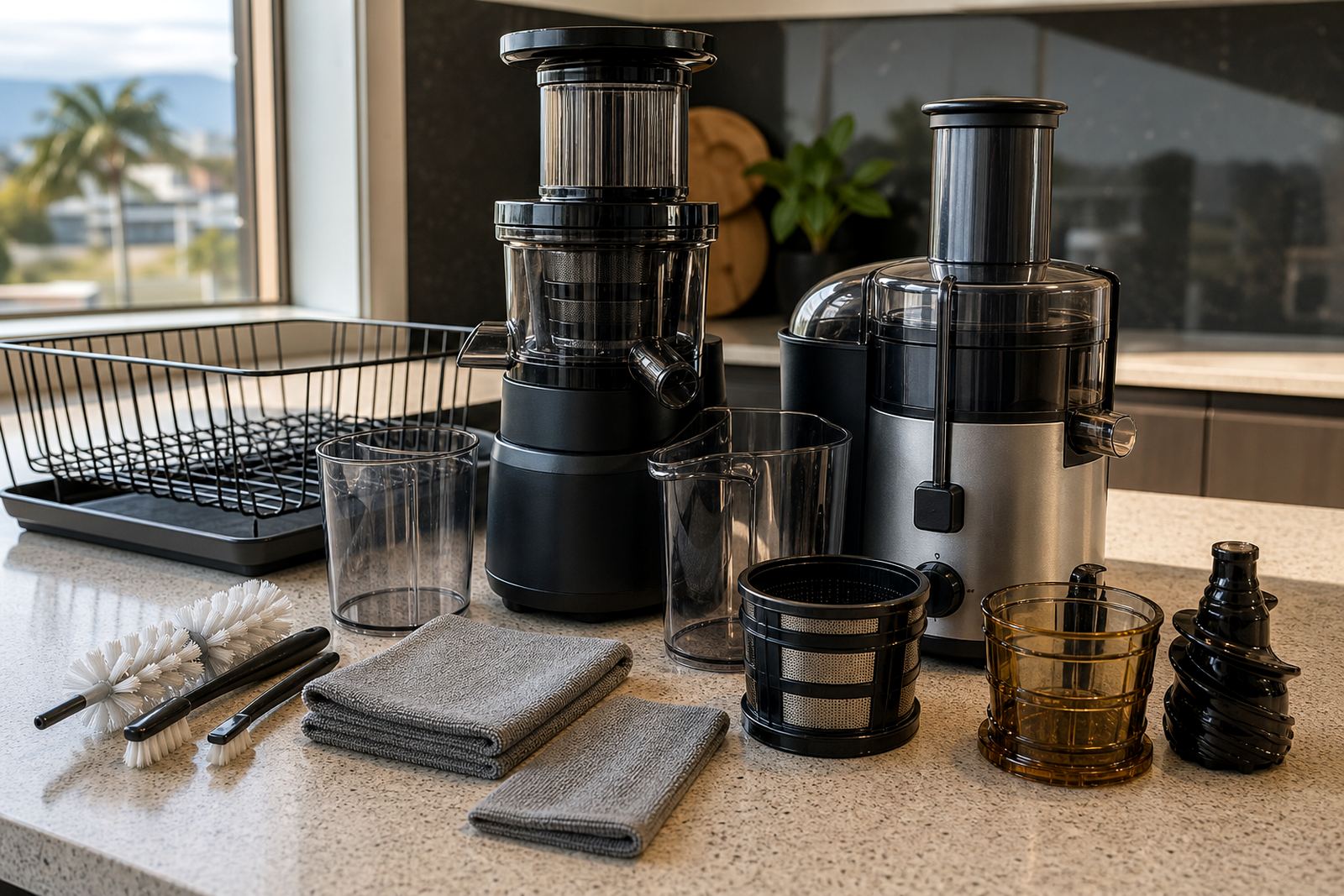
A good clean starts with the right tools. Most screens can be handled safely with household items, as long as they are not harsh enough to scratch the mesh or damage the seals around it.
- A soft nylon brush for loosening pulp from the holes
- A small bottle brush for corners, chute edges and pulp outlets
- A non-scratch sponge or soft cloth
- Warm water and mild dish soap
- A wooden or plastic pick for stubborn fibre, used gently
- A dry towel for drying the screen and housing properly
Metal scourers and sharp blades should be avoided. They can widen the holes or nick the surface, which affects how the filter performs over time. If a screen is bent, dented or cracked, it is better to replace it than to keep forcing it back into service.
A cleaner screen starts with the right sequence
Cleaning goes faster when it is done in the right order. Switch the machine off, unplug it and let the motor stop completely before opening any cover or removing parts. Take out the screen as soon as the session is finished, then rinse away loose pulp before it dries.
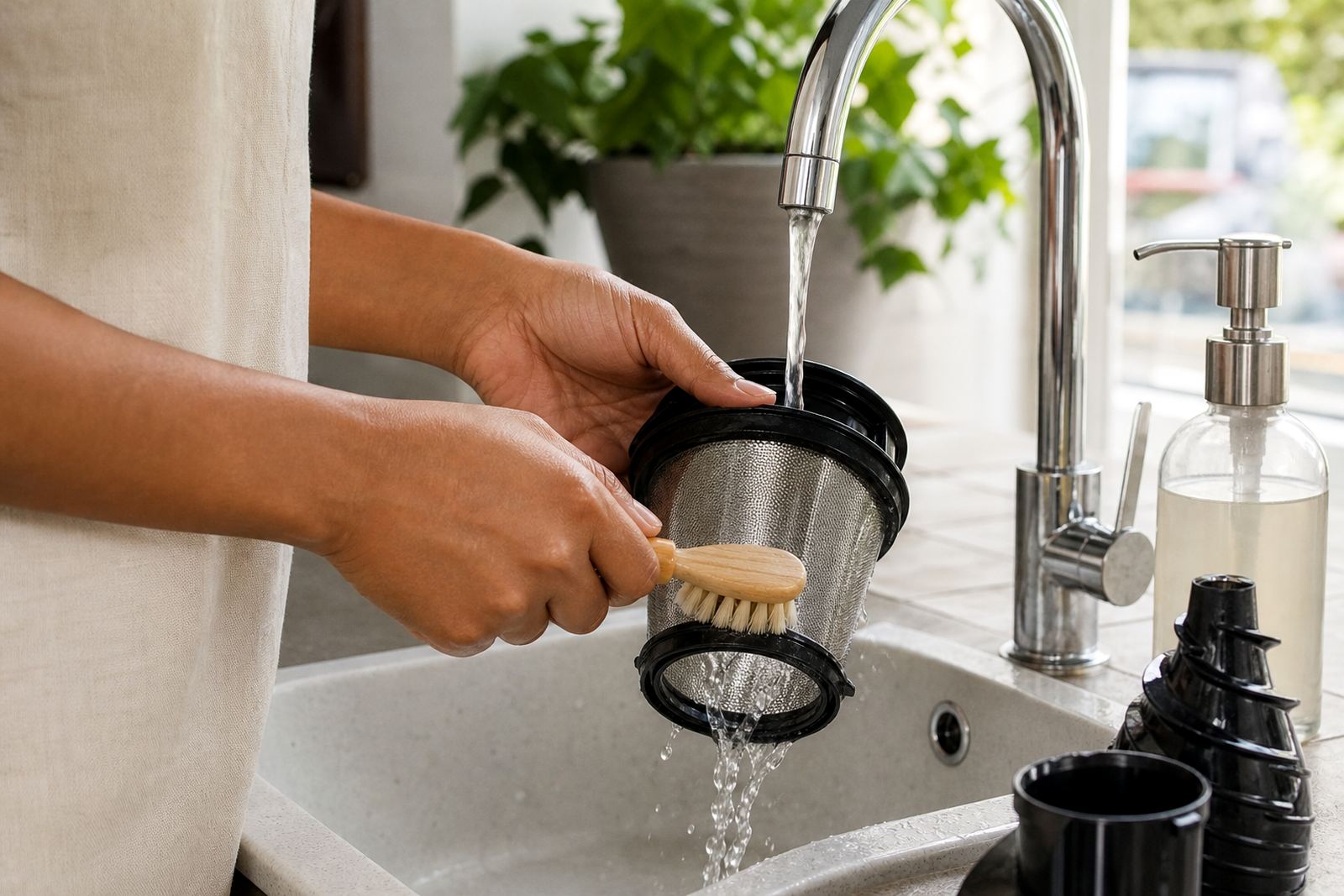
For most home machines, the best method is to soak the screen briefly in warm water, then brush from the inside out so fibre lifts away from the openings. If the screen has many fine holes, hold it up to the light after rinsing. If the light still does not pass through evenly, the filter needs another pass with the brush.
- Rinse immediately after use
- Soak only long enough to loosen residue
- Brush in short circles instead of hard strokes
- Check both sides of the screen for trapped pulp
- Dry fully before reassembly to avoid moisture sitting in the unit
This matters for food safety as well. Residue left inside warm parts can support odours, staining and bacterial growth. Clean, dry components are easier to store and safer to use next time.
Different juicer types need different handling
Slow masticating juicers usually press produce more gradually, so the pulp is often drier, but the screen can still collect fine fibre that is awkward to remove. These screens may have narrow slots or tiny perforations that need patient brushing. Centrifugal juicers move faster, so they often throw more foam and pulp against the filter basket, which means the screen may need a quicker rinse straight after use.
Cold presses often have parts that work under steady pressure rather than speed. That can reduce splatter, but it does not remove the need for proper cleaning. If the machine is used for mixed produce, especially combinations that include herbs, berries or fibrous greens, the screen can hold on to sticky residue that dries fast in warm kitchens.
For coastal homes in Stellenbosch, Somerset West and George, humidity can slow down drying and leave moisture sitting in the mesh. In those areas it helps to wipe the screen dry and leave it standing in open air for a short while before packing it away.
When the screen problem is not just dirt
Sometimes a screen keeps clogging even after a careful clean. That usually points to another issue rather than poor washing. A cracked seal, a worn brush, a warped basket or a blocked outlet can all make the filter seem worse than it is.
Watch for these signs:
- Water or juice leaking around the screen housing
- Unusual vibration during operation
- Pulp building up on one side only
- The screen rattling or sitting unevenly
- Noise that changes when pressure is applied
If any of those show up, the unit may need a seal replacement, cable and plug check, or a closer look at the internal fit. A damaged screen should not be forced back into the machine, especially where a loose fit could let pulp move where it should not.
A Paarden Eiland example that many homes will recognise
A customer in Paarden Eiland once described a machine that seemed to clog every second day, even after rinsing. The issue turned out to be a combination of dried citrus pulp in the screen and a slightly worn brush that was not clearing the finer holes. After a proper deep clean, a new brush and a short routine care plan, the screen stayed open longer and the machine ran more evenly.
That kind of problem is common in busy households across Cape Town and Johannesburg where the juicer gets used in the morning rush, then left to sit until later. In Durban, where humidity can slow drying, residue can cling a bit longer. The fix is usually not complicated, but it does rely on prompt attention and the right tools.
MiniPress supports customers with first time setup, deep clean guidance, spare parts help, screen care, leak troubleshooting, noise and vibration checks, storage care, cable plug checks, brushes and tools, routine care plans and video support calls. Those services are useful when the screen needs more than a quick rinse and a bit of patience.