Start with the fruit bowl, not the juicer
The best place to begin is on the counter, before any blade, auger, screen, or press part comes out. Separate the produce that will be juiced from anything that is going back into the fridge, then wash your hands, clear the sink, and rinse the basin if it has soap residue or food bits. A clean start matters because soil, leaf fragments, and grit can move from the peel to your cutting board and into the machine.
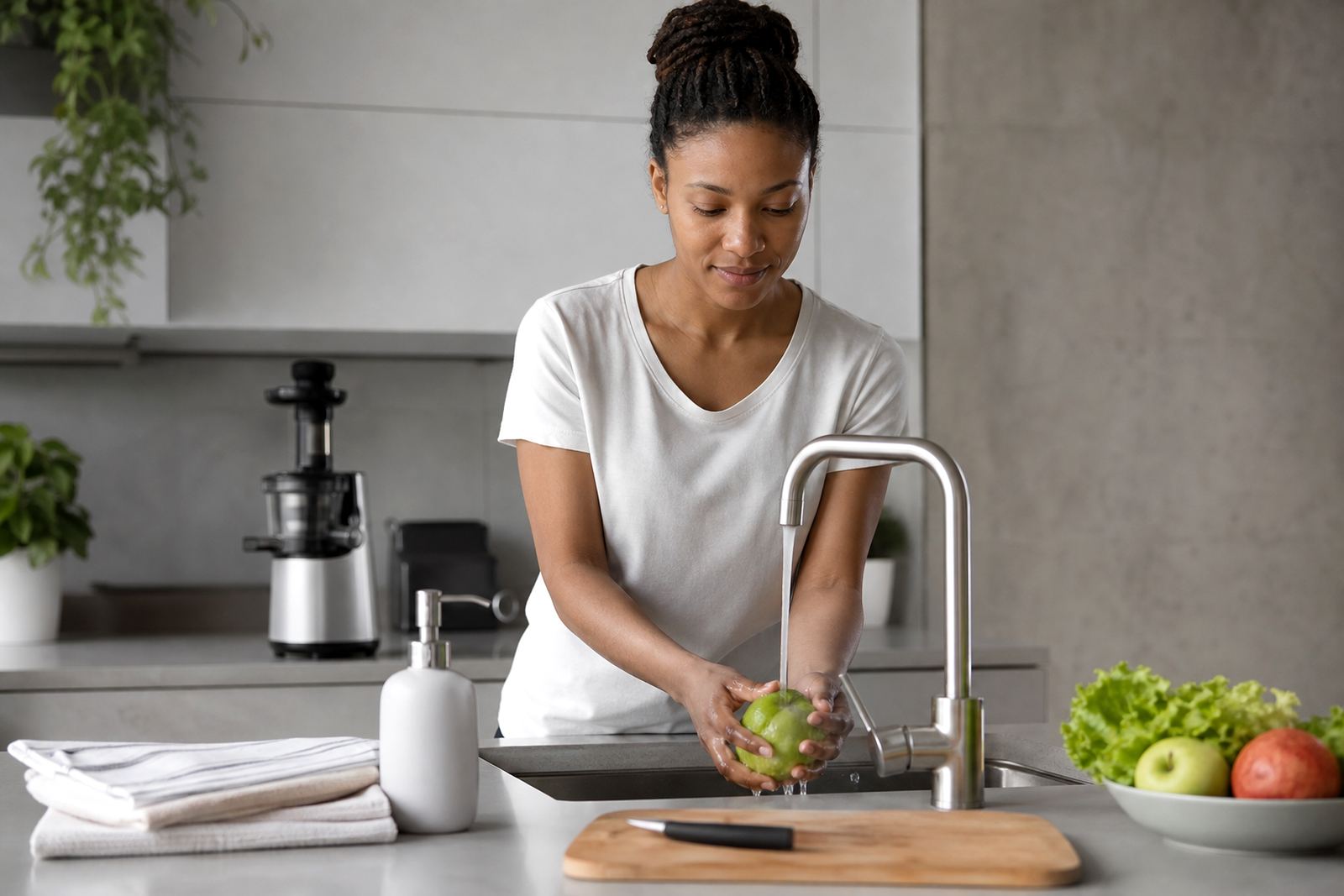
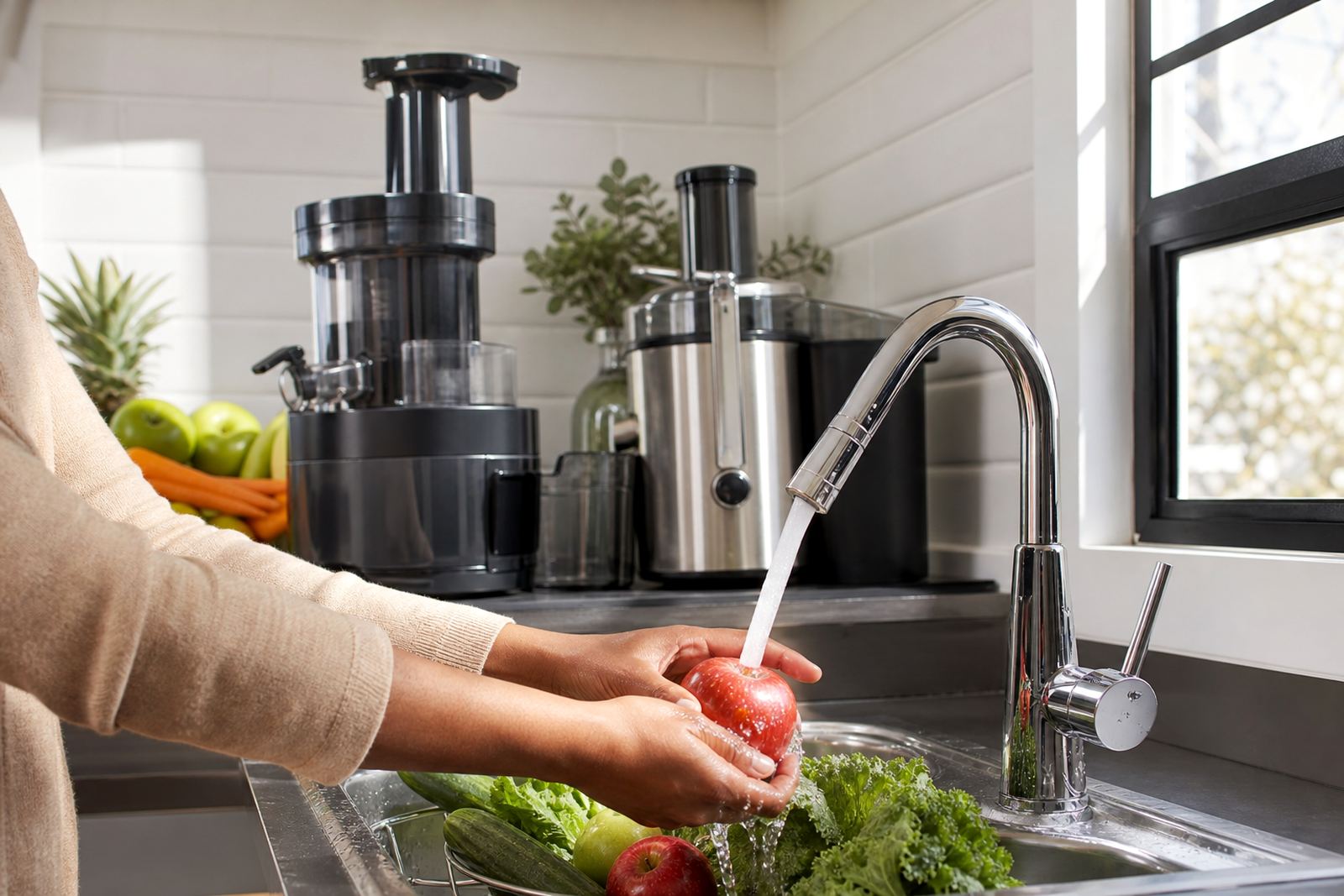
For firm produce like apples, pears, carrots, and beetroot, hold each piece under cool running water and rub the surface with your hands. For softer items such as berries, grapes, or leafy herbs, use a bowl of clean water and move them gently so you do not bruise them. If the sink is shared with dishes, clean the area first. In a busy Cape Town kitchen, that little step saves time later and keeps juice from picking up odd smells or particles from the drain.
- Wash your hands before handling produce.
- Rinse the sink or basin before use.
- Keep raw meat, fish, and washing-up water away from juicing prep.
- Use separate chopping boards if the kitchen is busy.
How to wash different produce without making a mess
Not every fruit or vegetable needs the same approach. Thick-skinned items can take a firmer rinse, while delicate produce needs a gentler touch. The aim is to remove surface dirt without soaking the food for too long or leaving too much water sitting in folds and creases. Excess water can make a centrifugal juicer work harder with soft produce, while a slow masticating juicer may still handle it but can produce a thinner feel in the first few minutes.
Leafy greens need special care. Dunk spinach, kale, celery leaves, or parsley in a bowl, swish them around, then lift them out and drain them in a colander. For produce with stems or tight joints, like celery, rub the grooves where soil likes to hide. If you are using citrus for juice, wash the outside too, because a knife can drag surface dirt from the skin into the flesh. A quick rinse is not enough when the produce comes from a roadside stall after a windy day near the coast.
- Use cool water, not hot water.
- Swish leafy produce in a bowl instead of blasting it under a strong tap.
- Pay attention to stems, grooves, and leafy folds.
- Drain well so the chopping board does not become slippery.
Where food safety starts and ends in a juicing kitchen
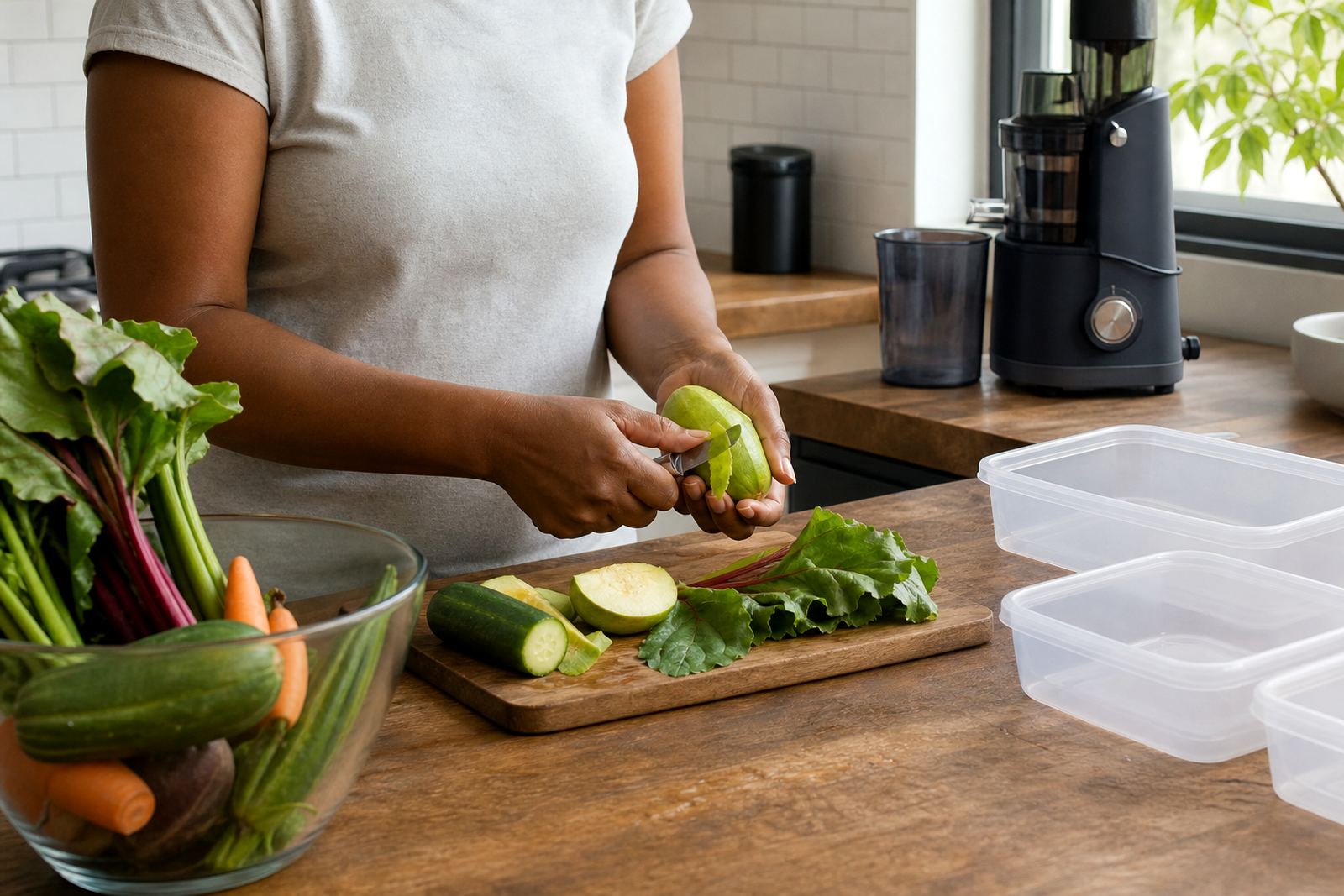
Good kitchen hygiene is mostly about stopping dirt from moving around. Wash produce, then place it on a clean tray or board. Use a clean knife for cutting and keep peels, pips, and trimmings in a separate bowl. Do not put washed fruit back into the same basket that held unwashed items. That sort of mixing is where trouble starts, especially when the kitchen is full and there are other meals on the go.
If you are juicing for several people, prepare one batch at a time and clean the working area between batches. A cold press can process soft greens and hard root vegetables in the same session, but the prep area still needs a tidy reset.A torch, a clean cloth, and a little order go a long way when the lights are out and the counter is crowded.
- Keep washed and unwashed produce apart.
- Use clean cloths or paper towel for drying surfaces.
- Wipe spills straight away so insects and dust do not settle.
- Store prepped produce in the fridge if there is a delay before juicing.
Peels, wax, mud and the bits people forget
Some fruit carries more than dust. Apples, cucumbers, citrus and similar produce can have wax, handling residue, or tiny bits of packing material from storage and transport. Rinsing helps, but if the skin feels slick or has visible patches, give it an extra rub under running water. For root vegetables, use a brush reserved for food prep. A soft produce brush is useful for carrots, beetroot, and potatoes where soil clings in the ridges.
Never use dish soap or bleach on produce. Those products are for surfaces, not food. If the peel is damaged, cut away the bruised or mouldy parts before juicing. This is especially important with soft fruit that may look fine on the outside but have a weak spot under the skin. In Paarden Eiland, where deliveries often pick up dust from warehouse roads and sea air, a proper rinse before cutting makes a noticeable difference to the smell and texture of the prep area.
- Use a food brush on hard roots and firm skins.
- Cut away bruised, split, or mouldy sections.
- Do not use detergents on food.
- Dry the fruit or vegetables if a lot of extra water will affect the mix.
Cleaning the juicer after the produce is done
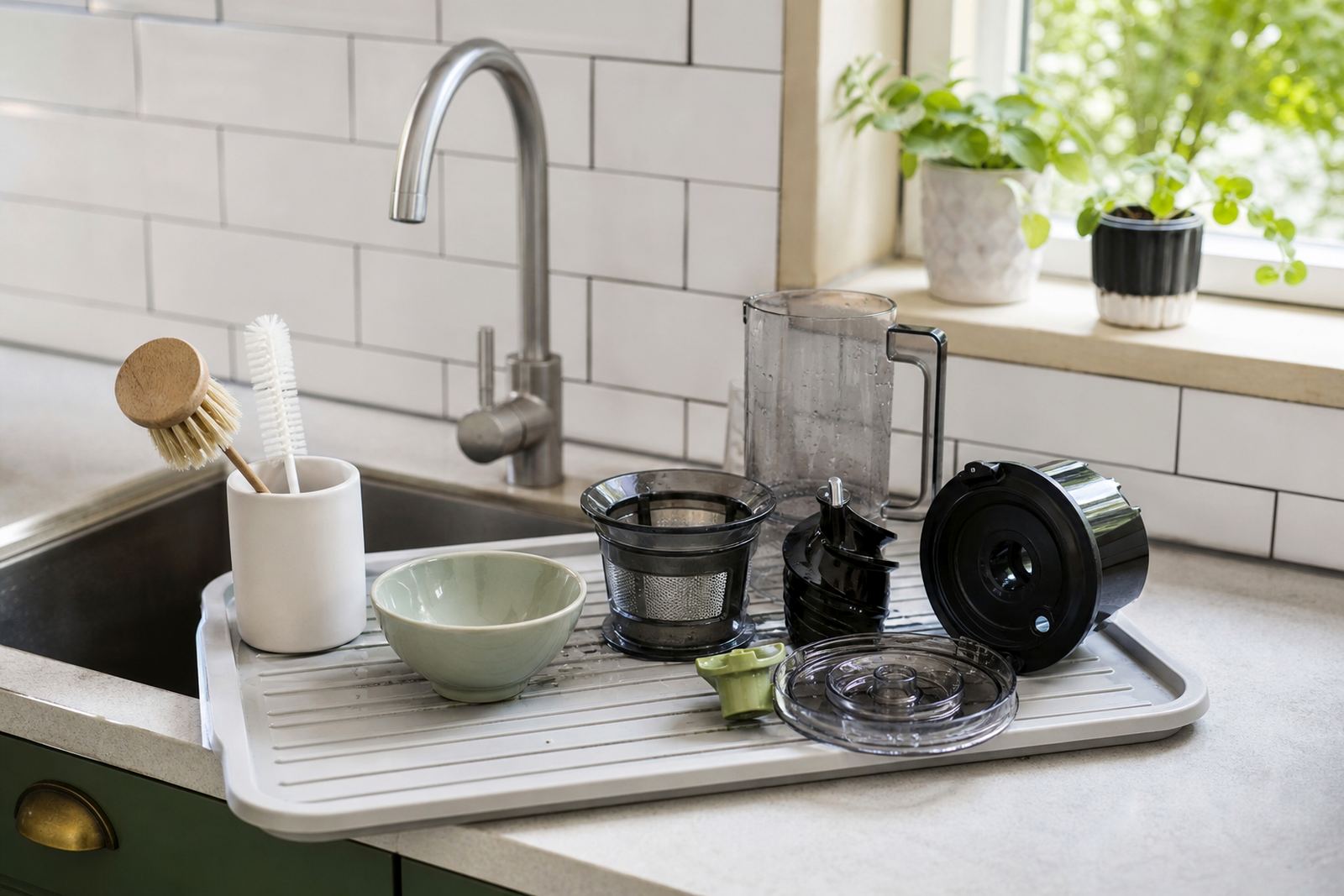
Once the fruit and vegetables are prepared, the machine needs attention right away. Pulp dries fast, and dried fibres can block screens, strain seals, and leave sour smells in the housing. Whether you use a slow masticating juicer, a centrifugal model, or a cold press, the safest habit is to strip the removable parts and rinse them soon after use. If you leave pulp to sit overnight, the next clean can turn into a long scrub, and that is when people start rushing the job.
Separate rinse water from the wash-up sink if you can. Rinse away pulp first, then wash with mild dish soap and warm water, and rinse again so no slippery film remains. Check the feed chute, juicing screen, seals, and spout for trapped fibres. A soft brush or the correct cleaning tool helps with fine mesh screens. If your kitchen is in a coastal area, dry the parts fully before packing them away so moisture does not sit on metal or around plugs.
- Rinse parts soon after juicing.
- Brush screens and seals carefully.
- Dry every removable part before storage.
- Keep cables and plugs away from wet counters.
A Cape Town morning example that keeps the routine steady
Picture a Saturday in Stellenbosch or Somerset West. The oranges are on the table, the carrots are in a crate, and the kitchen has only one free sink because breakfast dishes are still waiting. The easiest approach is to sort the produce first, rinse the counter, then wash the items in order from cleanest to dirtiest. Fruit with thin skin goes first, then leafy greens, and lastly the root vegetables that carry soil. That order keeps the water cleaner for longer and cuts down on repeat rinsing.
If the power is off and you are working by daylight, set the clean produce in a colander near the window and keep the juicer parts on a dry tea towel. This kind of routine matters in homes across Cape Town, Johannesburg, Durban, Pretoria, and George where kitchen time is tight and family members may be moving in and out. A steady sequence is easier than a rushed one, and it leaves less room for missed grit or slippery surfaces.
- Wash from cleanest produce to dirtier produce.
- Use a colander to let water drain naturally.
- Keep the prep area dry enough for safe handling.
- Work in batches if the kitchen is busy or the light is poor.