Wash first, then start the worktop
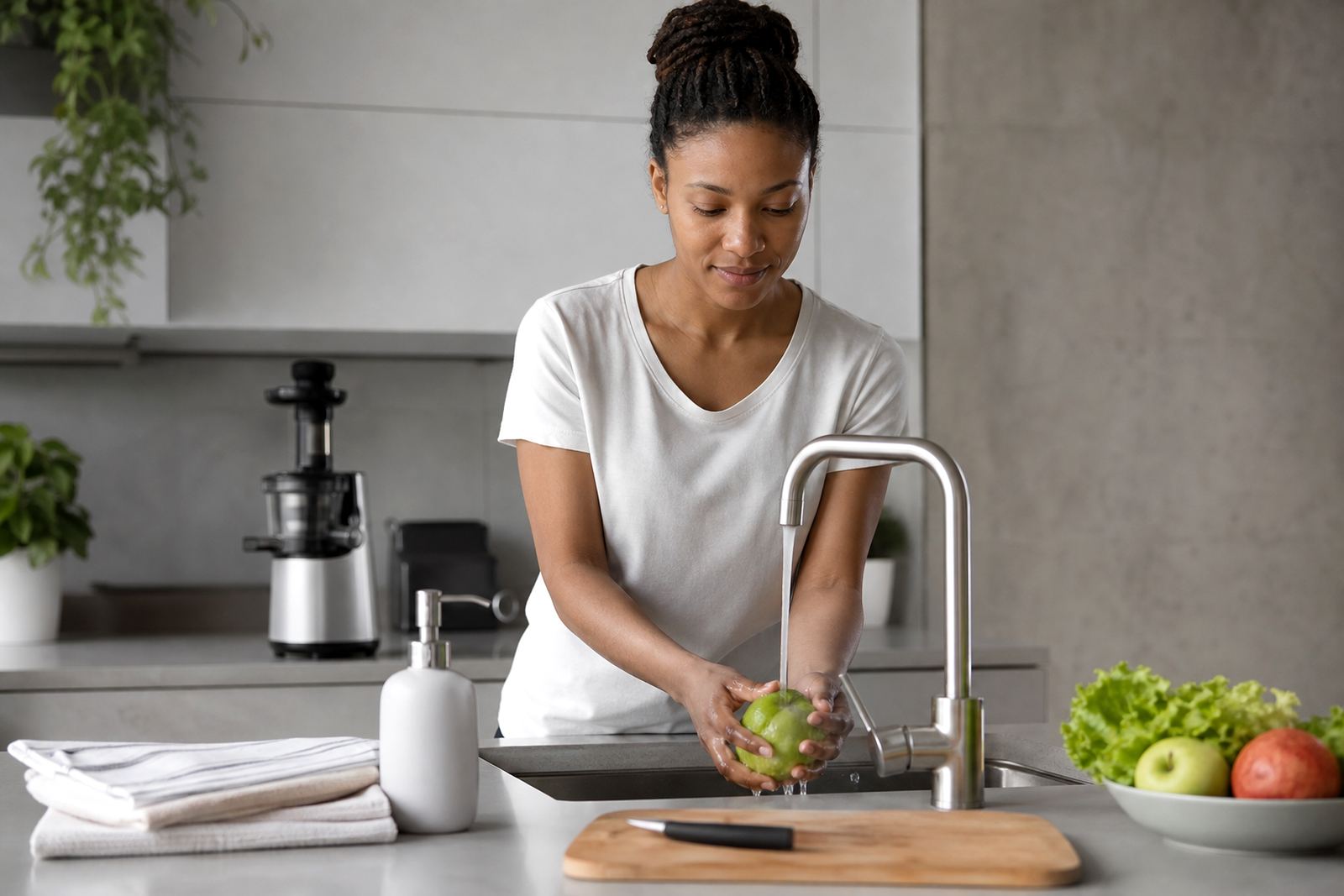
Before fruit or vegetables touch the board, wash your hands well with soap and running water for at least 20 seconds. Dry them on a clean towel or paper towel, then clear the worktop so peels, labels and wrappers are not sitting near the juicer bowl or feed chute. In a busy Cape Town kitchen, that small reset saves time later and keeps scraps from spreading to handles, taps and containers.
Handwashing matters most when you are moving between raw produce, waste bins and cleaned jars or cups.
Boards that do not mix jobs
A board used for scraps should not be the same board used for ready-to-juice produce unless it has been washed with hot water and dish soap, then dried properly. Cross-contamination often happens through tiny habits, like laying a rinsed apple on a board that still has onion bits, or cutting a lemon beside leafy trimmings and then using the same knife without cleaning it.
- Keep one board for trimming and another for clean fruit and vegetables where possible.
- Wash knives, peelers and graters between different ingredients.
- Use a separate tray or bowl for scraps instead of piling them beside the juicer.
- Dry boards upright so moisture does not sit in the grooves.
In coastal areas such as Paarden Eiland, the air can stay damp, so wooden boards need extra attention. If they are left wet, they can hold smells and stains longer than expected.
Separate the washed pile from the scrap pile
Once produce is rinsed, keep it apart from everything that has been peeled, trimmed or discarded. A clean colander or bowl for washed items and a lined bin for scraps works well in a small kitchen. This is especially useful when juicing oranges, carrots, apples, celery or leafy greens, because the peelings and stems build up quickly.
Do not place washed produce back into the same container that held unwashed items. Even a few drops of rinse water from a dirty container can undo the effort. If you are preparing a larger batch for the family or for a weekend in Stellenbosch, label the containers in your head if not on paper: washed, cut, scraps. It is a plain habit but it keeps the flow clear.
How juicers stay cleaner for longer
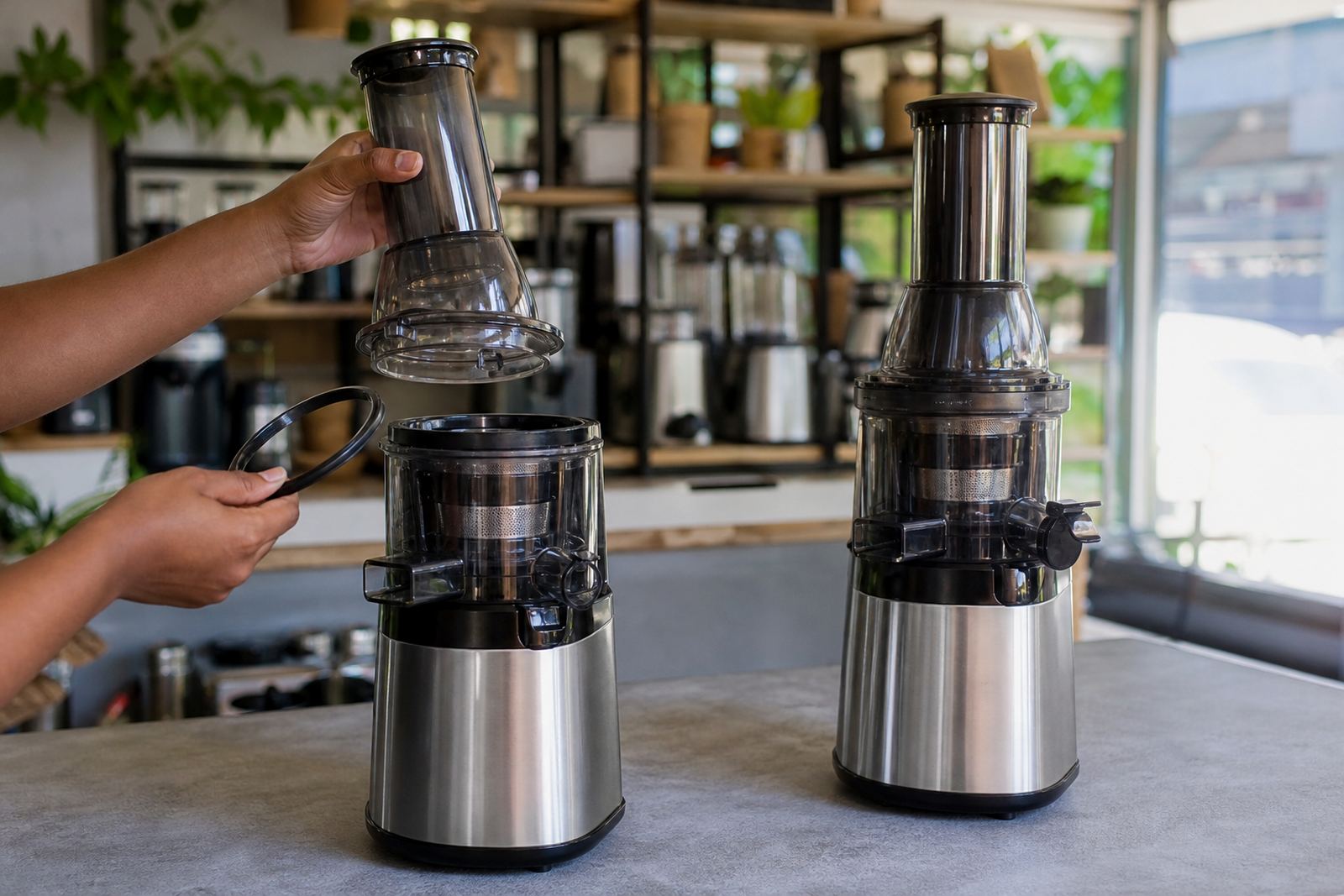
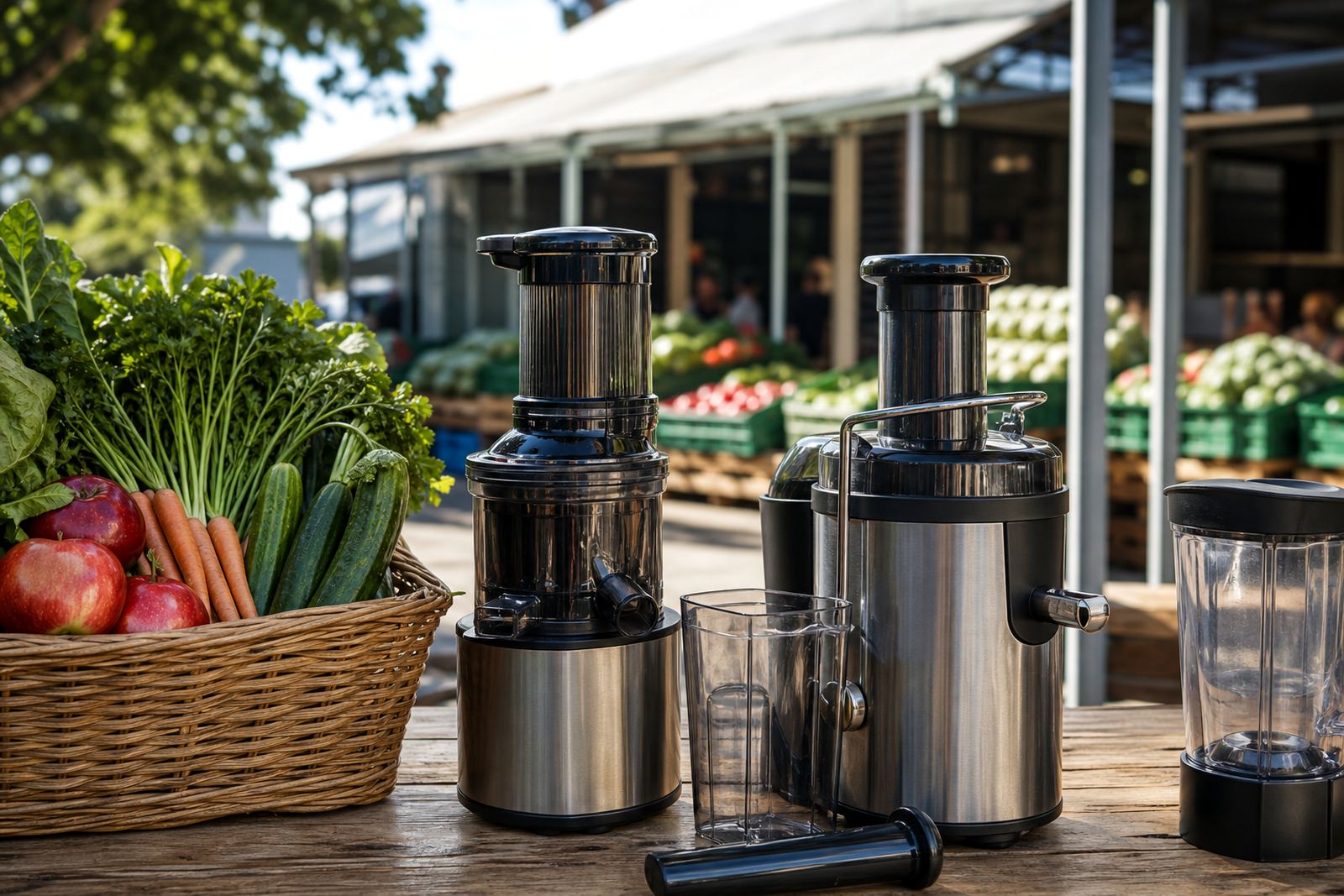
Slow masticating juicers and centrifugal juicers both need careful cleaning after use. Pulp dries fast on screens, strainers, augers and lids, and dried residue can hold on to odours. A cold press also benefits from a quick rinse straight after juicing, before fibres cling to the parts. Most machines are easier to maintain when each component is rinsed and brushed while the residue is still soft.
- Switch off and unplug the machine before taking it apart.
- Rinse removable parts under lukewarm water as soon as possible.
- Use a soft brush on screens, seals and narrow channels.
- Check the juice spout, pulp outlet and rubber feet for sticky build-up.
- Let all parts dry fully before storage.
For households near the coast, salt in the air can also affect small fittings over time. Keeping parts dry and stored together helps reduce grime, rust spots and musty smells.
Food safety lives in the details
Fresh produce should be handled with the same care whether it is going into a juice, a salad or a storage container. Rinse fruit and vegetables under clean running water, even when the peel will be removed. Scrub firm items such as carrots and beetroot with a clean brush. Trim bruised sections away and discard produce that smells off, is slimy or has mould.
Keep raw eggs, meat and fish away from juicing spaces. Do not use the same cloth for wiping the counter, drying hands and cleaning machine parts. A separate cloth for the juicer area works better, and it should be washed often in hot water. If you are handling produce after gardening or after opening a bin, wash hands again before touching washed fruit.
A Cape Town kitchen habit that travels well
A family in Durban may be working in humidity, while a flat in Pretoria may deal with dry winter air and seasonal dust. The hygiene habits stay the same. Wash hands, keep clean produce apart from scraps, and clean the machine before the residue dries. If the kitchen is small, use stackable bowls and a scrap tub with a lid so the bench does not become cluttered.
At MiniPress in Paarden Eiland, we often see that the neatest kitchens are not the biggest ones, they are the ones with a routine. A quick rinse, a separate board and a proper drying spot save effort later and keep the juicer ready for the next round without fuss.