
When the bowl sits off-centre, the rest follows
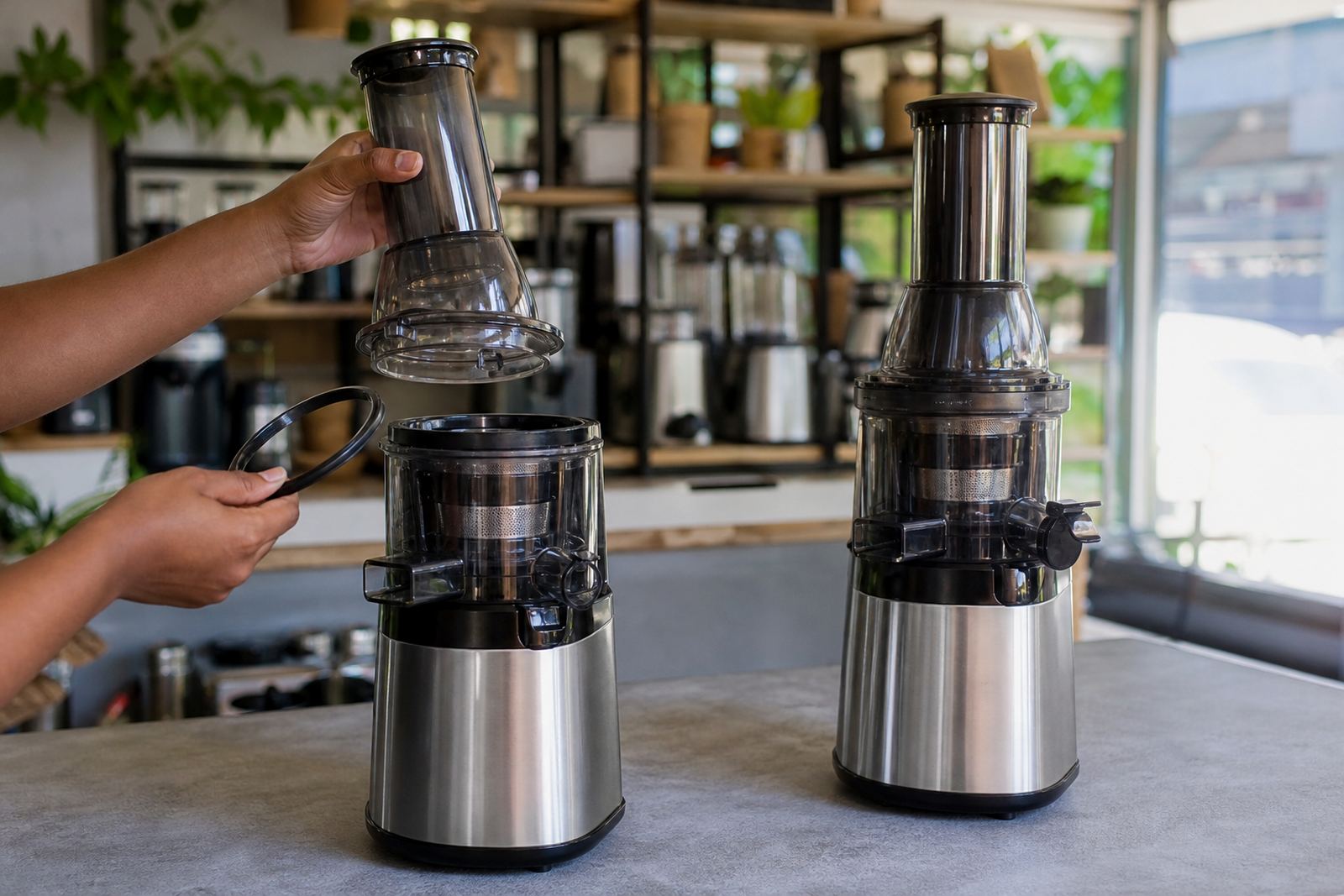
One of the most common setup faults is a bowl or chamber that is not locked fully into position. On a slow masticating unit, that can leave the auger rubbing where it should not. On a centrifugal model, it can cause the lid to sit unevenly and allow pulp or juice to escape around the edge.
The fix is usually basic: lift the bowl out, check that the drive coupling and locator tabs are clean, then set the chamber down again without forcing it. If a lid needs a hard push to close, something is not lined up. For home users in Paarden Eiland or Somerset West, this is often the difference between a machine that runs smoothly and one that chatters on the counter before breakfast.
- Check that every tab and notch is free of pulp and packaging material.
- Lock the bowl before adding fruit or vegetables.
- Do not tilt the body to make the lid close.
Feed chute choices that jam the works
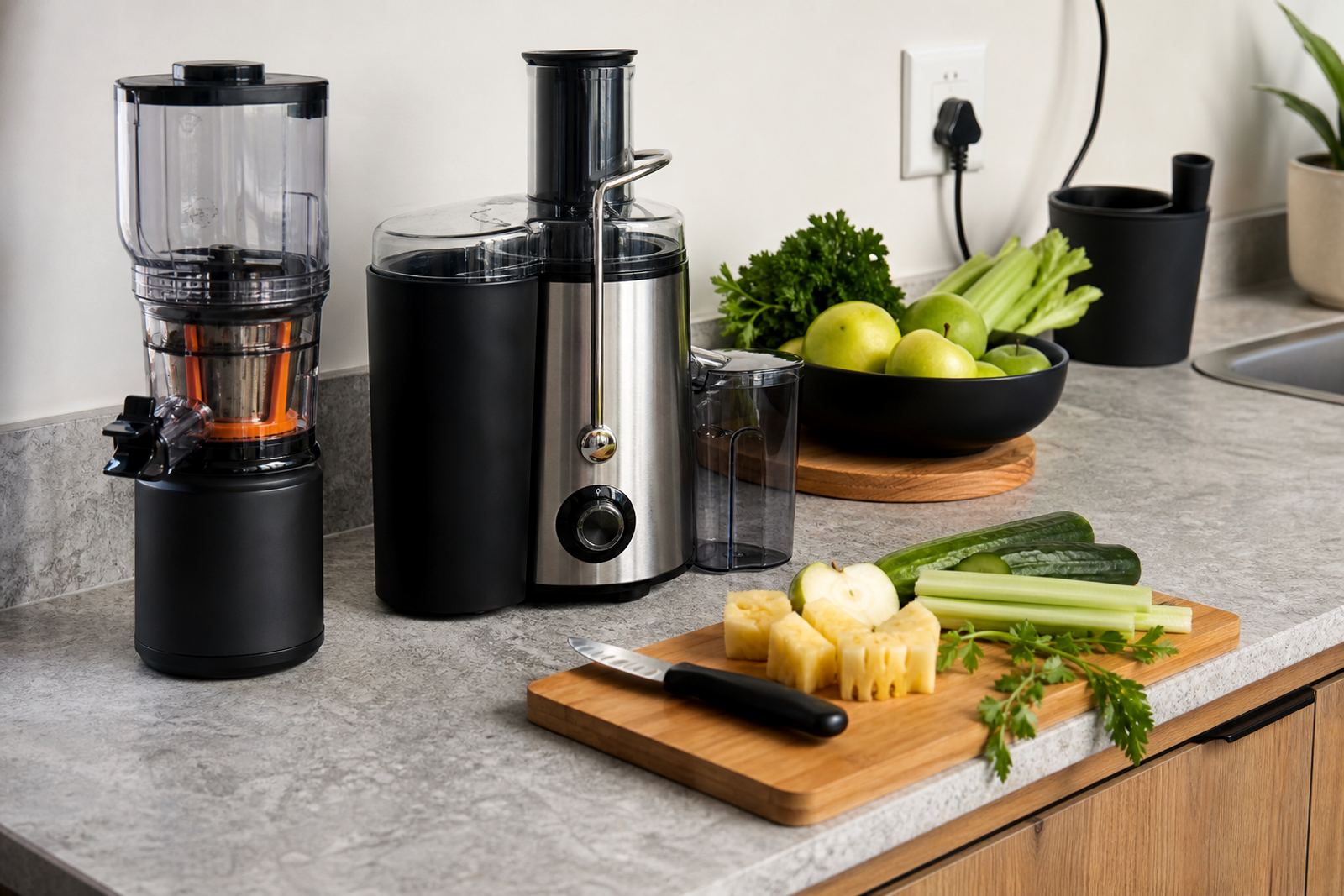
People often overload the feed chute because it looks roomy. That is risky with both centrifugal juicers and cold presses. Hard pieces pushed in too quickly can twist the food pusher, stall the auger, or cause the basket to jam. Leafy greens and fibrous produce need a steady feed, not a hurried one.
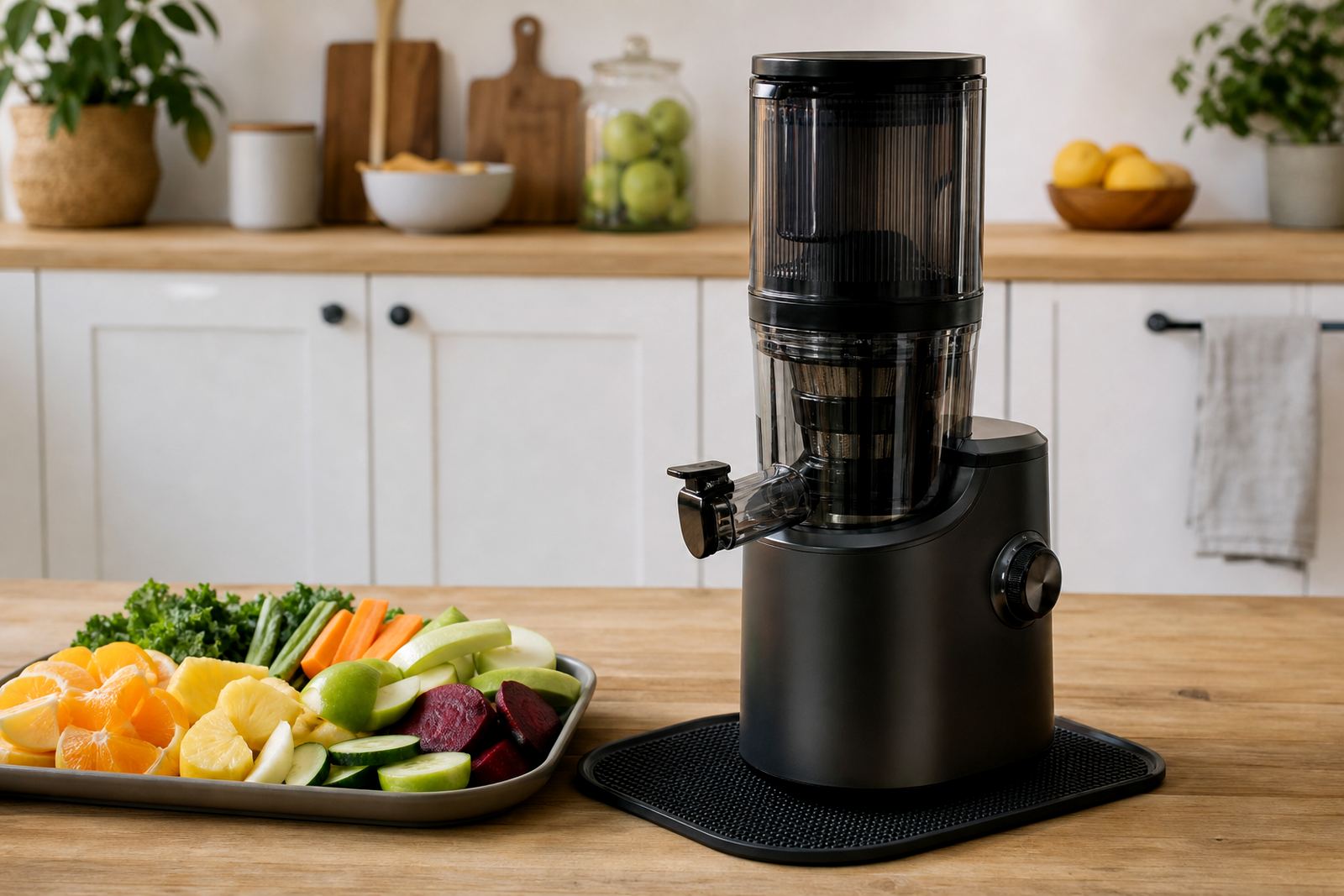
A better approach is to prep the produce first. Cut apples, beetroot and carrots into pieces that suit the chute size, and trim tough ends from celery or pineapple core. For a cold press, feeding too fast can build pressure in the chamber and make the motor sound strained. In Durban, where humidity can make washed produce cling together, people sometimes feed wet bunches straight in and wonder why the flow turns uneven.
- Use the pusher as a guide, not a tool for forcing food through.
- Feed softer items after harder ones if the machine manual allows it.
- Keep pieces roughly the same size for steadier operation.
Seal mistakes that lead to drips on the counter
Leaks usually do not start with a broken part. More often, they begin with a seal that was not seated correctly or was fitted back with a bit of pulp beneath it. A sealing ring, spout cap or outlet plug that is slightly out of place can let juice run where it should not, leaving sticky patches under the unit and along the worktop.
This matters even more in kitchens where the machine gets used daily. In Johannesburg or Pretoria, people often set up on tiled counters and only notice the leak once the juice has run toward the edge. A proper check should be done after every wash: inspect the seal, make sure the grooves are clean, and confirm the outlet closes firmly. If there is wear or cracking, replace it promptly, because a tired seal tends to get worse quickly.
- Wipe the seal groove before reassembly.
- Look for flattened rubber or stretched edges.
- Test with a small amount of water before juicing a full batch.
Screen and basket care that gets skipped too often
The screen or filter basket does the hard work of separating juice from fibre, so if it is fitted badly or left partly blocked, the whole machine becomes harder to use. A screen that is not clipped in properly can rattle, while one that still has fine pulp in the mesh can slow the extraction and make cleaning a chore later.
Cold presses and centrifugal juicers both need attention here, though the parts look different. Rinse soon after use, not after the residue has dried. A soft brush helps clear the tiny holes without scratching the mesh. Some users in George leave the screen to soak overnight, then struggle with stuck residue the next morning. That extra effort is avoidable, and it also keeps old food from staying on the part longer than it should.
- Rinse the screen right after use.
- Use brushes and tools made for fine mesh, not metal objects.
- Hold the part up to the light to check for blocked holes.
Noise and vibration are often setup clues
Unusual noise is not always a motor fault. A loose base, an uneven counter, or a drive part not seated properly can cause the machine to shake more than it should. That vibration can work screws loose over time and may also make the unit creep across the counter top, especially on smooth granite or polished tiles.
Before worrying about the motor, make sure the feet are clean and the unit sits level. If the machine is close to a sink edge or a loose extension lead, that can add to the problem as well.A short check before switching on saves a lot of nuisance later.
- Place the unit on a dry, level surface.
- Check that the locking arms are fully engaged.
- Listen for scraping, knocking or a high pitched whine before feeding produce.
Cleaning order matters more than most people think
Many cleaning complaints are really assembly complaints in reverse. If parts are packed away in the wrong order, next time the machine is used there may be a missing seal, a misplaced screen or a lid that does not sit right. Some people also force parts into the sink, which bends small clips or damages the drive socket.
The safest routine is to separate parts carefully, rinse them promptly, and let them dry fully before storage. Food safety depends on removing residue, yes, but it also depends on keeping parts dry and correctly stored so old moisture does not sit in crevices. In coastal areas like Cape Town and the False Bay side, humidity can keep a damp gasket wet for longer than expected, so a bit of patience helps. If a part feels sticky or smells off after washing, do not reassemble it until it is properly clean and dry.
- Lay parts out in the same order they came off.
- Dry seals and screens fully before storing.
- Keep spare parts and brushes together so nothing goes missing.