What people mean when they say cold press
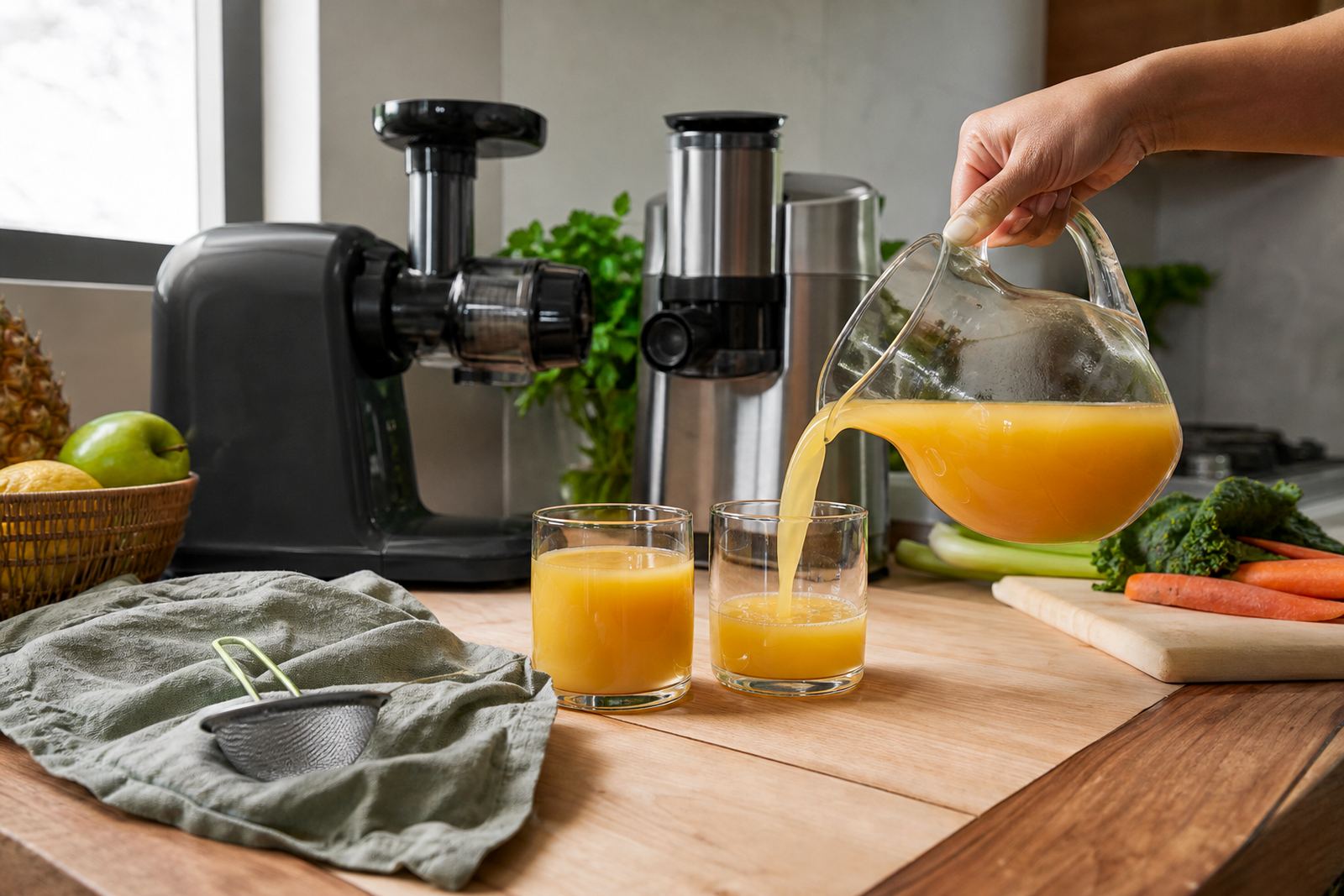
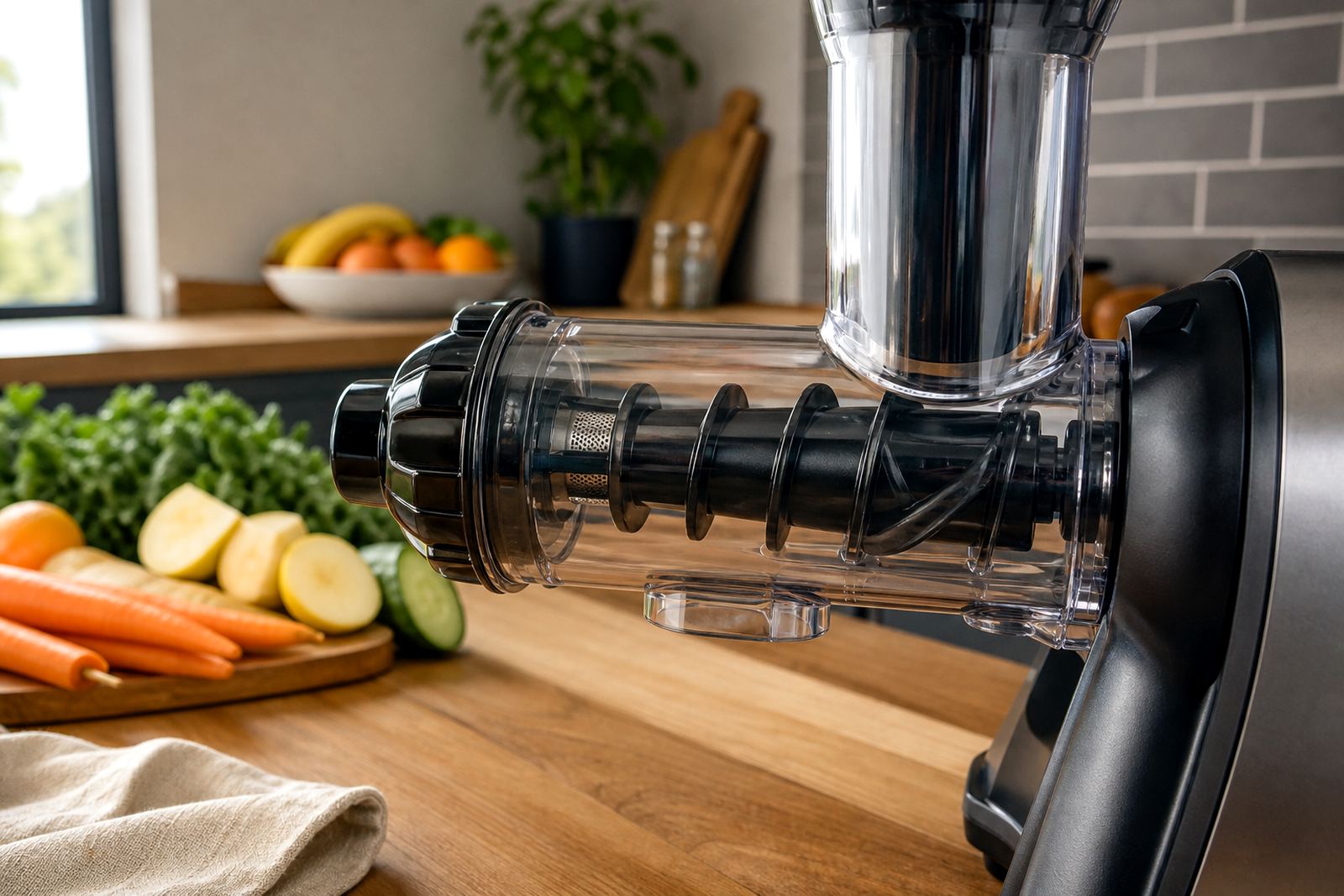
In everyday home juicing, cold press means the machine squeezes or crushes fruit and vegetables rather than using a fast spinning blade to fling juice out. The idea is to reduce heat build-up and limit how much air gets mixed through the juice during extraction. That is why the term is often used for slow masticating juicers and compact cold presses.
There is no single legal definition that every household appliance must meet, so the phrase is used in a practical way. For most buyers in South Africa, it points to a slower machine that handles apples, celery, carrots, ginger and leafy greens with less froth than a high speed unit. It can also mean a better squeeze on softer produce, though the yield still depends on the produce itself and the condition of the machine.
- Slow masticating juicers work with an auger that crushes and presses produce.
- Cold presses use pressure and slower movement to extract juice.
- Centrifugal juicers use a fast spinning basket and are usually quicker.
- The term is common in home use, but it is not always used the same way by every seller.
Slow masticating or centrifugal, what changes in the kitchen
A slow masticating juicer is built for a steadier feed. You add produce in smaller pieces and the machine works through it at a measured pace. That usually gives a thicker, less aerated result and can be kinder to soft leaves and herbs. It also tends to be quieter, which matters in flats, townhouses and shared homes where early morning noise is a problem.
A centrifugal juicer is the quicker option. It shreds produce with a fast moving basket and throws the juice out through a mesh screen. That makes it handy when you want speed and do not want to spend much time on prep. The trade-off is more foam, more noise and often more splash, especially if the feed chute is wide and the fruit is not cut evenly.
For a Cape Town household in Paarden Eiland, or a family in Somerset West, the choice often comes down to routine. If you want a quick apple-and-carrot run before school, a centrifugal machine may suit. If you prefer slower prep on a Saturday and want to process leafy vegetables or softer ingredients, a masticating unit may feel more practical.
- Choose slow masticating when noise, leafy produce and slower pacing matter.
- Choose centrifugal when speed and quick clean-up matter more.
- Check the feed chute size, pulp outlet and the number of parts to wash.
- For coastal homes, look for parts that dry properly to reduce lingering damp.
Why the word cold press matters to buyers in South Africa
In South African home kitchens, cold press often means a machine that fits daily life instead of a commercial process. It should be easy to assemble on a counter in Cape Town, Johannesburg, Durban, Pretoria or George, and it should not create a big washing-up job. People also ask about plugs, voltage and storage because a machine that is awkward to keep or clean often ends up unused.
At MiniPress in Paarden Eiland, customers often ask what the term means before choosing between a slow juicer and a faster centrifugal model. The useful answer is simple: cold press describes the way the juice is extracted, not a promise that every bottle will be identical. Fresh produce, peel thickness, ripeness and how carefully the machine is fed all affect the result.
For local homes, this matters in practical ways. A family in Durban dealing with humid weather may want parts that dry quickly after washing. A household in Pretoria might want a model that can be cleaned fast after a busy weekday. In George, where people often juggle kitchen space and storage, a smaller footprint can matter more than extra power.
Cleaning, food safety and the parts people forget
Cold press machines and slow juicers need regular cleaning because juice residue can set quickly on screens, seals and pulp paths. That residue can hold fruit sugars and moisture, which is not ideal if the machine is left overnight. Food safety starts with washing hands, rinsing produce well and cleaning the machine soon after use.
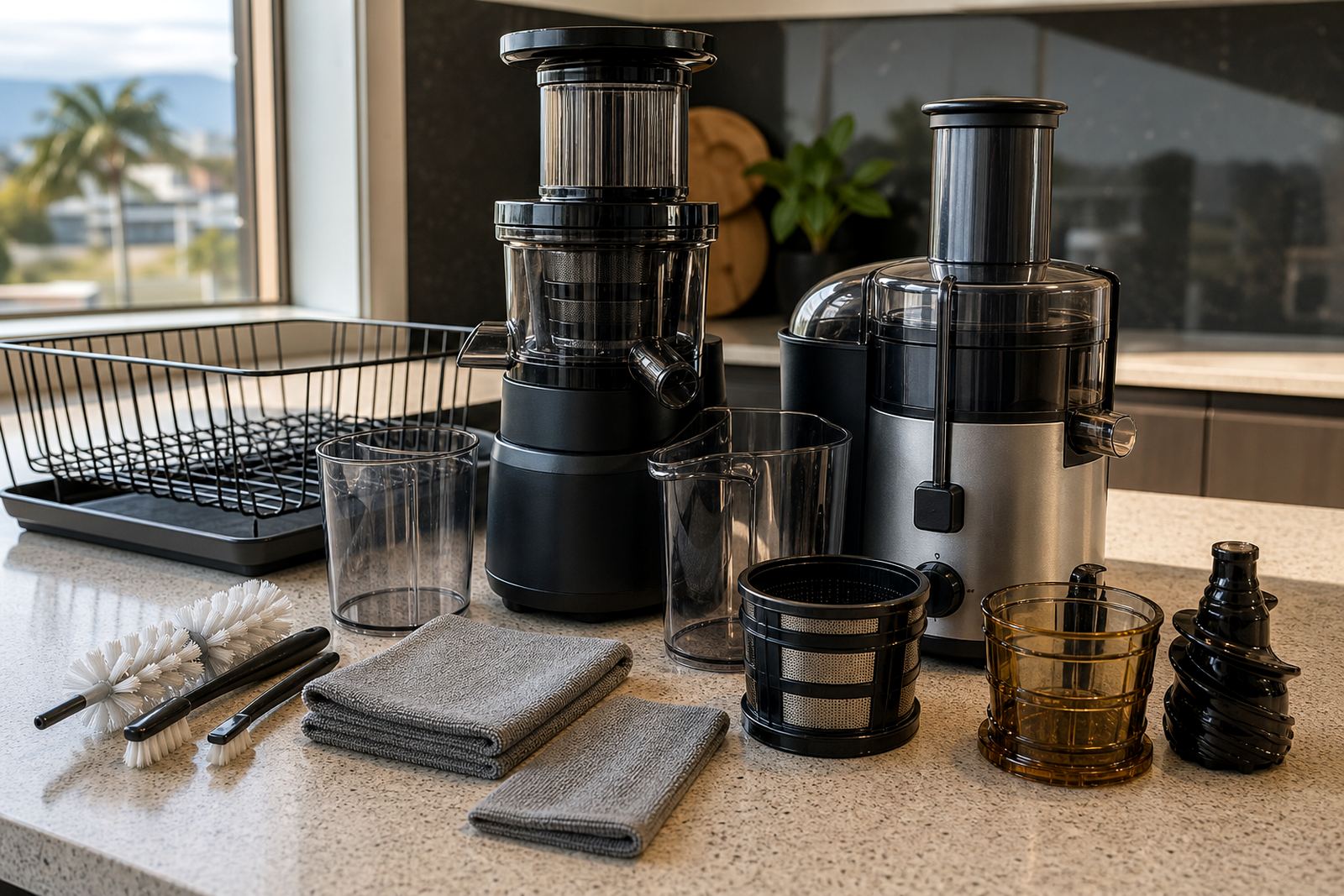
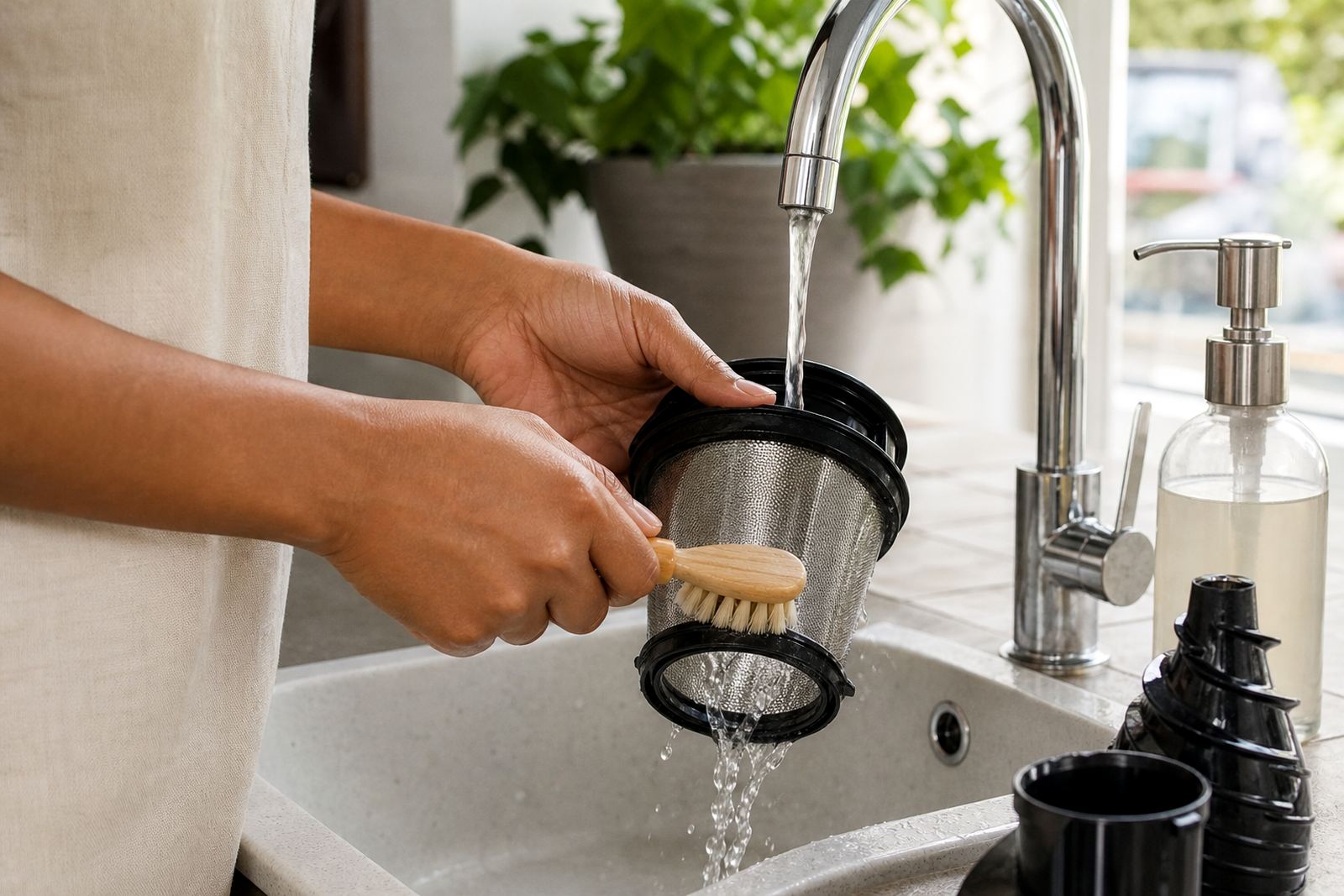
Most home juicers have a few parts that need careful attention: the screen, auger, hopper, seals and juice container. If a seal is not seated properly, juice can leak onto the motor base or counter. If the screen is clogged, the machine may sound strained and the pulp may come out wetter than usual. A light brush and warm water usually help, but harsh scrubbing can damage fine mesh.
- Switch the unit off and unplug it before cleaning.
- Rinse pulp channels before residue dries.
- Use a soft brush on screens and narrow sections.
- Dry the parts fully before storage, especially in humid coastal areas.
- Check plugs and cables for wear if the unit is moved often.
When a cold press starts sounding wrong
Many problems show up as noise, vibration or slow output rather than a full breakdown. If the machine rattles on the counter, the feet may not be level or the internal parts may not be locked in properly. If it leaks from the base, the seal may need replacement or the screen may not be seated correctly. A dull grinding sound can point to hard pieces of peel, pips or a worn screen.
These issues are usually fixable with basic checks. That is why routine care is useful, especially for homes that juice often. A machine kept clean and dry tends to last better than one that is stored with pulp still inside.
MiniPress supports customers with first time setup, deep clean guidance, spare parts help, seal replacement, screen care, leak troubleshooting, noise vibration checks, storage care, cable plug checks, brushes and tools, a routine care plan and video support call. For customers across Cape Town, Johannesburg, Durban, Pretoria, George, Stellenbosch and Somerset West, that kind of help is often what keeps a juicer useful day to day.
A Paarden Eiland example that makes the term easier to use
Picture a small household in Paarden Eiland with limited counter space and a busy weekday routine. The family wants a machine that can handle carrots, apples and softer produce, but they also want something that does not spray juice across the kitchen. In that setting, the phrase cold press helps narrow the choice toward a slower machine that is easier to live with, even if the final decision still depends on budget, space and cleaning habits.
That is the useful part of the term. It is not just marketing language. It tells you the machine works at a slower pace, with less spinning and more pressing action, which changes how the juice looks, how the machine sounds and how much clean-up is involved. For many homes, that is the real point of asking what cold press means.
So if you are comparing home juicers online, think about how you cook, how often you will use the machine and how much time you want to spend washing parts after each run. Cold press is best understood as a working description, not a cure-all promise. Once you know that, the choice becomes far more practical.