A calmer pour starts at the machine
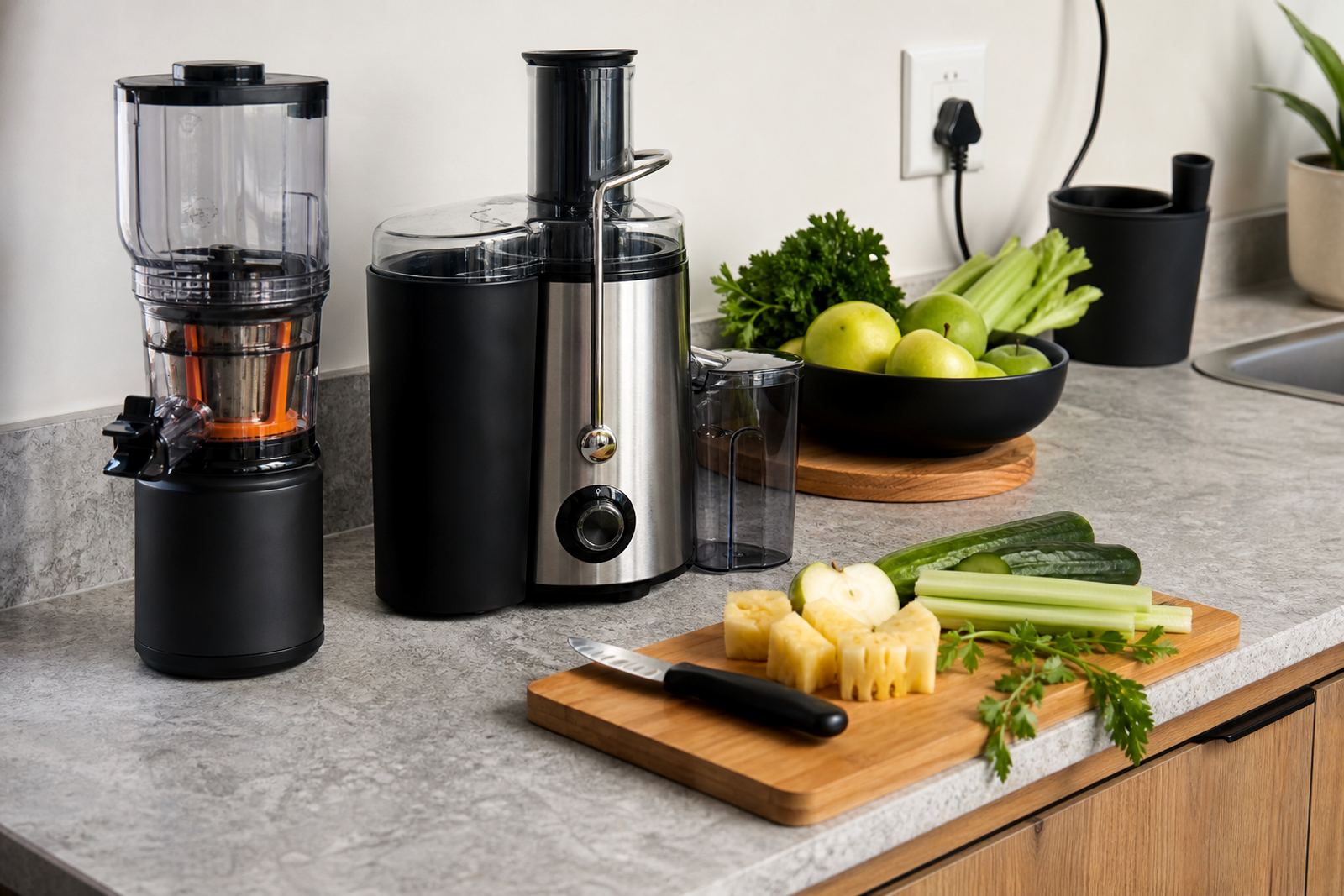
Slow masticating juicers usually give a denser juice with less foam, while centrifugal juicers can move faster and create more froth. Cold presses work at a slower pace and are often chosen when people want a cleaner finish in the jug, though the pulp still needs proper handling. Whichever machine you use, let the juice settle for a minute or two before pouring. That small pause helps bubbles rise and gives you a better read on the final volume.
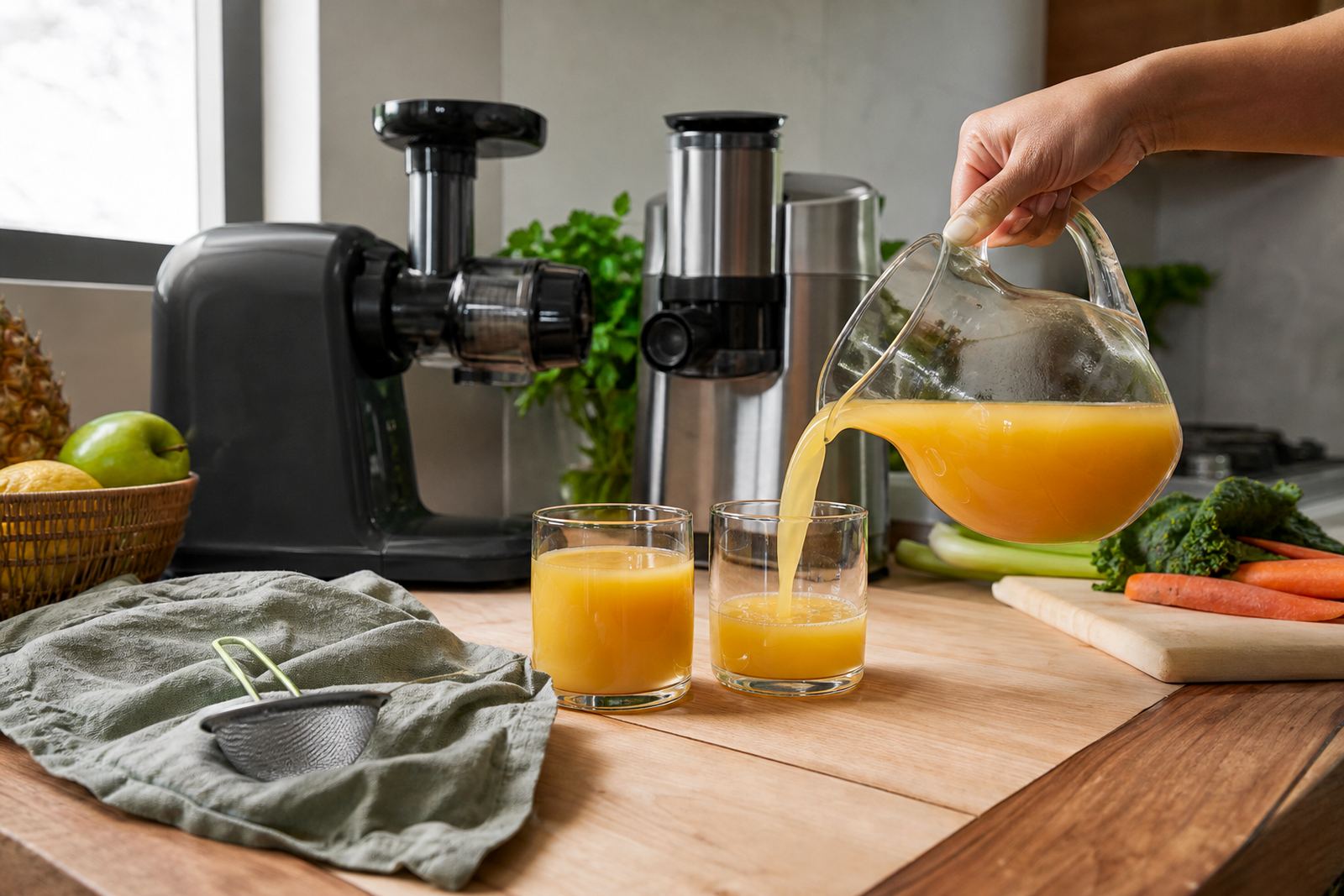
If the juice is coming out in a rush, use a jug with a wide mouth and a steady handle. A narrow lip may look neat but it often drips down the side, especially if you are serving over a polished counter top in a small kitchen in Paarden Eiland or a shared apartment in Woodstock. Keep the machine level too, because a slight tilt can send pulp and liquid to one side and make the pour uneven.
Strain only as much as the recipe calls for
Not every juice needs extra straining. A slow masticating or cold press unit already separates much of the fibre from the liquid, so a second pass through a fine sieve can be unnecessary unless you want a smoother finish. Centrifugal juicers often leave more fine pulp in the drink, so a mesh strainer can help if you are serving to guests and want a clearer glass.
- Use a fine sieve for a light strain, not a full mash through the mesh.
- Pour in small batches rather than trying to strain the entire jug at once.
- Tap the strainer gently, do not push pulp through with force.
- Rinse the sieve straight after use so dried fibre does not clog the holes.
For mixed fruit and vegetable juice, try straining after the first stir instead of before. That keeps the liquid moving evenly and cuts down on splashes across the sink and counter.
Glassware that helps the table look tidy
Glass shape affects how juice behaves on the table. A tall narrow glass is neat for serving at breakfast, but a heavier tumbler is easier for children or when the table is busy. If the juice has foam, leave a little headroom so it does not spill onto the rim when carried from the kitchen.
Choose glasses with clean rims and no chips. A chipped rim is harder to keep hygienic and it also feels rough when people drink from it. If you are setting up for a small family brunch in Somerset West or a quick weekday pour in Pretoria, stack the clean glasses upside down on a dry tray until you are ready to serve.
Cleaning habits that stop sticky edges and smells
Juice residue dries fast, especially in warm weather or near an open window. Wash the jug, lid, auger, feed chute and strainer soon after use so pulp does not harden. With a cold press or slow masticating machine, food fibre can hide in the screen and scraper gaps, so use the brushes supplied with the unit and check the corners carefully. A quick rinse is not enough when citrus, carrot or leafy fibre has been through the machine.
- Take the machine apart as far as the manual allows.
- Wash removable parts in warm water with mild detergent.
- Use a soft brush on screens and narrow channels.
- Dry everything fully before storing it away.
Never store damp parts in a closed cupboard. Coastal humidity in Durban or George can leave a faint smell and can also encourage staining if bits of fruit are left on the seals. A clean machine is easier to use the next morning and it keeps the serving area looking orderly.
Food safety at the counter not just in the machine
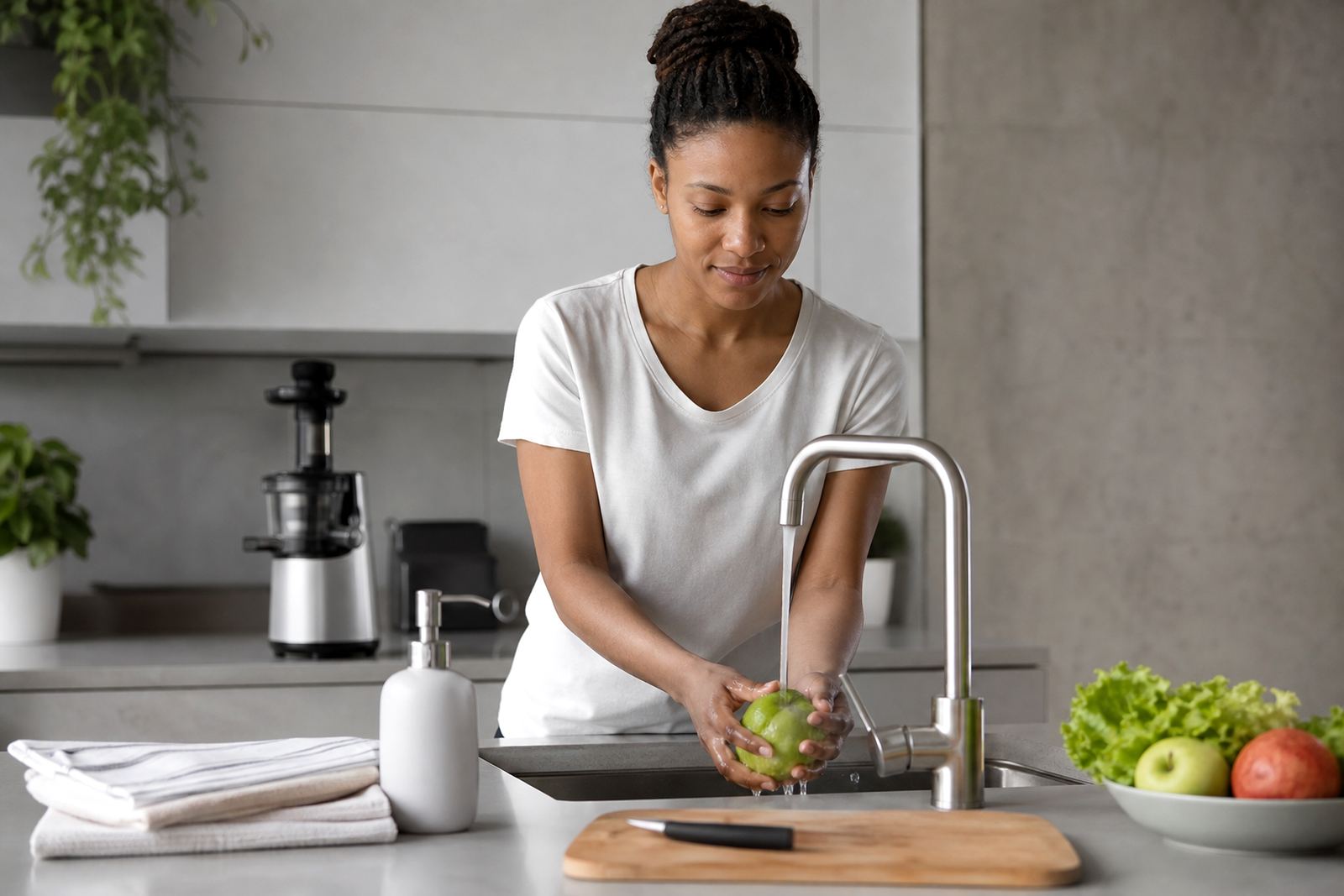
Good serving practice includes the whole space around the juicer. Wash hands before handling fruit and vegetables, keep raw produce away from mugs and ice, and use a separate board for cutting if you are working with mixed ingredients. If juice is sitting out while you prepare more, keep it covered. Even in a cool kitchen, uncovered liquid can pick up dust or stray droplets from nearby washing up.
Use clean cloths and avoid wiping the counter with the same towel that dries the machine parts. If you are serving to guests, pour from a clean jug rather than from a container that has already been used for other drinks. It sounds small, but these are the details that make a kitchen feel properly managed and easier to keep safe.
A Cape Town example from a busy weekday morning
In Paarden Eiland, where kitchens often have little space and a lot of movement, a family may run a cold press before school and work. They set the jug on a tray, line up the glasses, and keep a small bowl for pulp so the counter stays clear. The machine is rinsed immediately, then the screen and seal are checked before it is packed away. That way the next use starts clean instead of starting with a sticky mess.
If something feels off, such as a leak, unusual vibration or a noisy start, it is worth checking the seals, plug and screen before the next batch. MiniPress offers first time setup, deep clean guidance, spare parts help, seal replacement, screen care, leak troubleshooting, noise vibration checks, storage care, cable plug checks, brushes and tools, routine care plan and video support call. For delivery across South Africa, including Cape Town, Johannesburg, Durban, Pretoria, George, Stellenbosch and Somerset West, the goal is the same: a machine that serves neatly and stores neatly too.