The upright form that sits neatly on the counter
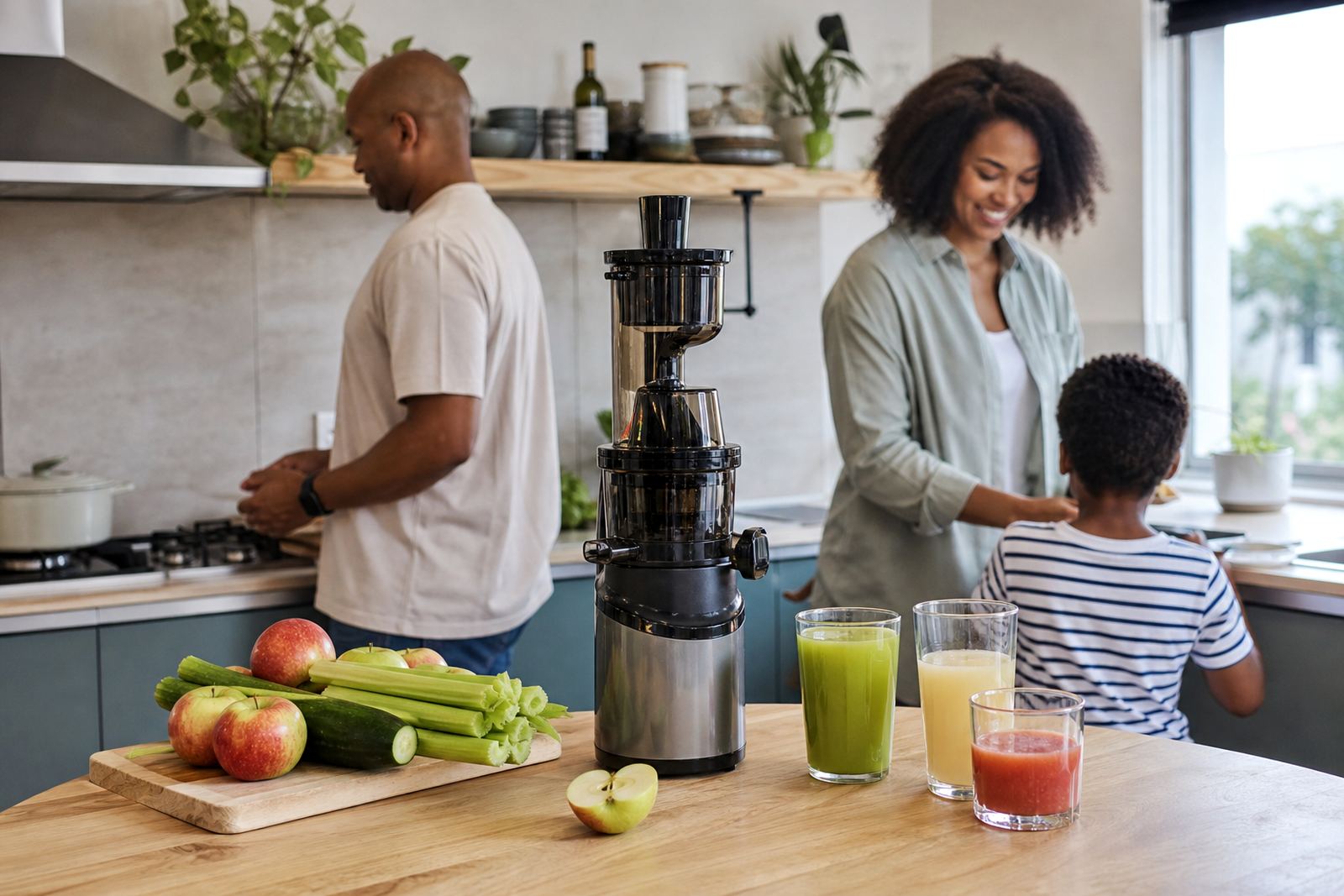
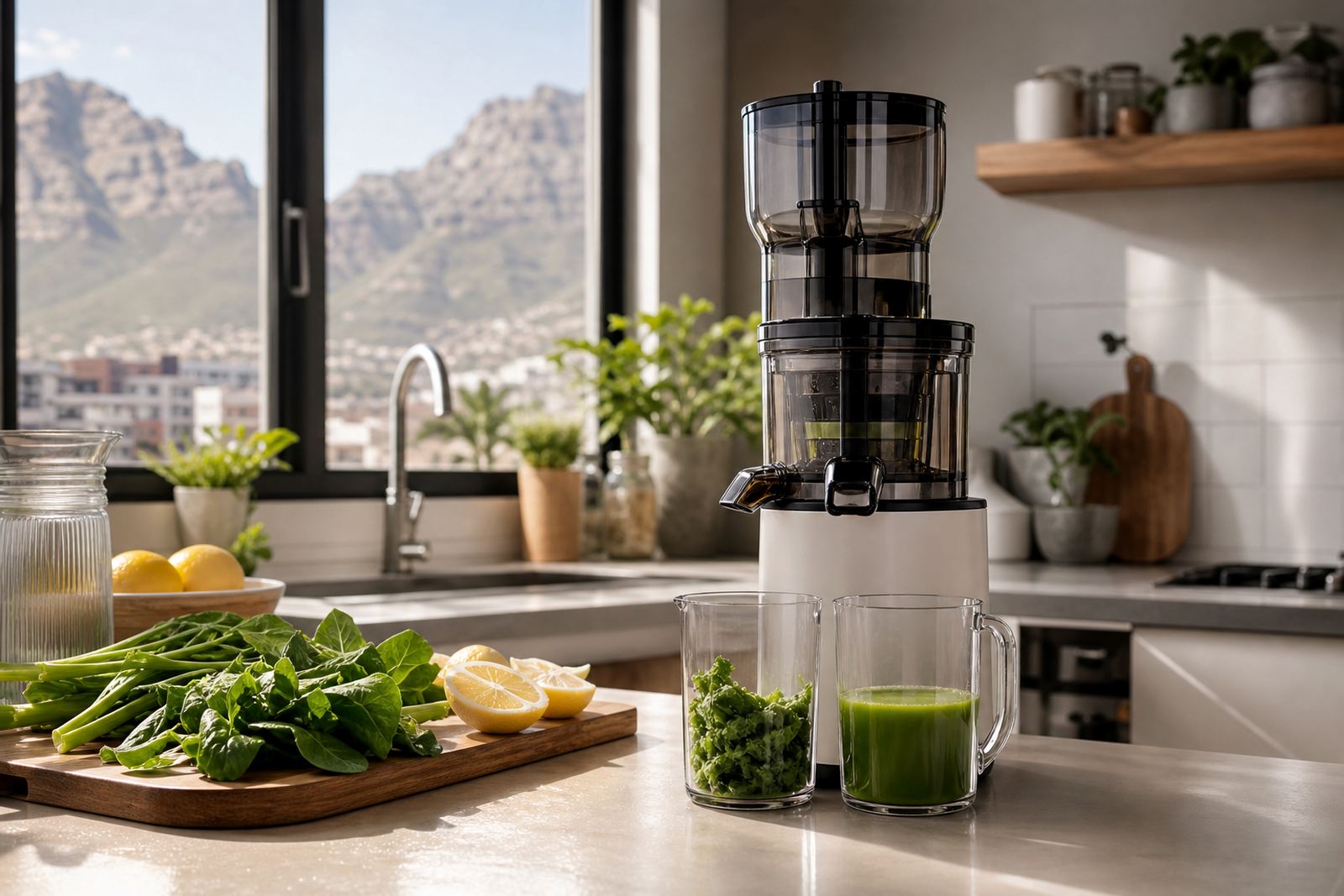
This upright cold press keeps the feed chute, pressing chamber and juice outlet stacked in one vertical line, so it takes up less width on the counter than many horizontal units. In a Paarden Eiland kitchen or a flat in Pretoria, that smaller footprint can make all the difference when space is shared with a kettle, toaster or prep board.
Cold press juicing works by slowly crushing and pressing fruit or vegetables rather than spinning them at high speed. That slower action is commonly used for softer leaves, citrus segments, apples, cucumber, celery and similar produce, with a separate pulp outlet for the dry residue. It is a practical format for weekday use when you want a controlled feed and less splashing at the bench.
- Vertical body for compact counter layouts
- Slow masticating action for measured juicing
- Separate juice cup and pulp collection path
- Suited to fruit and many vegetables
Sizes, output paths and the usual add-ons
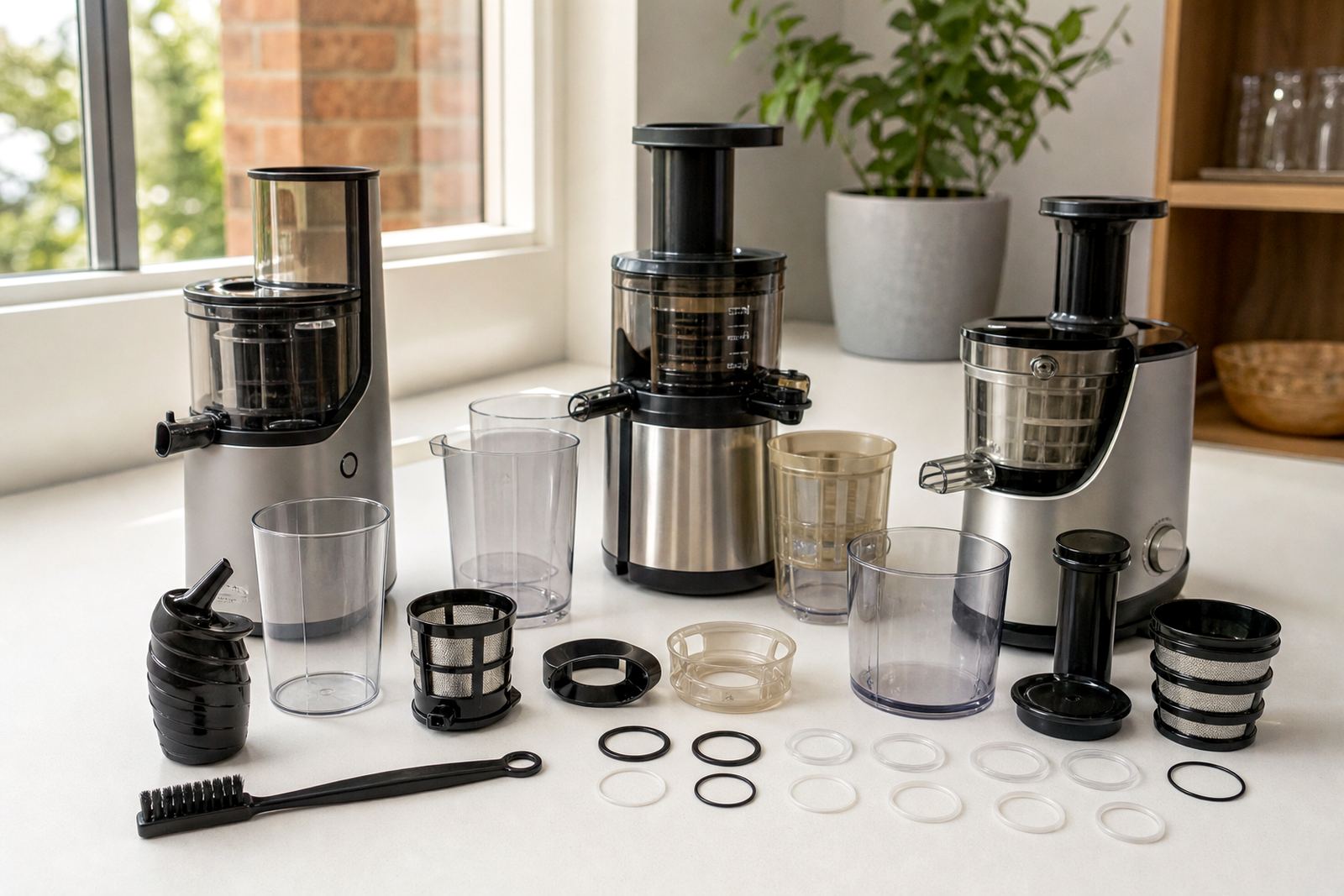
Upright cold presses are commonly supplied with a standard family size bowl, a feed chute, one or more strain screens and a juice jug. Some setups include a finer screen for clearer juice and a coarser screen for thicker output, while others are supplied with a single screen that balances yield and texture. The right option depends on how often you juice and what you normally put through it.
For homes in Cape Town, Johannesburg or George, it is worth checking the footprint on the counter and in the cupboard before ordering. If you have limited prep space, note the height under hanging cupboards, because an upright unit needs enough room above the lid for safe feeding and cleaning.
- Compact upright chassis for smaller kitchens
- Choice of screen style on selected sets
- Juice jug and pulp container sizes vary by model
- Check height, width and storage space before purchase
Where this unit fits best in South African homes
This type of cold press suits households that juice during the week rather than only on weekends. It is a sensible choice for apartments, townhouses and kitchens where a larger machine would feel crowded. In coastal areas like Durban and Stellenbosch, the enclosed parts and removable lids should be dried properly after washing so moisture does not sit in seams overnight.
It also suits homes where the machine is put away after use. If your counter space is shared with baking gear or a small air fryer, the upright format is easier to lift, position and store than bulkier appliances.
- Useful for regular home juicing routines
- Works well in compact kitchens and flats
- Practical for coastal humidity if dried properly
- Best placed near a stable household power point
Cleaning that keeps food contact parts in order
Food safety starts with a clean feeding path, clean screens and fresh seals. After each use, the juice chamber, auger, lid and screen should be rinsed before pulp dries hard on the mesh. A soft brush helps with fibre stuck in the fine holes, and warm water with mild dish soap is usually enough for most removable parts, followed by complete drying before reassembly.
Never store wet screens in a closed cupboard or leave fruit residue in the chamber overnight. That can lead to odour, staining and a sticky build-up that makes the next clean more difficult. If a seal starts to harden or crack, the unit may begin to leak at the base, so replacement should be done before more parts wear out.
- Rinse straight after use for easier cleaning
- Use a soft brush on the screen and pulp paths
- Dry all parts fully before storage
- Check seals, lids and latches for wear
What to check before you place the order
When ordering an upright cold press, confirm the exact model type, the body colour, the screen set, the juice container size and whether any spare seals or brushes are included. If you are replacing a machine, check the opening size at the top, the base width and the height of the unit in its working position. That helps avoid a mismatch with your counter or cupboard space.
You should also confirm the mains plug type used in your kitchen, the cable length and whether the machine has any pressure sensors or safety latches that need the lid to seat a certain way before starting. If the unit will be used in a busy household, ask about spare parts access and routine care support, because those small items matter over time.
- Model, screen set and container sizes
- Working height and counter footprint
- Plug type, cable length and safety latch layout
- Spare seal and brush availability
Paarden Eiland support for fitting, care and checks
From our Paarden Eiland base in Cape Town, MiniPress supports customers across South Africa with first time setup, deep clean guidance, spare parts help and routine care plans. The team can also assist with seal replacement, screen care, leak troubleshooting, noise vibration checks, storage care, cable plug checks, brushes and tools, and video support call guidance when a kitchen issue is easier to show than explain.
Lukhanyo Mthembu leads the business, with Ayesha Letsoalo on operations, Sibusiso Rapetswa on technical support, Megan Mokoka on online sales, Ruan Fortuin on warehouse and dispatch, Nomonde Gxowa in customer care, and Tariq Petersen on content and training. Deliveries go out to Cape Town, Johannesburg, Durban, Pretoria, George, Stellenbosch and Somerset West, with practical packing for courier travel across the country.
- Support from Paarden Eiland, Cape Town
- Delivery to major cities and surrounding areas
- Help with setup, parts, leaks and vibration
- Video support available when a direct check is needed
Key facts
| Format | Upright cold press |
|---|---|
| Juicing method | Slow masticating and pressing action |
| Typical body footprint | Compact counter width, height varies by model |
| Suitable produce | Fruit, leafy greens and many vegetables |
| Care parts | Removable chamber, screen, auger, lid and seals |
| Support | Setup guidance, cleaning help, spare parts and troubleshooting |