What this wider-feed juicer brings to the counter
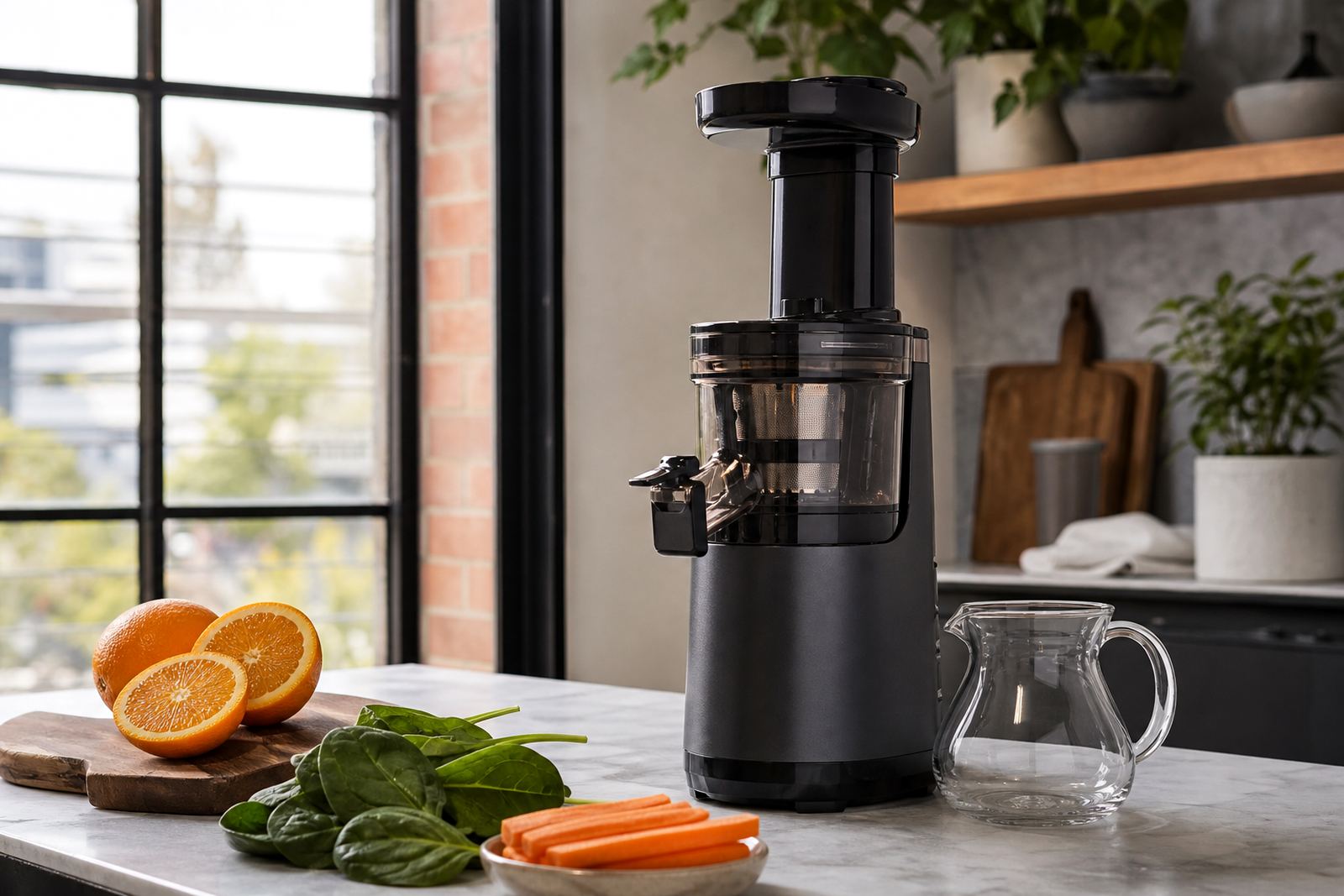
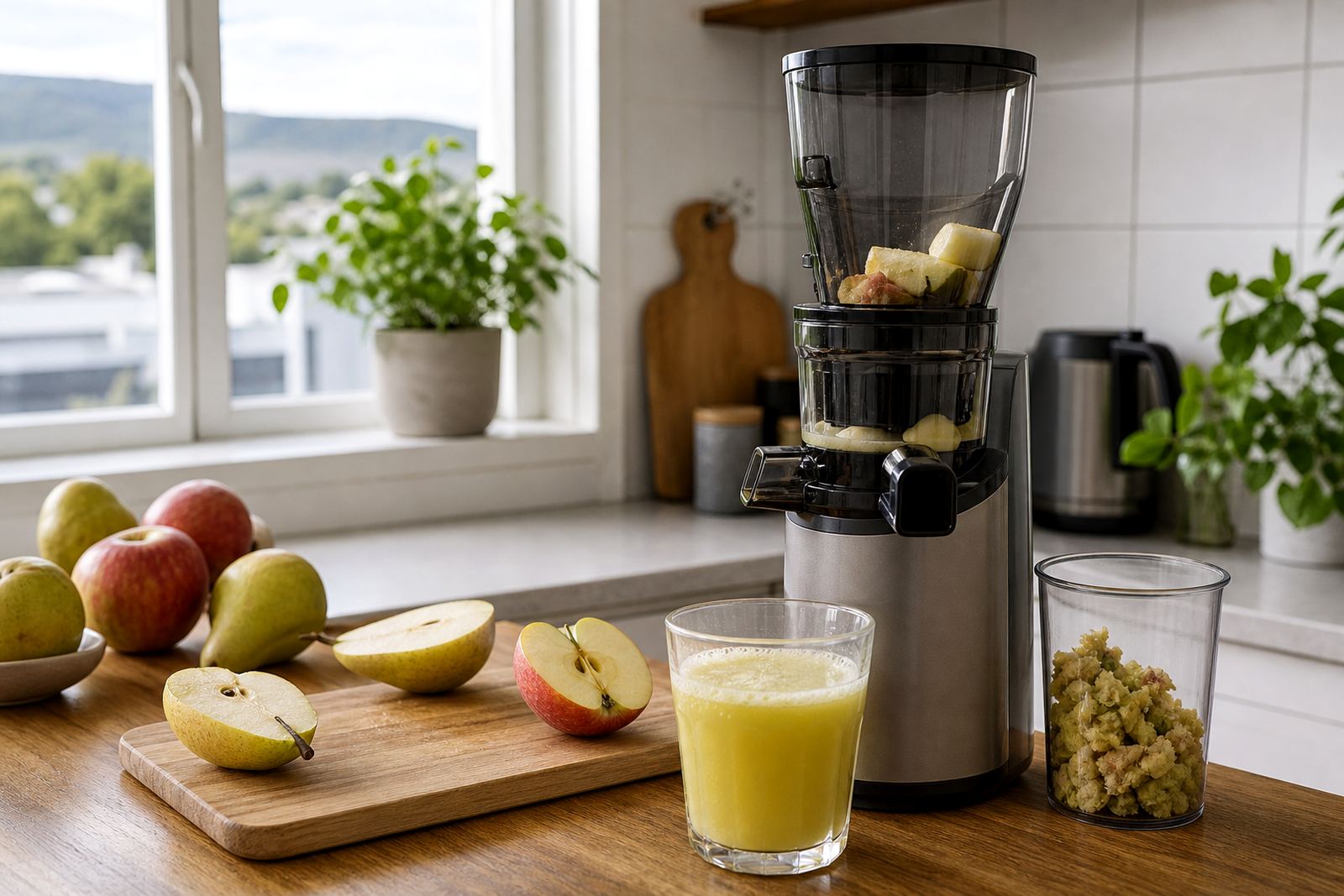
The wide chute juicer is built for home use where prep time matters. The larger feed opening lets you load bigger pieces of produce, which can cut down on slicing before juicing and makes daily use easier when you are working with apples, citrus, carrots, celery or leafy mixes. For many kitchens in Cape Town, Johannesburg, Durban, Pretoria and George, that means less time at the board and a more practical routine for busy mornings or weekend batch prep.
MiniPress supplies home juicers and cold press machines for South African households that want solid performance without overcomplicated operation. This model suits buyers who want a feed opening that handles a broader range of produce sizes, while still keeping the machine suitable for countertop use. A good wide chute unit should feel steady, feed smoothly and be easy to take apart for cleaning after use.
Where the wide chute format earns its keep
This type of juicer works well for households that juice often and prefer to spend less time chopping. It is a practical fit for smaller family kitchens, shared flats, guest houses and home entertaining spaces where you want quick preparation without filling the counter with tools. In coastal areas like Paarden Eiland, Somerset West and Stellenbosch, buyers often also look for parts that rinse clean properly and dry well, because moisture in the air can make rushed cleaning a problem.
Wide chute juicers are usually chosen by people who want a balance between speed and juice quality. If you are processing softer produce, the wider feed opening helps with convenience. If you are working with firmer fruit and vegetables, it reduces the number of cuts before feeding. The result is a more efficient prep routine, though the best outcome still depends on proper peeling, trimming and feeding at the right pace.
- Good for home kitchens with regular juicing
- Useful where prep time needs to be shorter
- Handy for mixed fruit and vegetable batches
- Suitable for countertop storage and daily use
Slow masticating, centrifugal and cold press fit-outs
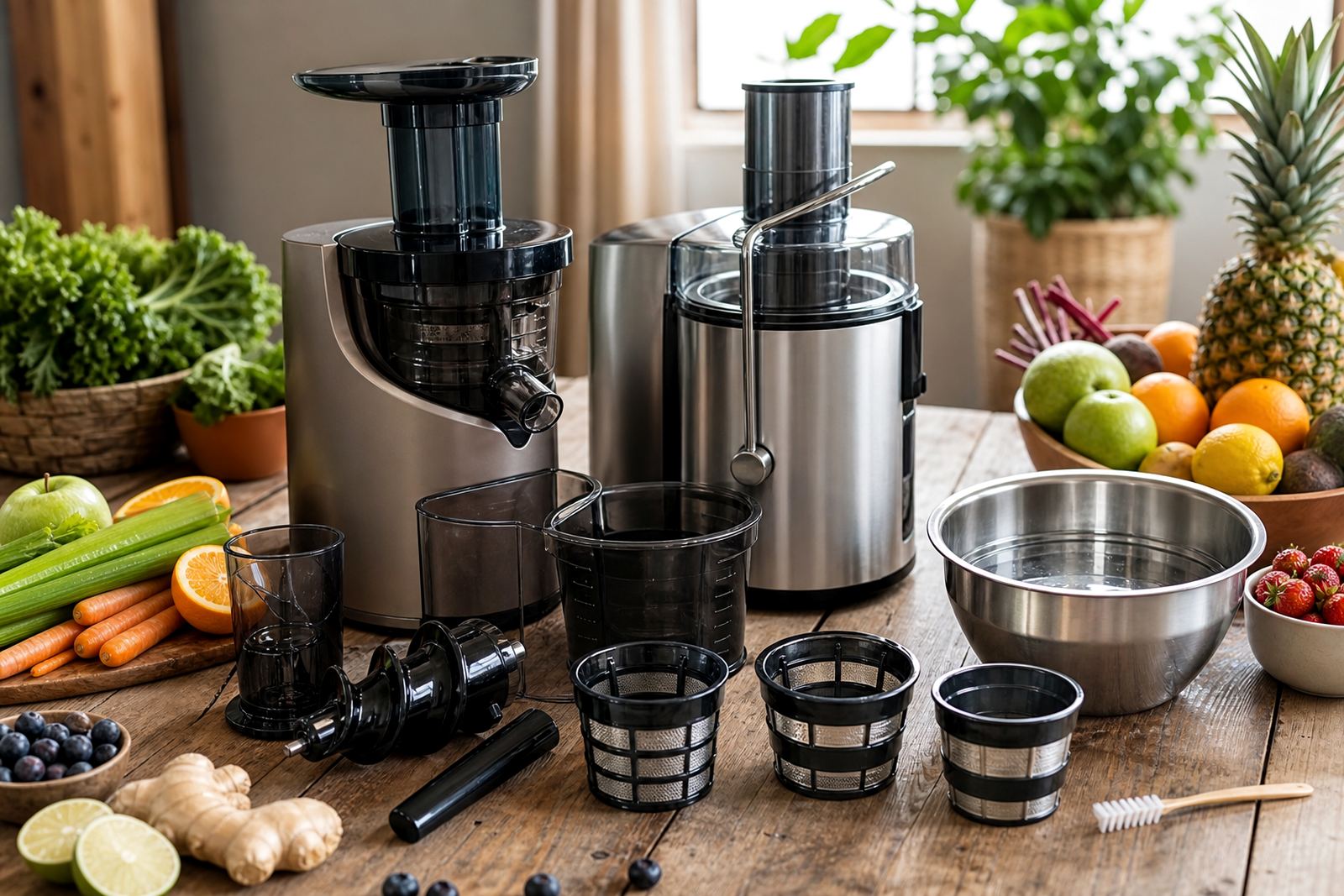
MiniPress covers the main home juicing styles so you can choose the one that matches your kitchen routine. Slow masticating juicers use an auger to crush and press produce at a slower speed. That slower motion is often preferred for leafy greens, softer fruit and more controlled extraction, and it can reduce heat build-up during operation. Centrifugal juicers work faster, using a spinning basket to separate juice from pulp, which suits households that want quick turnaround and do not mind a bit more froth in the glass.
Cold press machines are designed to press produce with gentle pressure rather than rapid spinning. They are often chosen for users who prefer a calmer operating style and a lower-speed process. For any of these machines, the key is matching the feed opening, motor use and parts to the way you actually juice at home. On a wide chute model, the opening is the headline feature, but the feeding method and pulp outlet still need to be checked carefully before ordering.
- Slow masticating: slower feed, careful extraction, often quieter
- Centrifugal: faster processing, simple daily use, more speed-driven
- Cold press: pressing action suited to gentler juicing routines
Sizes, feed opening choices and kitchen clearance
When ordering a wide chute juicer, confirm the actual feed opening size, the body footprint and the height under your kitchen cupboards. In many South African homes the under-cupboard space is tighter than expected, so the machine may fit on the counter but still be awkward to load if the lid sits too high. Check whether the chute takes whole or larger-cut produce, and whether the hopper shape suits your usual ingredients. Some chutes are broad but shallow, while others are deeper and more forgiving when feeding in batches.
You should also check the container sizes for juice and pulp, because those affect how long you can work before emptying. If you have limited counter space, a compact base with a taller chute can work well. If you prefer a lower machine with a wider stance, make sure the width does not crowd your kettle, toaster or storage jars. The point is to match the machine to your real kitchen layout, not just the catalogue view.
- Feed opening width and shape
- Overall width, depth and height
- Juice jug and pulp bin capacity
- Counter clearance under cupboards
- Weight for moving, storing and cleaning
Fitting, power checks and daily handling
If your kitchen has limited plug points, check where the unit will sit and whether you can work safely without stretching the cable across a wet counter. For homes that rely on backup power, it helps to confirm the machine rating and make sure the power source can handle the start-up load.
There is no special installation in the building sense, but a proper first setup still matters. Make sure the machine sits flat, the locking arms are secure and the feeding chamber is assembled correctly before the first run. If you are unsure about fitting the seals, screens or feed parts, MiniPress can assist with first time setup, video support and cable or plug checks when needed. The machine should run without wobble, and any unusual vibration needs to be checked before regular use.
- Confirm socket position and cord reach
- Check the machine rating for your power setup
- Set on a level, dry surface only
- Lock parts in the correct order before switching on
- Allow space around the unit for airflow and handling
Cleaning after juicing and food-safe handling
Good cleaning keeps the machine safe to use and helps the parts last longer. Rinse pulp and juice residue soon after use, because dried fibre becomes harder to remove from screens, seals and the feed path. Separate the main parts, wash them with warm water and a mild cleaning method suitable for food-contact equipment, then dry them fully before reassembly. In humid coastal areas, leaving parts damp can lead to odours, staining or sticky build-up.
Food safety starts with the produce and continues through the machine. Wash fruit and vegetables first, trim damaged sections and inspect the screen, seal and chute for residue before each session. If you notice leaks, odd noise, excess vibration or slow discharge, stop and check the parts rather than pushing harder. MiniPress can help with deep clean guidance, brush and tool advice, seal replacement and screen care when the machine starts showing signs of wear.
- Clean soon after use so fibre does not harden
- Dry all parts before storage
- Inspect seals, screens and pulp exits regularly
- Use brushes and tools suited to fine mesh parts
- Store in a dry cupboard or on a clean shelf
When you order, confirm these details first
To make sure the wide chute juicer matches your needs, confirm the model type, feed opening size, power rating and the parts included in the box. Also check whether the machine is suited to the fruits and vegetables you use most often, because the feed size alone does not tell the full story. If you want to use it for mixed batches, ask about the screen type, pulp handling and how the machine copes with firmer produce.
It is also worth confirming spare parts support before you order. Seals, screens, lids, pusher parts and jugs can wear over time, so a model with sensible parts support is easier to keep going. For customers across Cape Town, Johannesburg, Durban, Pretoria and George, MiniPress arranges delivery nationwide and can assist through the enquiry form on the contact page for product matching, care guidance and spare parts help.
- Exact model and feed opening size
- Power rating and plug details
- Included accessories and pulp parts
- Compatibility with your usual produce
- Spare parts and support options
Key facts
| Product type | Wide chute home juicer |
|---|---|
| Juicing styles | Slow masticating, centrifugal and cold press options available in the range |
| Feed opening | Generous chute for larger fruit and vegetable pieces |
| Power | Electric household plug-in model |
| Typical use | Home kitchens, daily juicing, batch prep |
| Support | First time setup, cleaning guidance, seals, screens, leaks and vibration checks |