What a citrus-heavy kitchen usually looks like
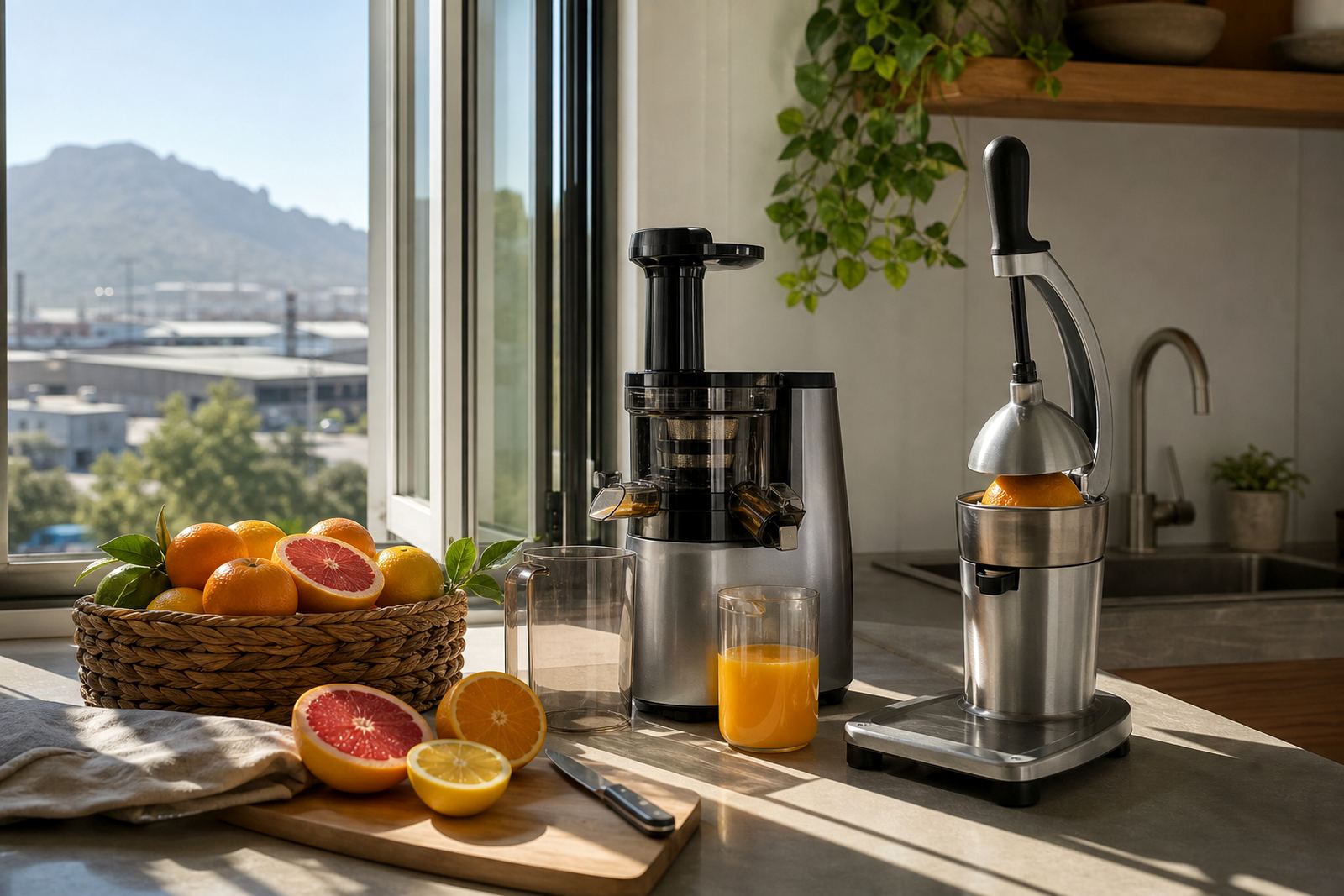
A citrus season setup is usually about volume, speed and easy clean-up. In a family kitchen, that might mean a few litres of juice over the weekend, or smaller daily runs for breakfast and cooking. The right machine depends on whether you want a fast glass of orange juice, a finer extraction from grapefruit and lemons, or a slower press for mixed fruit batches.
In Paarden Eiland, we often see homes that want one machine for weekday use and another for heavier weekend prep. If you are near the coast in Cape Town or dealing with humid storage conditions in Durban, material choice matters too. Stainless steel strainers, food-safe plastics and stable non-slip feet help when counters are busy and the weather is not on your side.
Three machine types and how they behave
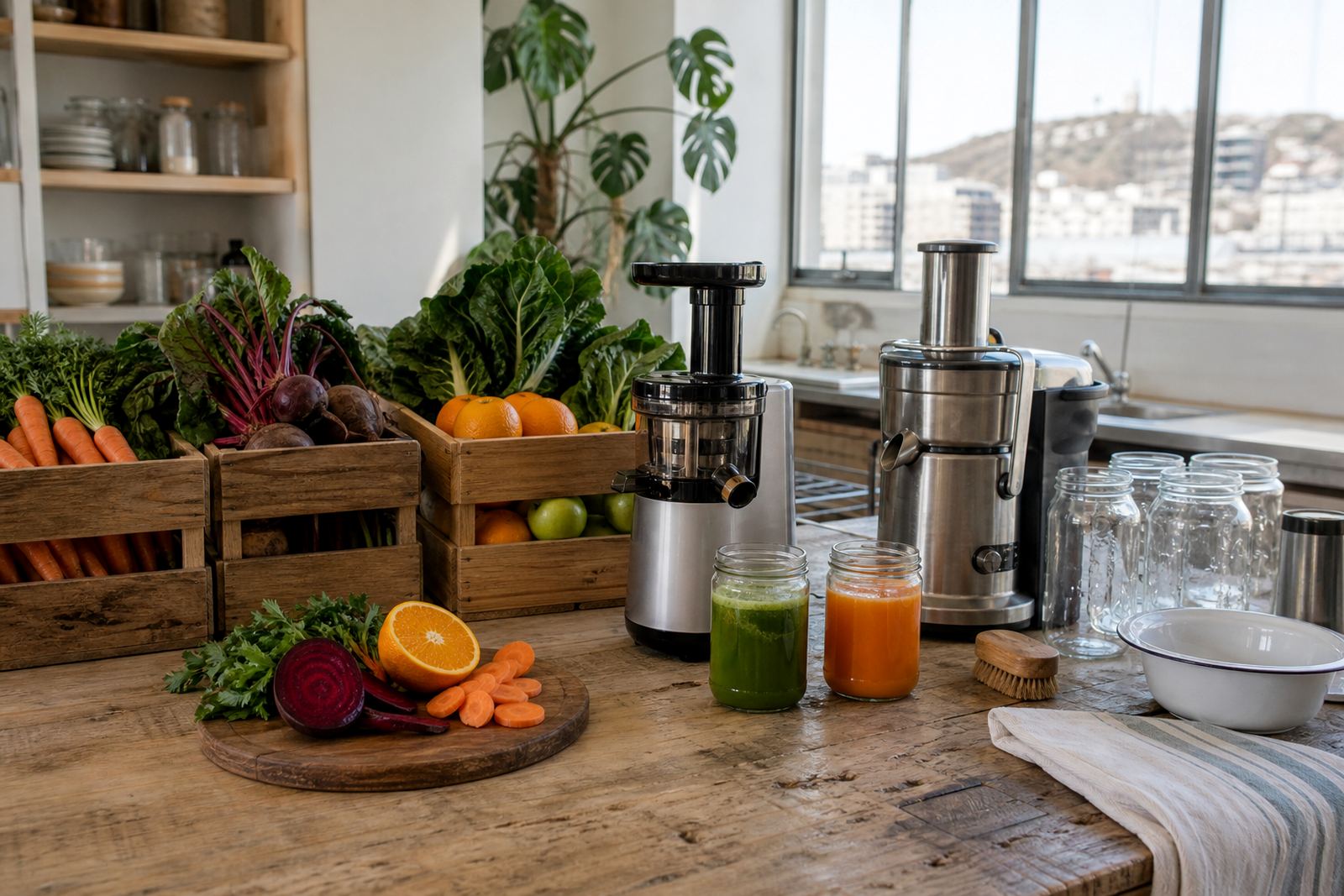
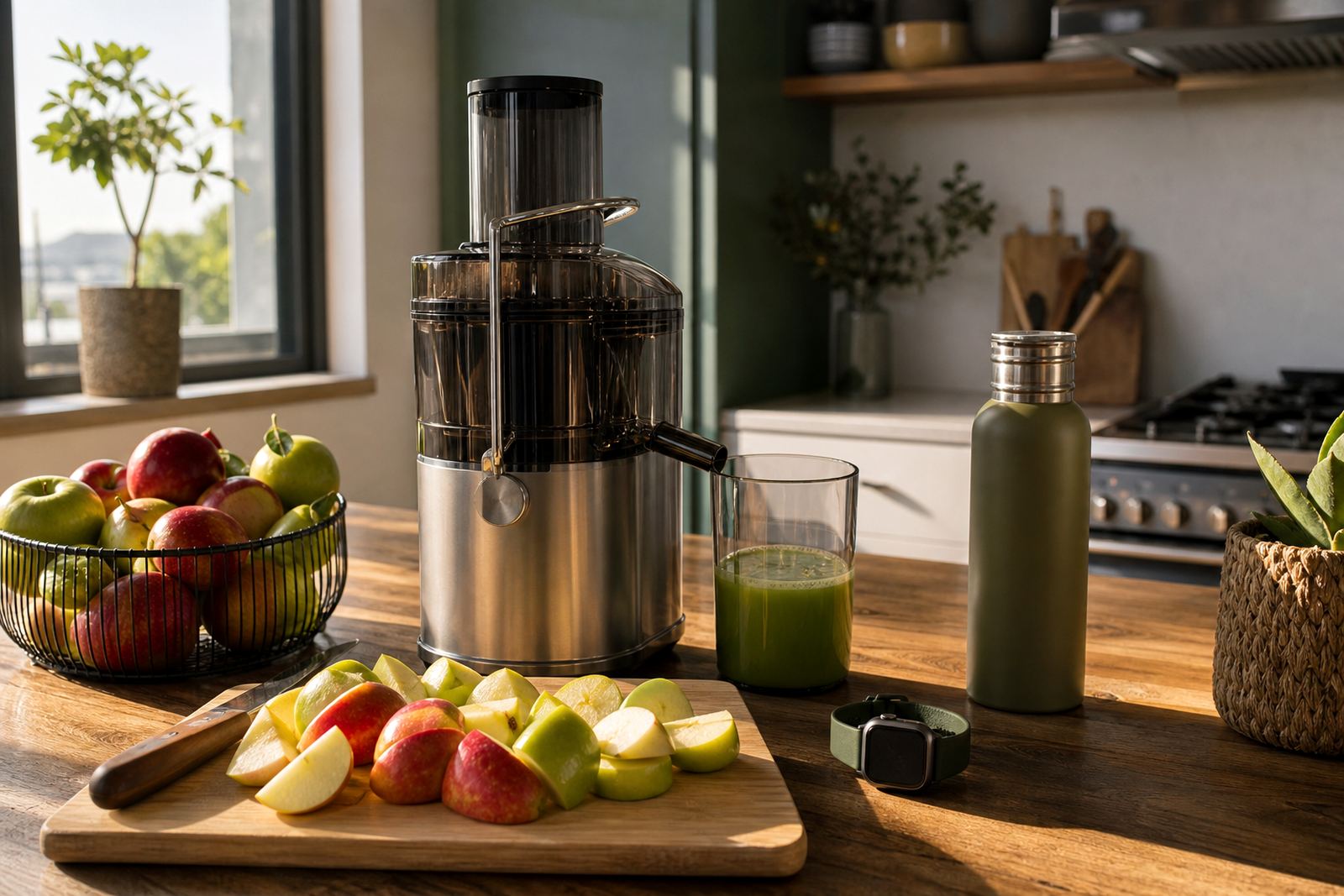
Slow masticating juicers work by crushing and pressing fruit at a slower speed. They are useful when you want less foaming and a steadier flow, especially for citrus blends that include softer fruit. Centrifugal juicers use a fast spinning basket to separate juice quickly, which suits busy mornings and larger bursts of oranges or grapefruit. Cold presses take the slow approach further, with pressure used to extract juice and reduce heat during operation.
Each style has its own rhythm. Fast machines can suit a household that values speed over yield, while slower presses suit people who prefer a calmer process and more control. Citrus pith can clog some screens, so a machine with a well-fitted filter and easy-access parts can save time. If you plan to work through crates of lemons for cordial, sauces or freezer packs, the design of the feed chute and pulp outlet becomes important.
- Centrifugal juicers: quicker batch work, often easier for mornings
- Slow masticating juicers: steadier extraction, lower speed operation
- Cold presses: suited to careful pressing and regular home use
A sensible layout for orange, grapefruit and lemon days
For citrus season, the best layout is usually compact and within one reach zone. Keep the machine close to the sink, a chopping board, a washable bowl and a lidded jug.A nearby plug point with a safe cable run helps avoid stretching cords across wet floors.
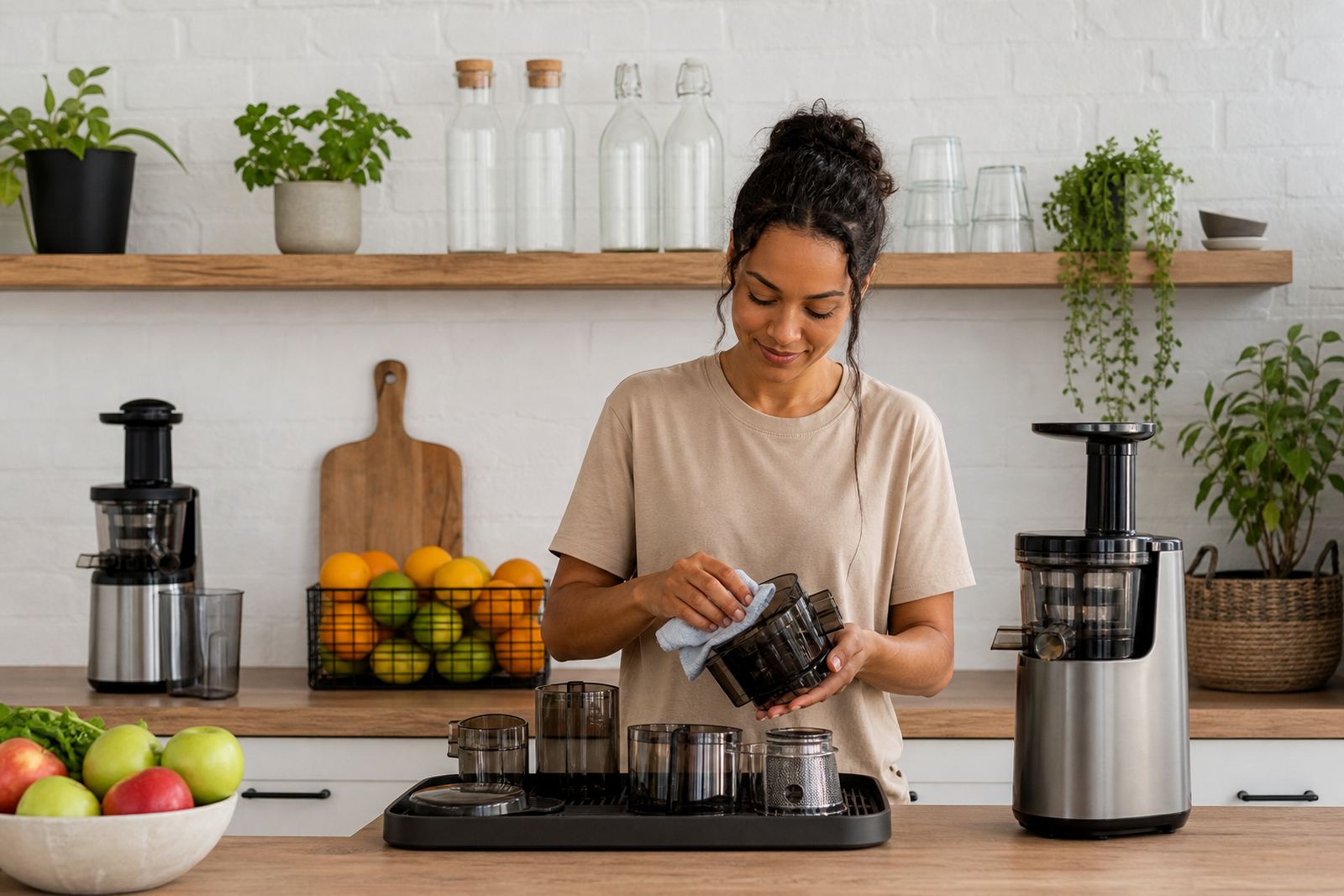
Plan for waste too. Citrus peel, pith and pips need a container that can be emptied often, especially in smaller homes. Place brushes, a sponge and a drying rack in the same area so parts do not sit in a sink overnight. In Stellenbosch and Somerset West homes where the kitchen may also handle jam or preserving days, a second tray for cleaned parts is useful when several people are working at once.
- Keep the unit on a level surface with enough space for the juice jug and pulp bin
- Store lids, screens and cutters in one dry container
- Leave room for quick rinse access after each batch
- Avoid placing the machine near open windows where fruit flies can get in
Cleaning and food safety without slowing the morning down
Citrus is messy in a predictable way. Juice runs, peel oils spread onto surfaces and pulp can sit in corners if parts are not rinsed straight away. Rinse removable parts as soon as possible, then wash them in warm water with a mild detergent and a soft brush. If a strainer has fine holes, check it carefully because citrus fibre can block the openings. Dry parts fully before storage so mould and odours do not set in.
Food safety starts with clean hands, clean fruit and a clean work area. Sort bruised fruit out before juicing, and avoid leaving cut citrus at room temperature for too long. If a machine has a seal, screen or feed chute that comes apart, inspect those areas for build-up after each session. For households in Durban or George where humidity can be higher, storage in a dry cupboard matters more than most people think. A clean machine is easier to use and lasts longer when routine care is steady, not rushed.
The mistakes that cause the most frustration
Most problems in a citrus kitchen come from small oversights. People often overfill the feed chute, push fruit too hard or let pips and pith build up until the machine starts to labour. Another common issue is skipping the first rinse and leaving sticky residue on seals and screens. That makes cleaning harder the next day and can affect how smoothly the unit runs.
Noise and vibration are also worth checking. A machine that is not seated properly can walk across the counter, especially on smooth granite or tiled tops. Power cords should be checked for wear, and plugs should sit securely in the socket. If the unit starts leaking, the seal may need attention or the screen may be blocked. Small faults are often easier to sort early than after a full season of use.
- Do not force fruit through a chute that is too small
- Do not store damp parts in a closed container
- Do not ignore a wobble, rattle or change in motor sound
- Do not mix hot water and delicate plastic parts unless the maker allows it
Budget ranges that make sense in Rand
For a home citrus setup, budget depends on how often the machine will run and how much control you want. Entry-level centrifugal juicers for light home use can begin around R800 to R1 800. Mid-range slow masticating juicers often sit around R2 000 to R4 500, while stronger cold presses for regular family use can move from roughly R3 500 to R7 500, depending on build, parts and accessories.
It is worth allowing a little extra for cleaning tools, spare screens, replacement seals and a proper storage spot. If the machine is going to be used through the citrus season in Cape Town, Johannesburg, Pretoria or Durban, a sensible service plan also helps. MiniPress handles delivery nationwide from Paarden Eiland, and our team can assist with setup, deep clean guidance, screen care, leak checks and spare parts help when the kitchen starts working harder than usual.
A practical order for a seasonal household
For a household that wants one reliable citrus station, the best order is usually simple: choose the machine type first, then set up the workspace, then sort the care items. Households that make juice for breakfast may prefer a centrifugal unit, while those who want slower pressing and more controlled batches may lean toward a cold press or slow masticating option. Either way, the room around the machine matters just as much as the motor inside it.
MiniPress works with clients across Cape Town Delivery, Johannesburg Delivery, Durban Delivery, Pretoria Delivery, George Delivery, Stellenbosch Delivery and Somerset West Delivery. If you are setting up for a heavy citrus month, the right arrangement can save time every morning and keep the counter cleaner. A machine that fits the kitchen, and not the other way round, is usually the one that gets used properly.