When the kettle is boiling and the shoes are on
A quick workday juice setup suits people who want fresh juice before leaving home, but do not have time for a long clean-up. The best arrangement is the one that lets you wash one or two parts straight after use, wipe the base dry, then store everything within reach for the next morning. In a flat in Sea Point, a townhouse in Pretoria East or a family kitchen in George, the main challenge is the same: get the machine ready fast and keep the counter clear.
For this kind of routine, the machine should match the fruit and vegetables you use most often. Soft fruit, citrus and watery produce work well in many juicers, while harder roots and leafy produce may need slower feeding or smaller pieces. If the goal is speed, choose a model that does not demand a lot of chopping, and set out a jug, chopping board and cleaning brush before you start.
The three machines people usually narrow it down to
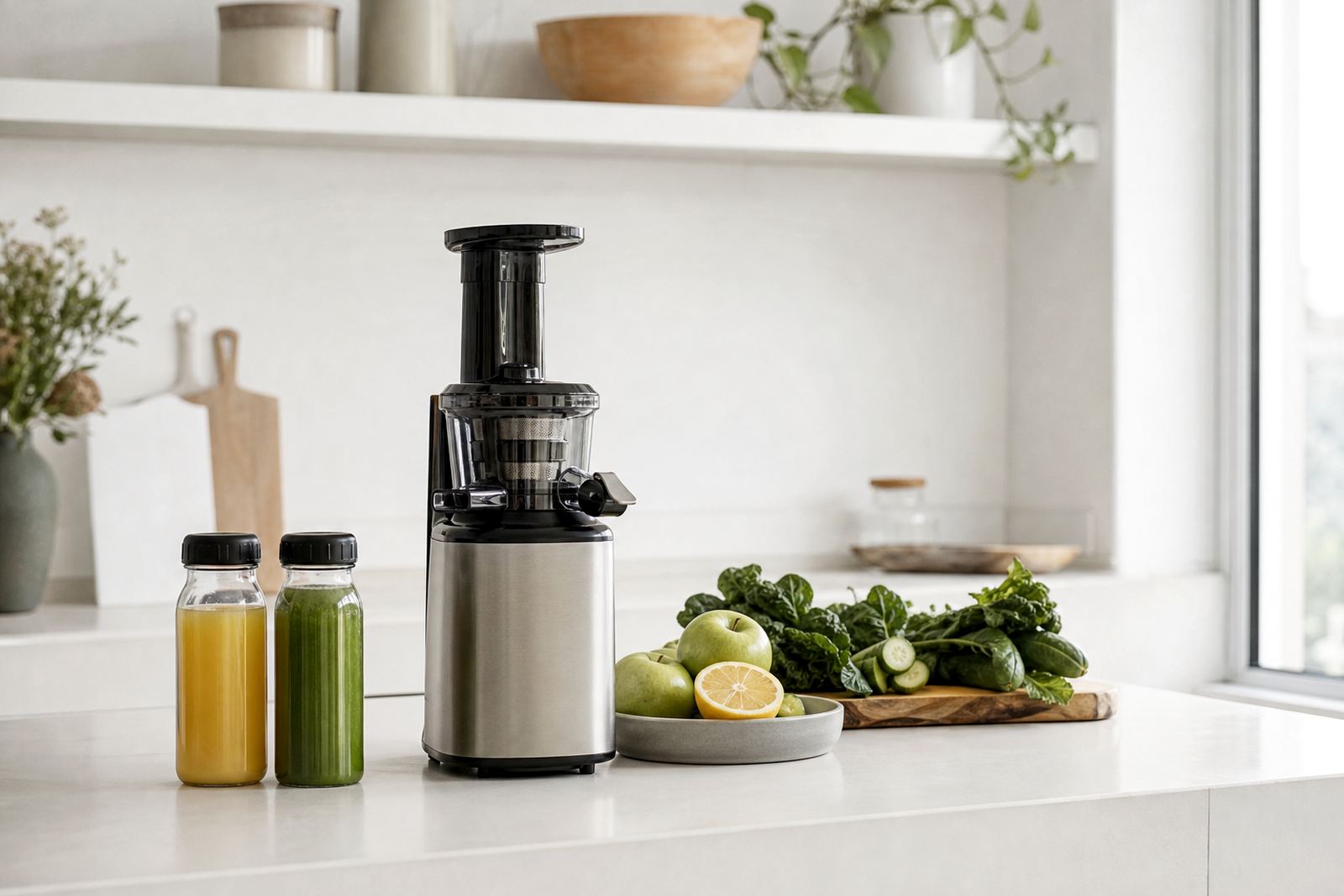
Slow masticating juicers, centrifugal juicers and cold press machines each suit a different pace. A slow masticating unit uses an auger to crush and squeeze produce at a lower speed. It usually gives drier pulp and can handle leafy greens, herbs and harder vegetables well, but it takes a little more patience with feeding. A centrifugal juicer spins a grating basket very fast, which is handy when someone wants juice in a hurry before the school run or the N1 traffic build up. A cold press machine works on a lower-speed squeezing method and is often chosen for quieter operation and steadier output.
For workday use, the important question is not only yield, but also cleanup and space. A centrifugal unit may be quicker for a rushed morning, while a slow masticating model may suit someone who wants less foam and is prepared to rinse a few more parts. Cold press equipment is often favoured by households that value quieter operation in apartments or shared living spaces, especially where neighbours are close by.
- Centrifugal: fastest for many common fruits and vegetables, but usually noisier.
- Slow masticating: better for mixed produce and quieter mornings, with more careful prep.
- Cold press: suited to low-speed squeezing and a calmer kitchen routine.
A counter plan that saves minutes, not just space
The fastest morning routines are built around placement. Keep the machine near a plug point, but away from the stove and sink splash zone.In coastal areas like Paarden Eiland, Milnerton and Somerset West, it also helps to store accessories in a dry cupboard so moisture does not sit on seals or screens.
Small layout changes make a real difference. A permanent container for peelings, a bowl for washed produce and a drying cloth beside the sink cut down on back-and-forth. If children or staff use the kitchen, label the parts that should not go in a dishwasher and keep the pusher, screen and brushes together in one container. That way the setup does not spread across the whole counter by 7am.
- Leave the machine near a fixed plug point.
- Keep chopped produce in one bowl before juicing.
- Store brushes, lids and seals in one marked container.
- Use a tray or mat under the unit to catch drips.
Cleaning habits that keep the next morning easier
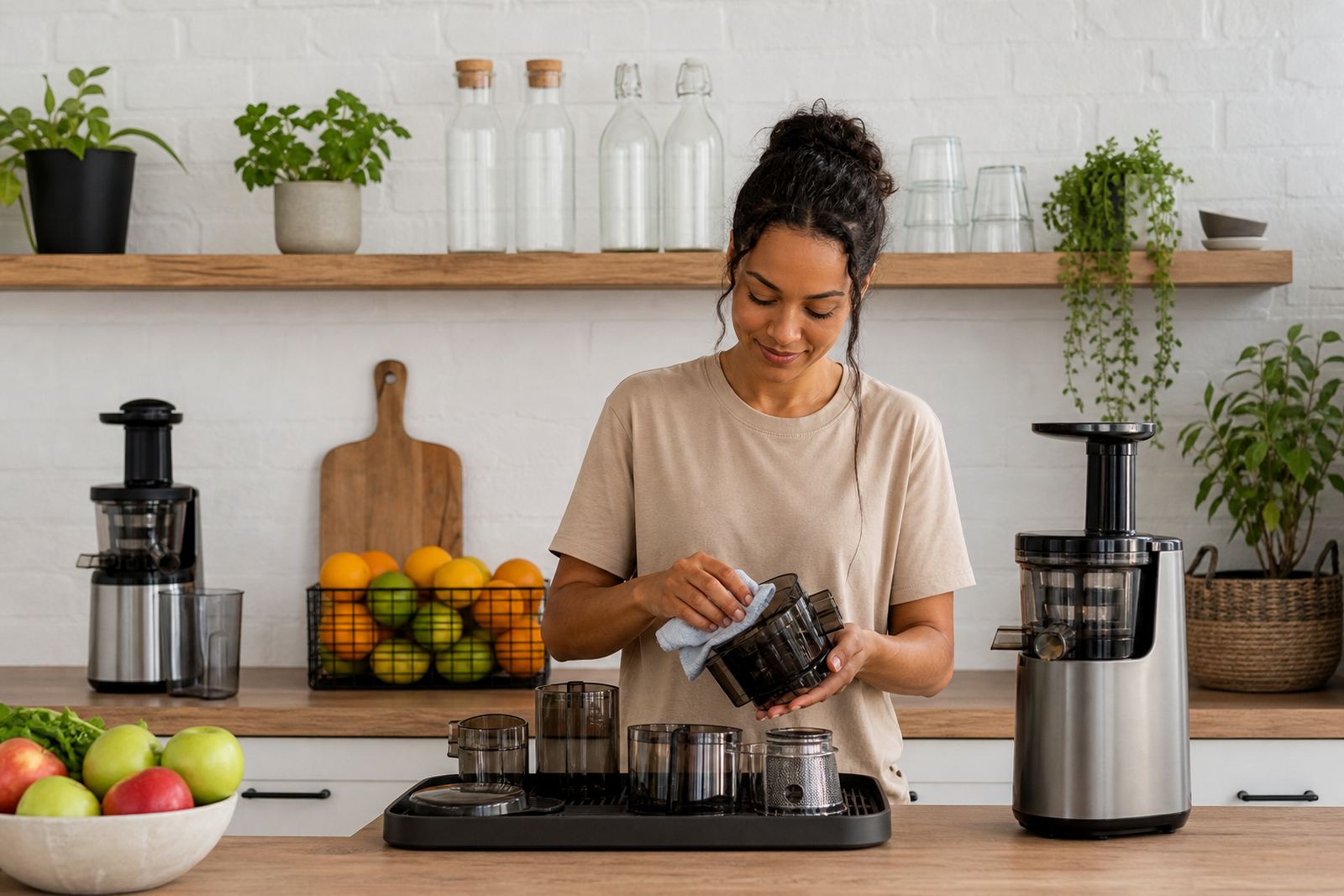
Food safety starts with clean hands, clean produce and a clean machine. Rinse fruit and vegetables first, and do not let cut produce sit uncovered on the counter too long in hot weather. After juicing, disassemble the parts that touched food, rinse them straight away and wash them with warm water and a mild dish soap. Letting pulp dry on the screen makes the next clean-up slower and can cause odours.
Pay attention to seals, lids and feeding tubes. A small amount of pulp caught in a seal can affect fit, and a cracked screen or tired rubber part can cause leaks. In busy households, this is often where trouble starts, not from the motor itself. If a machine begins to rattle, wobble or leave wetter pulp than usual, check for blocked parts, worn seals or a loose cover before using it again.
For people who start early, a quick deep-clean routine once a week helps. This can include soaking a screen, brushing fine fibres out of the mesh and checking cable plugs for wear. If the unit is stored for a few days, dry every part fully before packing it away to help prevent smells and residue.
What gets picked for a weekday rush
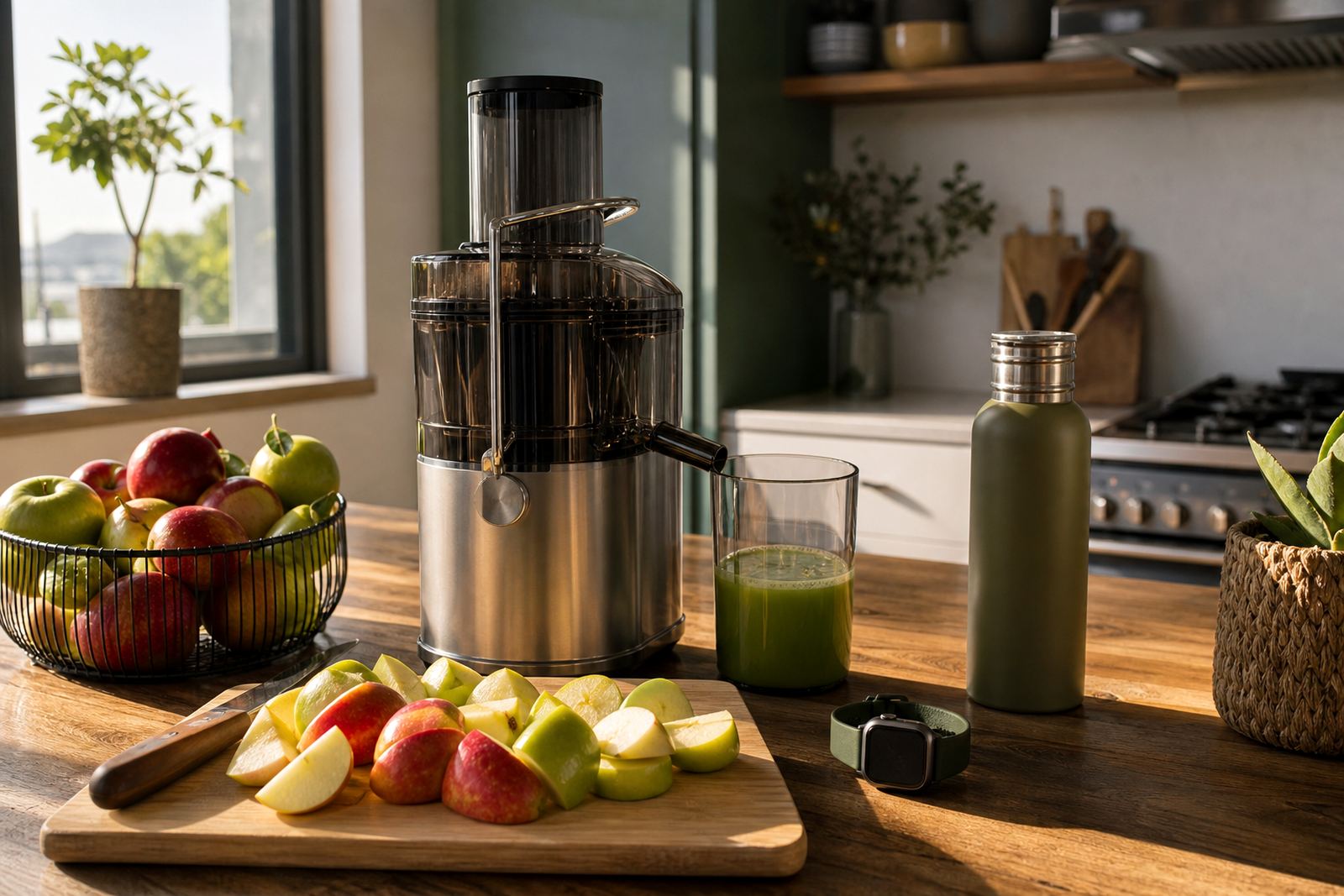
A typical quick workday set-up often includes one juicer, one jug, a cleaning brush and a small storage tray. Some homes prefer a compact centrifugal machine for quick orange, apple or carrot mixes, while others choose a slow masticating model if they use more greens, celery or ginger in the mornings. For households that want quieter operation, a cold press style machine is often placed on a stable surface away from the breakfast area.
When planning the set, think about the waste bin, the fruit bowl and the sink all at once. If the bin is too far away, peelings and pulp tend to pile up around the counter. If the sink is crowded, cleaning slows down. The best weekday setup usually uses the shortest possible path from fridge to machine to sink.
- Machine suited to your usual produce.
- Stable chopping board and a sharp knife.
- Jug or bottle with a lid for the juice.
- Brushes and tools for the screen and chute.
- Drying space that does not block the sink.
Budget bands that make sense in Rand
Budget depends on build quality, motor type, parts and how much cleaning support you want. Entry level home juicers are often chosen for occasional weekday use and usually sit in a lower Rand range. Mid-range models suit regular family use and tend to offer better parts access, easier assembly and stronger housing. Higher-end cold press units, or machines with more specialised feed systems, can cost more but may suit households that use them most days and want quieter running.
It is also worth allowing room for spare parts and care items. A spare seal, replacement screen, brush set or extra jug may cost less than replacing a whole unit later. For a home in Cape Town or a delivery area such as Durban, Johannesburg or Pretoria, it is sensible to budget for the machine itself plus a small maintenance amount. That is usually the more practical way to plan, especially where the juicer will be used before work several times a week.
MiniPress can assist with first time setup, seal replacement, screen care, leak troubleshooting and routine care plans, which is helpful if the machine is doing daily duty rather than only weekend use. If you need guidance on a unit already in the kitchen, a video support call can help check noise, vibration, cable plugs and storage care without making the process drawn out.
A weekday routine that does not fight the clock
The best quick juice routine is the one that becomes ordinary. Keep produce washed, the machine dry, and the parts together in one spot. If the setup only takes a few minutes to assemble and clean, it is far more likely to be used on a rushed Tuesday than a complicated one that lives at the back of the cupboard. For many homes, that is the whole point: less faffing around before work and less mess afterwards.
Whether you use a centrifugal juicer for speed, a slow masticating model for quieter prep, or a cold press machine for a more controlled squeeze, the same principles apply. Shorter prep, sensible layout and prompt cleaning are what make a weekday kitchen work. That matters just as much in a flat in Stellenbosch as it does in a house in George or a townhouse in Durban.