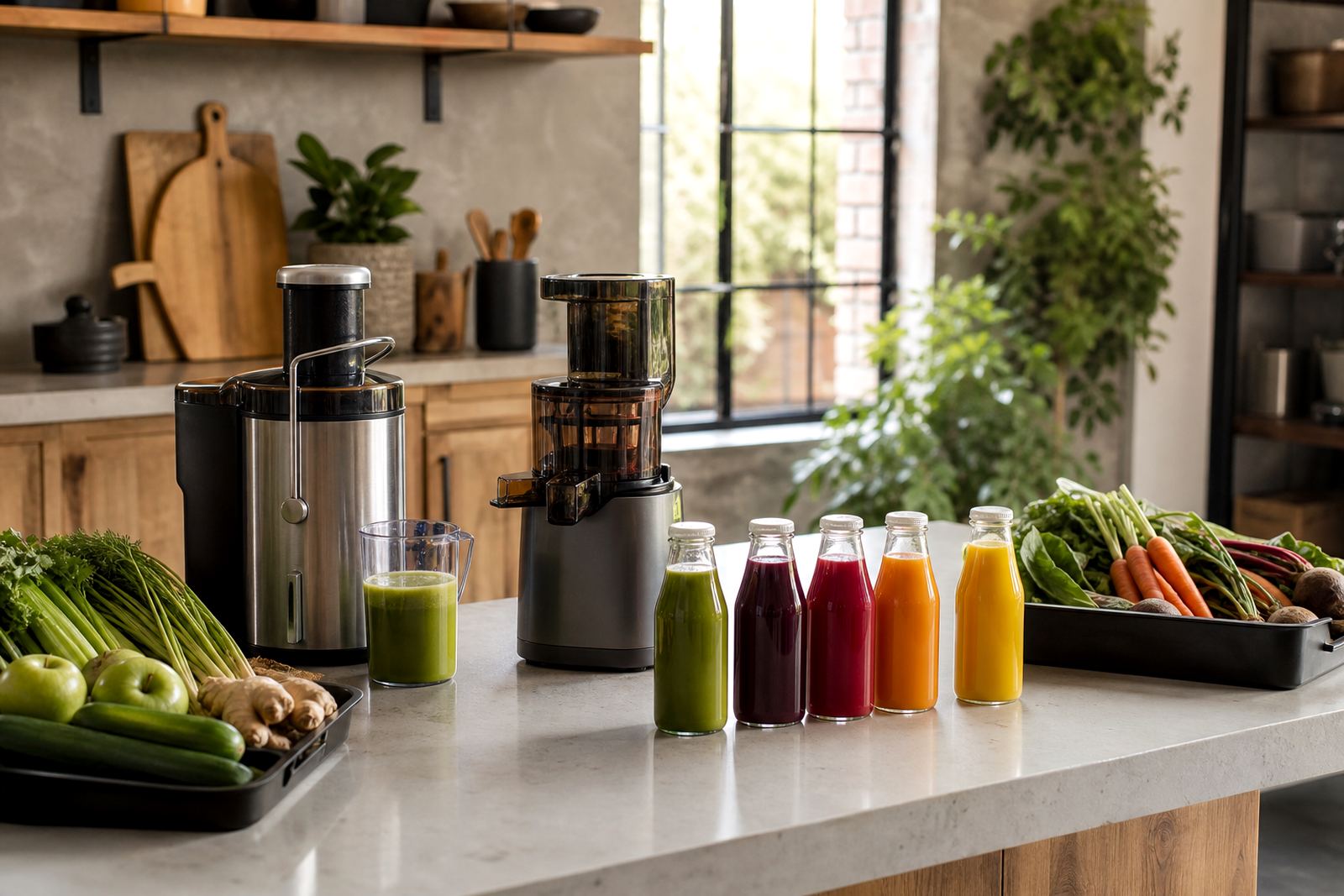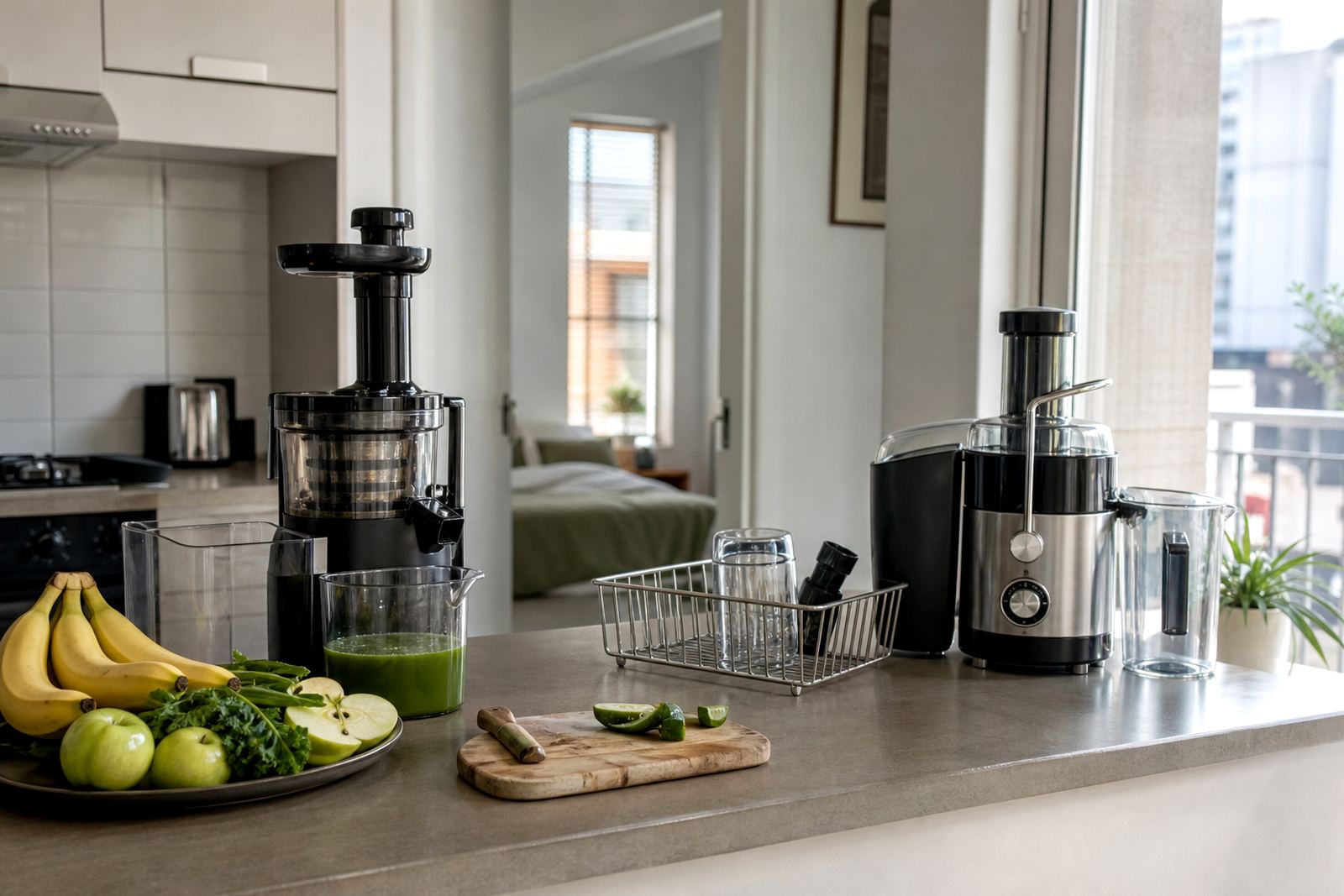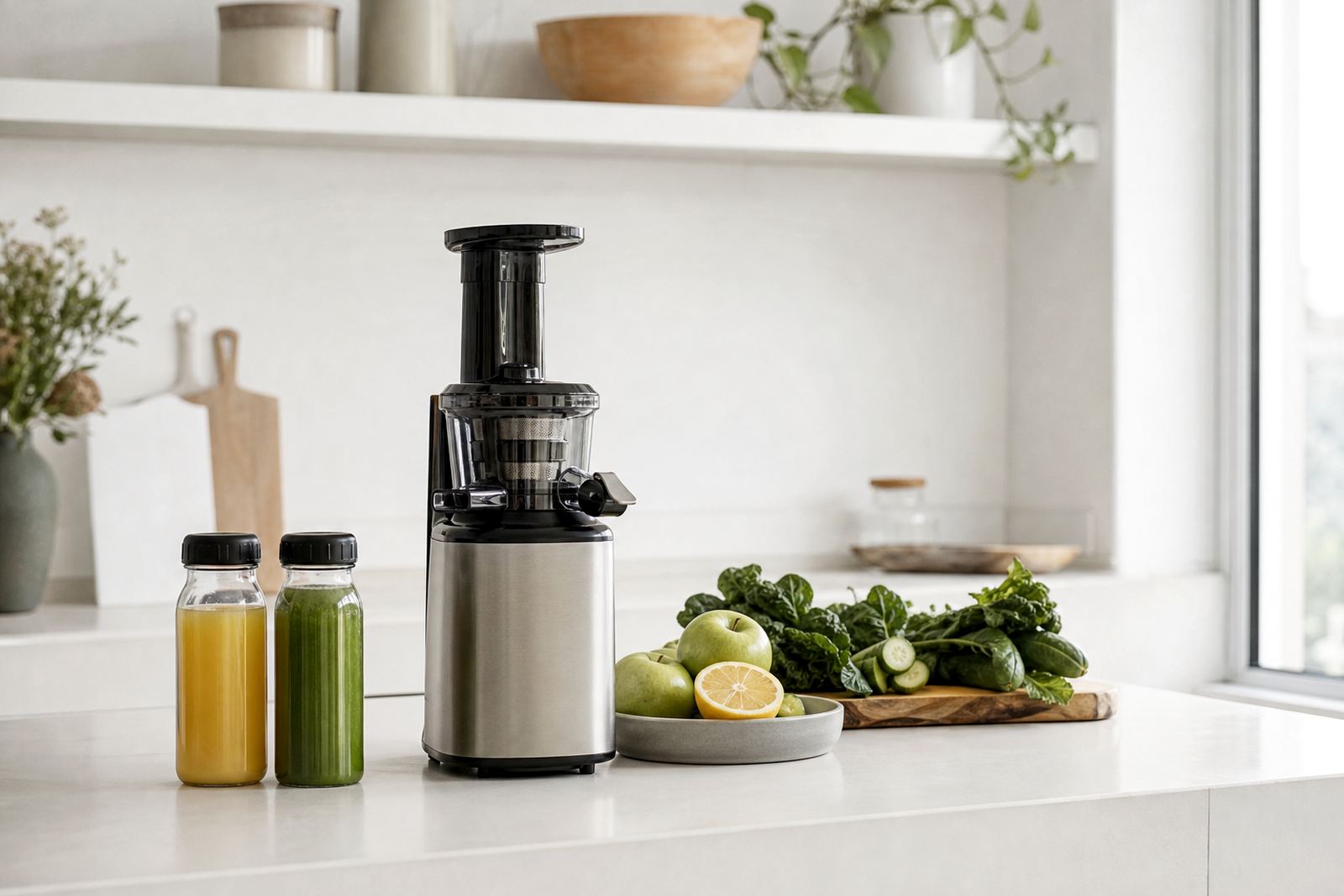
A clean corner for the morning press
A minimalist kitchen setup works well when the juicer is not left in the middle of the counter all day. The goal is a small, practical station with enough clear space for the feed chute, jug, pulp container, and a drying rack or cloth nearby. In compact Cape Town flats, Stellenbosch units, and townhouse kitchens in Pretoria, that usually means one shelf, one plug point, and one stable chopping area beside the sink.
Slow masticating juicers suit people who want a steady pace and less splatter, while centrifugal juicers are often chosen for quicker use on busy weekdays. Cold presses sit neatly in the same kind of setup, especially where the owner prefers quieter operation and a more measured routine. Keep the layout simple and the machine easy to reach, because if it is awkward to get out, it often stays packed away.
The small set of items that actually earn their place
A minimalist arrangement does not mean bare. It means only the pieces you use regularly stay within reach. For most homes, that includes the juicer or cold press, one or two reusable bottles, a cleaning brush, a fine screen or filter if the model uses one, and a small drying cloth. If the kitchen is coastal and humid, like parts of Durban or George, a ventilated spot is better than a closed cupboard right after washing because trapped moisture can leave parts smelling stale.
Food safety starts with clean parts and dry storage. Wash hands before handling the machine, rinse fruit and vegetables properly, and do not leave wet pulp sitting in the hopper or feed area. If you are using the juicer daily, clean the screen and juice path straight after use so residue does not harden. That saves time later, and it also keeps the unit looking neater on the shelf, which matters in a pared-back kitchen.
- For citrus, leafy greens, and hard produce, a slow masticating model is often easier to manage in a compact routine.
- For quick batches before work, a centrifugal unit may suit a home that wants speed more than silence.
- If the counter is shared with a kettle or toaster, keep cords separated to reduce clutter and accidental spills.
Planning the layout without crowding the counter
The best layout starts with measurements. Check the width of the machine, the height under cupboards, and the distance to the nearest plug. A low shelf can work if the juicer lifts out comfortably, but avoid stacking it too high because repeated lifting becomes annoying. In Paarden Eiland and other Cape Town homes where kitchen space can be tight, even 10 to 15 cm of extra room on each side makes the station easier to use.
Think about the sequence of use. Produce comes out of the fridge, then wash basin, then prep board, then juicer, then bottles, then cleaning brush. That order keeps movement short and reduces mess. If you use the machine near a window, keep it away from direct sun and damp sea air that can affect stored parts over time.
- Keep the power cable loose, not wrapped tight around the base.
- Store the tamper, pusher, or lid parts in the same drawer every time.
- Use a small tray to hold drips and keep the bench tidy after rinsing.
Cleaning habits that suit a pared-back routine
Minimal kitchens usually depend on fast cleanup, so choose a machine that can be taken apart and rinsed without a long delay. A slow masticating juicer may have a few more parts than a centrifugal unit, while a cold press can have screens, augers, and seals that need careful attention. The main thing is not to let juice dry on the mesh or around the outlet. Once that happens, cleaning takes longer and the machine no longer feels easy to use.
Use a soft brush for screens and fine openings, lukewarm water, and a mild kitchen detergent. Avoid harsh scrubbing on seals and transparent parts, because scratches can trap residue. Dry everything fully before packing it away, especially in humid areas like Durban and the coast. If you notice the same part clogging often, check whether the screen is damaged or whether the produce needs smaller cuts before feeding. That little bit of care keeps the setup neat and prevents avoidable wear.
MiniPress support for this use case often includes deep clean guidance, seal replacement, screen care, and leak troubleshooting, which is useful when the machine is used often but stored out of sight.
Common mistakes in a neat kitchen
The biggest mistake is buying a machine that is too large for the way the kitchen is used. Another common problem is leaving bottles, tools, and peels spread across the counter, which defeats the whole point of a minimalist arrangement. It also helps to avoid placing the juicer where it has to be moved past a stove, because heat and steam can affect stored parts and make the corner feel crowded.
Some homes also forget about noise. A centrifugal juicer can be lively, which is fine if the kitchen is separate, but less pleasant in a small open-plan flat. Slow masticating models are generally calmer, while cold presses are often chosen where a quieter, more controlled routine is preferred. It is still worth checking vibration, especially on light tables or thin laminated counters that can rattle a bit.
- Do not store damp brushes inside a closed cupboard.
- Do not wrap the cord around a wet machine.
- Do not force oversized produce into the chute, cut it down first.
What a tidy setup usually costs in Rand
Budget depends on the type of machine and how much storage you want around it. A basic minimalist setup for a smaller home may start around R1 500 to R3 500 if you only need a compact juicer, a bottle or two, and a few cleaning tools. Mid-range home use often sits between R3 500 and R7 500 when people want a better-built unit, extra screens, or a colder-press style arrangement with more careful storage.
For homes that want a more refined setup with spare parts, storage containers, brushes, and a dedicated place on the counter or shelf, R7 500 to R12 000 is a more realistic working range. Delivery across South Africa is useful here, especially for Johannesburg, Durban, Pretoria, and George where families may be building a kitchen setup in stages. If you are planning for long-term use, factor in seals, screens, and routine care rather than only the first purchase price.
MiniPress can help with first time setup, spare parts help, cable plug checks, and a routine care plan so the corner stays orderly instead of slowly turning into clutter.