How a small flat changes the juicing choice
In a student rental, the main issue is not whether a juicer works in theory, it is whether it can live on a small counter, be packed away in a cupboard and still be ready for the next use. In Paarden Eiland and other Cape Town flats, we often see one plug point, a narrow prep area and limited washing-up space, so the machine has to suit the room first.
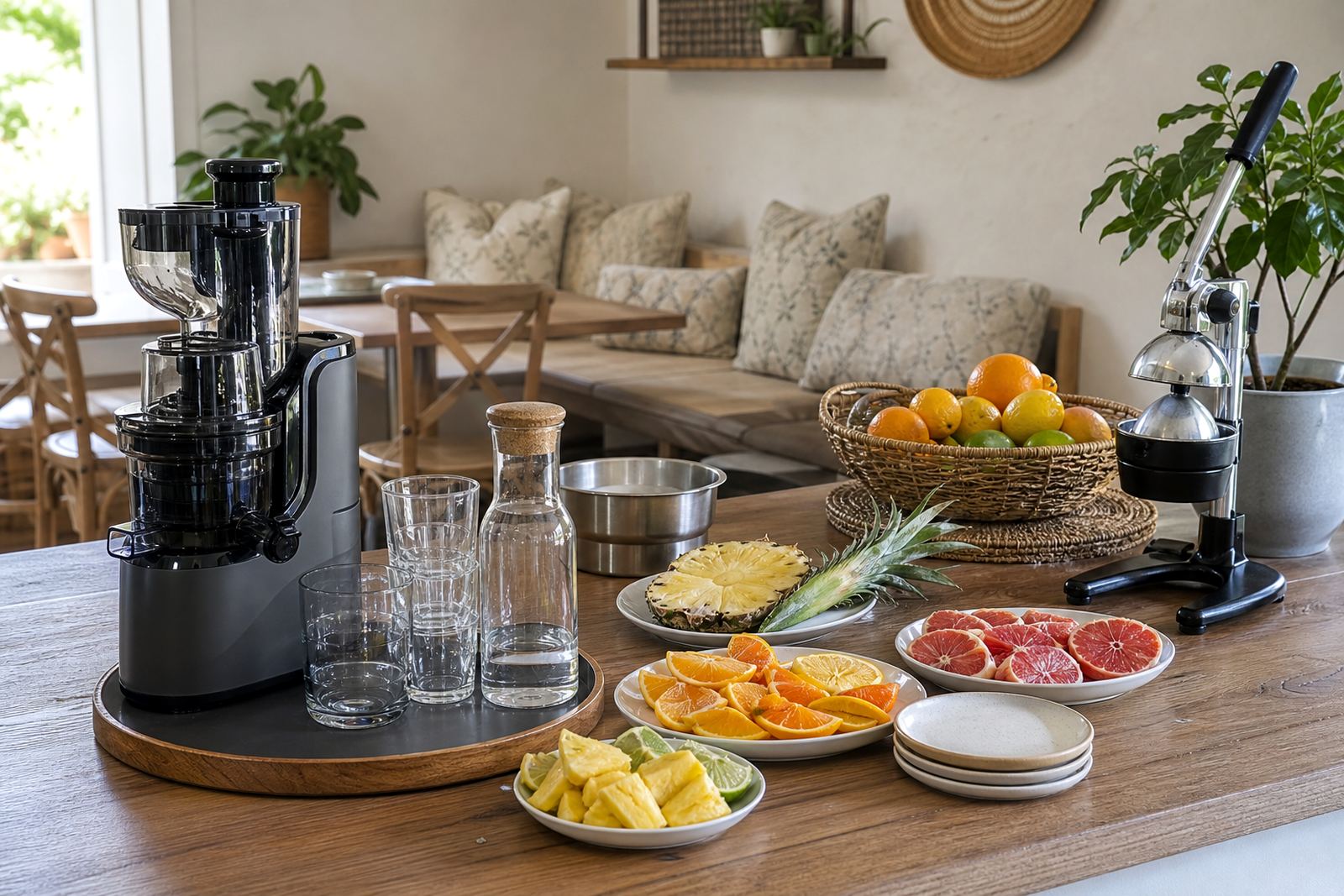
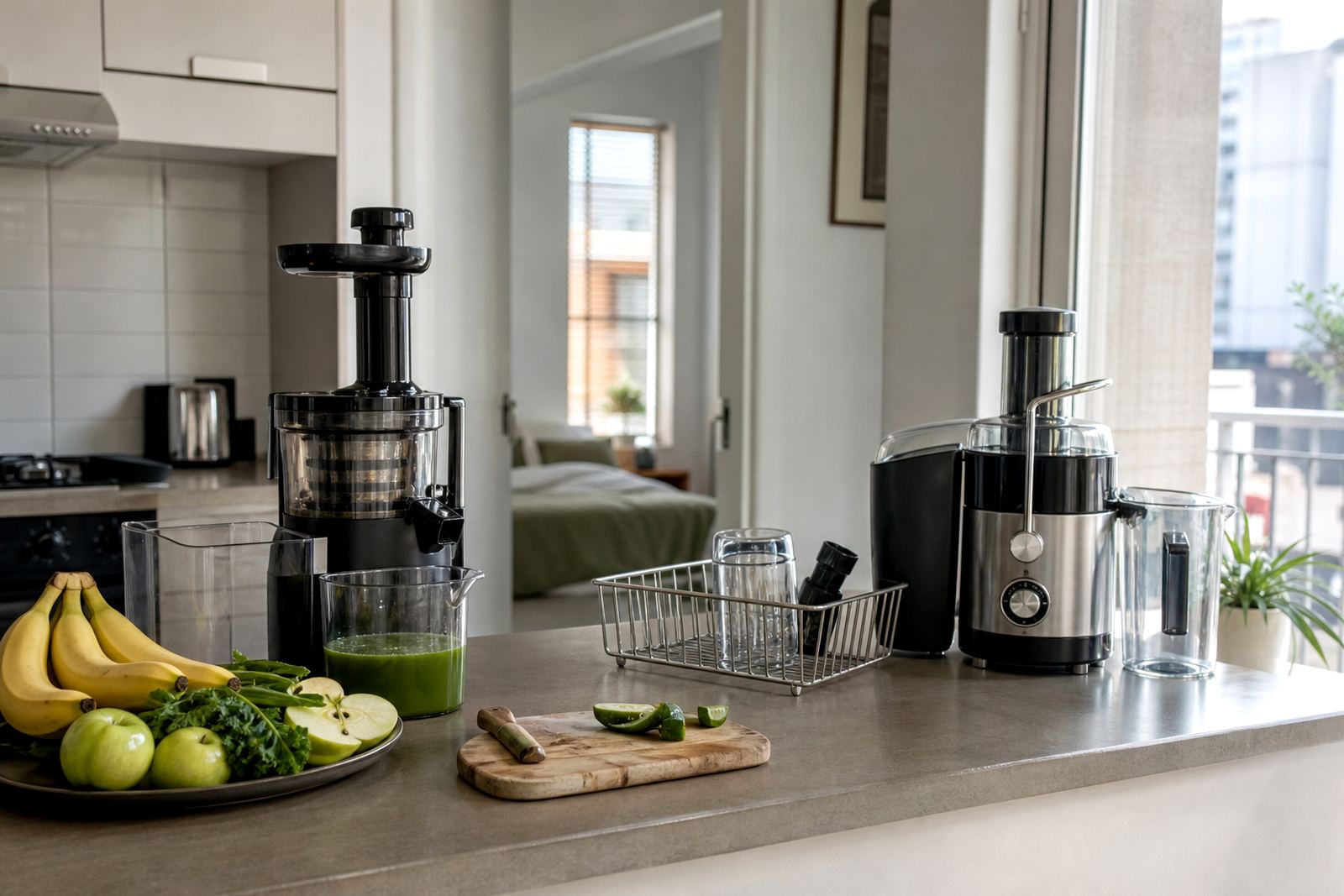
Slow masticating juicers suit people who want higher juice yield from leafy greens, apples, cucumber and hard veg, with a gentler pressing action. Centrifugal juicers are faster for quick morning use and are often lighter to move around. Cold presses are the slowest of the three in operation, but they are useful where the user wants a compact, steady setup and does not mind a more careful prep routine.
A student kitchen kit that does not take over the sink
A workable first setup usually stays basic.A small chopping board, a peeler, a measuring jug and one storage bottle are often enough to start.
- Compact juicer or cold press with a small footprint
- Fine mesh screen or strainer, depending on the model
- Cleaning brush set for pulp channels and filters
- One or two sealable bottles for fridge storage
- Dry cloth for wiping the motor base and cable
For rented rooms in Johannesburg, Pretoria or Stellenbosch, storage matters as much as performance. A machine that can be lifted with one hand and stored on a high shelf is easier to keep in use than a heavier unit that stays boxed under the bed.
Where the machine should live in a rental kitchen
Layout is about reaching the machine without moving half the kitchen first. Put the juicer near a plug point, but keep it away from the stove, kettle steam and wet dish racks. Coastal humidity in Durban and George can make stored parts feel tacky if they are put away damp, so every part should dry fully before it goes back in the cupboard.
Try to leave a small working triangle between the sink, chopping area and machine. If the kitchen is shared, label one shelf or crate for the juicer parts so the screens, auger, hopper lid and cleaning brush do not disappear into other people's dishes. That small habit saves a lot of friction in a flat with three or four students sharing the same space.
Common slip-ups that turn a good machine into a headache
The most common mistake is buying a machine that is too large for the room, then leaving it boxed because it is awkward to carry out. Another issue is feeding it too quickly or pushing hard on the pusher, which can strain the motor and create more mess than needed. It is also easy to forget that fruit and veg should be washed before use, even if they will be peeled.
- Leaving pulp and screen bits to dry overnight, which makes cleaning harder
- Using a damaged cable or loose plug in an old flat
- Overfilling a small hopper and forcing feed stock down
- Storing wet seals or lids, which can lead to odours
- Ignoring drips around the spout or outlet during first use
In older buildings around Cape Town and parts of the northern suburbs, plug points can be tired, so it is worth checking the socket and plug fit before regular use.
Cleaning and food safety in a shared home
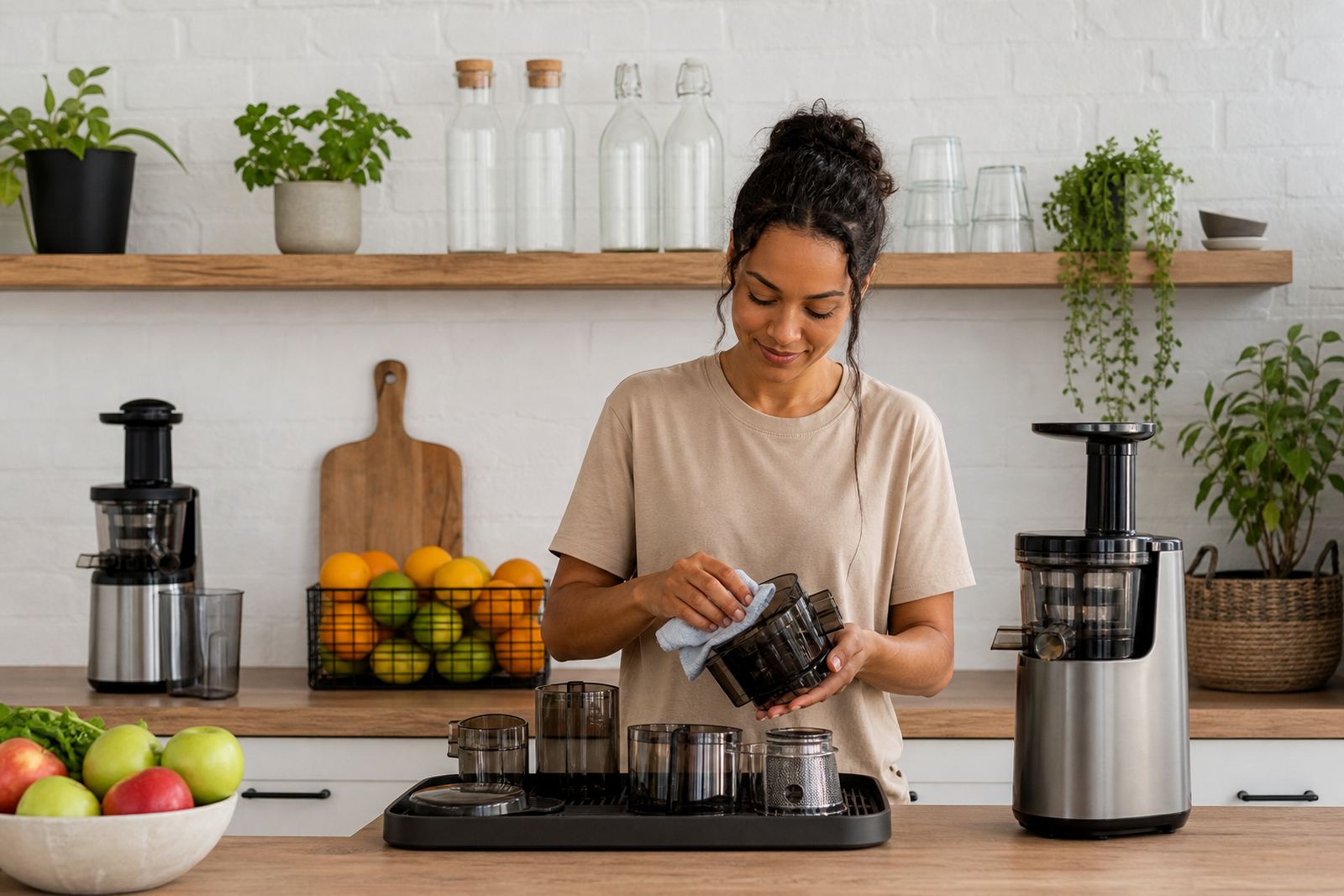
With any juicer, good cleaning starts immediately after use. Residue left in a filter or auger can dry quickly and become difficult to remove. Warm water, a soft brush and a mild detergent are usually enough for routine cleaning, provided the parts are handled according to the unit's own care instructions. Before reassembly, every washable part should be fully dry.
Food safety in a student flat is mostly about clean surfaces and sensible storage. Keep raw produce separate from cleaned parts, do not leave juice sitting at room temperature for long, and wipe the work area before and after use. If a bottle will go into the fridge, use a clean lid and date it with tape if the flat shares food space. That small step helps avoid mix-ups in busy weeks.
Budget ranges that make sense for first-year living
Budgets differ depending on capacity, materials and whether the machine is a basic centrifugal model, a slow masticating juicer or a more compact cold press. For a student flat setup, the goal is usually value and ease of storage rather than the biggest machine on the shelf.
- Entry level centrifugal juicers: about R800 to R1 800
- Basic slow masticating juicers: about R1 800 to R3 500
- Compact cold presses: about R2 500 to R5 500
- Brushes, bottles and small accessories: about R120 to R450
For delivery across South Africa, including Cape Town, Johannesburg, Durban, Pretoria, George, Stellenbosch and Somerset West, the full cost should also leave room for practical extras like a spare seal or screen care tool. Those items are small, but in a rental flat they can save a lot of trouble later.
Help for the bits students usually forget
Students often need support after the first week, not at the moment of purchase. That is when the questions start about seals, leaks, blocked screens, vibration on a thin counter or which parts should be stored dry. We handle first time setup guidance, deep clean guidance, spare parts help, seal replacement, screen care, leak troubleshooting, noise and vibration checks, storage care, cable and plug checks, brushes and tools, routine care plans and video support calls.
If the flat is tight on time, the best arrangement is a machine that can be set up, used and cleaned in a short routine. A practical juicer setup should fit the room, the power points and the cleaning habits of the people sharing it, not the other way round.