How a shared kitchen changes the way a juicer gets used
In a shared house, the juicer is not only about juice, it becomes part of the kitchen routine. That means storage space, turn taking, cleaning and label discipline matter as much as the machine itself. In Paarden Eiland flats, Stellenbosch student houses and shared homes in Durban, the main problem is usually not the juicer, it is the confusion around who last used it and how well it was cleaned.
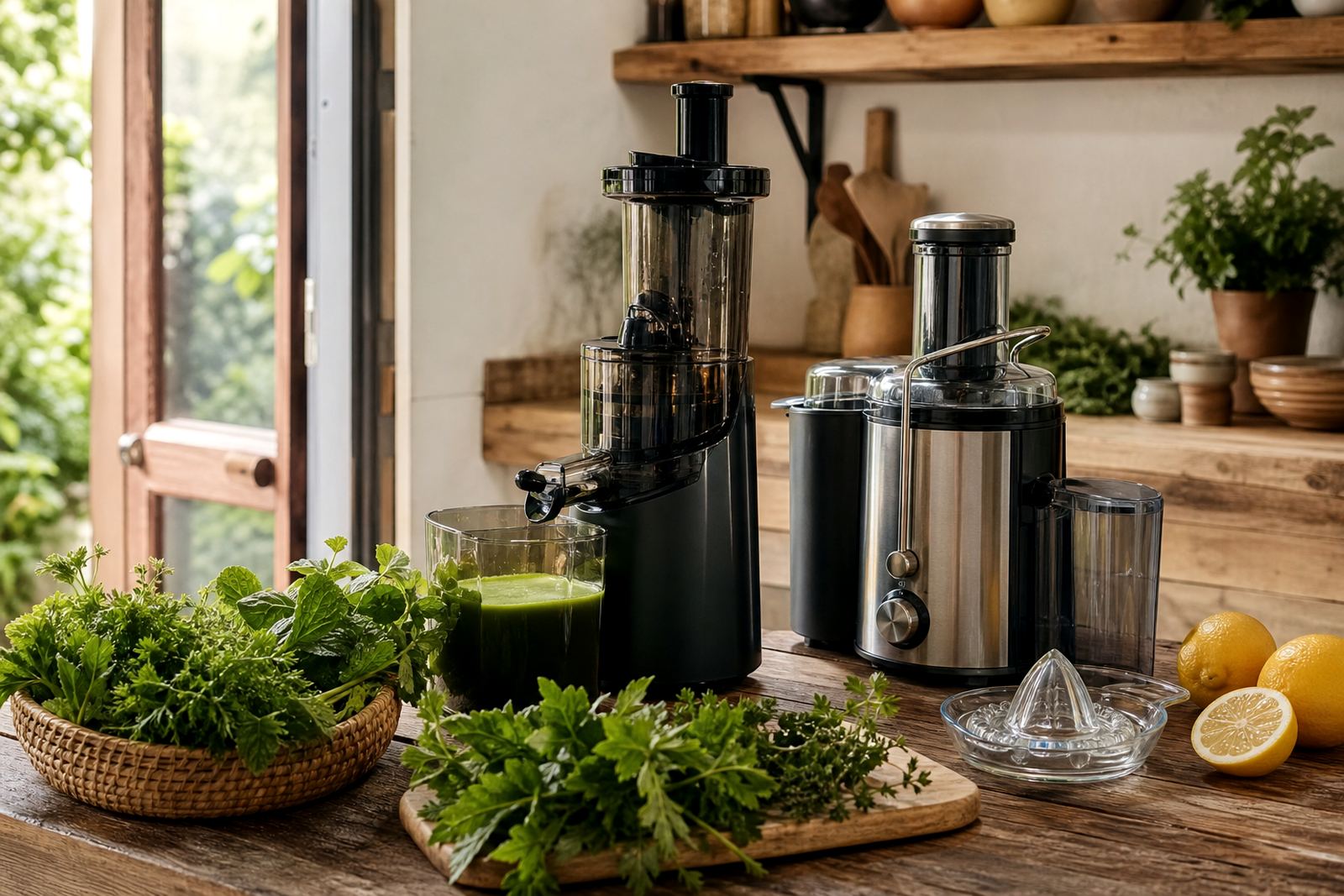
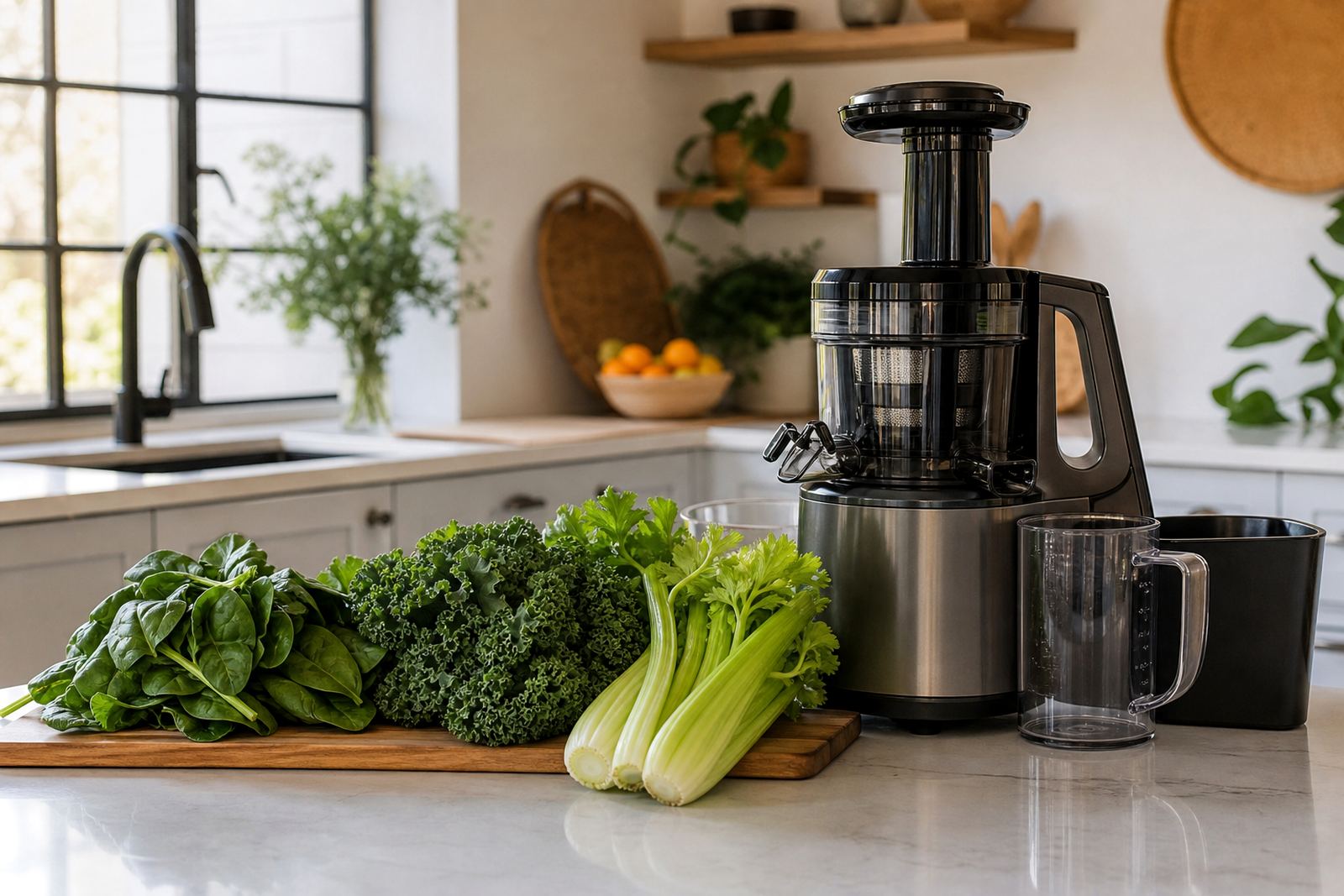
Slow masticating juicers suit shared kitchens where people want lower speed operation and less splatter. Centrifugal juicers suit quick use when several people want a fast glass before work, but they can be noisier and usually need more careful cleaning straight after use. Cold presses are useful where the household wants larger batch prep and a calmer pace, but they need enough counter space and a clear place for pulp, jugs and cleaning tools.
The equipment set that works best in a house share
A shared home does better with a compact set that is easy to identify and easy to rinse out. Keep the machine, feed chute parts, pulp container, jug, brush set and drying rack together in one marked place.
- One main juicer or cold press with all original parts kept together
- A marked storage tub for brushes, cleaning picks and spare seals
- Two or three clearly labelled jugs or bottles for mixed households
- A drying mat that stays away from the stove and dish cloth pile
- A small bin or compost caddy for pulp so waste does not spread across the counter
For food safety, the important habit is to wash surfaces, hands and parts before and after use, then dry everything fully before packing away. Damp parts left under a sink in coastal areas like Cape Town or George can pick up smell faster, so ventilation matters.
Layout choices that stop arguments before they start
Good planning reduces small disputes. Put the juicer on a stable counter with enough room on both sides for ingredients and bottles. The machine should not sit in the splash zone near the kettle or under overhead cupboards that make it awkward to lift the feed chute. In a tight kitchen, a trolley or pull-out board can help, but it must not wobble when the motor starts.
A shared setup works better when there is a clear place for each step: washing, cutting, juicing, pouring, then cleaning. If the household is using a slow masticating juicer, keep a small prep bowl nearby for chopped produce. If it is a centrifugal unit, keep the feed area uncluttered so ingredients can go in quickly without people crowding the counter. For colder areas like Pretoria, a simple cupboard shelf may be enough, but in humid Durban or along the Cape coast, sealed storage helps protect screens and seals from sticking.
- Keep the outlet close enough to avoid loose extension leads across the floor
- Do not store the machine beside raw meat containers or open spice tubs
- Assign one shelf or basket for clean parts and one for drying parts
- Use waterproof labels with dates or initials where the household needs it
- Leave enough space for the pulp bin so it does not get shoved against a wall
Cleaning habits that keep the peace in a mixed household
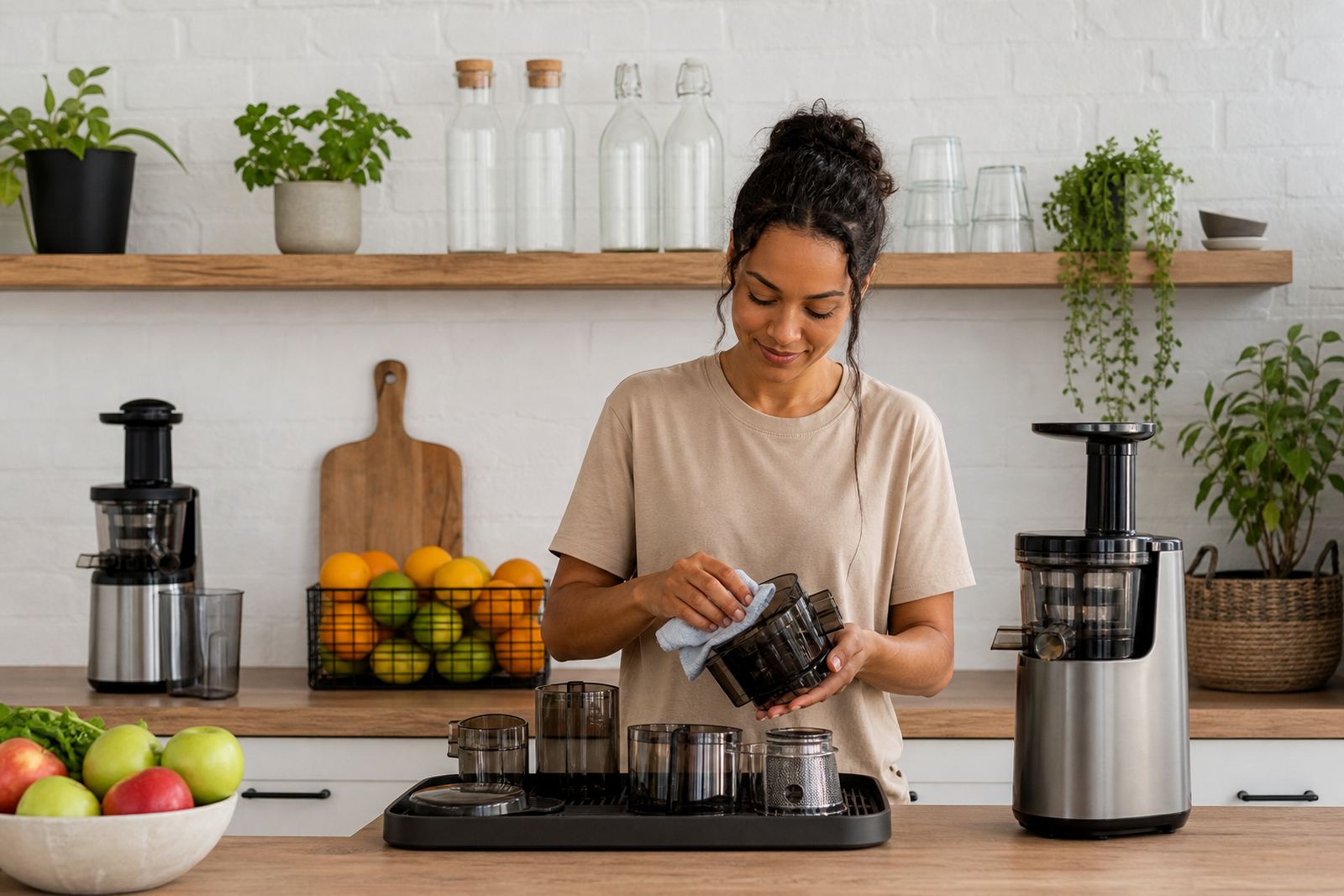
Cleaning is where most shared kitchens fall apart. The best rule is to rinse the parts straight after use, before the pulp dries and becomes sticky. Screens, seals and strainers need extra attention because trapped fibres can affect flow on the next use. A soft brush is usually enough for daily cleaning, while deeper cleaning should be done on a set routine, especially in a house where the machine is used every day.
Do not leave fruit pieces in the chute or the pulp container overnight. That can cause smell and attract ants, and it makes the next person less likely to use the machine properly. Make sure the machine is switched off and unplugged before disassembly. If a shared house uses the juicer in the early morning, noise control matters too, so check for loose feet, unstable surfaces or worn seals that cause extra vibration.
- Rinse parts right after use, then wash with warm water and mild soap
- Dry screens and seals fully before storing them
- Wipe the motor base with a damp cloth only, never immerse it
- Check for residue around the spout and drip points
- Use separate cloths for drying parts and for counter cleaning
Common slip-ups in shared kitchens and how to avoid them
One common mistake is assuming everyone knows the same cleaning standard. In reality, housemates often have different habits, so the machine needs a written routine or at least a clear spoken agreement. Another problem is overloading the chute, especially on centrifugal units, which can strain the motor and leave a mess on the counter. On slow masticating machines, forcing in too much at once can slow the feed and make the machine harder to clean.
Other slip-ups include using the wrong brush on a fine screen, storing wet seals in a closed tub, or leaving the machine packed away with juice still inside the spout. Cables also get damaged when they are wrapped too tightly or kept under stacked pots. If the household notices leaks, unusual noise or uneven vibration, it is better to check the seals, screen and feet early rather than wait for a bigger fault.
MiniPress offers support for first time setup, spare parts help, seal replacement, screen care, leak troubleshooting, noise and vibration checks, storage care, cable plug checks, brushes and tools, routine care plans and video support call guidance for home users across South Africa.
What a workable budget looks like in Rand
For a shared house, the budget should match how often the machine will be used and how many people rely on it. Entry level centrifugal juicers are usually the lowest cost option, while slow masticating models and cold presses sit higher because of their build and processing style. It is also wise to allow for spare parts, brushes and a small maintenance allowance rather than spending everything on the first purchase.
As a practical guide, a basic shared-house setup can start around R900 to R1 800 for a simple machine, with mid-range models often sitting between R1 800 and R4 500. More specialised cold press units may go beyond that depending on size and features. For a household that wants a cleaner routine, a second basket, better storage tubs and replacement seals can add a few hundred Rand more over time, which is still easier than replacing a machine that was not cleaned properly.
Delivery is available across Cape Town, Johannesburg, Durban, Pretoria, George, Stellenbosch and Somerset West, so a shared household can plan around the kitchen rather than the other way round.