When the garden starts deciding the menu
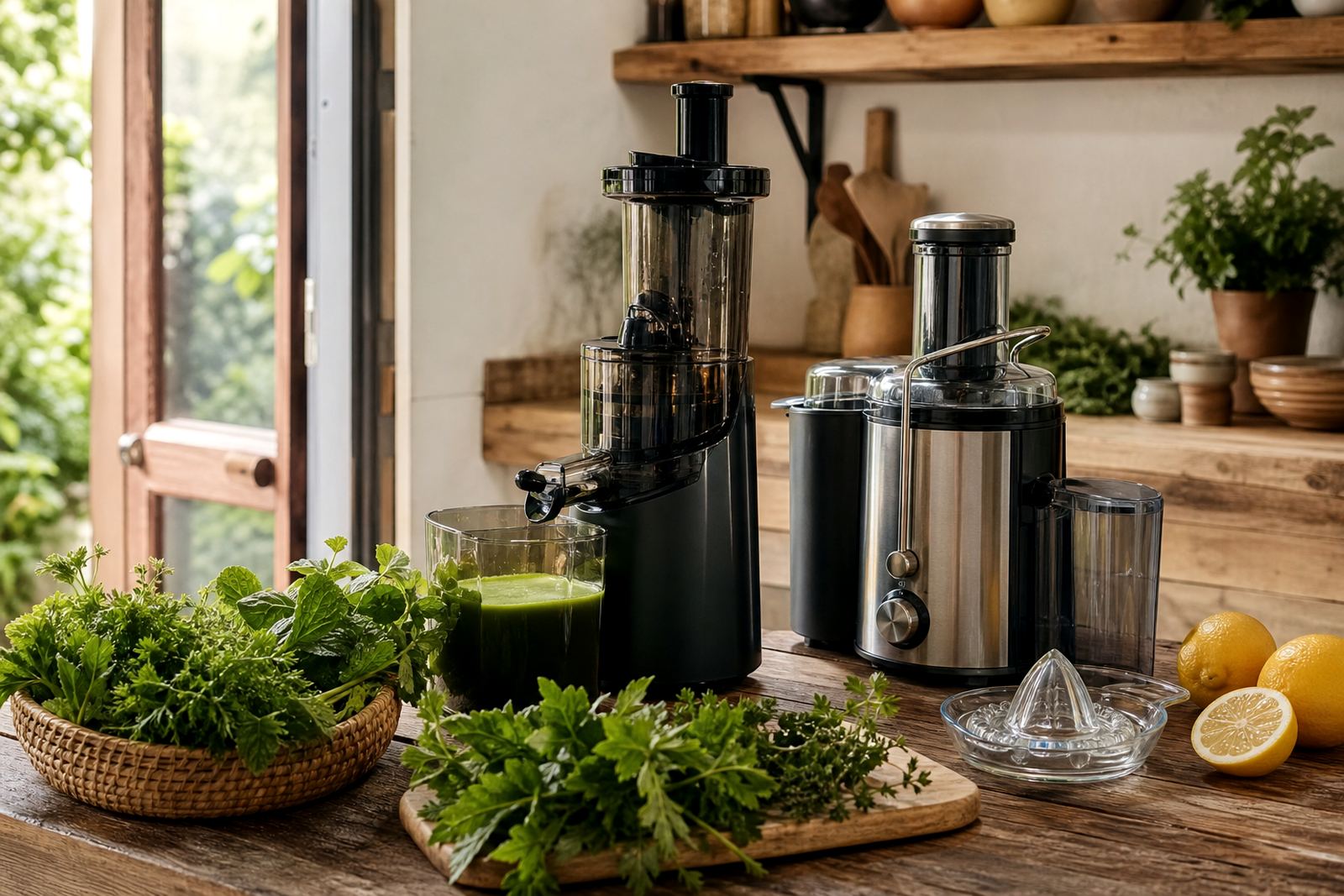
In many Cape Town homes, a few naartjies, lemons, celery stalks, spearmint, parsley and a tray of tomatoes can turn into a morning or weekend routine without much fuss. Garden to glass juicing suits households that want to use what is already on hand, rather than buying large supermarket quantities. It also works for families in Paarden Eiland, Stellenbosch and Somerset West where storage space may be tight and the kitchen gets used for more than one task at a time.
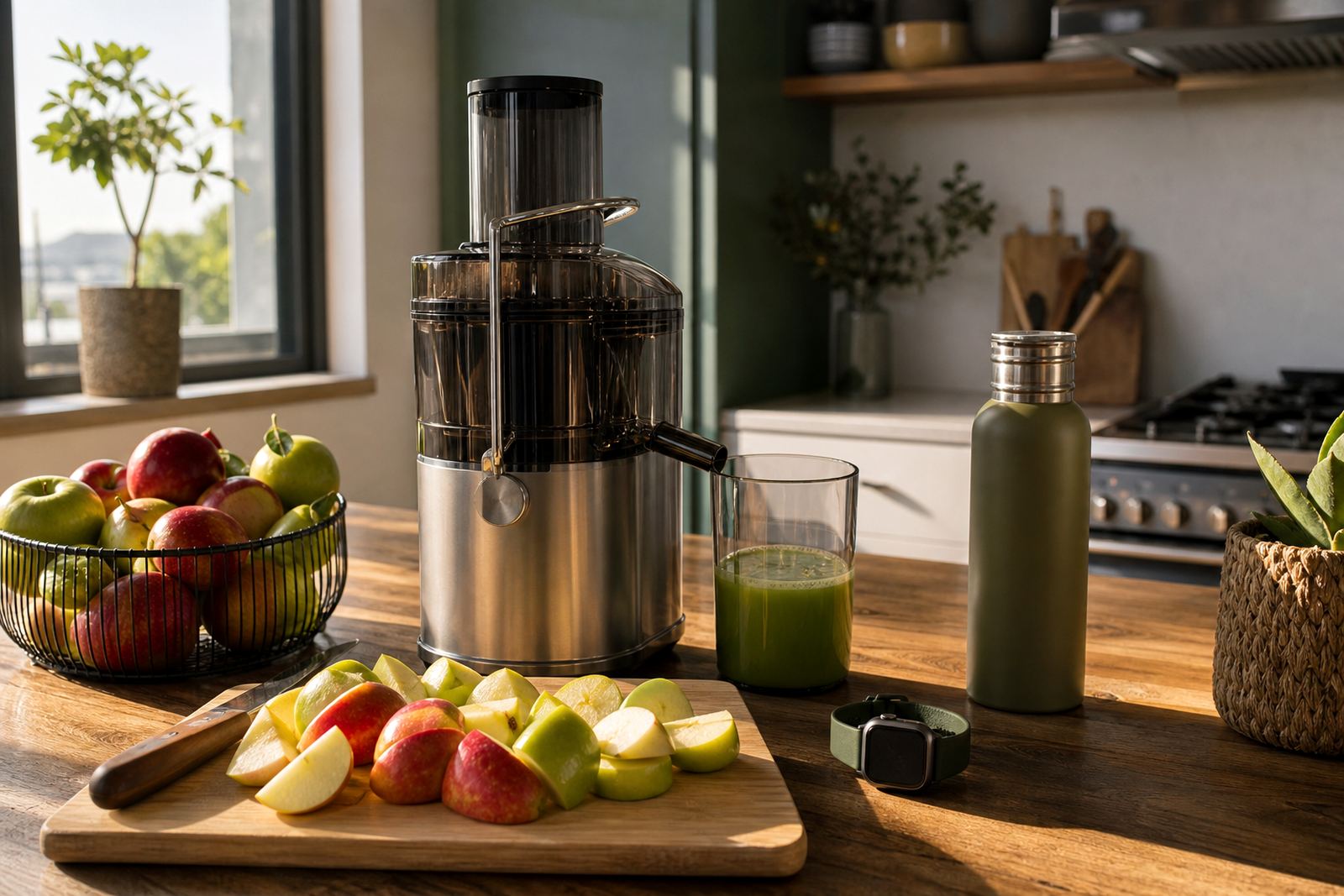
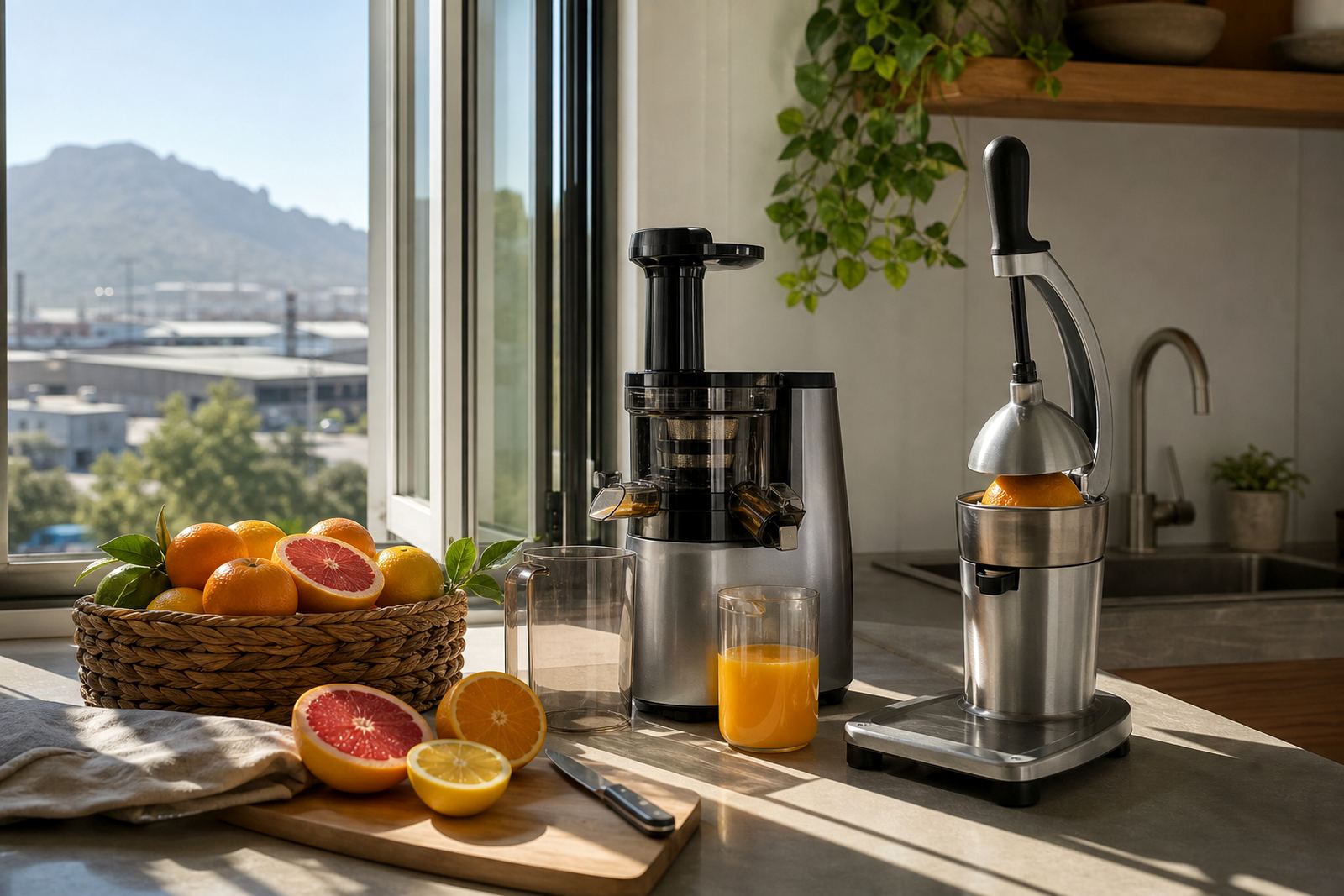
The key is matching the machine to the produce. Soft citrus and leafy herbs need a gentler feed, while harder produce like carrots, beetroot and apples can be handled by both slow masticating and centrifugal units, depending on the batch size and the texture you want. A cold press is often chosen where quieter running, higher juice yield and slower oxidation are preferred, while a centrifugal juicer suits quick runs and harder produce when speed matters more than silence.
Picking the machine that fits your counter space
For a home kitchen, the usual set-up is not complicated: one juicer or cold press, a chopping board, a washing-up bowl or sink area, a storage container for cleaned produce, and a small brush set for screens and seals.
- Slow masticating juicers: better for leafy greens, herbs and mixed garden produce, with quieter operation and a slower feed speed.
- Centrifugal juicers: useful for fast juicing, especially with firmer fruit and vegetables, but usually noisier and more foamy.
- Cold presses: suited to households that want a slower process, careful extraction and less heat build-up during long runs.
MiniPress supports home users across Cape Town, Johannesburg, Durban, Pretoria and George, with delivery that suits both city flats and freestanding homes. For households in coastal areas like Durban and Cape Town, choosing parts that are easy to dry and store matters because humidity can affect seals, lids and screens if they are put away still damp.
A practical counter layout for small kitchens
The safest layout is the one that keeps raw produce, washing water and the machine in a clear line. Put the juicer near a sink if possible, with enough space for the pulp bin or waste container to sit without wobbling. Keep a second cloth or tray nearby so wet produce is not placed directly on wood or painted surfaces. If you are working with glass bottles or jars, store them a little away from the plug point to avoid knocks during cleaning.
For homes that juice citrus and herbs from the garden, a pre-rinse station helps. Remove leaves with obvious soil, rinse fruit under clean water, and trim damaged spots before feeding the machine. Good food safety practice is straightforward: wash hands, keep blades and screens clean, and do not leave leftover juice standing warm on the counter for too long. In summer, especially in warmer inland towns, this matters more because heat changes how quickly fresh juice should be handled.
- Leave enough room to open the lid fully without scraping the wall or splashback.
- Keep the brush, pusher and screen together so the clean-up is not split into three trips.
- Use a stable plug point and avoid loose extension leads where children or pets move around.
- If the kitchen is busy, separate raw produce prep from the area where washed parts are drying.
Cleaning habits that keep the machine usable
A garden-to-glass routine can become frustrating when the screen blocks up or the seal starts weeping because the unit was not rinsed properly. For most household machines, the best habit is to rinse parts immediately after use, before pulp dries onto the mesh or around the auger. Deep clean guidance is useful when a household uses fibrous herbs, beetroot, celery or citrus pith often, because those ingredients can leave residue in corners and around the feed chute.
Typical maintenance help includes screen care, seal replacement, leak troubleshooting, noise vibration checks, storage care and cable plug checks. These are not dramatic fixes, just the practical things that keep a kitchen appliance working as expected. A household that juices three or four times a week may also benefit from a routine care plan, especially if the machine is shared between several people and put away and brought out repeatedly.
A common mistake is leaving the machine assembled while wet, or storing the rubber parts tightly sealed in a container. That can trap moisture and create smells. Dry the parts properly, keep them out of direct sun, and do not use abrasive scourers on mesh screens because they can damage the surface and reduce performance.
Common slips that waste good produce
Garden produce is often more variable than shop-bought fruit. One day the lemons are small and thin-skinned, the next day the mint is stringy and the celery is coarse. That means feed speed and prep matter. With slow masticating machines, pushing too hard can cause pulping in the chute. With centrifugal units, overloading soft herbs can turn the batch frothy and leave more liquid in the waste.
The other mistake is not planning for the pulp. If a household is juicing daily, the waste container needs to be emptied quickly and the juicer should not be left packed with wet fibre. For households in Paarden Eiland or other coastal areas where kitchens can be humid, this is even more important because damp pulp can create a smell by the next day.
- Do not feed whole citrus peels unless the machine instructions allow it.
- Do not overload leafy herbs with hard fruit in one go, mix the batch steadily.
- Do not ignore small leaks around the spout or base, as they often get worse with use.
- Do not store parts while still warm and wet, especially seals and screens.
Budget ranges for a home juicing corner
A basic home juicing corner can be set up without taking over the whole kitchen, but the price range depends on whether the household wants quick extraction, a quieter machine or a cold press that handles a wider mix of produce. For many South African homes, the main spend is the machine itself, followed by spare parts, brushes and storage containers. Delivery across South Africa also helps households outside Cape Town avoid driving around for a small appliance.
As a working guide, compact centrifugal juicers often sit in a lower budget bracket, while slow masticating juicers and cold presses usually cost more because of their slower extraction method and added parts. A sensible home budget can also include one or two replacement screens, a spare seal and a small cleaning kit. When the household uses garden herbs and citrus often, a slightly better built machine can save time on clean-up and reduce the need for repeated replacements.
MiniPress assists with first time setup, spare parts help, seal replacement, brushes and tools, routine care and video support calls. For a household setting up a garden-to-glass routine in Cape Town, Johannesburg, Durban, Pretoria or George, that kind of support can be useful when the machine is being used by different family members and needs consistent handling from week to week.