
When the spinach basket becomes part of the week
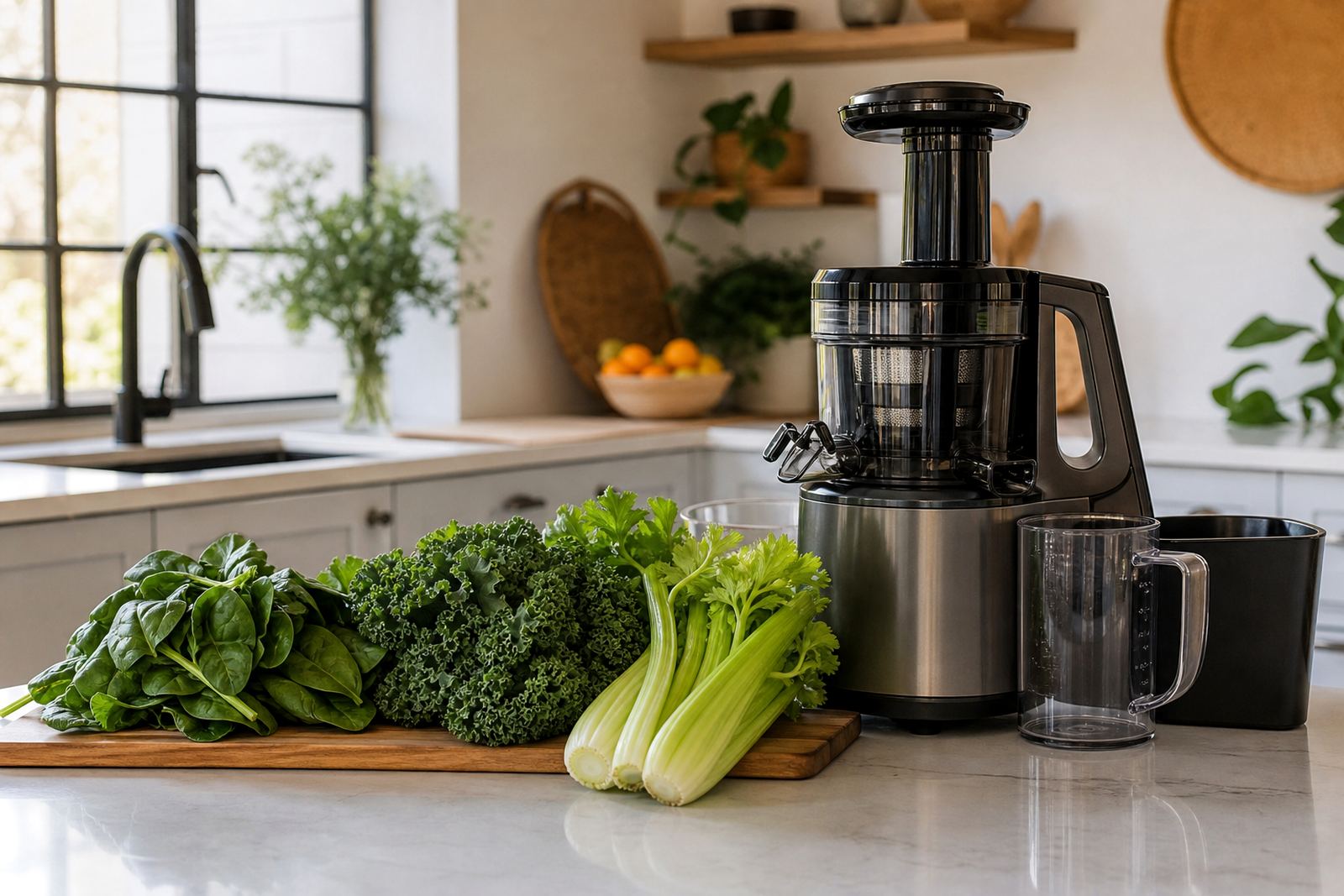
This use case suits homes that prep bunches of spinach, kale, celery, parsley, wheatgrass or similar greens more than once a week. The goal is not speed for its own sake, but a controlled feed that lets the machine work evenly without clogging. In a kitchen with limited counter space, it helps to set aside one clear section for rinsing, chopping and feeding, then another spot for the finished juice and cleaning items.
For leafy loads, the client situation is usually a mix of convenience and consistency. The family may want one appliance that can handle occasional fruit too, yet still manage greens without too much pulping or splatter. A slower feed rate matters here, because overfilling the chute or pushing too hard often leads to strain, more foam and a mess on the counter. In coastal homes such as Durban or Somerset West, the extra moisture in the air also means parts should be dried properly after washing, otherwise seals and screens can hold odour or staining.
The machine set that suits greens without drama
For this routine, a slow masticating juicer or a cold press is usually the most practical choice. These machines work at lower speeds and use pressure rather than fast spinning, which is helpful for leafy produce that can bind up in a fast chamber. A centrifugal juicer can still work for mixed batches, but with very leafy loads it normally needs more careful feeding and may leave a wetter pulp. That is not a fault, it is just how the machines are built.
Typical equipment for this kind of home use includes:
- A slow masticating juicer or cold press unit with a feed chute suited to chopped greens
- A small chopping board and a sharp kitchen knife for short lengths of celery and herbs
- A jug or bottle with a lid for short-term fridge storage
- A cleaning brush set for the screen, pulp path and seals
- A drying rack or clean tea towel for parts after washing
Food safety matters even when the juice is made at home. Greens should be rinsed well under running water, inspected for sand or damaged leaves and handled with clean hands and clean tools. If produce is very sandy, a second rinse is worth the effort. It is also best to keep raw produce away from uncooked meat surfaces and to wash parts soon after use, not hours later.
Counter layout that keeps the routine calm
A tidy layout makes the difference between a pleasant task and a frustrating one. Place the machine near a plug point that is not exposed to splashes, and keep the feed tray close to the chopping area so the workflow moves in one direction.
In a compact kitchen, one practical arrangement is rinsing at the sink, chopping on the nearest dry surface, then moving the pieces straight to the feed chute in small handfuls. Greens perform better when they are not stuffed in all at once. For homes in George or Pretoria where the kitchen may double as a family prep area, a small dedicated basket for washed leaves keeps the process organised and avoids cross-mixing with other ingredients.
- Keep a bowl for washed leaves and another for trimmed stems
- Feed in short bursts rather than pushing the chamber full
- Leave space for the pulp container and juice jug beside the machine
- Wipe the counter at the end so the screen does not dry on with residue
Where leafy batches usually go wrong
Most problems with greens are caused by overpacking, poor chopping or skipping the clean down. Long fibrous stems can wrap around the auger or clog the outlet, while very wet leaves can create extra froth and slower extraction. A machine that is meant for slow feeding should not be forced. If the motor sounds strained, pause, clear the chamber and start again with smaller portions.
Noise and vibration checks matter too. A loose base or uneven counter can make a well-kept unit shake more than it should. On some tiles or laminated surfaces, a thin mat can reduce movement. Seal replacement and screen care are also part of routine support, because a worn seal or blocked screen often shows up first when the user starts processing more greens than usual. If the juice begins to leak from an odd point, or the pulp comes out unusually wet, it is worth checking the screen, outlet and assembly order before assuming the machine has failed.
Another common mistake is storing damp parts together. Moisture trapped in the chamber can cause stale smells and make the next wash harder. Let the pieces dry fully, especially in humid areas like Durban or the coastal stretch around Cape Town. That small habit helps with food safety and keeps the next use cleaner.
Budget bands for a greens-focused home setup
Budget depends on whether the buyer wants a basic centrifugal juicer, a slower masticating model, or a cold press with a heavier build and more part care. A simple home unit may start in the lower Rand range, while a better greens-focused machine usually sits higher because of the drive system, screen quality and feed control. For families that juice often, it can be wise to allow for spare parts and care items as well, not just the machine itself.
As a working guide, many homes set aside separate amounts for the appliance and the support items. That may include brushes, replacement seals, a spare screen or guidance on first time setup. If the unit will be used several times a week, a little more spent upfront can save hassle later, especially where regular cleaning and assembly accuracy matter.
- Entry level centrifugal juicer: about R900 to R1 800
- Mid range slow masticating juicer: about R2 000 to R4 500
- Cold press unit with stronger build and slower operation: about R4 500 to R8 500
- Care items and spare parts: allow a small additional Rand budget for brushes, seals and screen care
Delivery across South Africa matters for customers in Cape Town, Johannesburg, Durban, Pretoria and George, and also for nearby areas such as Stellenbosch and Somerset West. For a leafy greens routine, the right machine is the one that fits the kitchen space, the cleaning habit and the amount of produce being handled, not just the headline feature list.
Support that keeps the weekly prep moving
MiniPress supports this use case with first time setup, deep clean guidance, spare parts help, seal replacement, screen care, leak troubleshooting, noise vibration checks, storage care, cable plug checks, brushes and tools, a routine care plan and a video support call. That support is useful when the machine is doing the same kind of work every week and small faults need early attention rather than guesswork.
For homes that rely on regular greens prep, the practical rhythm is easy to follow: chop small, feed slowly, clean promptly and dry parts well. That keeps the machine ready for the next round and helps the user avoid avoidable wear. It is ordinary kitchen discipline, but it makes a real difference.