Morning service in a room that cannot afford delays
A guesthouse breakfast bar usually works in a narrow window, with toast, fruit, tea and juice all moving at once. The juicer or cold press has to fit beside the sink, stay stable on a counter and be ready for repeated use between the first tray out and the last late riser. In Cape Town, Stellenbosch and Somerset West, many guesthouses also deal with salt air and damp mornings, so the finish, seals and cables need regular checking.
For this kind of setup, the best choice is not always the biggest unit. A machine with a manageable feed chute, straightforward locking parts and a juicing path that can be rinsed quickly is often a beter fit than a bulky machine that takes two staff members to move. The aim is fast turnarounds with less clutter around the basin and no juice drips on the service counter.
The machines that suit guesthouse counters best
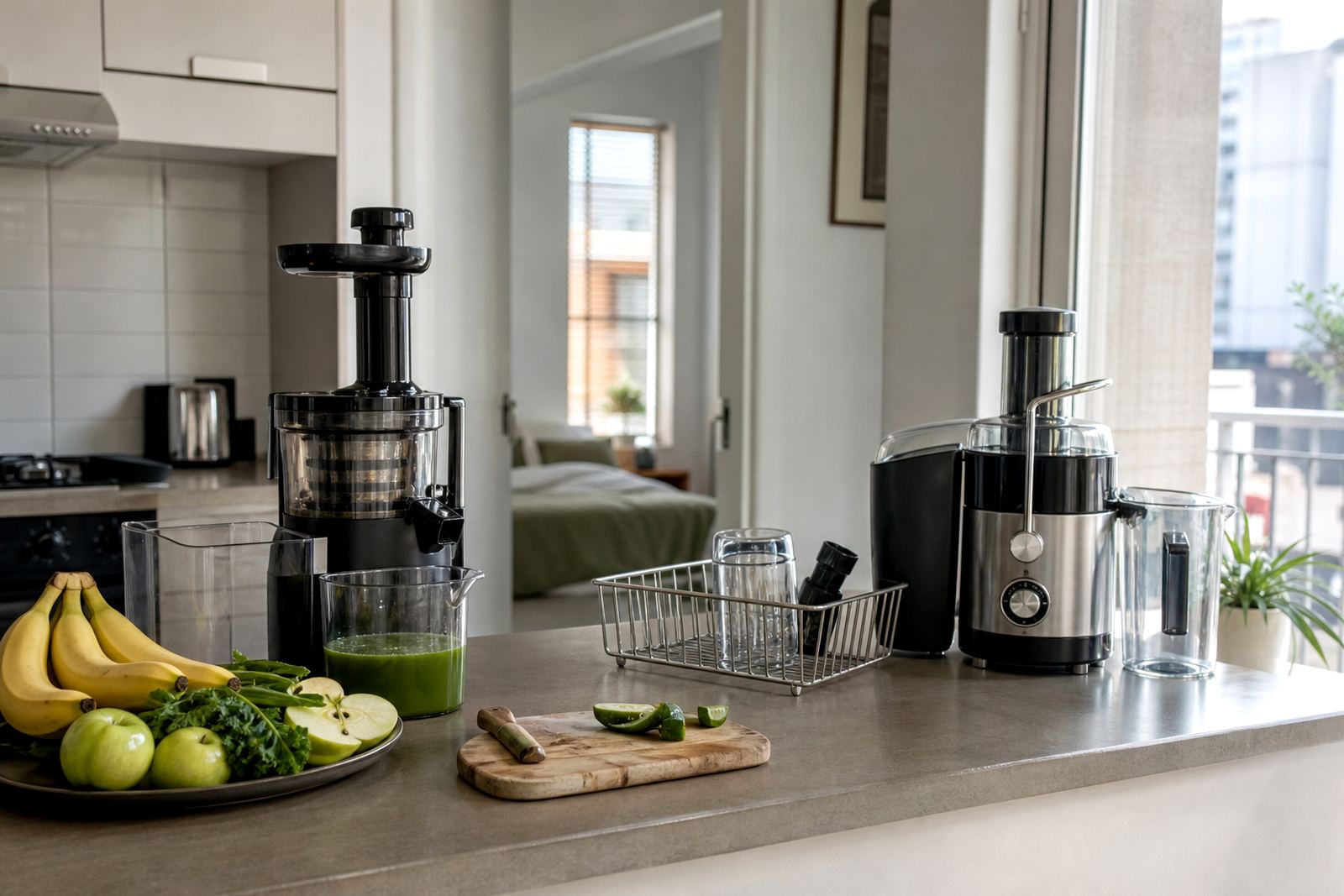
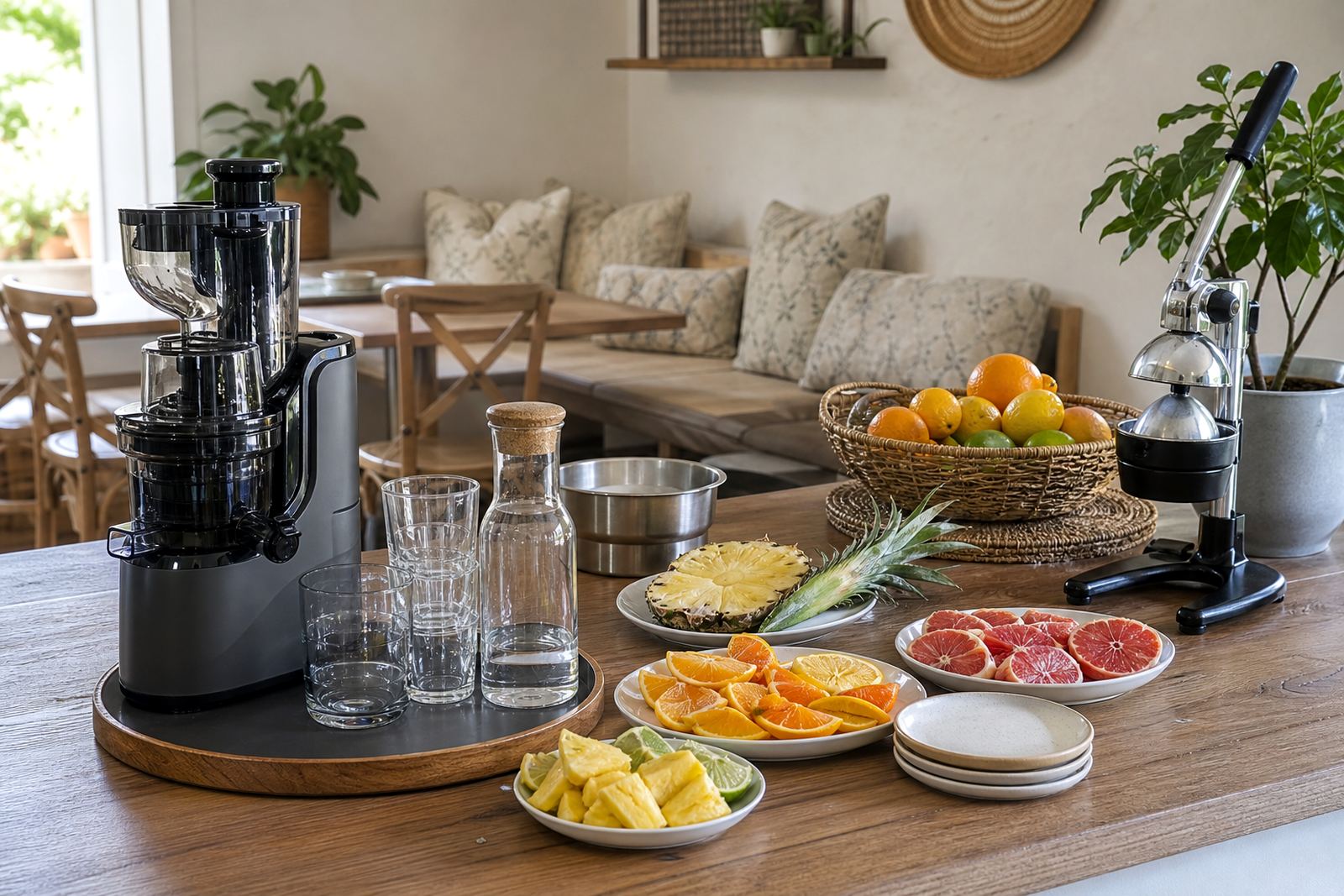
Guesthouses often mix fruit service with breakfast prep, so the equipment set tends to be practical rather than specialised. A slow masticating juicer works well where guests expect quieter operation and cleaner extraction from leafy greens, apples, citrus segments and softer produce. A centrifugal juicer suits busier service where speed matters and the operator needs to process larger amounts of fruit in less time. A cold press is useful when the menu leans toward gentler pressing and a more controlled output for immediate pouring.
- Slow masticating juicer for quieter, steadier service
- Centrifugal juicer for quicker output during peak breakfast time
- Cold press for controlled pressing and careful batch prep
- Extra strainers, screens and juice containers for rotation
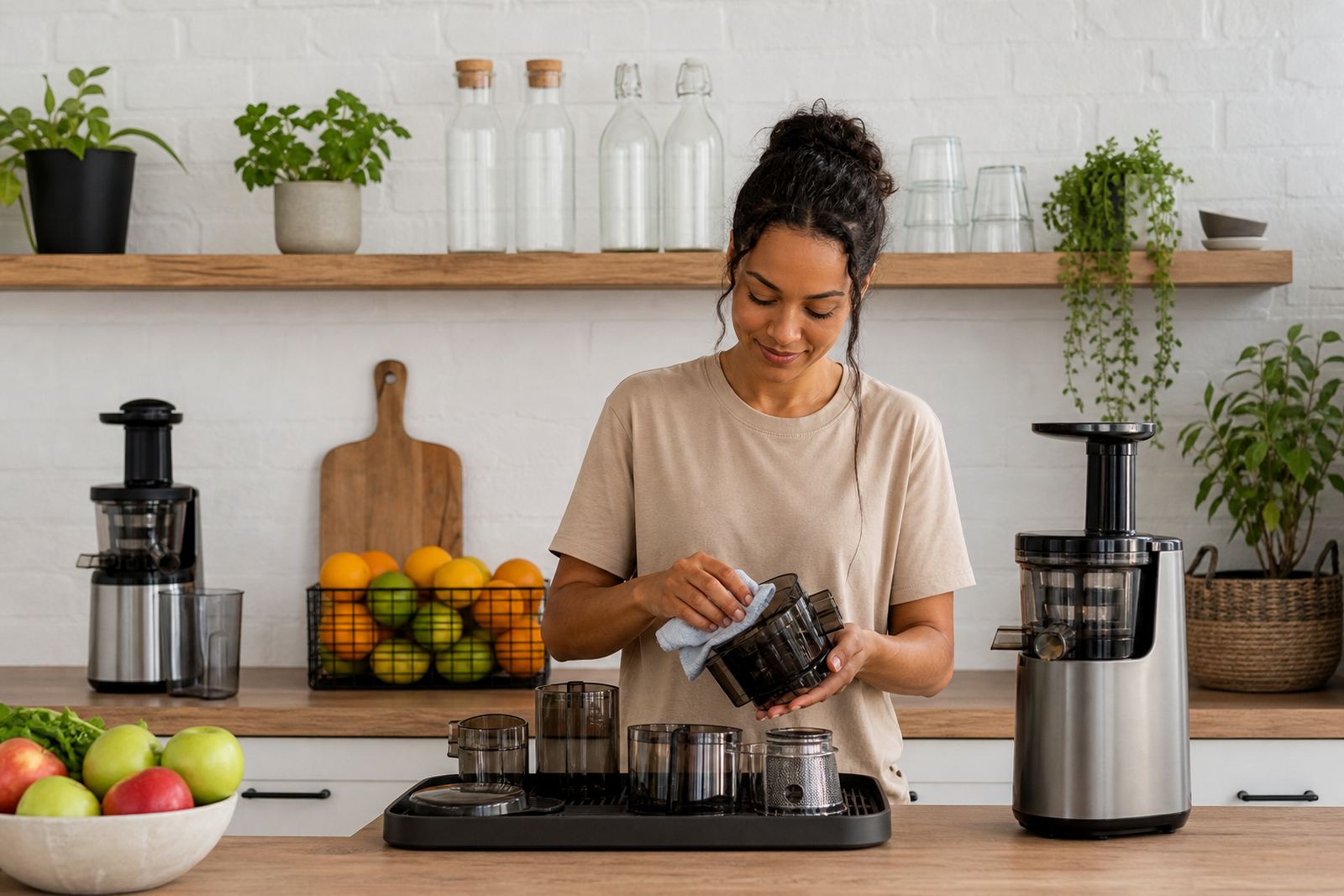
- Cleaning brushes, soft cloths and a drying rack near the sink
For a guesthouse, one main machine and one backup container set is often enough. If the breakfast area serves 6 to 20 guests at a time, the key is to match output to the room count, not to overbuy and leave equipment underused.
Where the station should sit so staff can move without crossing paths
The best breakfast bar layout keeps fruit, washing, juicing and serving in one short line. That means the prep board sits near the sink, the machine stands on a flat surface away from loose cords, and the pouring point is closest to the guest side of the counter. If the area is cramped, a wall shelf for spare jugs, screens and brushes saves time and keeps the counter clear.
- Leave enough space to open the lid and remove the pulp bin without twisting
- Keep water, towels and brushes within arm’s reach
- Use a non-slip mat under the unit to reduce vibration on tile or stone
- Place the machine away from heat sources like toasters and urns
- Store spare parts in labelled containers so morning staff do not hunt for them
In Johannesburg, Pretoria and Durban, where guesthouse service can run harder during peak travel periods, a tidy station reduces handling mistakes and cut down on service delays. It also helps if the machine can be unplugged and wiped down quickly before the next seating.
Cleaning habits that keep the breakfast bar food-safe
Food safety in a guesthouse setting starts with what happens after each batch, not after the whole breakfast rush. Juice residue left in screens, spouts and seals can dry quickly and become harder to remove. Warm water, mild detergent and a soft brush are usually enough for daily cleaning, while deeper care should cover the seals, pulp outlet and any removable mesh or screen parts.
Operators should also check for cracked seals, worn gaskets and loose fittings, because small leaks can wet the counter and create a slip risk near the serving line. If the machine starts making more noise than usual, vibrating too much or showing signs of poor output, it is worth checking alignment and screen condition before the next service. Storage matters too: dry parts fully before packing them away, especially in humid coastal areas where trapped moisture can cause odours or staining.
Budget ranges in Rand for a small hospitality counter
Budget depends on how much fruit the breakfast bar handles each morning, how often the machine will be used and whether the guesthouse wants one unit or a small back-up arrangement. Entry-level home juicers for light guest use generally start around R1,500 to R3,500. Mid-range units with better housing, easier cleaning and steadier output can sit around R3,500 to R8,000. Cold presses and heavier-duty models for more regular service can range from R8,000 to R18,000 or more, depending on size and features.
It is worth setting aside money for the parts that wear first. A set of spare seals, a replacement screen, a cleaning brush kit and a safe storage container may only add a few hundred Rand, but they can prevent avoidable downtime. For guesthouses in Paarden Eiland, George and the Cape Winelands, this is often a better spend than paying for emergency repairs after a busy weekend.
The mistakes that slow breakfast service and upset the prep rhythm
The most common mistakes are practical ones. Some guesthouses buy a machine that is too large for the counter, then struggle with storage and cleaning. Others place the unit too far from the wash area, which means drips get carried across the room. Another issue is using the same jug or container for raw fruit, finished juice and rinse water, which creates confusion and extra washing.
- Choosing output size without measuring the counter space
- Ignoring cable length and plug position near the server area
- Leaving pulp bins to overflow during the first breakfast rush
- Forgetting to inspect screens, seals and baskets after each service
- Storing damp parts in closed cupboards
A better approach is to plan the station around staff movement and the way guests queue. A small guesthouse does not need a complicated setup, just equipment that cleans quickly, fits the space and can handle the morning rush without fuss.
Support when the breakfast bar needs a hand
MiniPress works with guesthouses across South Africa from our Paarden Eiland base, with delivery to Cape Town, Johannesburg, Durban, Pretoria and George, plus nearby service areas such as Stellenbosch and Somerset West. The support side is useful when staff need help with first time setup, deep clean guidance, spare parts help, seal replacement, screen care, leak troubleshooting, noise vibration checks, storage care, cable plug checks, brushes and tools, routine care plan or a video support call.
For a hospitality counter, that kind of backup helps keep the breakfast routine steady. It also means the machine can be used with more confidence by early-shift staff, even when the day starts before most people are awake.