What a Saturday juicing run looks like at home
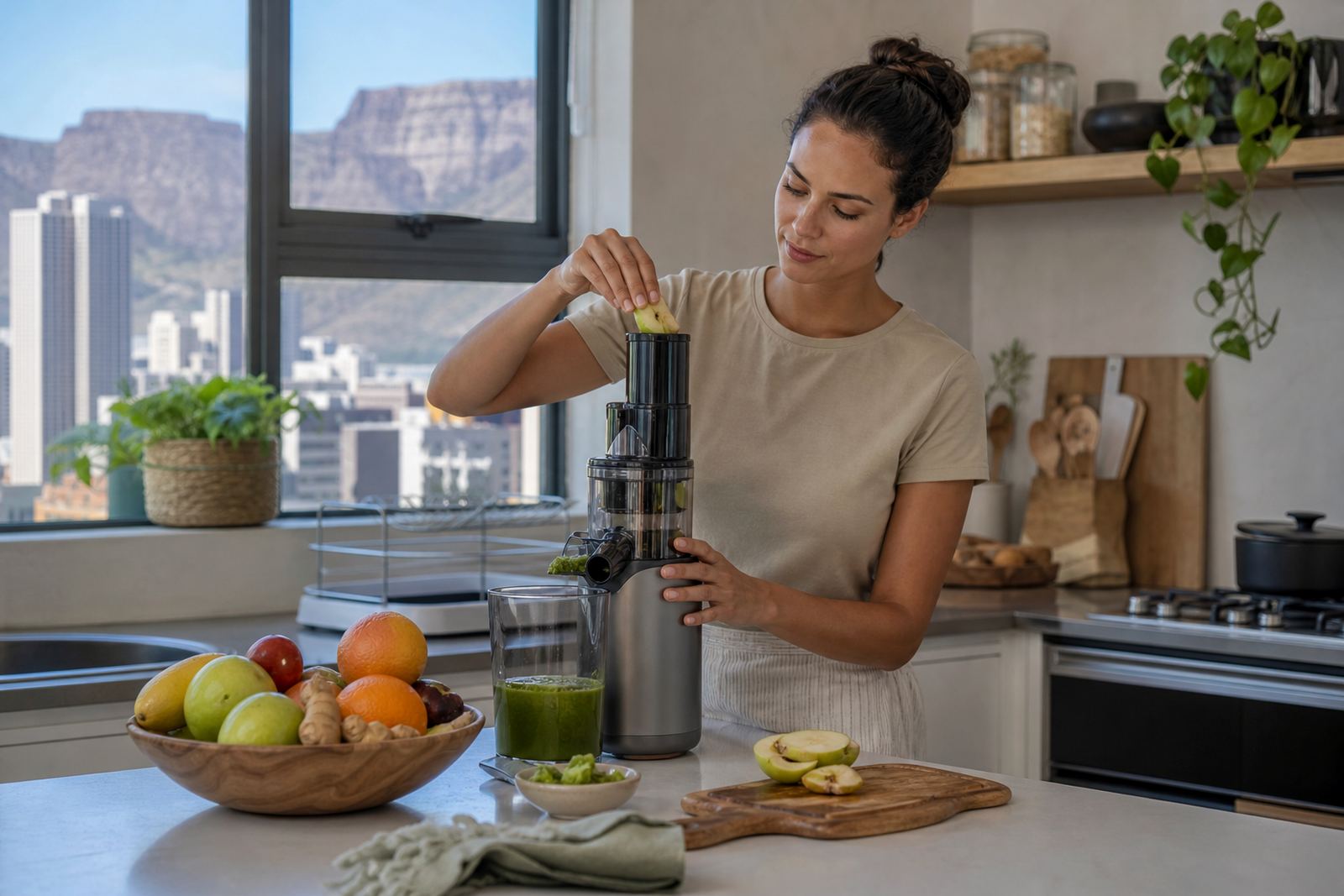
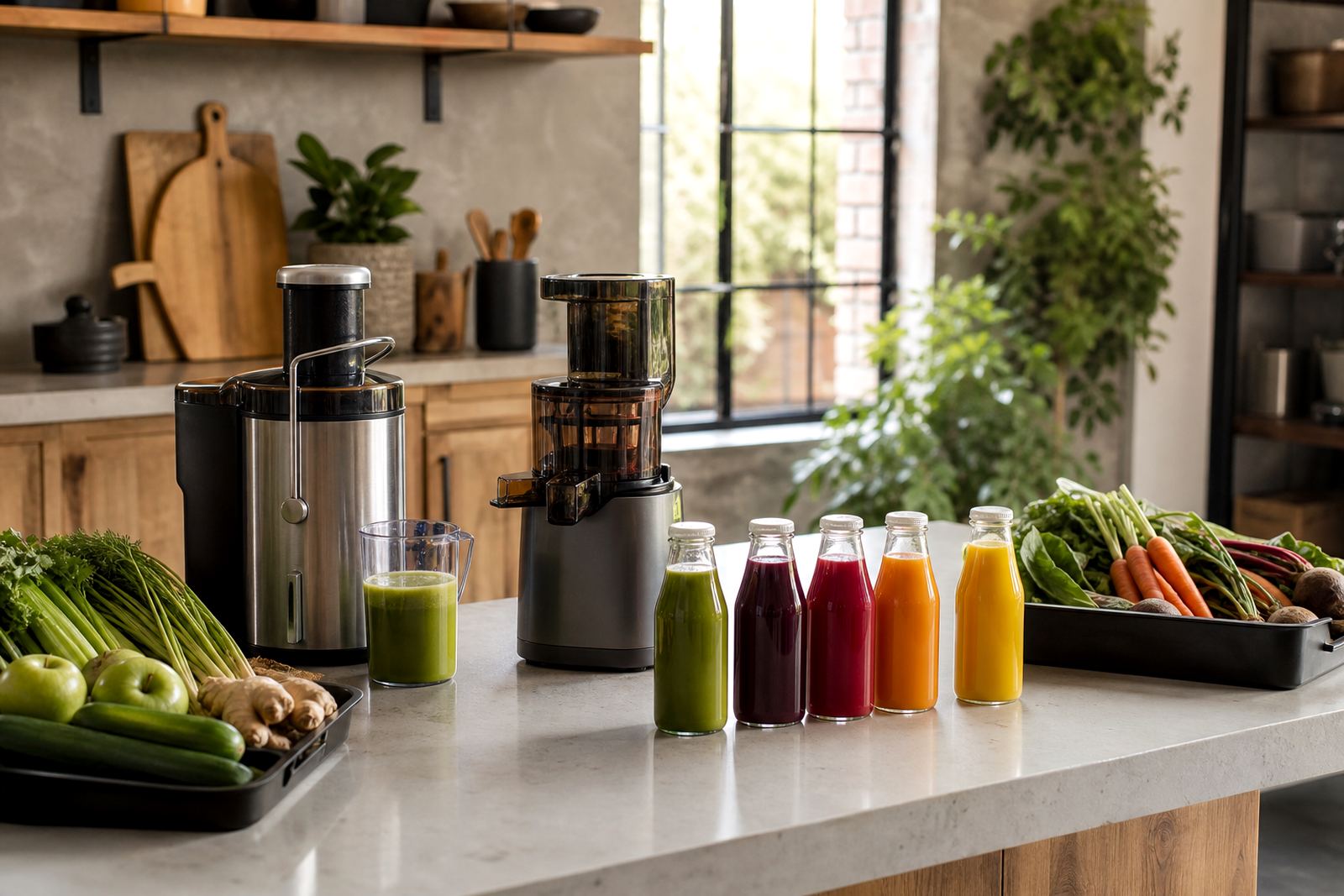
Weekend batch prep usually starts with a pile of washed produce, a clear counter and enough bottles to hold the finished juice without crowding the fridge. In a family kitchen, the job is less about making one glass at a time and more about moving in a steady line from prep to juicing to bottling, with lids and labels ready before the machine is switched on.
Households in Cape Town, Johannesburg, Durban, Pretoria and George often plan around shopping days and fridge space.
- Wash produce first and keep soft fruit apart from harder items that bruise easily.
- Set out bottles, measuring jugs and a tray for dripping pulp before you begin.
- Leave room in the fridge for the full batch, not just the first few bottles.
- Plan for a quick rinse between batches if you are mixing flavours.
Choosing the machine for a bigger household routine
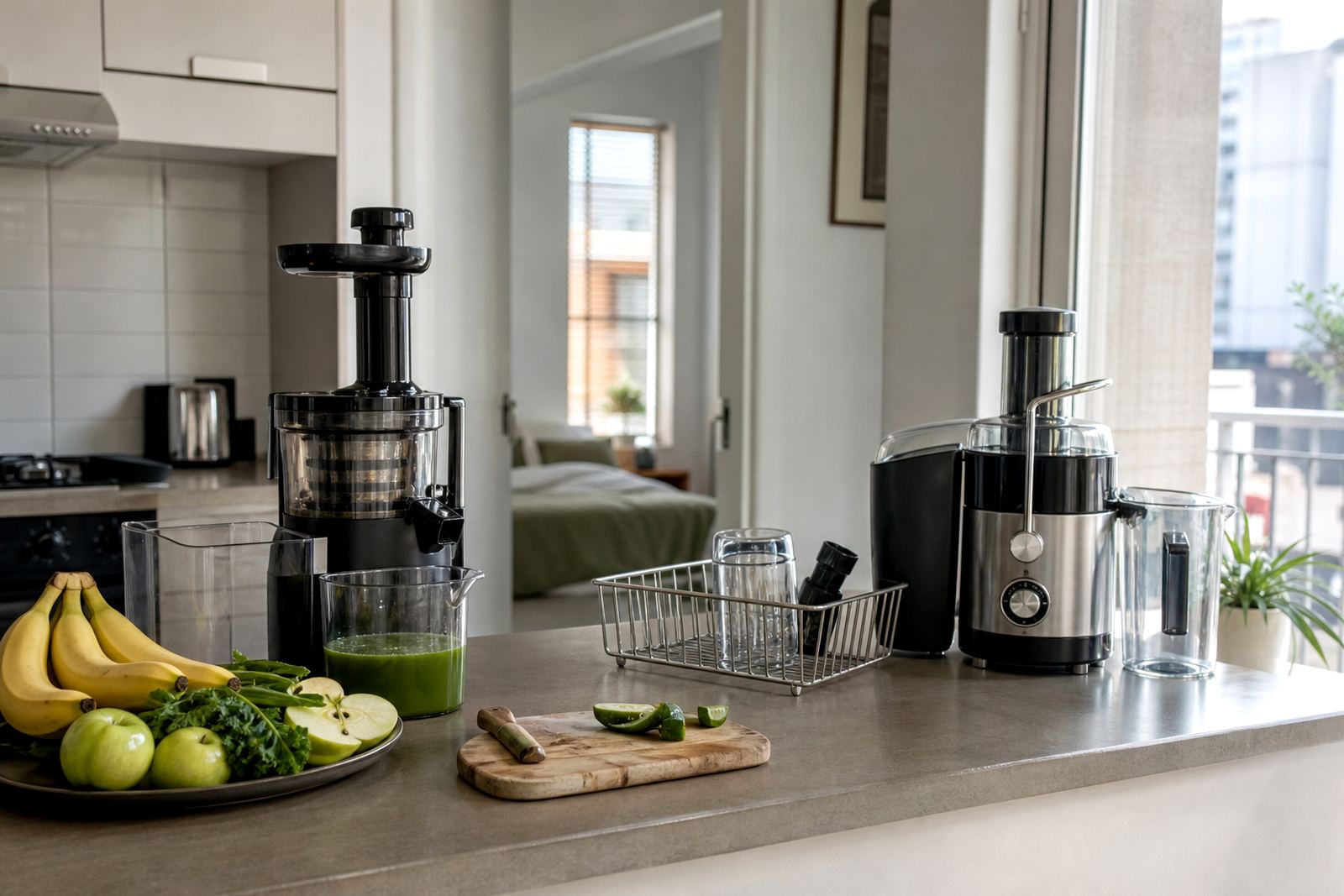
Slow masticating juicers are often preferred where households want a calmer pace and good juice yield from leafy greens, herbs, celery and firmer fruit. They feed produce through a narrow chute and press it with an auger, which usually leaves drier pulp and can suit families that juice in stages over a morning.
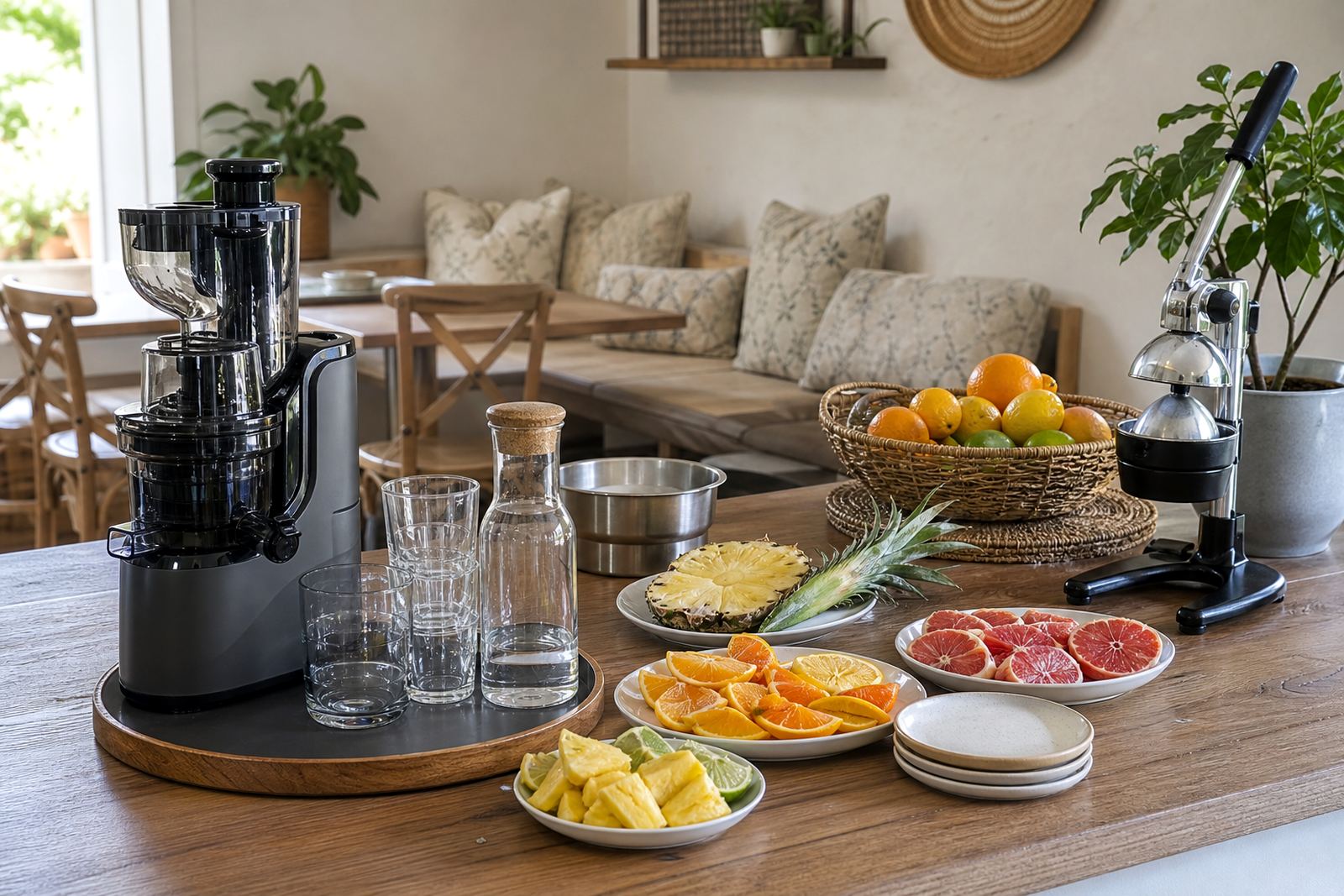
Centrifugal juicers work faster and can suit a kitchen where fruit is chopped and processed quickly, especially when the batch is large and the aim is to finish before the school run or braai prep. Cold presses are used where the household wants to prepare juice or juice-based mixes with less heat build-up during extraction, though they still need careful cleaning and correct assembly.
- Slow masticating: lower speed, steadier output, usually better for leafy ingredients.
- Centrifugal: quicker feed rate, useful for high-volume fruit and short prep windows.
- Cold press: suited to measured batches where storage, texture and careful handling matter.
The counter plan that saves time and mess
A good batch prep layout keeps the work moving in one direction. Produce should move from washing to chopping, then into the juicer, then into strainers or bottles, with the waste bin and rinse bowl nearby. If the machine sits too close to the edge, the vibration from a centrifugal unit can shift it during use, while a slow press needs enough space for trays, juice jugs and the pulp outlet.
Homes with smaller kitchens often use a single corner as the juicing zone and clear the rest of the counter first. That helps when the household is making 3 to 6 bottles at once, or when children and other family members are moving through the kitchen and the prep area needs to stay tidy.
- Keep a dry towel under the machine to catch splashes and stop slipping.
- Place bottles in a line by size so filling does not stall the process.
- Store labels, marker pens and funnel parts together in one drawer or container.
- Use a separate board for citrus, root vegetables and leafy items to limit flavour carryover.
Cleaning habits that protect food safety
Batch prep creates more residue than a single serving, so cleaning cannot be left until the next day. Juice left on seals, screens and feed parts can dry hard and attract odours, while pulp in a closed chamber can spoil quickly in warm weather. For households using the machine over a weekend, it is best to rinse removable parts soon after use and wash them with warm water and mild dish soap.
Food safety also depends on storage. Juice should go into clean, food-grade containers with tight lids, then into the fridge without delay. If a batch is made during a power cut, households often keep the fridge closed as much as possible and avoid leaving fresh juice on the counter. In coastal areas, drying parts fully matters because moisture left in corners can lead to a stale smell or mildew.
- Check the screen, seals and pulp outlet for trapped fibres after every session.
- Do not reuse bottles that still carry old odours or sticky residue.
- Air-dry removable parts on a clean rack before packing them away.
- Replace cracked lids, worn seals and damaged screens before the next large run.
The mistakes that turn a good batch into a frustrating one
Most problems with weekend batch prep come from rushing the setup. Overloading the chute can jam the machine, while forcing wet produce too quickly can leave the pulp sloppy and the yield uneven. Another common mistake is filling every bottle before checking fridge space, which means the last few containers end up squeezed into a warm shelf or balanced in the door where the temperature is less stable.
Noise and vibration also catch households out, especially in apartments or compact homes in areas like Stellenbosch and Somerset West. A loose base, a bent screen or a tired seal can make the machine shake more than it should. If the cord is strained, the plug wobbles or the unit leaks near the outlet, it is better to stop and have it checked before the next session.
- Do not skip the first rinse because small pulp bits become harder to remove later.
- Do not store juice in open jugs, even for a short time.
- Do not use cracked accessories or a lid that no longer seals properly.
- Do not ignore new grinding sounds or repeated vibration on a flat counter.
What households usually budget for this setup in Rand
Weekend batch prep does not only involve the machine itself. Families also need bottles, spare seals, brushes, replacement screens, cleaning tools and sometimes a second jug or funnel. A smaller centrifugal setup can suit a tight budget when the household wants quicker juicing for a few bottles at a time, while a slow masticating unit or cold press usually sits higher because the machine is built for more controlled extraction and more careful handling.
For many South African homes, the full outlay can range from a few hundred Rand for starter accessories to several thousand Rand for a stronger machine with spare parts on hand. Delivery across the country also matters, especially when a household in Durban or George wants the unit brought to the door and not collected in person. The best value is usually the model that matches batch size, cleaning time and kitchen space rather than the biggest machine available.
- Starter accessories and cleaning tools: about R250 to R900.
- Replacement parts such as seals, screens or brushes: about R150 to R800 depending on the part.
- Home juicer or cold press purchase: commonly from around R1 500 to R6 000 and higher for larger units.