How a compact kitchen changes the juicer choice
In a flat, the best juicer is not always the biggest or the most powerful one. You need to think about cupboard height, counter top depth, plug points, and whether the machine can stand near the sink without crowding the prep area. In many Cape Town apartments, especially where kitchens are narrow, the real test is not juice output but daily handling.
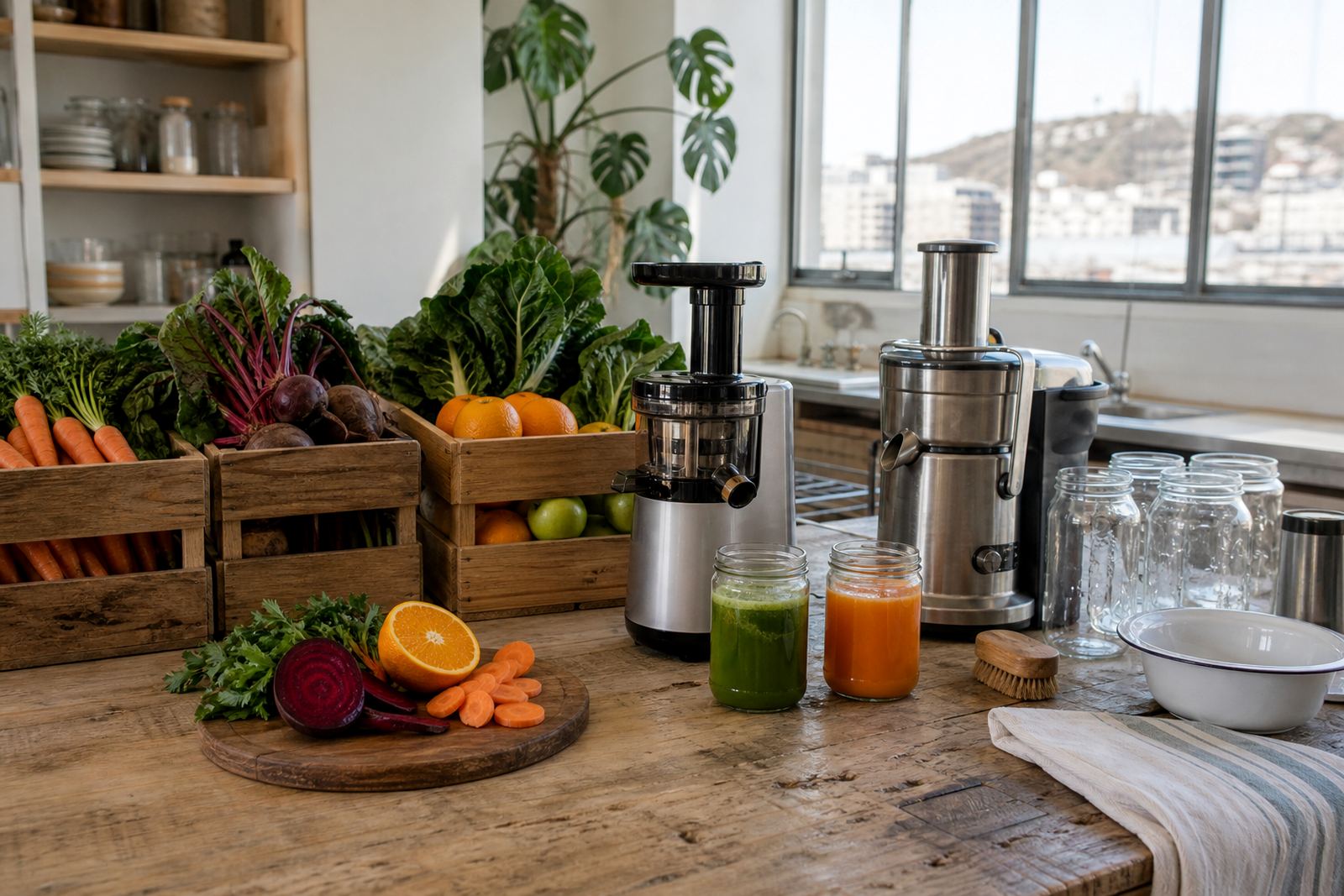
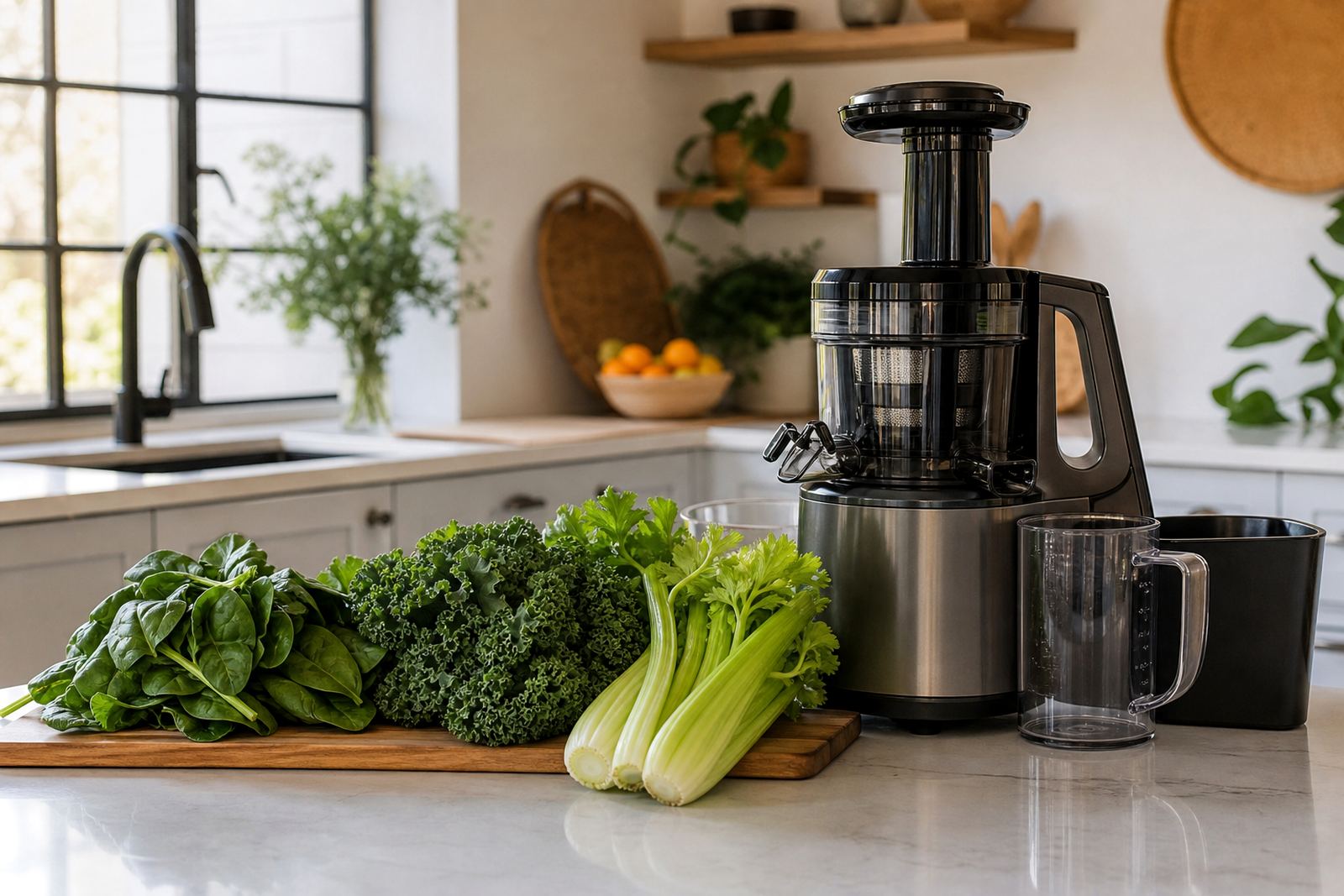
Slow masticating juicers work by pressing produce through an auger at a slower speed. They are generally quieter and can suit households that juice early in the morning, though they usually take more time to feed and clean. Centrifugal juicers use a fast spinning blade and basket, so they are often quicker for apples, carrots and citrus, but they can be louder and may leave more foam. Cold presses are used when a gentler extraction style is preferred, and they are often chosen where users want a cleaner, slower routine with less heat build-up in the process.
For small spaces, the question is often: how often will it be used, and where will it live when not in use? A machine that is easy to lift, has a compact footprint and does not require a full counter permanently can be a better fit than one that looks impressive but causes daily clutter.
A typical small flat juicing set-up that actually works
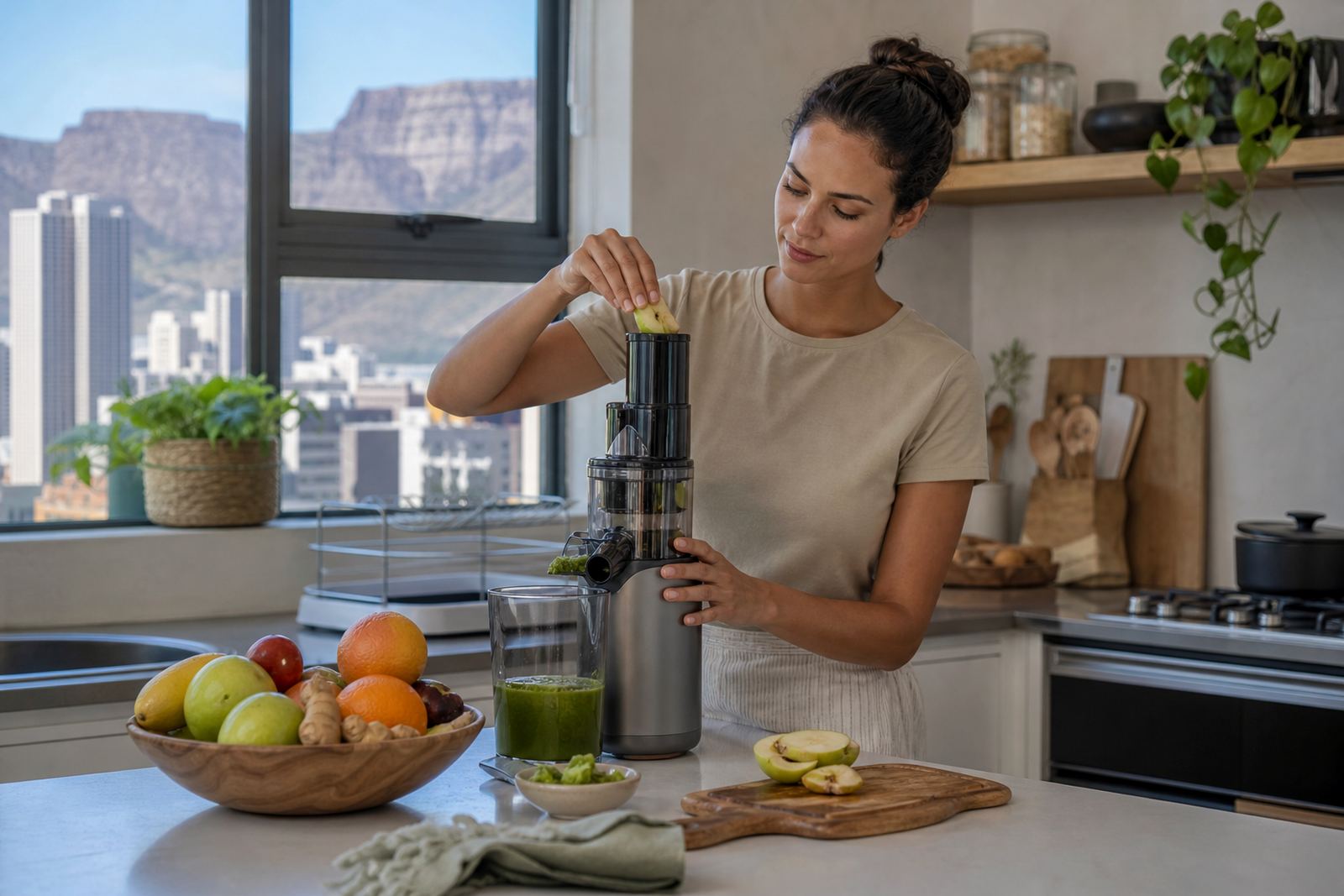
A workable setup usually includes a juicer, a chopping board, a small produce bowl, a jug or bottle for the juice, a brush for the screen and a tray or mat to catch drips. If the kitchen is very tight, keep the set-up to one basket of produce and one wash station so you are not moving items all over the place.
- Juicer or cold press unit with a stable base
- Small cutting board for trimming fruit and vegetables
- Measuring jug, bottle or sealed glass container
- Cleaning brush for pulp basket, screen and feed parts
- Microfibre cloth for wipe-downs and spill control
- Storage box for spare seals, brushes and small parts
A common mistake is buying extra accessories that have no clear storage spot. Another is choosing a very wide model that blocks the sink or kettle area. In a flat, a machine that can be packed away in under 2 minutes gets used more often than one that needs a full rearrange every time.
Layout tricks for apartments from Paarden Eiland to Pretoria
If your kitchen has limited storage, work with the space you have rather than against it. Put the juicer near a plug point and close to the sink if possible, then keep the cutting board in the same zone. That reduces carry distance and keeps the workflow tight. In humid coastal areas like Cape Town and Durban, keep parts dry before storing them so moisture does not sit in seals, baskets or lids.
A shelf or cupboard at chest height is useful for light appliances, but avoid stacking heavy items on top of the juicer box.Keep a small container for cords so the plug does not get tangled with other items.
- Measure cupboard opening height and shelf depth before ordering
- Leave room for the pulp bin or waste container
- Place the machine where the lid can open fully
- Use one dedicated shelf for juicing parts only
Cleaning habits that keep food safe in a tight kitchen
Food safety matters even more in a small flat where prep areas are shared. Wash produce before juicing, rinse parts soon after use, and do not leave wet pulp sitting inside the basket or screen. If residue dries on a filter, it becomes harder to remove and can affect the next use. A quick rinse after each session is better than waiting until the evening. It sounds obvious, but in small kitchens people often leave the job for later and later means dried pulp.
Use warm water and a mild washing liquid, then dry parts fully before reassembly or storage. For plastic lids and seals, check for cracks and staining. For screens and mesh parts, a soft brush is safer than metal scrubbers that can damage the surface. If you use a cold press or slow masticating unit regularly, a monthly deep clean helps with build-up in corners and around the auger.
Keep raw produce and ready-to-drink juice separate. Use clean bottles with lids, and store juice in the fridge promptly. If the machine shows any leak, odd noise or vibration, stop using it until the seals, feet or assembly are checked.
Mistakes that cost space, time and Rand
The first mistake is choosing a machine only for speed. Fast units can be handy, but if the noise is too high for a small apartment block, you may end up using it less. Another mistake is buying a unit that is hard to strip down and wash. In compact kitchens, complicated clean-up is a bigger issue than most people expect.
A third mistake is not budgeting for wear items. Screens, seals, cutters and feed parts can all need attention over time. If the machine sits in a warm cupboard or near a coastal window, storage care matters too because heat and humidity can affect rubber and plastic parts. A fourth mistake is ignoring cable length and plug location, especially in older flats where power points are not always where you need them.
- Do not store wet parts in sealed containers
- Do not force oversized fruit into the feed chute
- Do not run the machine with a loose lid or worn seal
- Do not let pulp block the outlet during use
What a sensible budget looks like in South African Rand
Budget planning for a small flat should include the unit itself, the first few accessories, and any spare parts or support you may need later. Entry-level centrifugal juicers are usually the most affordable option, while slow masticating units and cold presses generally sit higher because of the parts and extraction system. The right choice depends on how often you plan to use it and how much counter space you want to keep free.
As a broad guide, a compact centrifugal juicer may fall into a lower budget bracket, a slow masticating model into a mid-range bracket, and a cold press setup into a higher bracket. It is also worth allowing for cleaning tools, extra seals and a safe storage box. If you are buying for a rental flat, a practical budget often favours a unit that is easy to carry, easy to clean and simple to store between uses.
MiniPress serves customers from Paarden Eiland and ships across South Africa, including Cape Town, Johannesburg, Durban, Pretoria and George. Support can cover first time setup, deep clean guidance, spare parts help, seal replacement, screen care, leak troubleshooting, noise vibration checks, storage care, cable plug checks, brushes and tools, routine care planning, and video support call assistance. Enquiries come through the form on the contact page, which is the cleanest way to get help for a compact kitchen setup.