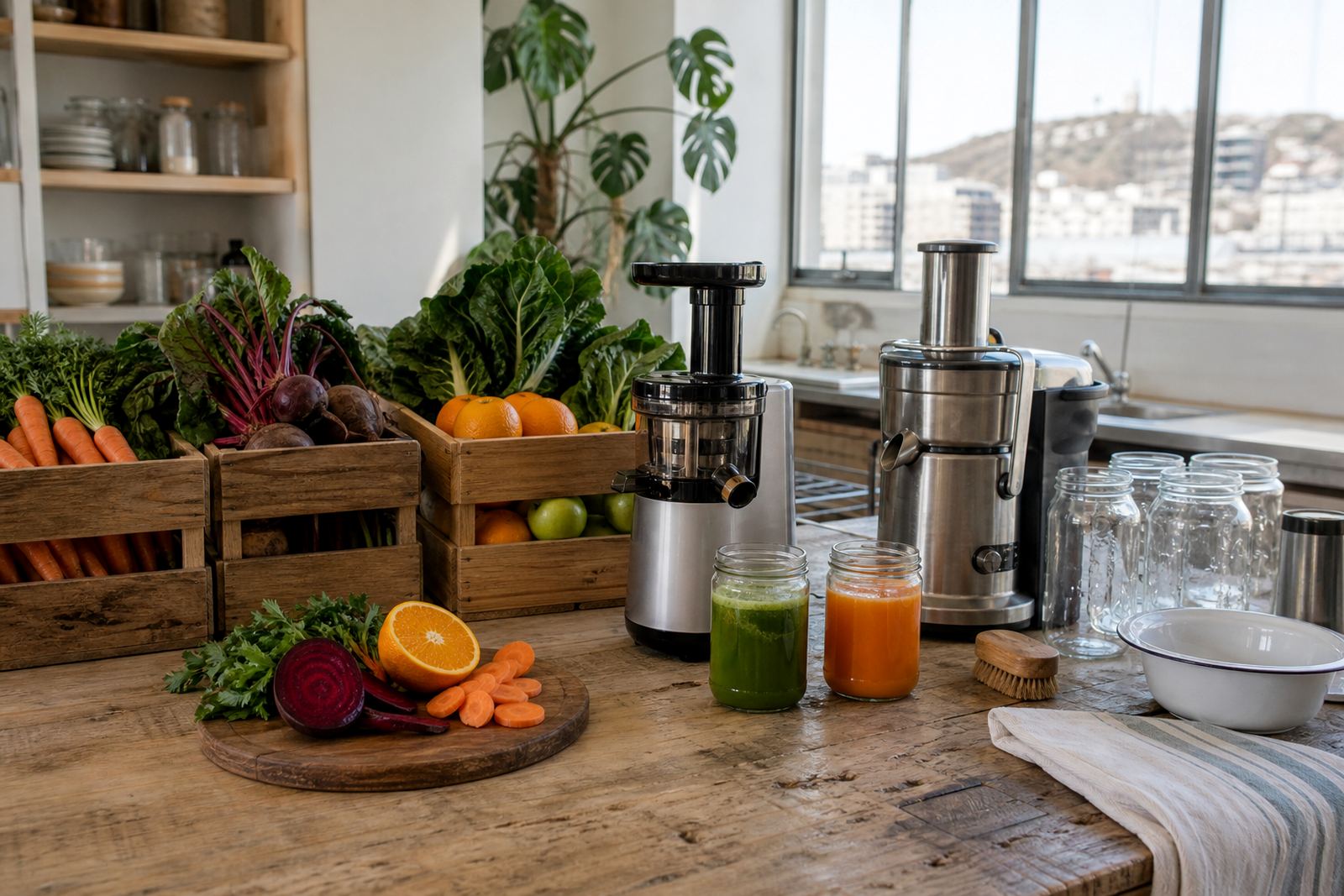
When the market basket changes, the juicer changes too
Seasonal Produce Juicing works best when the machine matches what is actually available in the market basket. In Cape Town that can mean soft stone fruit and berries in summer, then citrus, apples, pears, carrots and beets as the cooler months settle in. A home setup needs to handle those shifts without turning every batch into extra prep work.
A slow masticating juicer suits leafy greens, herbs, softer fruit and mixed seasonal blends where you want steadier extraction and drier pulp. A centrifugal juicer is quicker for apples, carrots and firmer produce, especially when family routines are tight and the ingredients are being processed straight after shopping. A cold press is useful where you want low-speed pressing for more controlled extraction from fruit and vegetables, though the feed prep takes more care.
Typical equipment for a rotating seasonal kitchen
Most households do not need a full commercial setup. A sensible home set usually starts with one main machine, a sturdy chopping board, a sharp knife, a jug for collection and a fine strainer if the texture needs adjusting. In coastal areas like Paarden Eiland, Stellenbosch and Somerset West, storage should keep parts away from damp cupboards and salty air that can affect seals and metal fittings over time.
- Slow masticating juicer for leafy produce, herbs and mixed fruit
- Centrifugal juicer for faster weekday batches and firmer produce
- Cold press for lower-speed extraction and careful batch control
- Brushes and tools for pulp screens, augers and juice outlet parts
- Extra seals or gaskets where a machine is used often
- Covered containers for chilled juice and prepped produce
With a manual clean-up routine ready, the machine is less likely to sit with sticky residue on screens or lids.
How the layout keeps a seasonal batch moving
A kitchen setup needs a clear path from washing to chopping to juicing. Keep the machine close to the sink if possible, with enough counter space for two bowls, one for whole produce and one for prepared pieces. If the ingredients are being washed in advance, dry them well before juicing because extra surface water can thin the result and make cleanup messier.
Place the feed chute, juice jug and pulp bin so you do not cross hands over the moving parts. That matters when handling harder produce like carrots and beetroot, where a slip can happen if the pieces are cut too large. If you use a cold press, allow time for slower feeding and do not overcrowd the chamber.
- Wash produce first, especially where soil or sand is common
- Trim citrus pith, hard cores and bruised ends before feeding
- Cut firm produce into even pieces for steadier loading
- Keep towels nearby for drips around the base and spout
- Store cut fruit in sealed containers if juicing is split across the day
The mistakes that waste produce and wear out parts
One common mistake is using the wrong machine for the produce at hand. A centrifugal unit can struggle with very soft berries or fibrous greens, while a slow masticating machine can be pushed too hard with oversized chunks or frozen pieces. Another problem is feeding wet or dirty produce into the chamber, which can leave grit in the screen and shorten the life of the seals.
Overloading the hopper is also a problem. It forces the motor to work harder and can increase noise and vibration, especially on harder roots. If the machine starts to wobble, stop and check that it is sitting level and that the parts are seated properly. For household users in apartments or cluster homes, that matters when there are rules about early morning noise or shared walls.
- Do not leave pulp sitting inside the screen after use
- Do not force oversized chunks through the feed chute
- Do not soak motor bases or electrical cords in water
- Do not ignore leaks from worn seals or cracked cups
- Do not store wet parts in closed containers
Cleaning habits that suit winter citrus and summer fruit
Seasonal produce leaves different residues. Citrus can leave sticky pith, stone fruit can clog fine screens and leafy blends can trap fibres in corners. A good cleaning routine starts with dismantling the removable parts straight after use, rinsing away the loose pulp and brushing the screen before residue dries. Food safety also depends on clean surfaces, dry storage and separate handling of raw produce and ready-to-drink juice.
Deep Clean Guidance is useful when a machine has been used heavily through a busy holiday period or after a run of softer fruit. Check seals for splits, screens for blockage and lids for trapped odours. If there is a sour smell, a leak or unusual vibration, it is better to sort it early rather than keep running it and hope for the best.
MiniPress supports Cape Town Delivery, Johannesburg Delivery, Durban Delivery, Pretoria Delivery, George Delivery, Stellenbosch Delivery and Somerset West Delivery, with the Paarden Eiland Base handling online orders and support across South Africa.
Budget ranges that make sense for home use
For seasonal juicing, budget depends on how often the machine will be used and how much cleaning time the household is willing to spend. Entry-level centrifugal juicers often suit occasional use and smaller kitchens, while slow masticating units and cold presses are usually chosen for more frequent use and a wider range of produce. The aim is to match the machine to the ingredient pattern not to buy more machine than needed.
As a rough home buying range in South African Rand, a basic centrifugal unit may sit around R900 to R2 500, a slow masticating unit around R2 000 to R6 500, and a cold press around R3 500 to R9 000 depending on capacity and build. Extra parts such as seals, screens, brushes and replacement cups are usually a smaller add-on, but they matter when the machine is used every week through the changing seasons.
For households wanting help with setup, routine care or troubleshooting, MiniPress offers First Time Setup, Spare Parts Help, Seal Replacement, Screen Care, Leak Troubleshooting, Noise Vibration Checks, Storage Care, Cable Plug Checks, Brushes and Tools, Routine Care Plan and Video Support Call.