
Where the juicer sits when people are already in the room
In an open plan home, the main challenge is not the juicer itself, it is the traffic around it. A small counter near the sink works best because fruit can be rinsed, peeled and fed in without carrying drips across the room. If the kitchen opens straight into a dining or living area, it helps to keep the machine just out of the serving line so guests can move past without brushing elbows or knocking over glasses.
Paarden Eiland homes and apartments often have mixed counter depths and narrow walkways, so placement matters. Leave enough space for the lid to open, for a jug to sit under the spout, and for a bowl of peeled fruit to rest nearby. A machine that is easy to lift or slide back into storage is useful when the kitchen also handles braai prep, packed lunches and municipal water restrictions that make washing up feel a bit more deliberate.
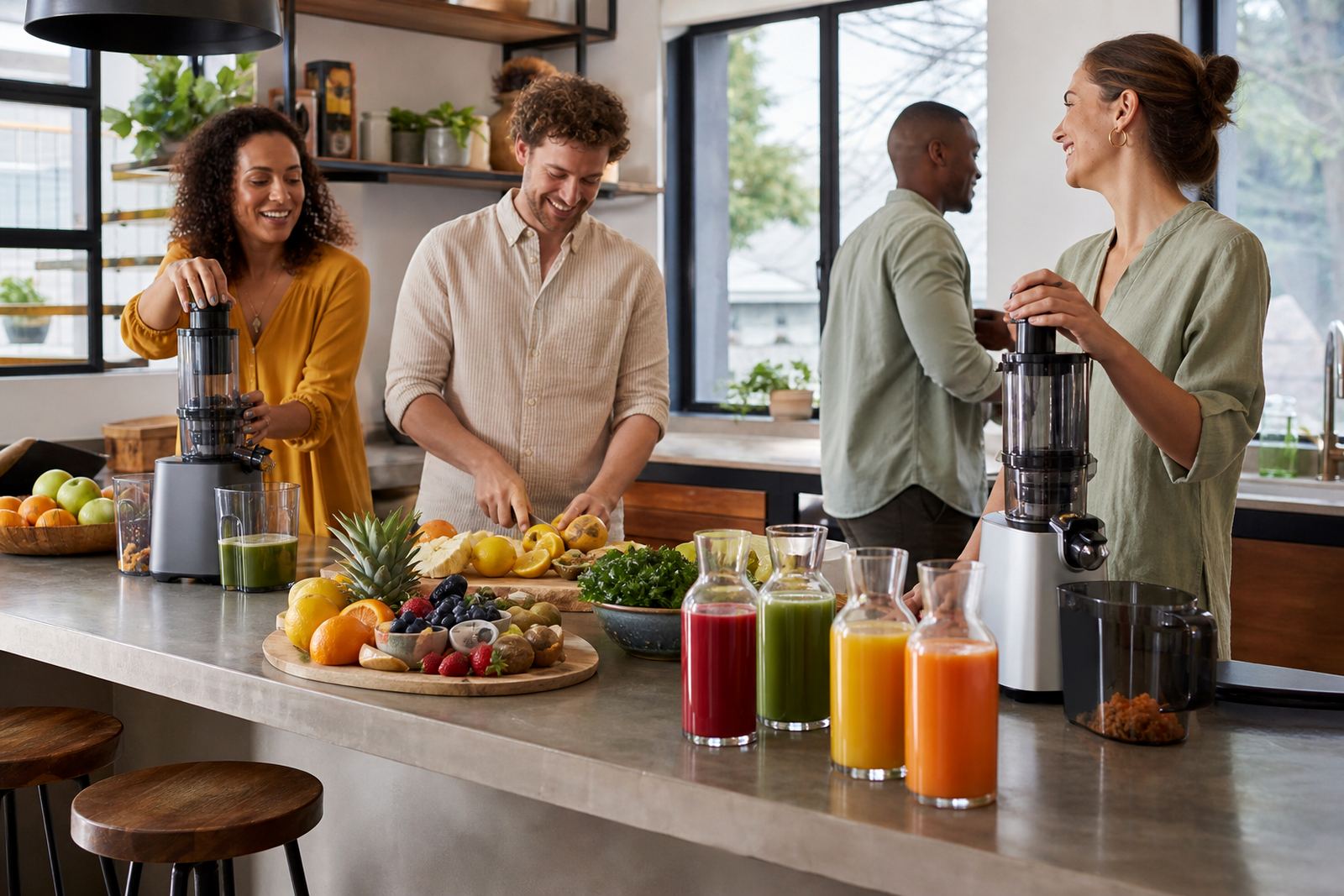
For a calm entertaining setup, think in three zones: feed, serve and wash. That way the juicer can be used during a Saturday breakfast without turning the whole kitchen into a work site.
Picking the machine for the way you host
Slow masticating juicers are a good fit when you want a quieter setup and a smoother pace. They use a slower auger to press produce against a screen, which is handy for leafy ingredients, softer fruit and small batch juice. In an open plan setting, the lower noise level can matter when people are chatting nearby or when a child is sleeping in another room. They usually take a bit more time to feed, so they suit relaxed entertaining rather than rushing through a large crowd.
Centrifugal juicers work faster and suit hosts who want to process apples, carrots or citrus in short bursts. They use a spinning basket and are often better for quick servings before lunch or a Sunday lunch crowd. They can be noisier, which is worth considering in apartments or homes with echoing tiles and high ceilings. A cold press can be a practical choice when you want gentler extraction and better control over texture, especially when the kitchen has to stay tidy while guests are nearby.
Food contact parts should be easy to remove, rinse and dry. A removable pulp bin, a stable lid, a non-slip base and a feed chute that suits your usual fruit size all make a difference in day to day use. If the family likes citrus, carrots and soft fruit in the same week, choose a machine that handles all three without forcing awkward prep.
How to keep the serving side neat while the juice is flowing
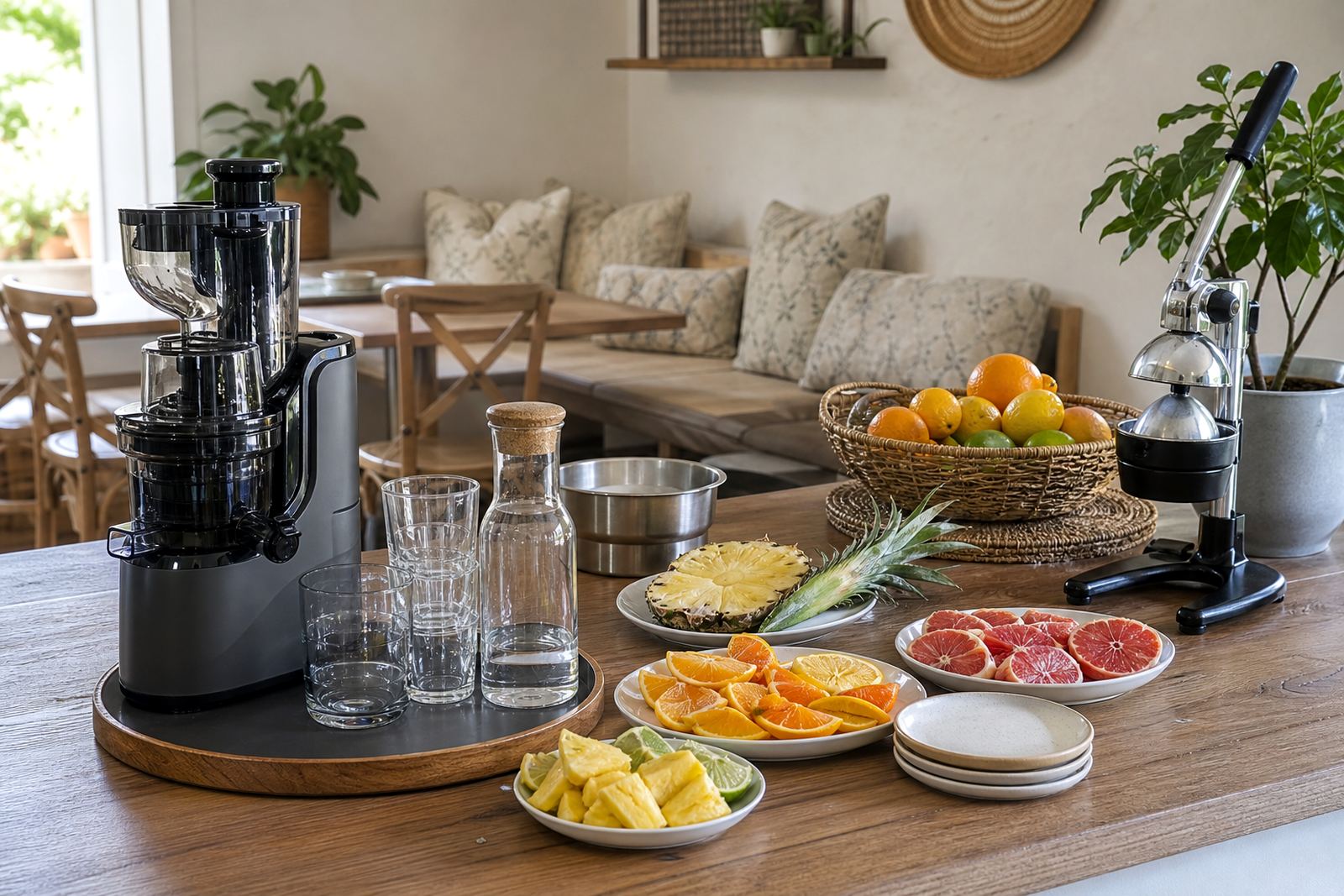
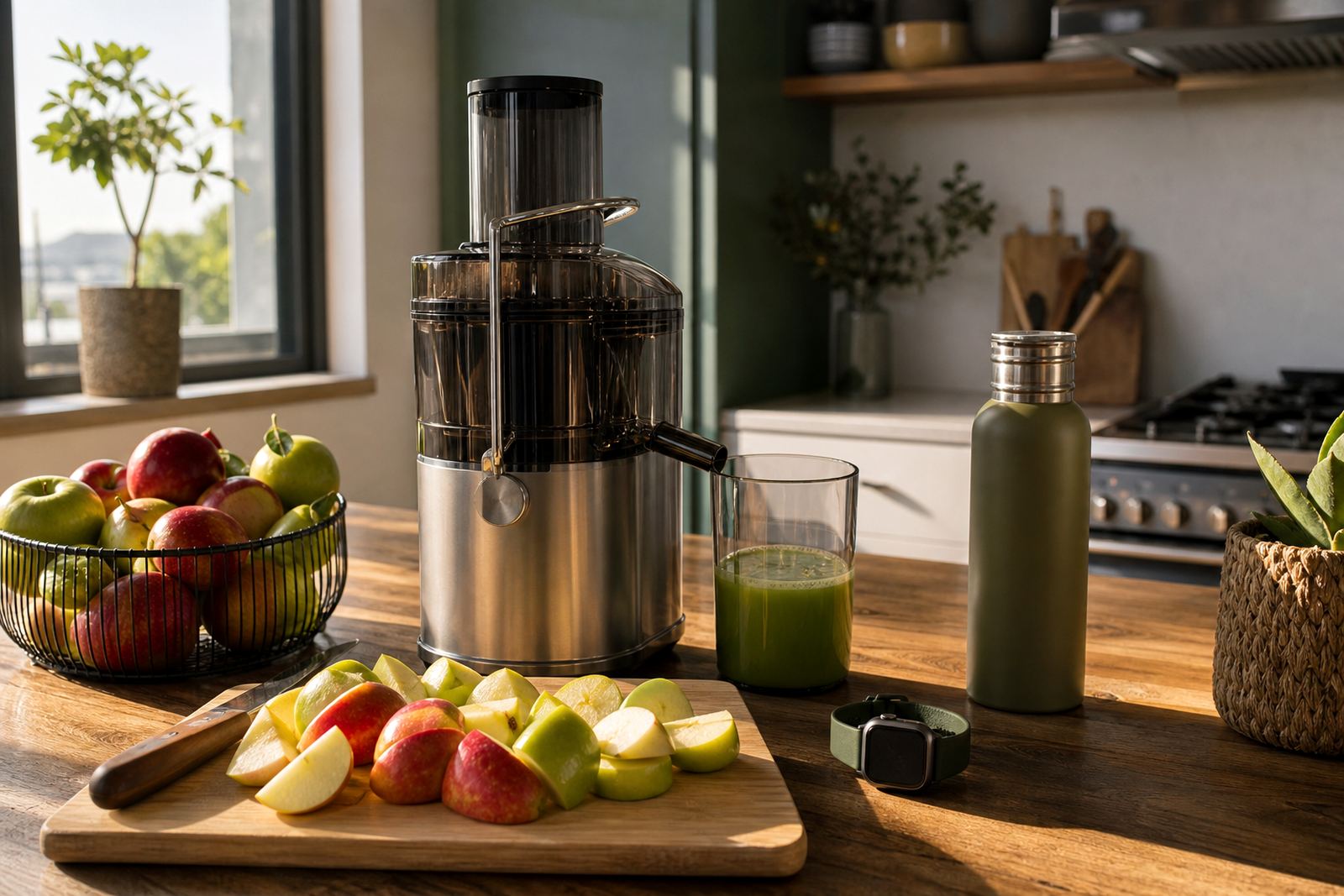
A good open plan juice station starts before the machine is switched on. Set out washed fruit, a chopping board, a jug, glasses and a cloth or tray to catch droplets. If the kitchen has a stone or laminated counter, a tray under the juicer helps protect the surface and makes moving the machine easier for cleaning. This is especially useful in Cape Town homes where coastal humidity can leave surfaces feeling tacky if the area is wiped late.
Keep peel, pips and pulp in separate bowls while you work. That keeps the counter cleaner and saves repeated trips to the bin. If guests are helping themselves, pre-label the jug or place a ladle nearby so serving does not create spills around the sink or dining table. It is also wise to keep cords away from the edge of the counter and away from any kettle or toaster that may already be in use.
- Use one board for fruit prep and a second clean area for glasses
- Park the pulp bin where it will not catch elbows
- Keep a small brush nearby for the screen and chute
- Dry removable parts fully before packing them away
The mistakes that make hosting feel messy
The biggest error is choosing a machine only for appearance, then finding it too loud, too tall or too awkward for the actual counter. Another common problem is placing the juicer too far from the sink, which means drips travel across the kitchen before they are wiped up. A third mistake is underestimating cleaning time. If the screen or cutting basket is left to dry with pulp on it, the next use becomes slower and less pleasant.
Food safety matters too. Fruit should be washed before peeling and juice should be served in clean containers. If the machine has seals, screens or feed parts that show wear, it is better to deal with that early rather than wait for leaks or rattling.
What to budget for a home setup in Rand
For a basic open plan setup, budget around R900 to R1 800 for a simple centrifugal juicer that suits occasional use and smaller households. Mid range slow masticating units often sit between R1 900 and R4 500, while cold presses with stronger build quality, steadier motors and better parts access can sit from about R4 500 to R8 500 or more depending on capacity and controls. These are broad guide figures, but they help when planning a kitchen purchase against other household costs.
It is worth adding a small allowance for brushes, spare seals, replacement screens or storage containers. If the machine will be used often for entertaining, the extra spend on easier cleaning and quieter operation usually pays back in time and less fuss at the counter. For homes in Durban or George where humidity can affect storage, a dry cupboard space is useful. In Pretoria or Johannesburg, the focus may be more on speed and handling larger batches for family gatherings.
- Entry level home use: R900 to R1 800
- Mid range slow press or masticating: R1 900 to R4 500
- Heavier duty cold press options: R4 500 to R8 500 plus
- Allow extra for care tools and spare parts
Keeping the setup ready for the next gathering
For open plan entertaining, the best setup is one that resets quickly. Rinse removable parts soon after use, check the screen for fine pulp, and leave everything to dry before it is packed away. If the machine is used weekly, a routine care plan helps with seal replacement, deep clean guidance, cable plug checks and noise or vibration checks. These are practical tasks, not glamorous ones, but they keep the kitchen running smoothly when people are coming and going.
MiniPress works with home juicers and cold presses across South Africa, with delivery to Cape Town, Johannesburg, Durban, Pretoria and George, plus surrounding areas such as Stellenbosch and Somerset West. For setup help, parts guidance or cleaner day to day use, the enquiry form on the contact page is the place to start. A tidy counter and a ready machine make hosting easier, and the kitchen feels calmer when every item has its place.