Start with the way you will actually use it
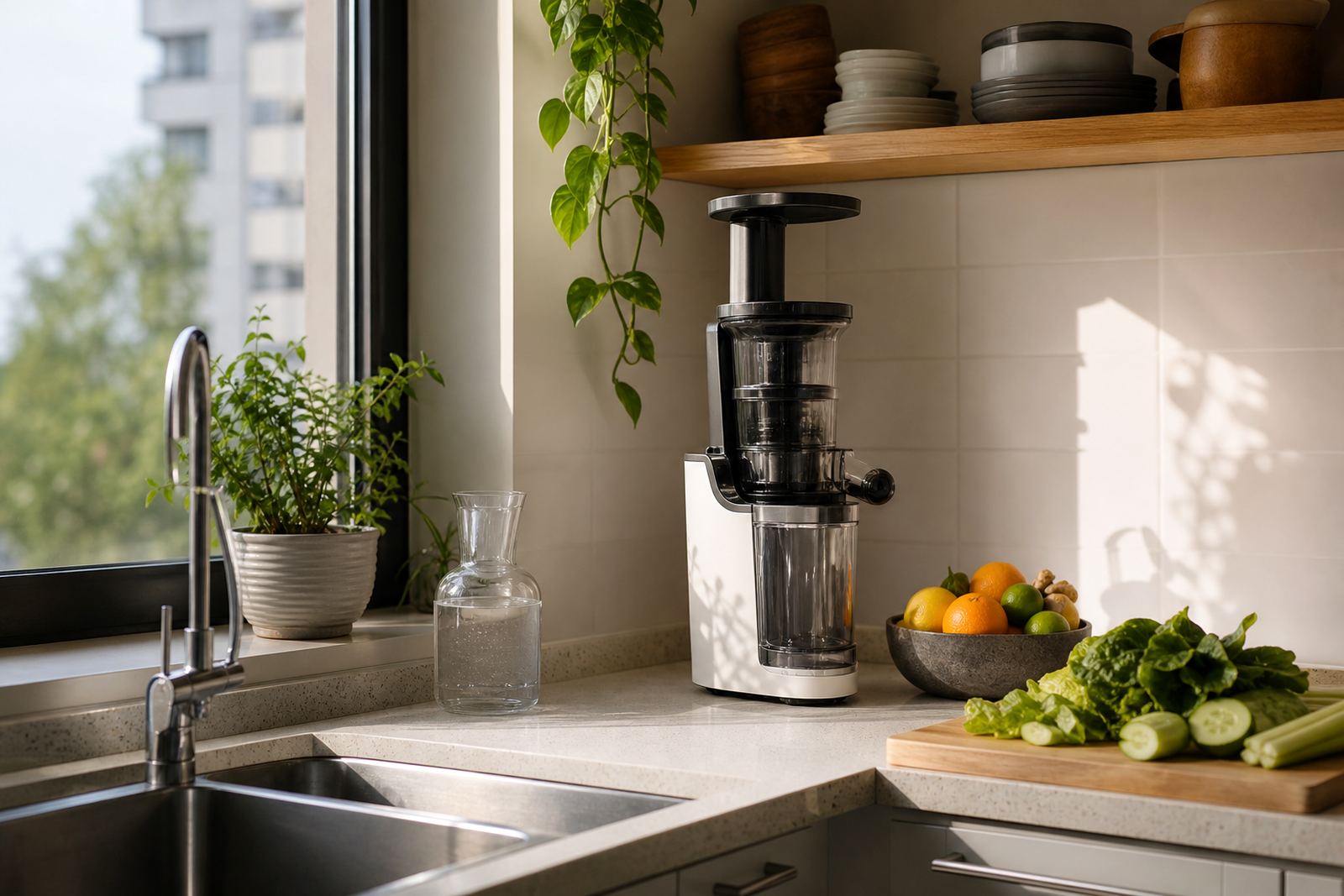
Before you compare motor sizes or feed chute widths, look at the way the juicer will fit into your kitchen. A small flat in Cape Town may need a lighter unit that stores on a shelf, while a larger family kitchen in Johannesburg or Pretoria may have room for a heavier machine that stays on the counter. If you only juice now and then, a compact model can make more sense than a large, slow machine that takes up valuable space.
Think about the produce you buy. Soft fruit, leafy greens, apples, carrots and beetroot all behave differently in the machine. A first buyer usually does better with a juicer that is easy to load and simple to take apart, because the easier the workflow, the more likely the machine gets used without becoming a chore.
- Measure your counter space and storage shelf height
- Check whether you want a quick weekday routine or a slower prep session
- Consider how often you buy produce and how much you typically process at once
- Decide if the machine must be light enough to move often
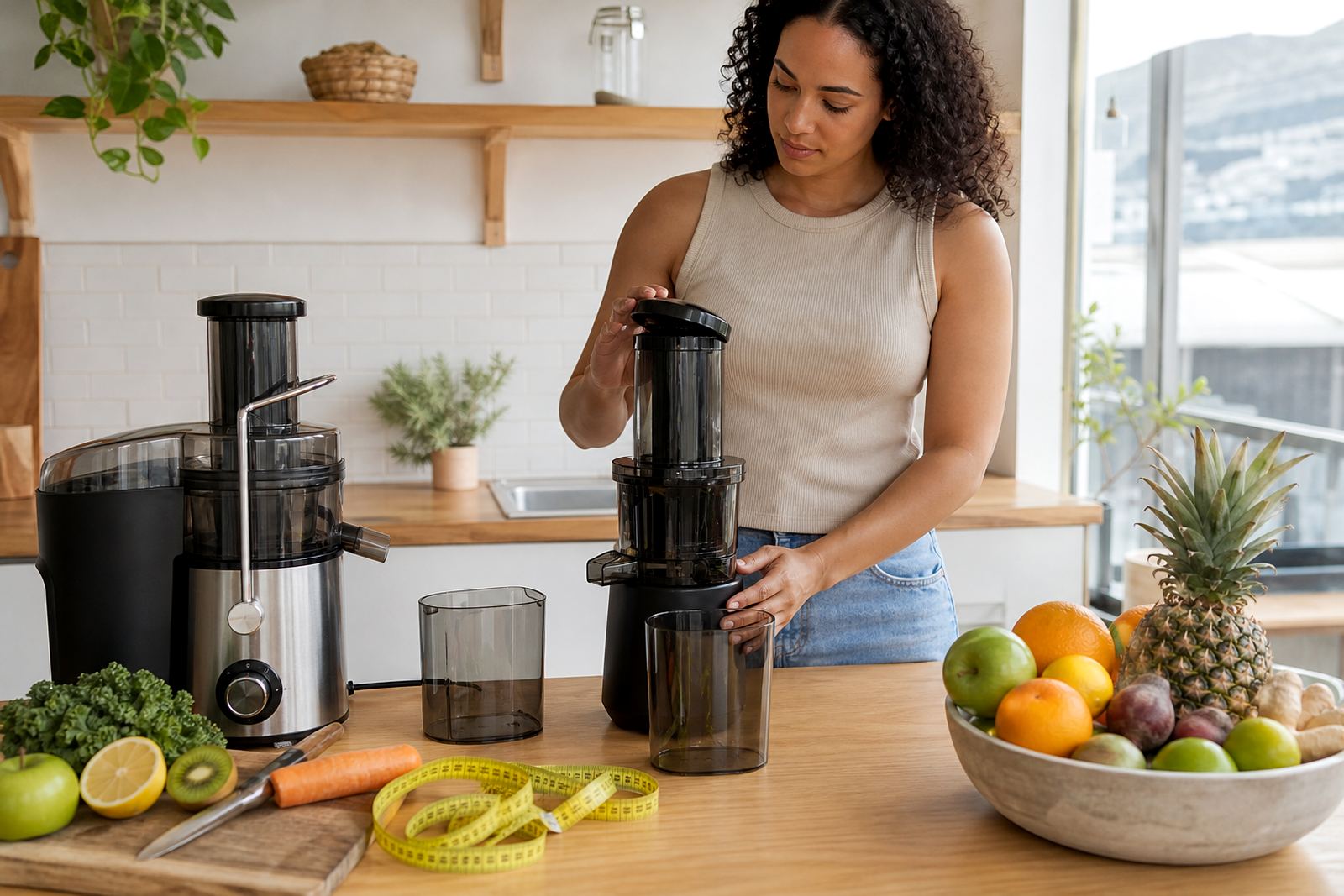
Slow masticating, centrifugal and cold press in plain terms
Slow masticating juicers use a rotating auger to crush and press produce. They usually work at a slower pace, which can suit leafy greens, herbs and mixed produce. Many first time buyers like the steady process and the finer control, but the feed can be slower and some items need cutting into smaller pieces.
Centrifugal juicers use a fast spinning basket to separate juice from pulp. They are often preferred when speed matters and the kitchen routine needs to be brief. They can be handy for apples, carrots and citrus, although soft produce and leafy greens may not always give the same yield as a slower press style machine. They also tend to be noisier, which matters in apartment living or early morning use.
Cold presses are built to press produce with low heat and low speed. In home use, this usually means a more deliberate workflow and careful feeding of ingredients. They are often chosen by buyers who want a calmer process and a machine that handles a mix of soft and firm produce with less foaming. There is no single best type, only the one that suits your kitchen rhythm, cleaning tolerance and the way you prep food.
How to choose a size that will not crowd the kitchen
Capacity is not only about the amount of juice the machine can make. It is also about how wide the chute is, how large the pulp container is and whether the parts are easy to carry to the sink. For one or two people, a smaller model can be enough. For a family, a machine with a wider feed opening and larger juice jug can save time on busy mornings.
In coastal areas like Durban or George, humidity can make wet parts harder to dry if they are stacked away too soon. A machine with fewer tight corners is easier to manage in that kind of climate. In Paarden Eiland and other busy urban areas, people also tend to look for storage that works in a smaller footprint, because the machine may need to be lifted in and out of a cupboard daily.
- Choose a chute size that matches how much chopping you are prepared to do
- Look at the footprint, not only the box size
- Check if the pulp bin fits your routine or if you will empty it often
- Make sure there is space to dry the parts before reassembly
A first use routine that keeps things calm
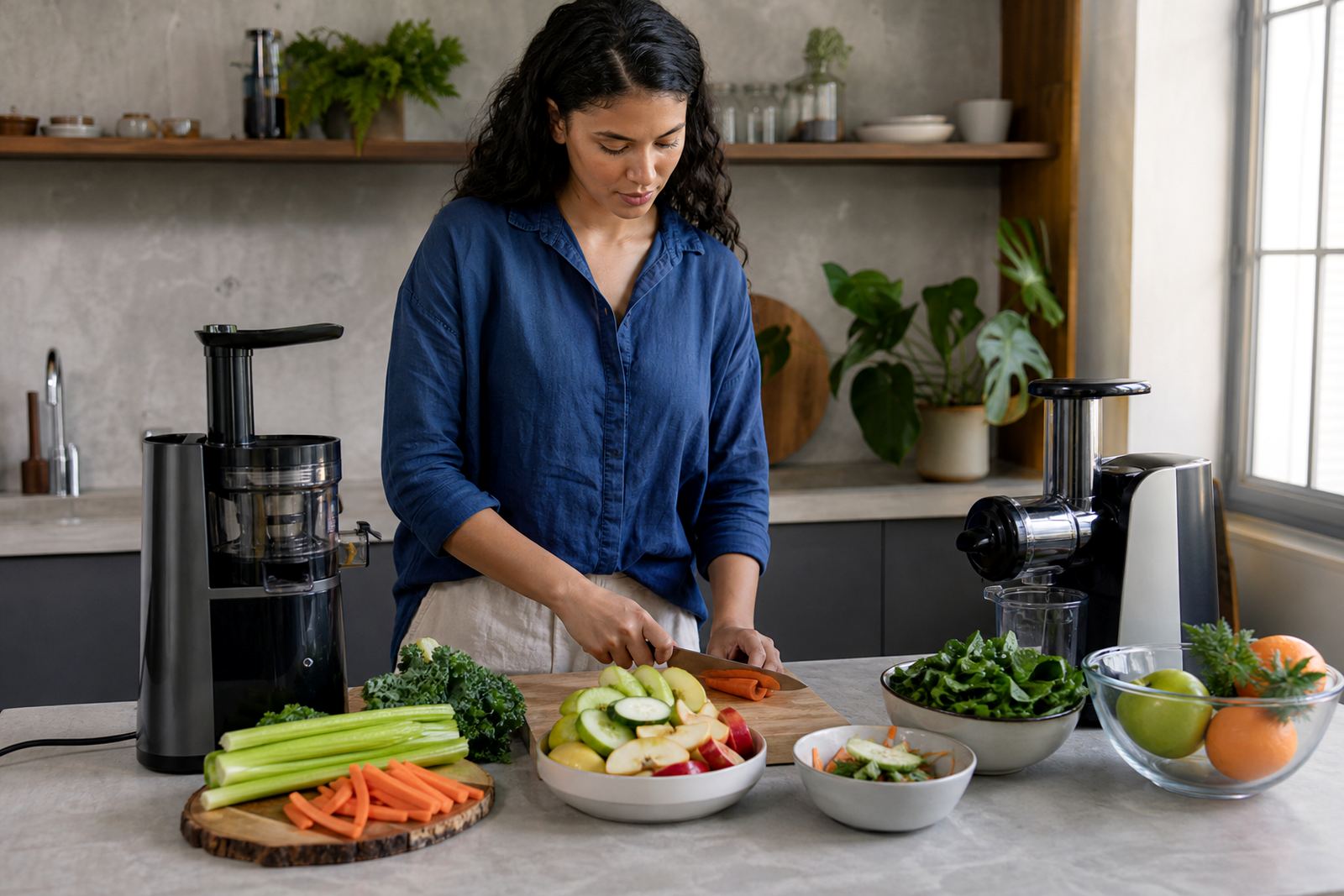
Good juicing starts before the switch is turned on. Wash produce well, trim damaged areas and sort items by firmness. Hard roots and soft fruit should not be loaded in one rushed pile. A sensible order helps the machine work better and reduces jamming. If the juicer includes a pusher, use it gently. Do not force food through the feed opening.
For a first run, keep the batch small. That makes it easier to notice how the machine sounds, how the pulp comes out and whether the juicer needs slower feeding. If you hear unusual knocking, stop and check for a blocked screen or an incorrectly fitted part. A careful first session can save time later and gives you a better sense of how the appliance behaves on your kitchen counter.
- Wash and sort ingredients before starting
- Cut food to the size recommended for the chute
- Feed firm and soft produce at a steady pace
- Stop if the sound changes sharply or the machine vibrates more than usual
Cleaning effort is part of the purchase choice
Many buyers focus on juicing performance and only later realise that cleaning matters just as much. A machine with more parts, fine screens and tighter seals will usually need more care after each use. If you want a quick clean-up, look for parts that separate easily and can be rinsed without fuss.
Food safety is mostly about time, temperature and thorough washing. Do not leave wet pulp sitting in the machine, because residue can build up and smell quickly. Wash all food contact parts soon after use with warm water and a mild detergent, then dry them fully before storage. Screens need extra attention because fibres can lodge in the mesh and affect the next batch if not cleaned properly. If a machine has seals or gaskets, make sure they are not twisted or trapped during reassembly.
- Rinse parts immediately after juicing
- Use a small brush on screens and narrow channels
- Dry parts fully before packing them away
- Check seals, screens and lids for trapped pulp before the next use
When the machine sounds wrong or leaks a little
First time buyers often worry when a juicer makes a new noise or drips from a joint. A small amount of moisture can come from assembly that is not seated properly, but regular leaking should be checked. Look at the seal, the locking points and the pulp outlet. If the unit shakes on the counter, the feet may not be level or the surface may be uneven. This is common in older kitchens and on tiled counters.
Noise can also point to overloaded feeding or a hard item that was not cut small enough. If the machine smells hot, switch it off and let it cool down. Never keep running a unit that is straining, especially during longer sessions in warm weather. If you need help with leak troubleshooting, noise vibration checks or seal replacement, it is better to address the cause early than keep forcing the appliance through another batch.
A sensible buying checklist for a first juicer
There is no need to overcomplicate the choice. The best first machine is the one that matches your space, your cleaning habits and the amount of produce you actually handle. A buyer in Stellenbosch may want something quiet enough for early mornings, while a buyer in Durban may want parts that dry quickly in humid conditions. If you are unsure, focus on the parts you touch every day: loading, emptying, washing and storing.
MiniPress supplies home juicers and cold presses across South Africa, with delivery to Cape Town, Johannesburg, Durban, Pretoria, George, Stellenbosch and Somerset West. If you need first time setup, deep clean guidance, brushes and tools, spare parts help, screen care or a video support call, use the enquiry form on our contact page and our team can talk through the practical details.
- Choose the type first, then look at capacity and size
- Keep cleaning effort in mind from the start
- Make sure the machine suits your kitchen layout and storage space
- Ask for setup guidance if you are not sure about the first assembly