Start with a clean basin and a clear board
Before anything gets sliced, rinse the sink or a large basin, wipe the cutting board and check that knives are sharp. A sharp blade is safer and gives cleaner cuts, which helps with firmer produce like beetroot, carrots and apples. Keep raw meat, poultry and seafood far away from juicing prep and use a separate board for produce.
For households near the coast, such as Paarden Eiland, Durban or George, produce can carry more surface moisture and spoil a bit faster in warm weather. Work in small batches, keep the kitchen cool where possible, and pack washed items back into the fridge if you are not juicing right away.
- Wash hands with soap for at least 20 seconds.
- Rinse boards, knives and peelers before use.
- Use separate equipment for produce and raw animal foods.
- Check that the juicer chute and pulp outlet are clean and dry.
Washing without soaking away the good parts
Most fruit and vegetables should be rinsed under clean running water. Rubbing the surface with your hands is usually enough for apples, pears, peppers, cucumbers and leafy greens. Soaking is not needed for everyday prep and can leave produce sitting in dirty water, which is poor food hygiene.
If you are dealing with dusty leafy vegatables, a loose bunch of herbs or produce with soil on the skin, rinse once to remove grit, then use a second clean rinse. For tough-skinned items like melons or oranges, wash before cutting so dirt does not transfer from the skin to the flesh. Drying with a clean tea towel or paper towel can help reduce slipping on the board.
- Rinse each item before peeling or cutting.
- Brush root crops if there is visible soil.
- Remove damaged outer leaves from lettuce, spinach or cabbage.
- Dry slippery produce before chopping.
What to trim, peel and remove before juicing
Not every part of a fruit or vegetable is ready for the juicer. Thick skins, hard cores, large seeds and woody stems can strain the feed system or leave a bitter taste. A slow masticating juicer can usually handle more fibrous produce than a centrifugal unit, but both work better when hard or inedible parts are removed first.
As a rule, trim anything that is bruised, mouldy or bitter. Peel produce with thick waxed skin if you do not want it in the juice. Remove citrus pith if the white layer makes the flavour too sharp. For pineapples, cut away the rough skin and hard eyes. For leafy greens, strip away thick central stems when they feel too woody.
- Remove stones, pips and seeds from peaches, mangoes and avocados.
- Trim beetroot tops and carrot ends.
- Peel ginger if the skin is tough or sandy.
- Cut away bruised sections and any mouldy spots.
Cut sizes that keep the feed steady
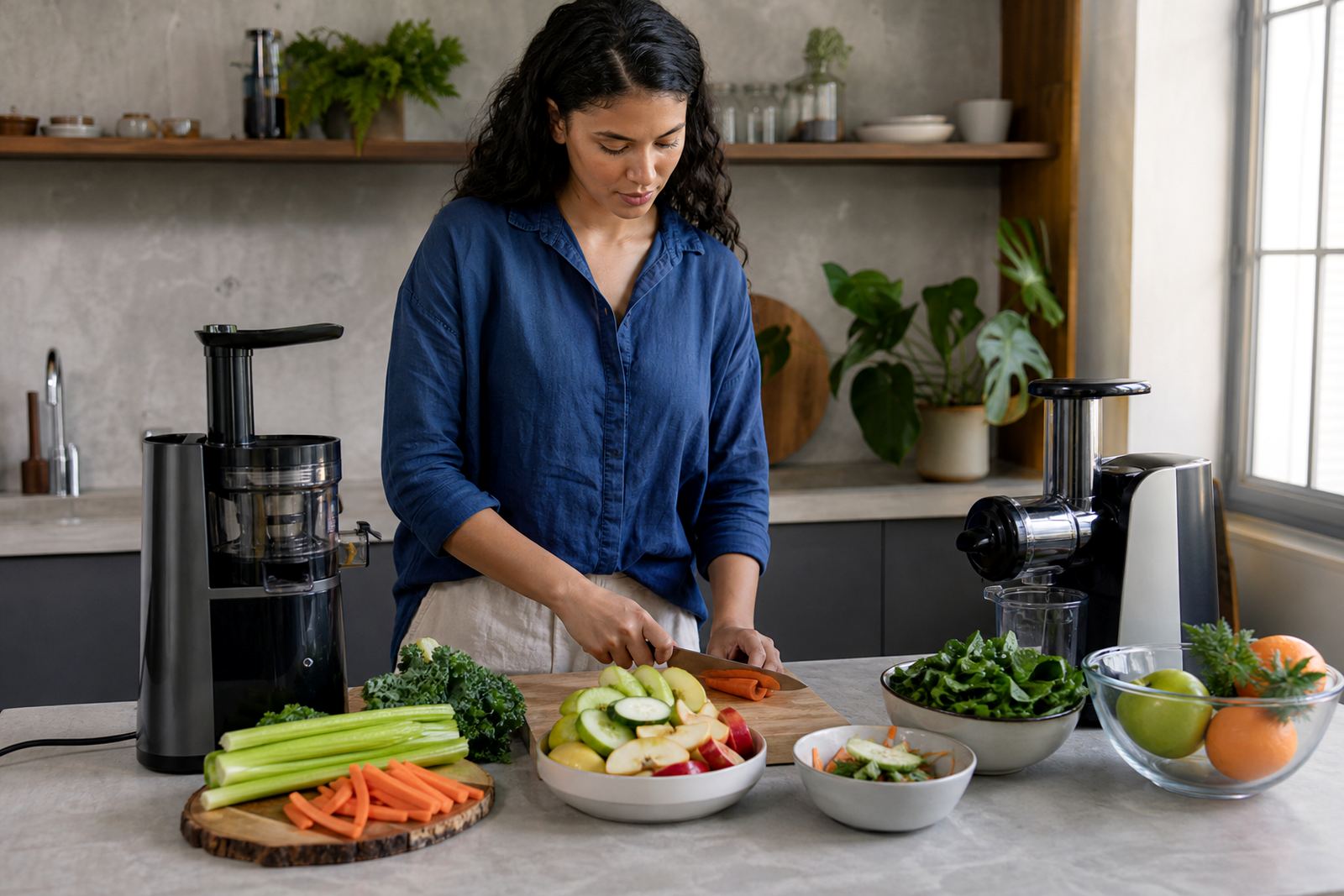
Cutting produce to a similar size helps the juicer run more evenly. Large chunks can jam the chute, especially in compact home units, while very tiny pieces may fall through too quickly in a centrifugal machine. A good rule is to cut hard produce into fingers or cubes small enough to fit the feed tube without forcing.
Soft fruit can be cut into larger pieces, but remove excess mushy sections first. Leafy greens often work better when rolled into loose bundles rather than chopped to bits. If you hear a machine labouring or see pulp backing up, pause and feed the next piece a little slower. That small habit often prevents vibration and spillages around the spout.
- Carrots, beetroot and apples: cut into bite-sized chunks or long fingers.
- Cucumbers and celery: cut to match the feed chute.
- Leafy greens: bundle loosely, do not pack tight.
- Citrus: peel and segment if your recipe calls for it.
Cold press prep for softer feed and fewer blockages
Cold press machines work best when the prep is steady and deliberate. Because they rely on slow compression, they need produce that is not overloaded with hard cores, stones or long fibres. Feed one piece at a time, especially with celery, wheatgrass, kale and herbs. This gives the auger time to grip the produce and reduces the chance of clogging.
If you are juicing a mix of soft and hard ingredients, alternate them rather than loading all the hard items first. A slice of cucumber between harder beetroot pieces can help keep the movement going.
- Roll leafy greens loosely before feeding.
- Cut fibrous stalks into shorter lengths.
- Alternate hard and soft produce for steadier pressing.
- Stop and clear pulp build-up if the machine slows down.
Centrifugal prep for fast feed and cleaner splatter control
Centrifugal juicers usually work faster, so prep should match that speed. Cut produce so it can move easily through the chute without needing to push hard. Soft fruit can splash if dropped in too fast, and very watery produce may create more froth, so it helps to keep a steady hand and a dry work area.
These machines often handle whole apples or larger chunks better than smaller, loose pieces, but always follow the feed size that suits your model. Keep a jug or glass close by, because the faster spin can throw fine droplets around the spout area. Wipe the lid and rim after use to reduce sticky residue and make cleaning easier later.
- Keep cut pieces similar in size.
- Do not force food into the chute.
- Keep cloths or paper towels nearby for splatter.
- Rinse the lid and filter soon after juicing.
Before the lid goes on: a final food-safe check
Right before juicing, check that the produce is clean, trimmed and dry enough to handle safely. Watch for small stones, stringy roots, forgotten pips or loose bits of peel that can rattle inside the machine. If anything looks questionable, sort it out first rather than hoping the juicer will cope. That extra minute can save cleaning time and reduce wear on screens, seals and feed parts.
After prep, store cut produce in a covered container in the fridge if you are not juicing immediately. Use clean lids, bowls and tongs so the ingredients stay away from dust and insects. For families in coastal areas, where humidity can be higher, do not leave chopped fruit on the counter for long periods.
- Inspect for stones, pips and grit.
- Keep chopped produce covered until use.
- Use clean containers with tight-fitting lids.
- Discard anything with spoilage, off smells or slimy texture.