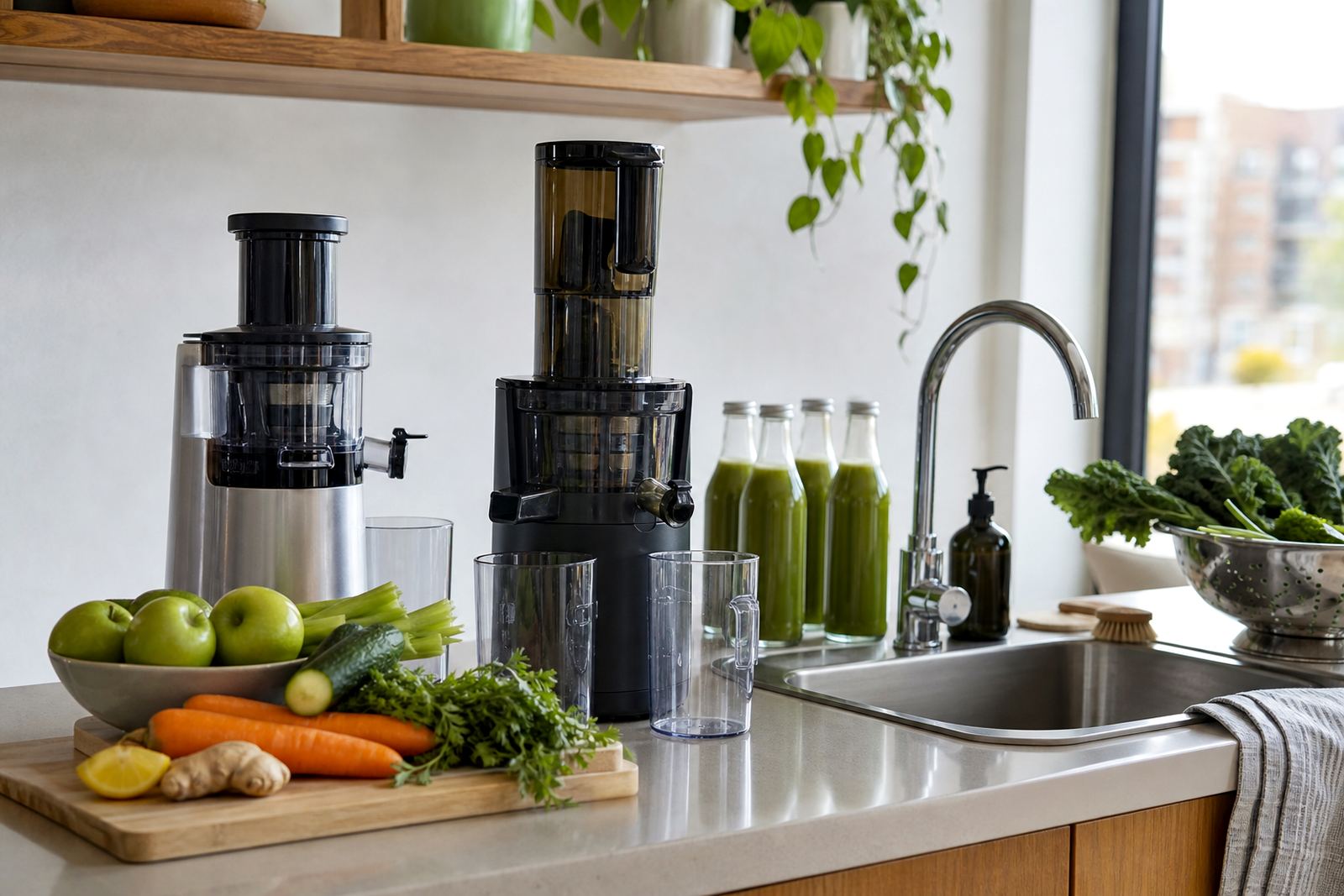

What a cold press machine is doing at the counter
A cold press juicer, sometimes called a slow masticating juicer or a press-style juicer, breaks produce down with an auger or pressing system rather than spinning it at high speed. That slower action is useful when you want less froth and a drier pulp, which many home users prefer for everyday kitchen use.
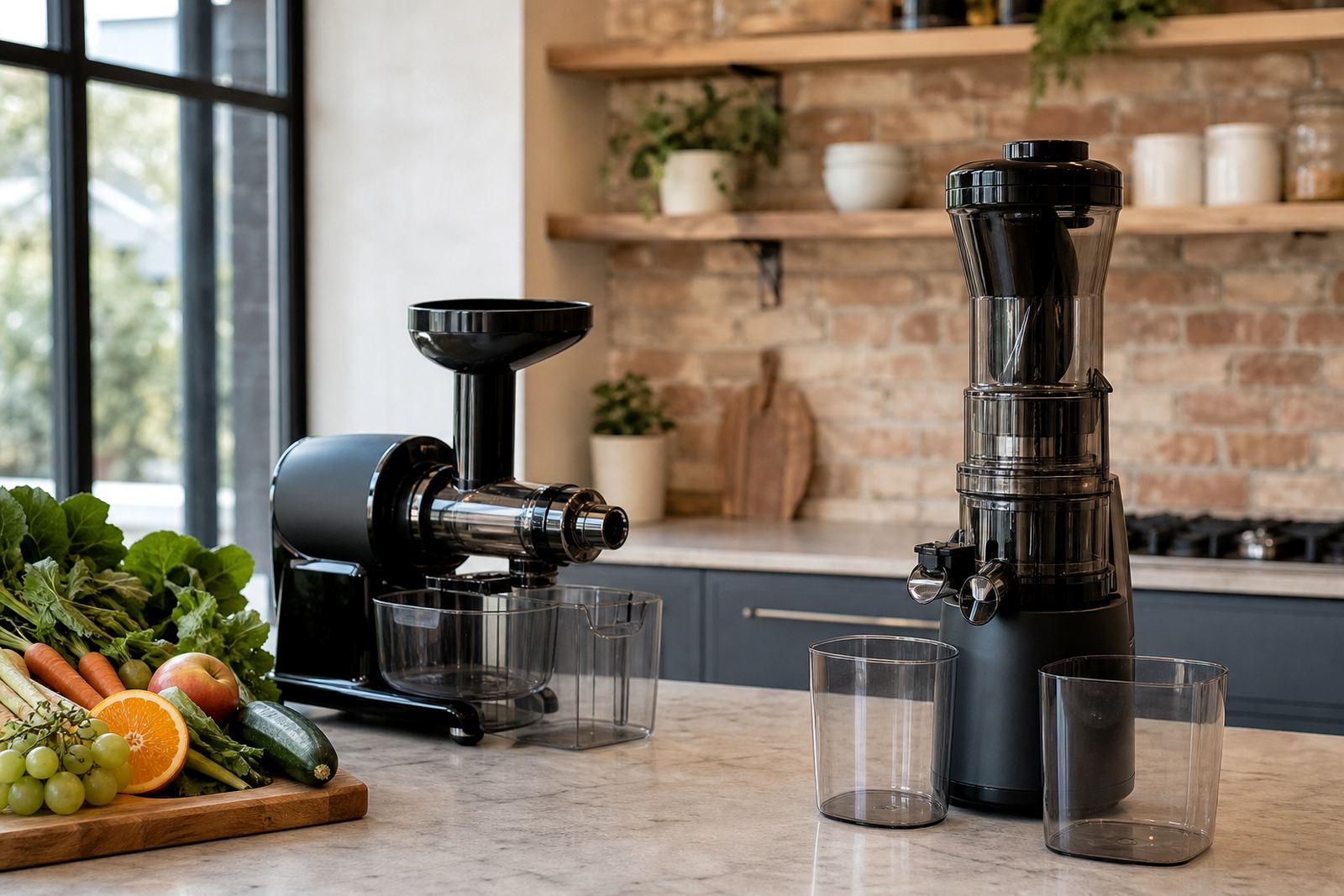
There are two common home formats. Vertical units take up less counter space and suit smaller kitchens in flats or townhouses. Horizontal units usually give you a wider feed path and can handle leafy items and some fibrous produce more comfortably. A cold press is not the same as a centrifugal juicer, which uses fast spinning and is often quicker for large batches but usually makes more foam and a wetter pulp.
- Check how much counter height you have under cupboards.
- Allow space for the feed chute, pulp container and juice jug.
- Choose a machine that is easy to assemble and lock back into place.
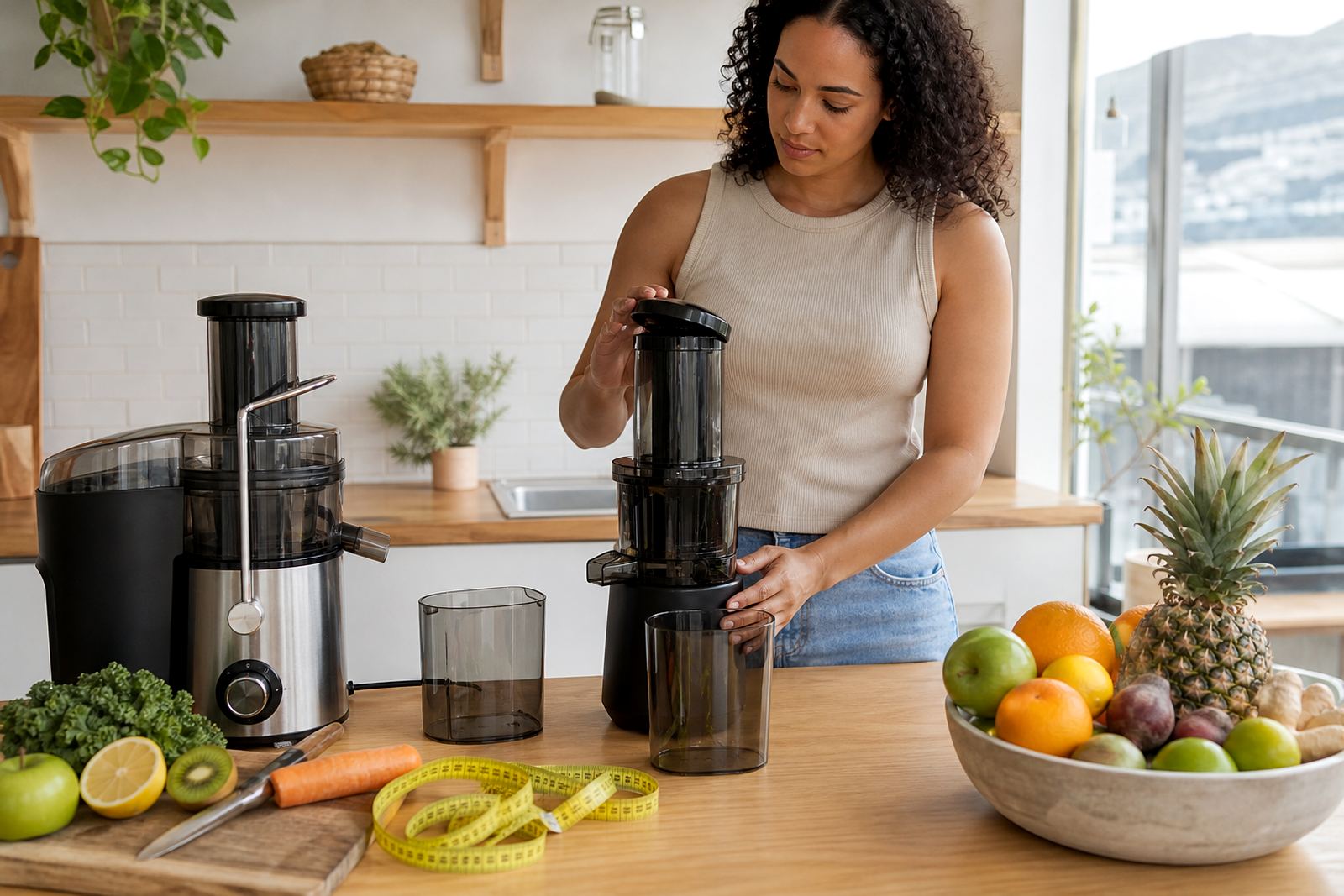
- If the kitchen is tight, measure the footprint before ordering.
Slow masticating or centrifugal, what changes at home
Home buyers often compare a slow masticating machine with a centrifugal juicer and ask which one is more practical. The answer depends on how often you juice, what produce you use and how much cleaning time you can allow after each use. For one or two glasses at a time, a slow juicer is often chosen for its controlled feed and lower speed.
A centrifugal juicer is handy where speed matters and you want to process harder fruit in a hurry. It is usually louder, and the fast spinning basket can send more air into the juice. A slow juicer works at a gentler pace, which can help with leafy greens, soft fruit and mixed batches, though prep time still matters because most produce must be cut to fit the chute.
- Use a centrifugal juicer if quick processing is the main concern.
- Use a slow masticating juicer if you want a calmer pace and drier pulp.
- Check whether the machine can handle hard produce, leafy items and softer fruit.
- Ask whether the feed chute saves cutting time or needs smaller pieces.
Cold press formats that suit South African kitchens
In Cape Town, Johannesburg, Durban, Pretoria and George, kitchens vary a lot in size, power setup and humidity. A compact cold press can suit a Paarden Eiland apartment or a small family kitchen in Stellenbosch, while a heavier unit may suit a home that juices daily and has more counter room. If you live near the coast, moisture can affect seals and stored parts, so drying matters after washing.
A unit that is simple to assemble, with clear locking points and fewer loose parts, tends to be easier when routines are interrupted. If the kitchen is shared, a quieter motor can also make early morning use less disruptive.
- Measure counter width, height and storage space before choosing a format.
- Look at the chute size, especially if you want less chopping.
- Check if the motor base is stable on smooth tiled counters.
- Store parts in a dry cupboard, not next to a steaming kettle or sink.
A practical setup routine before the first juice
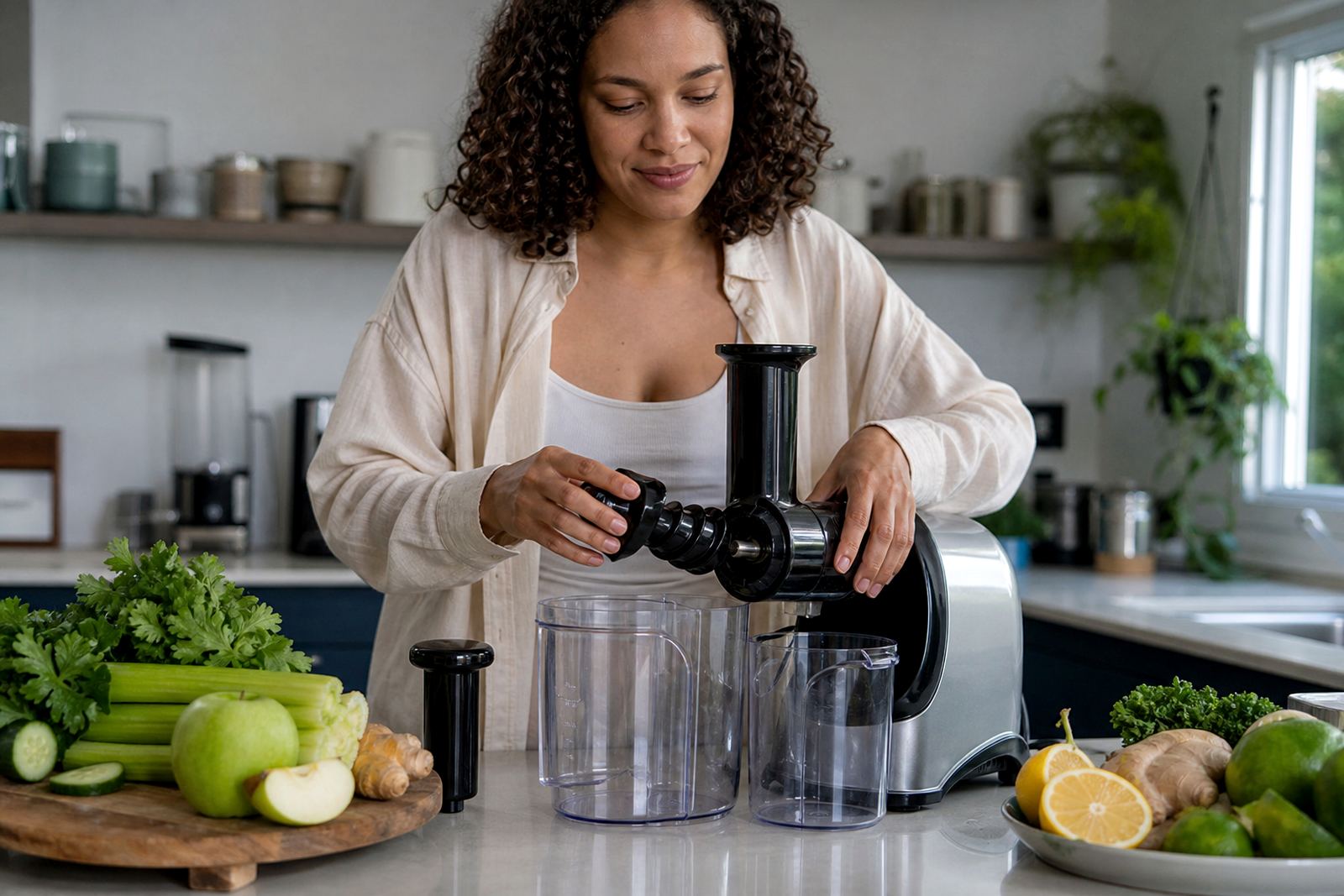
First time setup is worth doing carefully. Read the parts list, wash removable components in warm water and let them dry fully before assembly. Make sure the locking arms, screens, pulp outlet and juice outlet sit correctly, because a loose fit can lead to leaks or vibration. If the machine has a feed pusher, keep it to hand and never force produce down the chute.
It helps to test the unit with a small batch of firm fruit first. That makes it easier to notice if the screen is seating properly or if any part is rattling. If you hear unusual movement, stop and check the fit before continuing. A steady base, a dry countertop and a clear work area make the process cleaner and safer.
- Wash and dry every removable part before first use.
- Check the screen for dents, blocked holes or trapped fibres.
- Place the base on a level, dry surface.
- Keep hands clear of the chute and use the pusher provided.
- Start with a small test batch before full use.
Cleaning habits that help the machine last longer
Cleaning is easier when it starts immediately after use. Rinse pulp from the screen and chamber before it dries hard, then use brushes and tools suited to fine mesh parts. A soft brush works better than a metal tool, which can damage the screen and affect juice flow. If you leave citrus or beetroot residue overnight, staining and odour can build up, especially in warmer coastal weather.
Food safety also depends on drying and storage. Every part that touches produce should be clean, rinsed and fully dry before it is packed away. Do not store damp seals or screens inside closed containers for long periods, because trapped moisture can encourage smells and film on the parts.
- Rinse parts straight after juicing.
- Use a brush for the screen and tight corners.
- Dry seals, screens and chambers before storage.
- Check for worn rings, loose seals or cracks during cleaning.
- Keep all food-contact parts apart from cleaning chemicals and cloths used on other surfaces.
When a home user should ask for help
Some problems are small and easy to sort out, while others need a closer look. A leaking chamber may point to a worn seal, a screen that is not seated properly or a blocked outlet. Excess vibration can come from an uneven surface, an overloaded feed chute or a part fitted the wrong way round. If the machine starts making a grinding noise, stop and inspect it rather than pushing through.
MiniPress supports home users across South Africa with setup help, deep clean guidance, spare parts help, seal replacement, screen care, leak troubleshooting, noise vibration checks, storage care, cable plug checks, brushes and tools, routine care plans and video support calls. That is useful whether you are in Paarden Eiland, Johannesburg, Durban, Pretoria, George, Somerset West or Stellenbosch and need help after delivery.
- Contact support if the machine leaks from the base or outlet.
- Ask for help if the motor sounds strained or the machine walks across the counter.
- Check the power cable and plug before using the unit again after storage.
- Replace worn seals and damaged screens promptly.